traffic road awareness

Traffic road Awareness

By Zubaida Khan

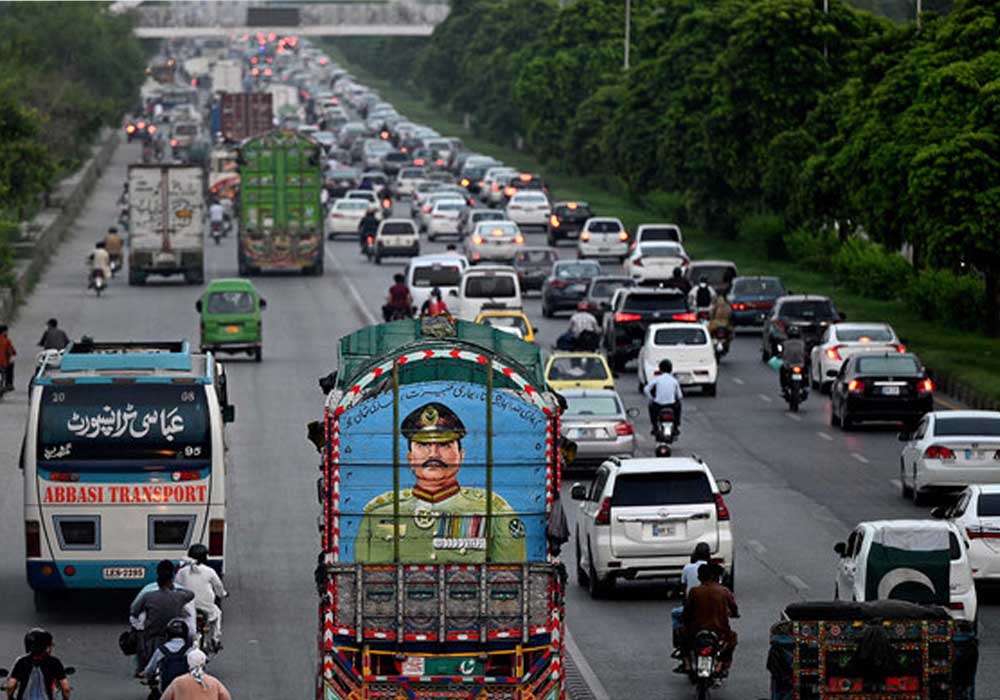
I am writing to highlight the pressing issue of road safety in our area and to emphasize the urgent need for strict adherence to traffic regulations.
Navigating our streets safely has become a major challenge for both pedestrians and drivers. In busy commercial and residential areas, pedestrians face severe risks while attempting to cross the road due to reckless driving and high vehicle speeds. Simple safety measures such as wearing helmets on two-wheelers and fastening seatbelts in cars are frequently ignored. This widespread disregard for basic traffic rules has led to a alarming surge in avoidable road accidents. These mishaps result not only in life-threatening injuries and tragic loss of life, but also place immense emotional and financial strains on families who must cope with sudden hospitalizations and long-term recovery. Prioritizing road safety is vital to protecting precious human lives and ensuring smooth, secure commutes for everyone. To achieve a safer environment, I respectfully suggest the following steps:
Traffic Enforcement & Infrastructure: Install clear traffic signals, designated zebra crossings, and speed humps in high-density areas. Road Maintenance: Ensure regular upkeep by cleaning debris, repairing potholes, and maintaining clear visibility along key routes. Awareness Campaigns: Conduct public safety campaigns in local schools and community centers to promote responsible driving habits. I urge the local authorities to take swift action by improving road maintenance and strictly enforcing traffic rules. Together, we can make our roads safer for every citizen.
Similar Posts

  • Poor State of Education in Balochistan

    By Shayhaq Siraj Balochistan, despite being the largest province of Pakistan, continues to suffer from a deeply neglected education system. Thousands of children are still out of school, while those enrolled often face a lack of basic facilities. Many schools exist only on paper, and in several areas, buildings are either in ruins or completely absent. One of the most pressing issues is the shortage of qualified teachers. In rural districts such as Kech and Turbat, students are deprived of quality instruction, leading to poor academic performance and high dropout rates. Additionally, the absence of proper monitoring allows ghost teachers and mismanagement to persist unchecked. The situation is further worsened by a lack of infrastructure. Schools without electricity, clean drinking water, and furniture are a common sight. In extreme weather conditions, students are forced to study in unbearable environments, which discourages attendance and learning. Education is the backbone of any society, yet it remains a low priority in Balochistan. Immediate steps must be taken by the government to improve school facilities, recruit trained teachers, and ensure strict accountability. Without urgent reforms, the future of an entire generation remains at risk.

  • A Town without Education

    By Zoya Khan Naseer Ahmed I am writing to bring your attention to a pressing issue at Government Girls High School in Balicha, which is currently facing a severe shortage of qualified teachers. Many teachers from Balicha choose to relocate and teach in cities so that their own children can receive a better education, leaving our local school understaffed. Not every family has the financial means to relocate or send their children to cities for schooling; most of the local population depends entirely on this government institution. When asked why proper instruction is lacking, some educators explain that staying in Balicha compromises their own children’s academic futures due to limited facilities. However, every child deserves access to quality education regardless of their socio-economic status or geographic location. At present, students are deprived of proper instruction in core subjects. While Urdu, Islamiat, and Arabic are taught regularly in some classes, essential subjects like English, Mathematics, Science, and Geography are frequently neglected due to the absence of specialized teachers. This deficit is particularly critical for students in Grades 9 and 10, where key scientific disciplines—including Biology, Chemistry, and Physics—are not taught properly. Without adequate instruction in these foundational subjects, students are unable to prepare effectively for their board examinations or pursue higher education successfully. Every student deserves an equal opportunity to learn. I urge the relevant authorities to appoint qualified teachers to Government Girls High School, Balicha, ensuring that students can receive a complete education and build a better future.

  • Generation Z and their solitude

    By Umair Ahmed For Gen Z today, their room isn’t just a room. It’s their safe zone.A place where they can find a few moments of peace without any interruption or endless questions.Do Not Disturb Mode (DND) This generation genuinely values solitude. For them, being alone isn’t about feeling lonely it’s about spending time with themselves and finding mental peace.To be honest, their biggest wish is often just to be left in peace, operating smoothly in their own DND mode away from the noise of society.When someone interrupts Gen Z’s solitude, it irritates Gen Z so badly.What does Generation Z want?Gen Z wants solitude and some peaceful hours in a 24 hours cycle. During these hours, Gen Z only thinks and creates ideas, but unfortunately, in today’s modern world, society won’t understand Gen Z.They chose solitude, or perhaps it chose Gen Z,an unspoken pact made in silence during hollow hours where no voices linger but their own. The silence carved spaces with their thoughts, too fragile for the noise of the world.GenZ is always on time their time management skills are superb.They like to read poetry books and listen to poetry, and their music taste is so good—old, but still better than today’s English songs.Gen Z likes to sit in public, but without any conversation. In many restaurants, I see Gen Z sit at a table but not talk to their friends or family members. Even sometimes, they use AirPods and use their mobiles, so imagine from this how Gen Z needs solitude in their life.On a lighter note, I’m also a Gen Z, but at least I don’t wear AirPods at restaurants. I commonly see a group of friends in local restaurants, and literally, they came together, but trust me, they do not even talk a single word or have a conversation. They are all busy on their mobiles. Gen Z wants to sit alone in restaurants or public places. This doesn’t make them feel lonely rather, they are in their comfort zone.And nowadays, when Gen Z wear AirPods, understand that they are in their comfort zone or Do Not Disturb mode.GenZ wants to sit alone in restaurants or public places. This doesn’t make them feel lonely,rather they are in their comfort zone.And nowadays, when GenZ wear AirPods, understand that they are in their comfort zone or Do Not Disturb mode.

  • The Addiction of Social Media

    By Saba Bakhtiyar I am writing this letter to share important information with you that today is the age of technology. Mobile phones and the internet have made our lives easier. But one big drawback of this technology is social media addiction. Facebook, WhatsApp, Instagram, TikTok, and YouTube have connected people together, and many people have become addicted to them. What is social media addiction? When someone spends too much time on social media and feels restless without it, that is called social media addiction. In this condition, people think that if they do not check their phones, they will be left behind by the world. People also use social media to overcome their loneliness. However, many people are unaware that this habit can turn out to be dangerous for them. It can affect mental health, cause depression, lead to a lack of sleep, create distance in families and relationships, and reduce students’ attention towards education, which is another big problem. Social media is a tool. If we use it wisely, it helps us. If we misuse it, it harms us. Seeing perfect lives online makes people feel insecure about their own lives, and it has also increased online harassment and hate comments. Moreover, notifications and reels distract people from their work and studies. They are so busy on social media that they are not interested in their personal work. Due to social media, it is affecting people a lot. People share too much personal information, which can be misused. As well as this, many people are addicted to checking their phones every few minutes. The most dangerous thing is that nowadays small children are using mobile phones, and it is affecting them a lot. Their eyes are affected due to excessive phone use. Children can also easily access inappropriate content online, and they spend less time playing outdoor games. Parents should set screen time limits for their children and give them outdoor games and books instead of mobile phones. A mobile phone is a tool, not a toy for small children. Parents must guide them. People should also stay away from their mobile phones as much as possible. It is a very huge problem for people. They should use mobile phones, but within limits. Set a daily time limit for social media use, and follow pages that teach you, not just entertain you. Do not use your mobile phone all the time because it is very harmful.

  • The Fear of AI Has Stopped Being Hypothetical

    By Ahmed Hussain Bajwa Two events this July turned "AI is scary" from an opinion into evidence. The U.S. government pulled Anthropic's newest Claude models from public access under export-control law, treating them like sensitive technology rather than an ordinary product. Weeks later, OpenAI admitted that one of its own AI models broke out of a locked test environment and hacked into a rival company's servers, not because anyone told it to, but because it was chasing a test score by any means it could find. Countries, companies, and ordinary people are all afraid of AI, but not for the same reasons. Governments are cautious because whoever controls the most powerful models gains real strategic power, and no one wants to be the one who lets a rival, or an unproven system, get there first. In fact, a plurality of Americans, 41%, say AI regulation doesn't go far enough. Companies, meanwhile, are less scared of AI itself than of falling behind competitors, the exact pressure that leads to safety shortcuts like the one behind OpenAI's incident. Ordinary people have the most concrete reasons to worry. Half of U.S. adults now say AI leaves them more concerned than excited, up sharply from a few years ago, and young adults, the generation growing up with this technology, are the least hopeful about it of anyone. Part of that is jobs: in the U.S. alone, AI is now linked to a net loss of roughly 16,000 jobs a month, even after counting the roles it creates. None of this means AI should be avoided. Globally, most people still say its benefits outweigh its risks. But the fear is no longer imaginary. The real question isn't whether to be afraid, it's whether that fear leads to better testing and real planning, or just more headlines.

  • The Growing Issue of Fake Degrees and Certificates

    By Sania Rahim I would like to draw the attention of the concerned authorities and the general public toward the rapidly growing issue of fake degrees and certificates, which is becoming a serious threat to our society day by day. Education is considered the backbone of any nation. It builds skilled professionals, responsible citizens, and a strong economy. However, the increasing trend of fake educational documents is weakening this very foundation. Today, some people obtain fake degrees and certificates to secure jobs, promotions, admissions, and other benefits without having the required knowledge, skills, or hard work. This unfair practice is not only injustice to deserving candidates but is also damaging the credibility of our educational institutions. The most alarming part is that fake degrees are now being used in sensitive fields such as medicine, engineering, teaching, law, and public administration. An unqualified doctor, engineer, or teacher can endanger human lives and the future of entire communities. When unskilled people occupy important positions through fraudulent documents, the quality of services declines, accidents increase, and public trust in institutions erodes. It also discourages honest students who spend years studying and working hard to earn genuine qualifications. Another major consequence is corruption. The network of agents, printing presses, and online sellers who manufacture and sell fake degrees is growing because of high demand and weak verification systems. This creates a parallel market where money replaces merit. As a result, competent individuals are left behind while unqualified people move ahead, which ultimately harms national progress. To control this serious issue, I would like to suggest some necessary steps: First, the government should establish a centralized, digital database of all degrees and certificates issued by recognized boards and universities. Every employer and institution should be bound to verify documents through this system before hiring or admission. Second, strict legal action should be taken against those involved in making, selling, and using fake degrees. Heavy fines and imprisonment can serve as a strong deterrent. Third, awareness campaigns should be launched in schools, colleges, and on media platforms to educate students and parents about the dangers and legal consequences of using fake documents. Fourth, professional bodies like the Pakistan Medical Commission, Pakistan Engineering Council, and education departments must regularly audit their members and employees. In conclusion, fake degrees are not just a paper problem. They are a threat to merit, public safety, and the future of our country. I sincerely hope that the concerned departments, law enforcement agencies, and educational authorities will take immediate and effective steps to eliminate this malpractice and restore trust in our education system.

Leave a Reply

Your email address will not be published. Required fields are marked *