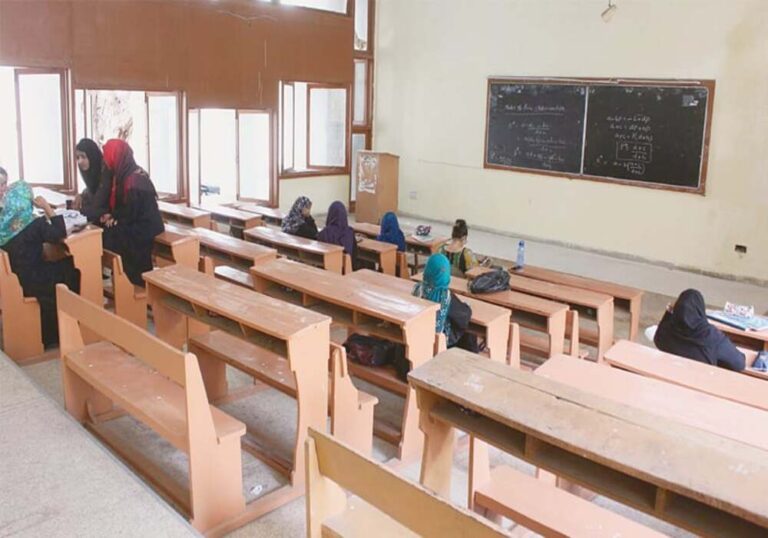
criminals pak sar

Criminals on Pak Sar Zameen

We call Pakistan Pak Sar Zameen, “the Land of the Pure.” But pure for whom? Tell me, honestly… pure for whom?

For the criminals? For the rapists? For the child abusers? For the killers who walk our streets untouched by iron shackles or jail cells? Because it certainly does not feel pure for our children.

The entire country is busy discussing India’s Jantar Mantar, an issue that we have no business obsessing over. Everyone knows what India should do, but everyone forgets what Pakistan must do. On that very same day, while the nation was distracted by a controversy across the border, six-year-old Dua was murdered in Karachi. Where was the collective scream? Where was the demand for change? And where were the changemakers?

We have time to argue about borders, about politics, about things that do not touch our homes. But when a child is murdered in our own city, we scroll past, we sigh, we say “Inna Lillahi wa inna ilayhi raji’un,” and we move on. We move on!

And Dua is not alone.

In 2026, it feels like every other day another child loses their life. Six-year-old Muhammad Wali from Lea Market. Three-year-old Kulsoom from Quaidabad. Tomorrow, another child will be slaughtered. Another name will join the cemetery’s roll call. How many more parents will decorate graves instead of hearing the pitter-patter of their tiny feet?

This is the lullaby that replaces safety in our children’s souls. Our children fall into open manholes because nobody bothers to close them. They are thrown from rooftops. They are abused until they cry, raped until they are wounded, murdered until their funerals become routine. Yet we choke on the same bitter question. Why are the murderers not swinging from ropes? Why are the rapists not rotting in cells? Why are the abusers not dragged through the streets until they beg for death?

A nation is not judged by how boldly it sings the national anthem. It is not judged by the scale of its army or the height of its flags. It is judged by the number of tiny coffins that leave its homes.

So I ask again: if this is truly the Land of the Pure, why are the purest souls in this country the ones who cry alone, die alone, and are forgotten alone?

Similar Posts

  • Pakistan: The Moment Frustration Met Patience

    Why would two nations that had been at war for months agree to let Pakistan carry their words to one another? The answer says a great deal about the place Pakistan has earned in the global hierarchy. Few countries are able to exchange views openly with both Tehran and Washington, yet Pakistan has built exactly that kind of standing through years of patient and balanced diplomacy. In Switzerland this June, that effort proved its worth. When the Iranian delegation grew frustrated and stepped away from the table, the negotiations might easily have collapsed. Instead, mediators from Pakistan and Qatar kept the channels open, passing messages between the two sides until the heat dissipated. The meeting at Burgenstock stretched on for eighteen hours, a test of patience that Pakistan met with gracious endurance. And what did it pocket for its own benefit? Nothing for itself. Its only aim was to silence the guns and keep the Strait of Hormuz open, so the wider world could feel some relief. Is that not the affirmation of a nation that proceeds in good faith? Credibility of this magnitude is not cultivated overnight. It is built progressively, through transparency and disciplined action, and in Switzerland, the world saw clearly that Pakistan possesses this cross-cultural credibility.

  • Losing Hope After Being Rejected

     By Granaz Assa Every student dreams of getting an opportunity to show their talent and prove their abilities. Schools and educational institutions regularly organize speech, debate, and other competitions to encourage students to discover their potential and build their confidence. These events are meant to inspire students and help them grow. However, there is an issue that is rarely discussed: the disappointment and loss of hope that many students experience after being rejected without being given a fair chance. Many students spend days or even weeks preparing for these competitions. They write and revise their speeches, practice repeatedly, and overcome their fear of speaking in front of an audience. They invest their time, energy, and emotions because they believe that their hard work will be recognized. Unfortunately, some students are rejected within just a few moments, sometimes before they even get the opportunity to present their speech. Such rejection can be deeply discouraging. While rejection is a natural part of life and no one can succeed every time, every student deserves a fair opportunity to demonstrate their abilities. If a student’s speech is weak, if their confidence is low, or if they need to improve their presentation skills, they should be informed of their mistakes with kindness and honesty. Constructive feedback helps students understand where they need improvement and motivates them to work harder. A student who knows their weaknesses can overcome them and return stronger in the future. On the other hand, rejecting students without any explanation or guidance only leaves them confused, disappointed, and hopeless. Instead of learning from the experience, they may begin to doubt their abilities. Such experiences can have a lasting impact on a student’s confidence. Many talented students stop participating in competitions because they fear facing rejection again. They begin to believe that their efforts have no value and that their voices do not matter. As a result, they lose the confidence to express themselves and miss opportunities to develop important communication and leadership skills. Educational institutions should remember that competitions are not only about selecting winners. They are also about encouraging learning, building confidence, recognizing potential, and helping every student grow, regardless of the final result. I have personally experienced this feeling. After being rejected without a chance to present my speech, I felt extremely hopeless and disappointed. I questioned whether all my hard work had been meaningless. However, I later realized that every student deserves encouragement, even if they are not selected. A few words of guidance and constructive feedback can restore confidence and inspire students to keep trying. By giving every participant a fair chance and treating them with respect, educational institutions can help students remain hopeful, determined, and ready to achieve greater success in the future.

  • Shortage of water in dasht

    By Baloch Khan Through the columns of your respected newspaper, I would like to draw the attention of the concerned authorities to the serious shortage of water in Dasht. The people of our area are facing great difficulties because clean drinking water is not available. Women and children have to travel long distances to fetch water. Sometimes the available water is dirty and unsafe, which causes many diseases. Farmers are also suffering because there is not enough water for their crops and animals. I request the government and the concerned departments to solve this problem by repairing water supply systems, installing new water pipelines, and providing clean drinking water to the people of Dasht as soon as possible. I hope my letter will be published and the authorities will take immediate action.

  • Death Certificate

    By Waseem Hasil Every family eventually faces the quiet, overwhelming pain of losing someone they love. In those raw moments of grief, the last thing anyone should have to worry about is whether they can afford the paperwork required to officially honor their loss and settle their loved one’s affairs. I am writing to you today not just as a citizen raising a policy issue, but as someone deeply concerned about how our current administrative system treats grieving families during their most vulnerable hours. While government policies often announce free registration, the human reality at the ground level tells a very different story. Citizens arriving at local union council offices or municipal counters are frequently met with unexpected charges, costly attestation fees, and confusing legal hurdles. For a family that has just lost its primary earner, coming up with extra money for delayed registration fines, stamp papers, or succession documentation is an agonizing extra weight to carry. It feels deeply unfair that obtaining a basic legal paper, something essential for pension claims and family inheritance, becomes a financial negotiation. Official procedures should reflect compassion and empathy, serving as a support system rather than an added obstacle. When we allow indirect fees and procedural delays to mount, we make an already heartbreaking situation needlessly harder for ordinary people who are simply trying to do what is right. I sincerely appeal to your office to step into the shoes of those waiting at municipal desks across the country. Please establish strict oversight to clear away hidden fees, simplify the paperwork, and ensure that every family, regardless of their financial status, can obtain a death certificate with dignity and ease.

  • Equal Treatment for Every Student

    By Baloch Khan Government schools are established to provide equal education and opportunities to every student. Unfortunately, in some schools, favoritism has become a serious concern. Some teachers give special attention to a few students while ignoring others. This unfair treatment discourages hardworking students and creates an unhealthy learning environment. Another troubling issue is the rude behavior of some teachers. Instead of guiding students with patience and respect, they often scold and humiliate them. Such behavior affects students’ confidence and their interest in education. Teachers should inspire children, not make them afraid of coming to school. The education department should monitor government schools regularly and take strict action against favoritism, negligence, and unprofessional behavior. Every child deserves equal treatment, respect, and a quality education

  • The Addiction of Social Media

    By Saba Bakhtiyar I am writing this letter to share important information with you that today is the age of technology. Mobile phones and the internet have made our lives easier. But one big drawback of this technology is social media addiction. Facebook, WhatsApp, Instagram, TikTok, and YouTube have connected people together, and many people have become addicted to them. What is social media addiction? When someone spends too much time on social media and feels restless without it, that is called social media addiction. In this condition, people think that if they do not check their phones, they will be left behind by the world. People also use social media to overcome their loneliness. However, many people are unaware that this habit can turn out to be dangerous for them. It can affect mental health, cause depression, lead to a lack of sleep, create distance in families and relationships, and reduce students’ attention towards education, which is another big problem. Social media is a tool. If we use it wisely, it helps us. If we misuse it, it harms us. Seeing perfect lives online makes people feel insecure about their own lives, and it has also increased online harassment and hate comments. Moreover, notifications and reels distract people from their work and studies. They are so busy on social media that they are not interested in their personal work. Due to social media, it is affecting people a lot. People share too much personal information, which can be misused. As well as this, many people are addicted to checking their phones every few minutes. The most dangerous thing is that nowadays small children are using mobile phones, and it is affecting them a lot. Their eyes are affected due to excessive phone use. Children can also easily access inappropriate content online, and they spend less time playing outdoor games. Parents should set screen time limits for their children and give them outdoor games and books instead of mobile phones. A mobile phone is a tool, not a toy for small children. Parents must guide them. People should also stay away from their mobile phones as much as possible. It is a very huge problem for people. They should use mobile phones, but within limits. Set a daily time limit for social media use, and follow pages that teach you, not just entertain you. Do not use your mobile phone all the time because it is very harmful.

Leave a Reply

Your email address will not be published. Required fields are marked *