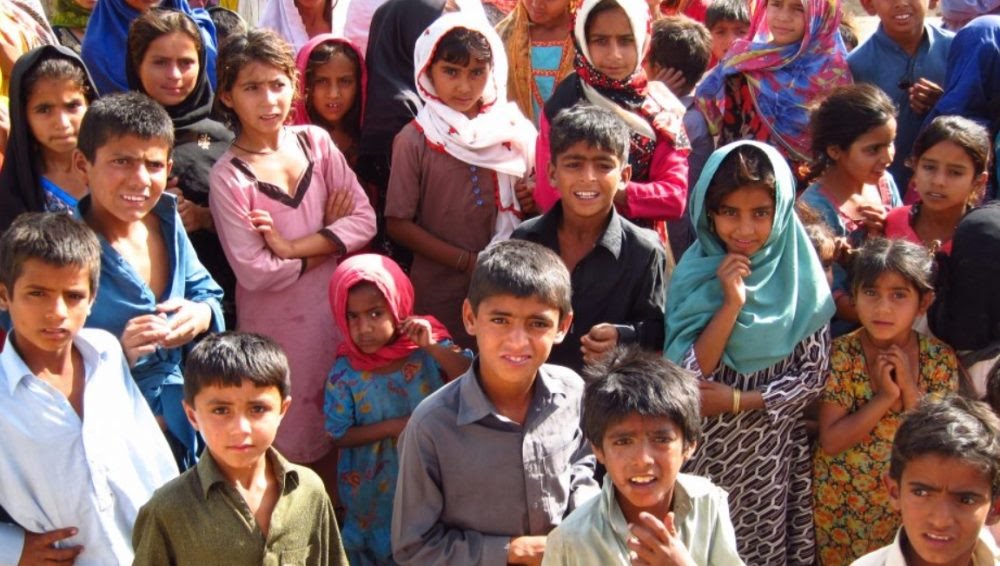
shortage water dasht

Shortage of water in dasht

By Baloch Khan

Through the columns of your respected newspaper, I would like to draw the attention of the concerned authorities to the serious shortage of water in Dasht. The people of our area are facing great difficulties because clean drinking water is not available.

Women and children have to travel long distances to fetch water. Sometimes the available water is dirty and unsafe, which causes many diseases. Farmers are also suffering because there is not enough water for their crops and animals.

I request the government and the concerned departments to solve this problem by repairing water supply systems, installing new water pipelines, and providing clean drinking water to the people of Dasht as soon as possible.

I hope my letter will be published and the authorities will take immediate action.

Similar Posts

  • Plastic Pollution in Kosh Malikabad

    By Baloch khan Through the columns of your esteemed newspaper, I would like to highlight the growing problem of plastic pollution in Kosh Malikabad, Turbat. Plastic bags and bottles are scattered on roads, empty plots, and drainage channels, making the area dirty and unhealthy. This pollution harms the environment, blocks drains, and poses a serious risk to animals and public health. The local authorities should install more dustbins, improve waste collection, and launch awareness campaigns to encourage people to reduce the use of single-use plastics. Citizens should also take responsibility for keeping their surroundings clean. I hope the concerned authorities will take immediate action to address this issue and protect the environment of Koshk Malikabad.

  • Poverty and Unemployment in Balochistan

    By Shadri Amanullah I am writing this letter for the people of Balochistan who are facing extreme poverty and unemployment. Most of the people in Balochistan can’t buy basic things like food, clothes, or shelter because they don’t have enough money. It is no longer a small problem, as we all know Balochistan is a land full of valuable resources like gas, gold, and copper. But the government is selling all these resources to other countries, while the local people remain poor. Many people grow crops or raise animals to survive. Due to the lack of rainfall, the soil has been converted into dust. The lakes and rivers have completely dried up. Because of this, farmers cannot grow crops. Everything like rice, flour, sugar, and all these things is too expensive, so poor families can’t afford them. These things are brought from other cities, so the transportation costs make everything too expensive. These are some of the reasons why the people of Balochistan remain poor. Many people in Balochistan are unemployed because there are no big factories, offices, or companies in Balochistan. People can only get government jobs, and the problem is that the government does not have enough jobs. Many people feed their families by buying and selling goods with Iran and Afghanistan. Now the government has closed the borders. Due to this, they can’t feed their families. Most of the universities in Balochistan don’t teach modern skills; they just teach the old lessons. If they teach modern skills to the students, it will be easier for them to find jobs. All the time of the government is spent on the military; due to this, the government forgets to build factories or provide ways for people to earn daily wages. Many young people who have university degrees are still unemployed. Because of frustration and hopelessness, some young people lose hope despite their efforts. The smart people leave the province and go to other cities and countries to study and get proper jobs. When young people don’t get jobs, they may turn to illegal activities such as drug abuse or smuggling. To fix this problem, the government must take three steps. We request the authorities to spend the money made from the valuable resources of Balochistan on building local businesses, roads, and water infrastructure. The government should open markets on the borders so that people could trade and earn some money for themselves. And we want the government to open centers for young people where they could learn useful skills like mobile repairing and other useful skills so they could start their own businesses and earn some money.

  • Brain Drain: A Growing Challenge for Pakistan

    By Asma Qayyum Brain drain refers to the migration of highly educated and skilled professionals to other countries in search of better employment opportunities, higher salaries, quality education, advanced research facilities, and improved living conditions. This phenomenon has become one of Pakistan’s most serious development challenges, affecting the country’s economic growth and human capital. According to the World Bank, Pakistan is among the countries experiencing a significant outflow of skilled workers. Furthermore, official data from the Bureau of Emigration and Overseas Employment (BEOE) show that hundreds of thousands of Pakistanis leave the country each year for overseas employment, including a large number of educated professionals. This growing migration places additional pressure on vital sectors such as healthcare, engineering, education, and information technology. Several factors contribute to brain drain, including unemployment, low salaries, limited research opportunities, political instability, economic uncertainty, and poor working conditions. As a result, many talented individuals believe they can achieve greater professional success and a better quality of life abroad. The consequences of brain drain are far-reaching. Pakistan loses experienced doctors, engineers, teachers, researchers, scientists, and IT specialists whose knowledge and expertise are essential for national development. The departure of these professionals weakens public services, reduces innovation, and slows economic progress. According to the Bureau of Emigration and Overseas Employment, 762,499 Pakistanis officially left the country for overseas employment in 2025. Since 1971, more than 15 million Pakistanis have been registered for overseas employment through the bureau. These figures highlight the scale of the issue and the urgent need for effective policy measures. To reduce brain drain, the government should create more employment opportunities, improve salaries and working conditions, invest in research, innovation, and higher education, and provide incentives that encourage skilled professionals to remain in or return to Pakistan. A stable economy, merit-based opportunities, and professional growth are essential to retaining the country’s talented workforce. Pakistan’s greatest asset is its people. By investing in its skilled professionals and creating an environment where they can thrive, the country can transform brain drain into brain gain and build a stronger, more prosperous future.

  • The Lack of Internet and Technology

    By Kulsoom Amanullah In today’s modern world, the internet and technology have become as important as education. They play a vital role in learning, communication, business, and daily life. However, many people living in villages and remote areas still do not have access to the internet or modern technology. This lack of digital facilities creates serious problems for students and limits their opportunities to learn and improve their future. Without a reliable internet connection, students cannot attend online classes, search for educational materials, complete research, or develop important digital skills. They also miss opportunities to participate in online courses, educational competitions, and virtual learning programs. The lack of internet access is as harmful as the lack of educational resources because it prevents students from gaining knowledge and keeping up with the modern world. Students in remote areas are as talented and hardworking as students in cities, but they often do not have the same facilities. As a result, they may fall behind in their studies and struggle to compete for higher education and better job opportunities. This digital divide increases educational inequality and slows the overall development of society. The government and organizations should work together to improve internet services, expand network coverage, and provide affordable technology to rural communities. Schools should also be equipped with computer laboratories and reliable internet connections so that every student can benefit from digital learning. Public awareness programs should encourage the responsible and productive use of technology. Access to technology should be as available as other basic educational facilities. If every student gets the opportunity to use the internet, they can learn new skills, explore knowledge, communicate with the world, and build a brighter future. I request the authorities to recognize that the digital divide is a serious issue that needs immediate attention. Providing reliable internet and technology is not only about modern development; it is about giving every person an equal opportunity to succeed and contribute to the progress of the nation.

  • Thank You for Giving Millions of Ordinary People an Extraordinary Voice

    By Syed Anwar Wasti For most of my life, I carried countless ideas, experiences, and stories within me. I wanted to write, share, and contribute—but I struggled to express myself. English was not my strongest language, I couldn’t type in Urdu, and many of my thoughts remained locked inside my mind. After living in the United States for more than four decades, I have witnessed many remarkable technological advances. Yet, in my personal opinion, few have transformed my life as profoundly as Artificial Intelligence—especially ChatGPT. Today, I can write articles, create blog posts, prepare speeches, develop video scripts, organize research, manage my website, and share my experiences with people around the world. Whether I am writing about my travels, my community, my business, or my personal reflections, AI has helped me turn ideas into words and words into meaningful conversations. What once required a team of writers, editors, and researchers can now be accomplished by one determined individual with the right tools. That is not just innovation—it is empowerment. Technology is most powerful when it gives ordinary people the opportunity to do extraordinary things. For me, AI has done exactly that. It has given me confidence, creativity, and, most importantly, a voice. Thank you for giving millions of ordinary people an extraordinary voice. Hats off to the brilliant minds behind ChatGPT and AI. May God bless you all, and may your work continue to benefit humanity for generations to come.

  • Save Jamia Masjid Lakhi Dar, Shikarpur

    Jamia Masjid Lakhi Dar is one of the few surviving ancient buildings in Shikarpur and a masterpiece of historical architecture. Located in the city’s famous Lakhi Dar area, it is popularly known by that very name. This noble mosque stands as an unparalleled testament to the architectural, artistic, and cultural heritage of Sindh, and of Shikarpur in particular. Today, though, it awaits the attention needed to ensure its very survival. The mosque has two entrances. The main one faces east, towards the Clock Tower (Ghanta Ghar), while the second lies on the north side. Passing through the eastern door leads into a spacious courtyard, followed by a veranda with a wooden ceiling. From this veranda, three doorways open into the mosque’s inner sanctum. In earlier times, the mosque’s interior was adorned with beautiful fresco work. Over the years, however, haphazard and amateur renovation and repainting have nearly erased this original ornamentation. Fortunately, traces of the exquisite artwork survive on the ceiling of the central dome, rendered in soft, pastel tones. The mosque comprises three domes, the central one larger than the other two. Handsome turrets rise from its corners, while two smaller minarets stand on the front parapet wall facing the central dome — a further showcase of its architectural mastery. Its most distinctive feature is the ornamental lantern crowning the central dome, a fine example of Sindh’s Islamic architectural artistry. It was arguably the first mosque in Shikarpur to feature such a decorative lantern atop its dome. But alas — today, this history is breathing its last. To look upon Jamia Masjid Lakhi Dar now is to feel the eyes fill with tears and the heart sink with sorrow. Centuries of history, this rare architectural specimen, its exquisite frescoes, the beauty of its domes, and its ornamental lantern are all slowly decaying under the weight of time, weathering, and sheer neglect. If this monument is not preserved on scientific principles today, future generations may know it only through the pages of history books. We strongly appeal to the Culture, Tourism, Antiquities & Archives Department of the Government of Sindh, archaeology experts, the district administration of Shikarpur, elected representatives, and all responsible authorities to take these measures without fail. First, immediately conduct a technical survey of Jamia Masjid Lakhi Dar. Second, carry out scientific restoration that preserves its original architectural beauty. Third, conserve the remaining fresco work and intricate motifs. Four, take emergency measures to protect the ornamental lantern, domes, and minarets. And last but not least, manage the mosque more effectively as a protected cultural heritage site of Sindh. Jamia Masjid Lakhi Dar is not merely a structure of brick, mortar, and lime — it is a living document of Shikarpur’s civilization, history, religious legacy, and the artistic grandeur of Sindh. If we fail to save it today, history will never forgive us.

Leave a Reply

Your email address will not be published. Required fields are marked *