attack one defence
| | | |

Attack on one, defence of all: Makkah pact

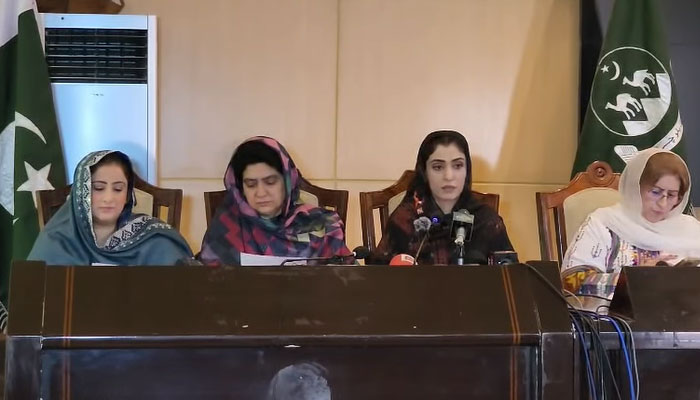
Saudi Arabia, Türkiye and Pakistan have signed a joint defence agreement aimed at strengthening collective security and defence capabilities among the three countries.

According to the Foreign Office spokesperson, the agreement was signed during a trilateral joint defence summit held in Makkah.

Saudi Crown Prince and Prime Minister Mohammed bin Salman, Prime Minister Shehbaz Sharif and Turkish President Recep Tayyip Erdogan signed the agreement.

Under the pact, an armed attack against any one of the three countries will be treated as an attack against all three.

The Foreign Office said the agreement is aimed at strengthening the three countries’ collective defence capabilities against any act of aggression.

The development came after Prime Minister Shehbaz Sharif met Saudi Crown Prince Mohammed bin Salman in Makkah. Field Marshal Syed Asim Munir and other members of the Pakistani delegation also attended the meeting.

The leaders discussed the regional situation and ways to further strengthen the strategic partnership between Pakistan and Saudi Arabia.

Earlier, a trilateral summit involving Saudi Arabia, Pakistan and Türkiye was scheduled to take place in Jeddah, with expectations of important developments concerning regional peace and security.

According to Turkish media reports, the three countries were set to sign an agreement concerning regional security during the summit. Turkish President Recep Tayyip Erdogan also arrived in Saudi Arabia to participate in the high-level meeting.

Prime Minister Shehbaz Sharif and Field Marshal Syed Asim Munir had arrived in Saudi Arabia a day earlier at the invitation of the Saudi Crown Prince.

During their visit, the Pakistani delegation also performed Umrah and offered prayers at the Holy Kaaba.
Similar Posts

  • | | | |

    Three powers, one shield? What the pact means

    Pakistan, Saudi Arabia and Türkiye have formalised their long-standing strategic and defence ties through the newly signed Makkah Joint Defence Agreement, establishing a framework for closer military coordination and collective security. The agreement was signed during a trilateral summit in Makkah attended by Prime Minister Shehbaz Sharif, Saudi Crown Prince Mohammed bin Salman and Turkish President Recep Tayyip Erdogan. The pact has attracted comparisons with established military alliances. However, analysts say its stated purpose is not to create a new military bloc or target any particular country. Instead, it provides an institutional structure for defence cooperation that has developed between the three nations over several decades. A formal structure for longstanding ties Pakistan and Türkiye have maintained close political and military relations for decades, while Islamabad and Riyadh have developed extensive defence, diplomatic and economic cooperation. The new agreement is viewed as an attempt to bring these existing relationships under a formal trilateral framework. It is designed to provide a more structured mechanism for consultations, military coordination and strategic cooperation. Why the agreement was signed now The agreement comes amid growing security challenges across the Middle East and wider region. Analysts say conflicts, changing military technologies and emerging security threats have encouraged countries with shared strategic interests to strengthen their defence coordination. The trilateral arrangement is intended to improve collective preparedness and provide a coordinated response to potential threats while supporting regional stability. What the defence pact provides A central element of the agreement is the principle of collective security. Under the framework, aggression against one member is to be treated as a threat to all three countries. The arrangement is expected to encourage greater military coordination, intelligence cooperation, strategic consultations and defence planning. Closer institutional links could also allow the three countries to coordinate their military capabilities and improve their ability to respond to security challenges. Different strengths, shared security interests Each country brings different capabilities to the partnership. Pakistan contributes a large and experienced military, operational expertise and extensive experience in counterterrorism and conventional defence. Saudi Arabia brings significant economic resources, regional influence and political weight. Türkiye adds its growing defence industry, military technology and manufacturing capabilities. Analysts believe these complementary strengths could make the partnership more effective while allowing the three countries to develop greater strategic self-reliance. Pakistan’s diplomatic role The agreement also comes as Pakistan seeks to strengthen its role as a regional diplomatic actor. Islamabad maintains relations with Saudi Arabia, Türkiye, Iran, China and the United States, giving it channels of communication with several major regional and global powers. Analysts argue that Pakistan’s diplomatic engagement, alongside its military capabilities, could help it contribute to regional crisis management and dialogue. What the pact does not mean Despite comparisons with NATO and other military alliances, analysts stress that the agreement is not described as an offensive alliance. It is also not presented as a pact directed against a particular country, a so-called “Muslim NATO”, a nuclear deterrence arrangement or a religious military bloc. Instead, the three countries have presented it as a defensive framework focused on collective security, deterrence, military cooperation and regional stability. The long-term effectiveness of the agreement will depend on sustained political coordination and the willingness of all three governments to implement its commitments.

  • Thailand’s Co-payment Scheme Falls Short Of 30 Million Participant Target

    BANGKOK, Thailand — Registration for the Thai government’s “Thais Help Thais Plus 60/40” co-payment scheme has concluded with more than 26 million applicants, falling approximately four million short of the program’s 30 million participant target, according to official statements from government spokesperson Rachada Dhnadirek. Thai Citizens Use Shoes To Reserve Places In Bank Queues The […]

  • | | |

    PM Shehbaz, Field Marshal Munir begin Saudi visit

    Prime Minister Shehbaz Sharif and Chief of Defence Forces and Chief of Army Staff Field Marshal Asim Munir will pay an official visit to Saudi Arabia from August 6 to 8 to hold high-level talks aimed at strengthening bilateral ties and discussing key regional developments. According to the Foreign Office, Deputy Prime Minister and Foreign Minister Ishaq Dar will also join the delegation after completing his visit to Jordan. During the visit, Prime Minister Shehbaz is scheduled to meet Saudi Crown Prince Mohammed bin Salman. The discussions will focus on expanding cooperation between the two countries, enhancing strategic relations and reviewing regional and international issues of mutual interest. The Foreign Office said the visit reflects the deep-rooted relationship between Pakistan and Saudi Arabia, built on decades of close cooperation, mutual trust and strong brotherly ties. Officials said the high-level engagements are expected to further strengthen political, economic and strategic cooperation between the two countries. Both sides are also likely to discuss ways to improve coordination on regional security and international affairs. The visit comes at a time of heightened tensions in the Gulf region, giving the meetings added diplomatic significance. However, Pakistani officials said the agenda extends beyond the current regional situation and is aimed at reinforcing the long-term strategic partnership between Islamabad and Riyadh. The Foreign Office added that the visit will help deepen bilateral relations, expand cooperation in areas of shared interest and enhance collaboration at multilateral forums. Prime Minister Shehbaz last visited Saudi Arabia in April, where he held meetings with the kingdom’s top leadership to discuss bilateral cooperation and regional developments.

  • Government Tightening Controls on Thai Nominees to Curb Foreign Proxy Businesses

    BANGKOK – The Thai government is introducing new measures to tighten controls on nominee arrangements, aiming to prevent foreigners from using Thai nationals as proxies to operate businesses, with the stricter rules set to take effect on April 1, the Bangkok Post reported. More Than 230 Arrested in Phuket Nominee Crackdown Deputy government spokeswoman Lalida […]

  • Thailand Updates Visa Rules: Indian Tourists Shift to 15-Day Visa-Free Entry

    BANGKOK – Thailand’s lawmakers recently approved a massive shift in its national immigration and border rules. This major policy overhaul completely changes how international foreign tourists enter the beautiful tropical country. Indian passport holders will soon see a very direct impact on their upcoming travel plans. Previously, Indian tourists heavily relied on a generous 60-day […]

  • | |

    Kashmir Exploitation Day, Pakistan’s leaders uni…

    ISLAMABAD: Pakistan observed Kashmir Exploitation Day on Wednesday with political leaders across party lines renewing their support for the people of Indian-administered Jammu and Kashmir, while condemning India’s constitutional changes of August 5, 2019, as unlawful and contrary to international law and United Nations resolutions. Messages of solidarity were issued by senior government officials, provincial leaders, parliamentarians and political parties, all reiterating Pakistan’s commitment to supporting the Kashmiri people’s right to self-determination. Rallies, public gatherings and awareness events were also held in different parts of the country to mark the occasion. Deputy Prime Minister and Foreign Minister Ishaq Dar Deputy Prime Minister and Foreign Minister Ishaq Dar said Pakistan would continue extending its political, diplomatic and moral support to the Kashmiri people until they were able to exercise their internationally recognised right to self-determination. He described India’s unilateral decisions of August 5, 2019, as illegal and urged New Delhi to reverse all measures that altered the disputed territory’s constitutional status. Pakistan’s Foreign Office Pakistan’s Foreign Office also reaffirmed the country’s unwavering support for Kashmiris, paying tribute to what it described as their courage, resilience and sacrifices. A spokesperson said Pakistan would continue highlighting the Kashmir issue at regional and international forums and called on the global community to uphold international law and relevant UN Security Council resolutions. Punjab Chief Minister Maryam Nawaz Punjab Chief Minister Maryam Nawaz paid tribute to the families of those who lost their lives during the Kashmir conflict and appealed to the United Nations and international human rights organisations to take notice of alleged human rights violations in the region. She said August 5, 2019, represented an attack on the identity and rights of the Kashmiri people and maintained that Pakistan would continue raising its voice on their behalf. Sindh Chief Minister Murad Ali Shah Sindh Chief Minister Murad Ali Shah also termed India’s constitutional changes a violation of UN Security Council resolutions. He urged the international community to play an effective role in ensuring the protection of human rights in Indian-administered Kashmir. Chairman Senate Yousaf Raza Gilani Chairman Senate Yousaf Raza Gilani strongly criticised India’s actions, saying attempts to alter the demographic composition of the disputed territory and undermine the identity of the Kashmiri people were unacceptable. He stressed that the Kashmir dispute should be resolved in accordance with the aspirations of its people and relevant UN resolutions. Governor Faisal Karim Kundi In Peshawar, a solidarity rally led by Governor Faisal Karim Kundi marched from the Civil Secretariat to the Governor House. Government employees, civil society representatives and citizens participated in the event, carrying Pakistani and Kashmiri flags while expressing support for the Kashmiri cause. Addressing participants, Kundi said Pakistan would continue standing with Kashmiris and expressed confidence that the people of the region would eventually determine their own future according to their wishes. Sindh Interior and Law Minister Zia-ul-Hassan Lanjar Sindh Interior and Law Minister Zia-ul-Hassan Lanjar said force and restrictions could not suppress the desire for freedom among Kashmiris. He alleged that India had violated international law and reiterated Pakistan’s solidarity with the people of Kashmir. Sindh Assembly Speaker Awais Qadir Shah Sindh Assembly Speaker Awais Qadir Shah also urged the United Nations to play a more active role, saying Kashmiris had been facing serious human rights challenges for several years. Jamaat-e-Islami chief Hafiz Naeem ur Rehman Jamaat-e-Islami chief Hafiz Naeem ur Rehman said the Kashmiri freedom movement would continue until the dispute was resolved in line with United Nations resolutions. He described the revocation of Kashmir’s special constitutional status as a challenge to international law and the UN system. Senator Sherry Rehman Senator Sherry Rehman praised the determination and resilience of the Kashmiri people, saying their struggle had continued despite years of political uncertainty. She maintained that India’s constitutional changes were aimed at ending the region’s special status. Federal Minister Amir Muqam At a separate rally in Islamabad, Federal Minister Amir Muqam said Pakistan marks August 5 every year to express solidarity with Kashmiris and condemn India’s actions. He alleged that demographic changes were being introduced in the disputed territory through settlement policies. PPP Parliamentarians Secretary General Nayyar Bukhari Meanwhile, Pakistan Peoples Party Parliamentarians Secretary General Nayyar Bukhari said the revocation of Kashmir’s special status had failed to weaken the freedom movement. He warned that policies pursued by the Indian government could further undermine regional peace and stability. The observance of Kashmir Exploitation Day concluded with renewed calls from Pakistan’s political leadership for greater international engagement on the Kashmir dispute. Leaders urged the United Nations and the global community to work towards a peaceful resolution of the issue in accordance with international law and the wishes of the Kashmiri people.

Leave a Reply

Your email address will not be published. Required fields are marked *