houthis strike yemen
| | | |

Houthis strike Yemen forces, 10 killed in Marib

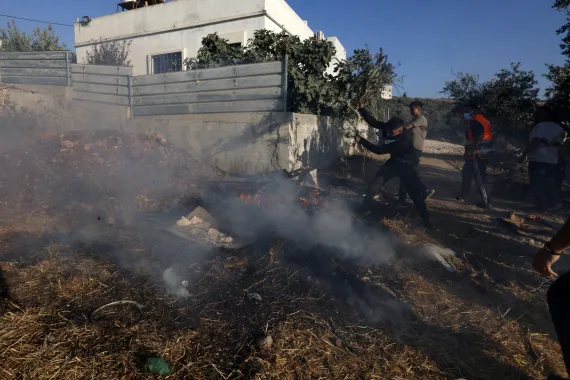
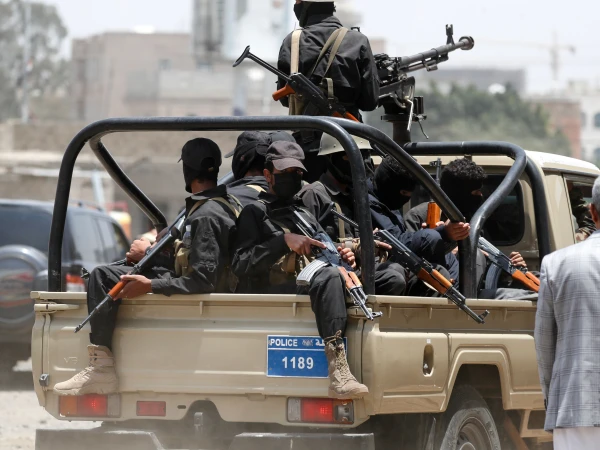
MARIB: At least 10 people, including eight members of Yemen’s government-aligned security forces and two civilians, were killed in fresh Houthi attacks in the oil-rich Marib province, raising fresh concerns over a possible escalation in the country’s fragile security situation.

According to local officials and military sources, Houthi fighters targeted positions held by forces loyal to Yemen’s internationally recognised government with missiles and drones. The attacks reportedly struck several military locations in Marib, a strategically important province that has remained a major focal point in Yemen’s long-running conflict.

The latest violence comes despite a significant reduction in large-scale fighting across Yemen in recent years. The renewed attacks have therefore sparked concerns that the relative calm could be disrupted and that low-intensity clashes could once again develop into broader military confrontations.

Reports also indicated that Houthi attacks in Marib and neighbouring Hadramout on Friday resulted in additional casualties, suggesting that the latest violence may be part of a wider increase in militant activity across government-held areas.

Marib holds particular strategic importance because of its oil and gas resources as well as its location. Control of the province has long been a key objective for both the Yemeni government and the Houthis.

The latest strikes have added to fears of a new escalation in Yemen, where years of conflict have already caused a severe humanitarian crisis. Any renewed fighting around Marib could carry wider consequences because of the province’s economic resources and military significance.

The Houthis, who control large parts of northern and western Yemen including the capital Sanaa, have been involved in a prolonged conflict with government forces and their allies.

The fresh deaths underline the continuing fragility of Yemen’s security environment and could test efforts to preserve the relative calm that has emerged after years of intense fighting.

Similar Posts

  • |

    Bodies of 14 Afghan migrants recovered in Southwestern desert While attempting to reach Iran

    The bodies of 14 Afghan migrants have been recovered from the desert in southwestern Afghanistan after they reportedly died while attempting to cross into neighboring Iran, according to local authorities. Officials said the victims had been missing for several weeks after setting out on an overland journey toward the Iranian border. The group was traveling by vehicle through the remote desert region when their transportation reportedly broke down, forcing them to continue the journey on foot under extremely harsh conditions. According to media reports, the search for the missing migrants began in Afghanistan’s Nimroz province after the driver of the vehicle managed to reach a nearby village in a state of severe exhaustion and dehydration. The driver reportedly sought emergency assistance and informed local residents and authorities that several passengers had been left stranded in the desert. Rescue teams were subsequently dispatched to search the area. During the initial operation, authorities recovered the bodies of five people. Search efforts then continued for the remaining members of the group who had attempted to continue their journey on foot after the vehicle became inoperable. On Saturday, local officials confirmed that the bodies of an additional 14 migrants had been discovered buried beneath the sand in the remote desert, bringing a tragic end to the search operation. Hospital sources in the region said the victims had likely succumbed to the extreme heat, dehydration, and exhaustion after becoming stranded without adequate food, water, or shelter. The exact cause of death is expected to be confirmed following official examinations. Nimroz province, which borders Iran, is one of Afghanistan’s hottest and driest regions. During the summer months, temperatures frequently reach around 45 degrees Celsius (113 degrees Fahrenheit), creating life-threatening conditions for anyone traveling across its vast desert landscape without sufficient supplies. The province has long served as one of the main transit routes for Afghans attempting to migrate to Iran in search of employment, economic opportunities, or a better future. Many migrants rely on human smuggling networks to organize dangerous journeys across isolated desert areas, exposing them to significant risks, including extreme weather, dehydration, and abandonment. Fatal incidents involving migrants are not uncommon along these routes, particularly during periods of intense summer heat. Humanitarian organizations have repeatedly warned about the dangers associated with irregular migration through remote border regions, where access to rescue services is limited and survival can quickly become impossible if travelers become stranded. Following the latest tragedy, Afghan authorities reaffirmed their commitment to combating human smuggling networks operating inside the country. In a statement carried by Afghanistan’s national broadcaster, Interior Ministry spokesperson Abdul Mateen Qani said security agencies would continue their operations against individuals and criminal groups involved in facilitating illegal migration. “Our authorities remain fully committed to continuing operations against human trafficking and smuggling networks,” Qani said, emphasizing that efforts to dismantle these criminal organizations would continue. The discovery of the victims has once again highlighted the desperate circumstances that drive many Afghans to undertake perilous journeys across some of the world’s most unforgiving terrain. It also underscores the continuing humanitarian challenges facing the country, where economic hardship and limited opportunities continue to push many people toward dangerous migration routes despite the potentially fatal consequences.

  • |

    Brazil recalls ambassador after Milei labels Lula a “thief” at campaign rally

    Relations between Brazil and Argentina have taken another sharp turn after Brazilian President Luiz Inacio Lula da Silva was indirectly attacked by Argentine President Javier Milei during a political rally in Sao Paulo. Brazil responded by recalling its ambassador from Buenos Aires, calling Milei’s remarks an insult to the country’s leadership, institutions, and democracy. Milei traveled to Brazil over the weekend to support Flavio Bolsonaro, who officially launched his campaign for Brazil’s presidential election scheduled for October. Flavio is the son of former Brazilian president Jair Bolsonaro and is representing the right wing Liberal Party after his father was barred from seeking office. During his speech, Milei did not mention Lula by name but referred to “the thief” and “the convict,” comments widely understood to be aimed at the Brazilian president. The remarks referenced Lula’s previous imprisonment on corruption charges before those convictions were later overturned, allowing him to return to politics and win the 2022 presidential election. Standing alongside Flavio Bolsonaro, Milei praised the candidate and said he believed he was the only person capable of defeating Lula in the upcoming election. The Argentine president has maintained close political ties with the Bolsonaro family and has openly supported their conservative agenda. Milei also criticized a senior Brazilian Supreme Court judge who oversaw legal proceedings involving Jair Bolsonaro. Without naming Justice Alexandre de Moraes directly, he used insulting language while referring to the judge. Earlier this month, Moraes rejected Milei’s request to visit the former Brazilian president, who is currently under house arrest in Brasilia. Jair Bolsonaro is serving a prison sentence of more than 27 years after being convicted of plotting a coup to remain in power following his defeat in the 2022 election. Because he is no longer eligible to run for public office, he has endorsed his son Flavio as the candidate for his party in this year’s presidential race. Brazilian officials reacted strongly to Milei’s comments. According to diplomatic sources, the statements were viewed as offensive not only to the country’s president but also to its judiciary, democratic institutions, and the Brazilian people. In response, Brazil recalled its ambassador from Argentina in a diplomatic protest, signaling growing frustration with Milei’s repeated criticism of the Brazilian government. President Lula did not directly address Milei’s speech during a public event on Sunday. However, he appeared to respond indirectly by saying that Brazil would not accept interference from outsiders in its internal affairs. His comments were seen as a clear message that foreign leaders should avoid becoming involved in Brazil’s domestic political disputes. The latest exchange has further strained ties between South America’s two largest economies. Despite their political differences, Brazil and Argentina remain each other’s biggest trading partners, making stable diplomatic relations important for regional trade and economic cooperation. With Brazil’s presidential election approaching, political tensions are expected to remain high. Milei’s public support for Flavio Bolsonaro and his criticism of Lula have added an international dimension to the campaign, increasing pressure on relations between the neighboring countries at a time when cooperation remains vital on economic and regional issues.

  • |

    Balochistan flood resilience project faces delays despite housing support progress

    QUETTA: Implementation of a major World Bank-backed flood resilience programme in Balochistan is facing significant delays, with slow progress on infrastructure, climate services and housing reconstruction raising concerns about the project’s ability to meet its targets before the scheduled completion date. The Integrated Flood Resilience and Adaptation Project (P180323), launched in the aftermath of the devastating 2022 floods, has seen mixed results. While more than 74,000 affected households have received the first tranche of financial assistance for housing reconstruction, several key components of the project remain substantially behind schedule. According to the World Bank’s latest Implementation Status and Results Report, overall implementation progress has been downgraded to “Moderately Unsatisfactory”, while the project’s development objective continues to carry a “Moderately Satisfactory” rating. The overall risk associated with the project remains high. The programme was approved in May 2023 with the broader objective of helping flood-affected communities restore livelihoods, regain access to essential services and strengthen their ability to withstand future climate-related disasters. Infrastructure work gains momentum The project includes several major components covering community infrastructure, resilient housing, hydro-meteorological and climate services, as well as institutional strengthening and project management. The World Bank reported some improvement in the community infrastructure component following the appointment of a dedicated project director and the strengthening of the Project Implementation Unit. Detailed engineering designs and bidding documents are now close to completion, while procurement activities have begun. Despite these developments, the project has yet to achieve any of the three development-objective-linked output indicators associated with the component. The gap reflects the difference between preparatory work and actual delivery of infrastructure on the ground, with authorities still required to translate procurement and planning progress into completed projects for flood-affected communities. Climate services remain behind schedule Progress has also been reported in the climate-services component following the appointment of a new deputy project director and the award of a contract for Automatic Weather Stations (AWS). However, several critical steps remain outstanding. The onboarding of the system integrator has yet to be completed, while a number of important procurement activities are still pending. The project aims to strengthen Balochistan’s ability to monitor weather conditions and provide timely warnings to communities exposed to floods and other climate-related hazards. Under the programme, the authorities are targeting the installation of 110 Automatic Weather Stations and the operationalisation of four weather radars. As of July 2026, none of the targeted weather radars had become operational. One positive development has been the establishment of a hydrological modelling-based early warning system for hill torrents in Balochistan, which could improve preparedness in areas vulnerable to sudden flooding. Housing component performs better The strongest performance has been recorded under the resilient housing component. More than 74,000 households have received the first tranche of housing assistance, providing financial support to families whose homes were damaged or destroyed by the 2022 floods. However, the World Bank has identified several risks that could affect further progress. These include a decision by the Project Steering Committee to limit beneficiary coverage, a funding shortfall affecting other eligible households, unresolved complaints and grievances, and communication difficulties with beneficiaries. The World Bank warned that these issues could undermine confidence in the programme and affect its ability to reach the intended beneficiaries. The physical reconstruction figures also show that considerable work remains. By July 2026, only 30,226 housing units had been restored or reconstructed against the project’s target of 97,000 homes by December 2028. This means authorities will need to significantly accelerate reconstruction during the remaining implementation period if the target is to be achieved. Essential services target remains distant The project also aims to restore access to essential services for flood-affected communities. By July 2026, around 214,217 people had regained access to at least one essential service. However, the eventual target is 1.5 million people, indicating a substantial gap between current achievements and the programme’s planned outcome. Similarly, the project has yet to register progress against its target of improving climate resilience for 1.8 million people. The figures suggest that while financial assistance and preparatory activities have moved forward, the broader resilience-building objectives are yet to translate into measurable results on the required scale. Irrigation and flood protection work yet to deliver The restoration of flood-damaged irrigation systems is another major area where implementation remains slow. The project has a target of restoring irrigation infrastructure covering approximately 50,000 hectares. A similar target has been set for improving flood-protection infrastructure over an area of 50,000 hectares. However, as of July 2026, no achievement had been recorded against either target. The lack of progress is particularly significant given the importance of irrigation to livelihoods in Balochistan, where agriculture and livestock remain major sources of income for many communities. Restoring damaged irrigation networks is also critical to rebuilding economic activity in areas affected by the 2022 floods. Financing constraints add pressure Financial challenges are adding another layer of difficulty to implementation. The project has a revised allocation of approximately $214.03 million under the IDA-73330 facility. Of this amount, around $113.97 million, equivalent to 62.61%, has been disbursed, while approximately $68.05 million remains undisbursed. In addition, a separate $32 million IDA-78980 facility remains completely undisbursed. The financing position means authorities have both resources and time constraints to manage as they seek to accelerate implementation. Bridging funding gaps for eligible beneficiaries and ensuring timely utilisation of available financing will be crucial to maintaining momentum during the remaining project period. Grievances and communication concerns The World Bank has also highlighted unresolved grievances and communication shortcomings as risks to the housing component. For a project involving thousands of flood-affected households, effective communication is essential to ensure beneficiaries understand eligibility criteria, payment arrangements, construction requirements and complaint-resolution procedures. Unresolved grievances could not only delay implementation but also create dissatisfaction among communities that expected assistance following the 2022 floods. Authorities will therefore need to strengthen communication channels and grievance mechanisms alongside accelerating physical reconstruction. Limited time remains The Integrated Flood Resilience and Adaptation Project is scheduled to close on December 31, 2028.

  • Mekong River Levels Stabilize in Chiang Rai as Officials Monitor Floods

    CHIANG RAI – The mighty Mekong River is finally showing clear signs of calming down across northern Thailand today. Recent water levels throughout Chiang Rai have officially stabilized and are beginning to slowly decrease. This gentle drop brings a much-needed sense of relief to the anxious local communities nearby. However, government officials are still urging […]

  • |

    Jasprit Bumrah ruled out of Sri Lanka Tests

    NEW DELHI: India have been dealt a significant setback ahead of their two-match Test series against Sri Lanka after star fast bowler Jasprit Bumrah was ruled out with a knee injury, the Board of Control for Cricket in India (BCCI) confirmed on Monday. Bumrah, widely regarded as India’s pace spearhead, has not fully recovered from the left knee injury he sustained during the One-Day International series against England last month. In a statement, the BCCI said the 32-year-old remains unavailable for selection as he continues his rehabilitation. Bumrah has not bowled competitively since the second ODI against England in Cardiff on July 16, where he suffered the injury.   His absence is a major setback for India, particularly with the challenging conditions expected in Sri Lanka, where Bumrah’s experience and ability to strike with the new ball have often made the difference in Test matches.   Replacing him in the 15-member squad is promising fast bowler Aquib Nabi, who receives his maiden senior international call-up after an impressive run in domestic cricket. The 29-year-old pacer from Jammu and Kashmir has emerged as one of India’s brightest bowling prospects, claiming 104 wickets across the last two Ranji Trophy seasons. He also impressed during India A’s recent tour of Sri Lanka, taking six wickets in two first-class matches, performances that earned him a place in the senior squad. India, led by Shubman Gill, will play a warm-up match before the opening Test begins in Galle on August 15. The second and final Test is scheduled to be played in Colombo from August 23 to 27. The series now presents a golden opportunity for Nabi to showcase his talent on the international stage, while India will hope their emerging pace attack can compensate for the absence of one of the world’s premier fast bowlers. With Bumrah sidelined and a new face joining the squad, all eyes will be on India’s bowling unit as the visitors aim to begin their Sri Lanka campaign on a winning note. India squad Shubman Gill (capt), KL Rahul (vice-captain), Yashasvi Jaiswal, Rishabh Pant (wk), Sai Sudharsan*, Dhruv Jurel (wk), Ravindra Jadeja, Kuldeep Yadav, Manav Suthar, Mohammed Siraj, Prasidh Krishna, Gurnoor Brar, Devdutt Padikkal, Saransh Jain, Auqib Nabi.

  • Pattaya Police Officers Investigated After Kuwaiti Tourists Allege Extortion

    PATTAYA – Senior police investigators have taken swift action against their own personnel following serious corruption allegations from foreign visitors. Senior officers recently ordered three patrolmen to step down from their regular duties amidst a growing public scandal. The sudden move comes after a group of Kuwaiti tourists accused the men of extortion during routine […]

Leave a Reply

Your email address will not be published. Required fields are marked *