| |

Iran pressures Gulf allies to rein in Trump, threa…

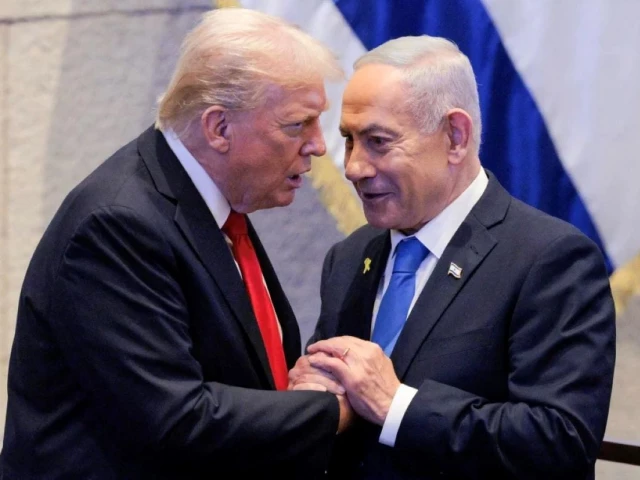
Iran has launched an intensive diplomatic campaign targeting Gulf states, warning them directly that Tehran will strike their oil, power and water facilities unless they persuade President Donald Trump to halt US military action and pursue a negotiated end to the war instead.

According to a senior Iranian official, the warning covers potential attacks on energy facilities, oil fields, refineries, electricity grids, water systems, transport networks and other strategic infrastructure belonging to Washington’s closest Arab partners in the region. The message formed part of a wider Iranian strategy to discourage further American military action by raising the specter of significant economic damage across the Gulf.

Sources familiar with the matter said the warning traveled through a wave of high level diplomatic contacts following Trump’s July 28 threat to strike Iran’s energy network and broader infrastructure. Two senior Iranian officials, two Gulf sources and a senior regional diplomat, all speaking on condition of anonymity given the sensitivity of the discussions, said Iranian Foreign Minister Abbas Araqchi held conversations with his Saudi, Turkish and Qatari counterparts as well as Pakistan’s army chief.

The senior diplomat said Araqchi pressed Washington’s Gulf allies to use their influence with Trump to head off renewed strikes, cautioning that any attack on Iran would trigger retaliation against American assets and critical infrastructure throughout the Gulf. The diplomat said Araqchi delivered a consistent message in each conversation, expressing readiness to retaliate while stressing that a diplomatic solution offers the best chance of avoiding wider regional destruction. One Gulf source described the Iranian position as unambiguous, saying Tehran made clear that any American strike on Iranian infrastructure would draw retaliation against Gulf energy facilities and other regional targets.

The campaign illustrates how Iran is attempting to convert Gulf vulnerability into diplomatic leverage, presenting regional governments with the prospect that a renewed confrontation between Washington and Tehran could put the infrastructure their economies depend on directly at risk.

Saudi Crown Prince Mohammed bin Salman subsequently spoke with Trump directly, urging him to hold off on military action, return to the negotiating table, pursue a ceasefire and seek a diplomatic resolution, according to the senior diplomat and Gulf sources. Another Gulf source said the warning was meant for every Gulf state but traveled primarily through Saudi Arabia and Qatar, both of which have rebuilt ties with Iran in recent years after a long period of regional rivalry. Qatar, Oman and Saudi Arabia have each urged Washington to resume talks with Tehran and prevent a fresh round of conflict, with Iran cautioning that further strikes could turn the region into what one Iranian official called a fireball. On August 2, Trump said he had agreed to call off a planned attack on Iran, provided a deal could be reached quickly.

Concerns over wider escalation

A Gulf source said Saudi Arabia believes additional escalation would only cause further destruction, explaining why Riyadh pushed Trump to give diplomacy more room to work. At the same time, Saudi officials made clear the kingdom would defend itself if directly threatened, with a second Gulf source saying Riyadh warned that any strike on Saudi territory would draw a military response of its own.

Ali Shihabi, a Saudi analyst with ties to the royal court, said the kingdom’s assessment holds that further escalation is unlikely to produce the outcome Washington wants. He said Saudi officials believe a mix of proportionate military responses combined with sustained pressure on Iran around the Strait of Hormuz offers the most realistic route toward a workable diplomatic settlement. Iran’s clerical leadership has repeatedly called for the closure of US military bases across the Gulf and urged Gulf Arab states to stop sharing intelligence with Washington, which Tehran believes has enabled strikes against Iranian targets.

Shihabi noted that memories of the September 2019 drone and missile strikes on Saudi Arabia’s Abqaiq and Khurais oil facilities still shape regional thinking, since that attack temporarily cut more than half the kingdom’s crude output and exposed how vulnerable Gulf energy infrastructure remains. A separate Iranian official reiterated that any damage inflicted on Iran would be met with far greater retaliation, again citing power grids and refineries among potential targets.

From Tehran’s perspective, the senior Iranian official said, Trump now confronts two difficult options: escalate a conflict that risks engulfing the wider Gulf and disrupting global energy markets, or accept a negotiated settlement that falls short of the decisive win Washington has sought. The senior regional diplomat identified Washington’s reluctance to let Tehran claim any form of victory as one of the central obstacles blocking an agreement, noting that American officials want tangible proof they prevailed in the conflict.
Similar Posts

  • |

    BNP veteran Alamgir elected Bangladesh president

    Bangladesh’s parliament has elected veteran Bangladesh Nationalist Party leader Mirza Fakhrul Islam Alamgir as the country’s new president, marking another major development in the country’s political transition. The 78-year-old politician secured victory in a parliamentary vote on Thursday, defeating retired army Colonel Oli Ahmed, who was backed by the Jamaat-e-Islami-led opposition alliance. Chief Election Commissioner A.M.M. Nasir Uddin announced Alamgir as the winner after he received 255 votes against Ahmed’s 88. Alamgir is expected to take the oath of office on Friday evening. Although the presidency in Bangladesh is largely ceremonial, the president serves as the country’s head of state and commander-in-chief of the armed forces. Executive powers remain with the prime minister and cabinet. Alamgir’s election comes after the BNP returned to power following the February general election. The party and its allies secured a two-thirds majority in parliament, while BNP leader Tarique Rahman became prime minister. The presidential election was triggered by the resignation of Mohammed Shahabuddin, who stepped down last month citing health reasons before completing his five-year term. Shahabuddin, a former Awami League politician and close associate of former prime minister Sheikh Hasina, had become president in 2023. Hasina left Bangladesh and moved to India after a mass uprising removed her government from power in August 2024. She has previously indicated that she plans to return to Bangladesh later this year. Alamgir is one of the BNP’s longest-serving senior figures. He served as the party’s secretary-general from 2016 until being nominated for the presidency. During the Awami League government’s rule, Alamgir emerged as one of the BNP’s most prominent opposition leaders. He faced several arrests and legal cases during his political career. His political journey began after he completed his studies in economics at the University of Dhaka. He initially worked as a teacher before entering politics. Alamgir joined the BNP in the early 1990s and gradually rose through its ranks. He later held several senior government positions and served as local government minister before leaving the position following his nomination for president. His election now places a longtime opposition figure in Bangladesh’s highest constitutional office as the BNP consolidates its political position following its return to government.

  • | |

    US, Russian envoys congratulate Pakistan on Indepe…

    ISLAMABAD: Pakistan’s 79th Independence Day brought messages of goodwill from two major international partners, with the United States and Russia extending warm greetings to the Pakistani people and expressing hopes for continued peace, prosperity and stronger bilateral ties. US Chargé d’Affaires Natalie A. Baker and the US diplomatic mission in Pakistan conveyed their Independence Day wishes to Pakistanis on Friday, marking the country’s 79th year as an independent nation. In its message, the US Embassy recalled the long history of relations between the two countries, noting that the United States was among the early countries to recognise Pakistan after its creation in 1947. The embassy said that Pakistan-US friendship had grown stronger over the decades, highlighting the enduring ties between the two countries and their peoples. “Over the past 80 years, the friendship between Pakistan and the United States has grown stronger,” the message said, while extending wishes for peace, happiness and prosperity to the people of Pakistan. The greeting comes as Islamabad and Washington continue to maintain engagement across several areas, including trade, investment, security, education and people-to-people ties. Russia highlights Pakistani resilience Russia’s ambassador to Pakistan also extended Independence Day greetings, describing the occasion as a reflection of the courage, determination and strong national spirit of the Pakistani people. In his message, the Russian envoy praised the resilience demonstrated by Pakistanis and expressed confidence that cooperation between Moscow and Islamabad could continue to expand. The ambassador said both countries would work together to strengthen mutual understanding and broaden their partnership in areas of shared interest. The message underscored Moscow’s interest in developing closer relations with Islamabad at a time when Pakistan is seeking to expand its diplomatic and economic partnerships. Messages arrive amid wider diplomatic engagement The messages from Washington and Moscow came as Pakistan marked Independence Day with nationwide celebrations, flag-raising ceremonies and tributes to the country’s founding leaders and those who sacrificed for independence. For Pakistan, such diplomatic messages carry significance beyond traditional greetings. They reflect the country’s longstanding relationships with major global powers and its continuing efforts to maintain engagement with partners across different regions. As Pakistan entered its 80th year since independence, the messages from the United States and Russia shared a common theme: a desire for peace, prosperity and stronger cooperation. While the two countries have different strategic relationships with Islamabad, their Independence Day messages highlighted the importance of continued engagement and mutual understanding. For Pakistanis celebrating the day, the greetings added an international dimension to the occasion, with both Washington and Moscow signalling their desire to see Pakistan move forward with stability, prosperity and deeper partnerships.

  • |

    PSX plunges over 1,300 points amid global market sell-off

    The Pakistan Stock Exchange (PSX) came under heavy selling pressure on Wednesday. The benchmark KSE-100 Index fell sharply during the trading session. The index dropped 1,339.73 points, or 0.75%, to reach 176,284.15 by 1:04pm. The decline came as regional markets also faced pressure and oil prices continued to rise. The KSE-100 had already fallen 1,297.67 points, or 0.73%, earlier in the session. At 9:34am, the index was trading at 176,326.21. The market remained volatile throughout the session. The KSE-100 recorded an intraday high of 176,935.03 and a low of 175,631.74. Trading activity remained significant. Around 120.55 million shares changed hands during the session. The total traded value stood at Rs10.69 billion. The previous close of the KSE-100 Index was 177,623.88. The latest decline therefore reflected a clear shift in investor sentiment. The pressure on the local market came amid a wider sell-off across Asian stock markets. Investors have become increasingly cautious about global economic conditions. Concerns surrounding heavy investment in artificial intelligence-related companies have also affected market sentiment. Investors are assessing whether valuations in some technology sectors have risen too quickly. The rise in international oil prices added another source of uncertainty. Oil prices increased after fresh attacks were reported in the Middle East. The developments have raised concerns about possible disruptions to global oil supplies. Higher energy prices could also increase inflationary pressures in several economies. Investors are also watching the potential impact of higher oil prices on interest rates. A prolonged rise in energy costs could complicate efforts to control inflation. Geopolitical tensions in the Middle East have further increased uncertainty in global financial markets. The latest developments have encouraged investors to adopt a more cautious approach. The negative trend in Asian equities also affected sentiment at the PSX. Local investors remained under pressure as the benchmark index continued to trade in negative territory.

  • | |

    Sharjeel Memon accuses PML-N of violating election…

    Sindh Information Minister Sharjeel Inam Memon has accused the Pakistan Muslim League-Nawaz (PML-N) of violating the election code of conduct ahead of the Azad Jammu and Kashmir (AJK) elections. Speaking at a press conference after a Sindh cabinet meeting in Karachi, Memon claimed that the ruling party was using its government position to influence the electoral process. During the briefing, Memon also announced that the Sindh cabinet had approved a six-month extension of the health insurance program for employees of the Governor House and Chief Minister House. He added that travel allowances for government employees from Grade 1 to Grade 16 had also been increased. Commenting on the recent heavy rainfall, the provincial minister said several districts in Punjab had been severely affected. He claimed that recent rains resulted in casualties in both Punjab and Khyber Pakhtunkhwa and criticized what he described as limited media attention to the situation. Turning to the political situation, Memon alleged that senior leaders of the federal and Punjab governments were focused on campaigning in Azad Kashmir instead of addressing public issues. He expressed confidence that the Pakistan Peoples Party (PPP) would secure a convincing victory in the upcoming AJK elections. The minister also criticized what he described as governments formed through “manufactured mandates,” saying that true political legitimacy comes through public support. He reiterated that the PPP is not part of the federal coalition government and said the party had only extended support to strengthen the democratic process. Memon further alleged that infrastructure development has been concentrated in Punjab while Sindh has not received similar attention, particularly in the construction of major motorways. His remarks drew criticism from Punjab Information Minister Uzma Bukhari, who defended the Punjab government’s development record and rejected the allegations. She argued that provincial resources are being spent on the welfare of Punjab’s residents and questioned the Sindh government’s own performance. Punjab Local Government Minister Zeeshan Rafique also responded, saying critics should first examine the condition of their own provinces. He defended Punjab’s drainage system, claiming rainwater in Lahore is cleared within hours, unlike in parts of Sindh where waterlogging often persists for days. The exchange of statements highlights the growing political rivalry between the PPP and PML-N as campaigning for the AJK elections intensifies.

  • |

    AJK’s JAAC accused of pursuing foreign agenda to sabotage regional polls

    Pakistan federal ministers and Azad Jammu and Kashmir authorities have publicly accused the proscribed Jammu Kashmir Joint Awami Action Committee of deploying armed violence and operating under Indian financial backing to disrupt the region’s legislative assembly elections. During a joint press conference in Islamabad, State Minister for Interior Talal Chaudhry and Federal Minister for Information Attaullah Tarar asserted that the group’s ongoing campaign aims to disenfranchise local voters rather than secure public rights. Chaudhry stated that thirty-seven of the committee’s thirty-eight demands had already been accepted by the government, rendering the continuing street agitation unjustified. Information Minister Tarar added that law enforcement agencies recently uncovered an India-linked digital campaign network funding social media operations and bot farms specifically to amplify content associated with the banned organization. The press conference coincided with statements from Azad Kashmir officials in Muzaffarabad following violent confrontations between law enforcement and protesters in Rawalakot. Regional police and administration spokespersons confirmed that five police officers sustained injuries from automatic gunfire during the clashes, alleging that armed elements within the movement have used civilians as shields. Despite the unrest in parts of the region, government representatives highlighted that roughly six hundred thousand citizens participated in the initial voting phase across Mirpur Division, characterising the high turnout as a definitive public rejection of efforts to derail the democratic process.

  • | |

    Canada suspends trade talks with US over 50% tarif…

    OTTAWA: Canadian Prime Minister Mark Carney has announced the suspension of trade negotiations with the United States after Washington moved to impose a 50 per cent tariff on certain Canadian imports, escalating tensions between the two North American trading partners. The tariff decision, covering Canadian goods worth an estimated $20 billion, has raised concerns about the future of economic relations between the two countries. The new duties were announced as part of broader US efforts to secure more favourable terms for American trade and address what Washington considers unfair trading practices. The US Customs authorities have also issued guidance regarding the additional duties on selected Canadian products, signalling that businesses on both sides of the border could soon face higher costs and increased uncertainty. US Trade Representative Jamieson Greer said Canada had refused to finalise a trade agreement and continued to take retaliatory measures against American interests. He said Washington had offered Canada more favourable access to the US market but had not received the concessions it expected. The Canadian government, however, has rejected the suggestion that sufficient progress has been made in the negotiations. Carney said the talks had failed to deliver the results required to protect Canadian interests and meet the targets set for his government. “If the United States imposes a 50 per cent tariff, Canada will impose tariffs of equal value,” Carney said, signalling that Ottawa was prepared to respond firmly rather than accept what it considers an unfair trade arrangement. The dispute marks another difficult chapter in the economic relationship between the two neighbours, whose economies are deeply connected through cross-border trade and supply chains. Industries ranging from manufacturing and agriculture to energy and consumer goods could be affected if the tariff measures remain in place. Businesses are now watching closely for signs of further escalation, particularly because higher import duties can increase the cost of products and disrupt established supply chains. The latest development also puts pressure on both governments to return to the negotiating table. While Ottawa has suspended the talks, the economic consequences of a prolonged tariff confrontation could provide an incentive for both sides to seek a compromise. For now, Carney’s announcement has hardened Canada’s position, while Washington’s tariff threat has added fresh uncertainty to one of the world’s most important bilateral trading relationships. The coming days are expected to determine whether the dispute develops into a wider trade confrontation or pushes both sides back toward negotiations.

Leave a Reply

Your email address will not be published. Required fields are marked *