growing unemployment crisis

The Growing Unemployment Crisis in Balochistan

By Baloch khan

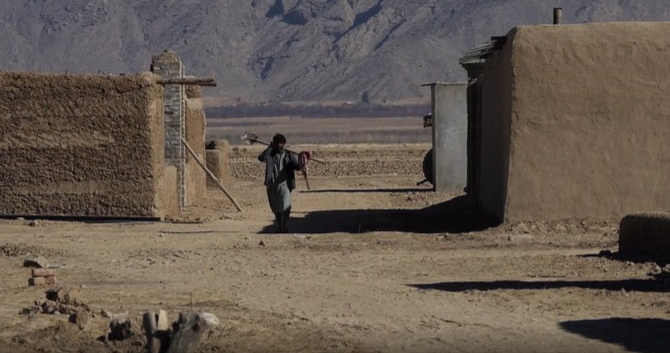
Through the columns of your esteemed newspaper, I wish to draw the attention of the authorities to the growing problem of unemployment in Balochistan. Thousands of educated young people are unable to find suitable jobs despite completing their studies. This lack of employment opportunities is causing frustration, poverty, and forcing many talented individuals to leave the province in search of work.
The government should create more jobs, support small businesses, expand vocational training, and ensure that recruitment is based on merit and transparency. Investing in industries and infrastructure can also help generate employment and improve the province’s economy.
It is hoped that the concerned authorities will take immediate steps to address this serious issue and provide a brighter future for the youth of Balochistan.

Similar Posts

  • Virat kholi and 2027 ODI World cup

    By Muhammad Naseer Virat Kohli’s possible presence in the 2027 ODI World Cup has already created excitement among cricket fans. After years of remarkable performances, Kohli has become one of the most respected ODI batters of his generation. He has openly reaffirmed his commitment to playing in the 2027 World Cup, giving fans hope that they may see him represent India in another major tournament. The 2027 World Cup will be especially important because it could be one of the final major international tournaments of his career. Kohli has already experienced the pressure and excitement of World Cups on several occasions. He was part of India’s 2011 World Cup-winning team and later became one of the tournament’s most consistent performers. His extraordinary ability to chase difficult targets has made him particularly valuable in ODI cricket. His experience could also provide important guidance to younger players entering their first World Cup. However, reaching 2027 will require maintaining fitness, form, and consistency over the coming years. Cricket is an unpredictable sport, and no player can guarantee what the future will bring. Nevertheless, Kohli’s determination suggests that he still has ambitions left to fulfil in the 50-over format. For millions of supporters, watching him in another World Cup would be an emotional experience. His presence could also add enormous attention to the tournament. More importantly, the younger generation could learn from his preparation, discipline, and approach to the game. Kohli has already achieved numerous individual milestones, but another World Cup triumph would add another memorable chapter to his career. India will have many talented players by 2027, so the final team selection will depend on form and fitness at that time. If Kohli remains at his best, his experience could be extremely valuable in a high-pressure tournament. The 2027 World Cup may therefore become not only a competition for India but also another stage in the remarkable story of one of cricket’s modern greats. Fans will undoubtedly hope to see his familiar number on the Indian jersey when the tournament begins. Whether he produces another unforgettable innings or simply guides younger teammates, his contribution could be significant. For now, the possibility of Virat Kohli playing in the 2027 ODI World Cup is enough to keep cricket lovers eagerly waiting for what could be another memorable chapter in his extraordinary career.

  • Criminals on Pak Sar Zameen

    We call Pakistan Pak Sar Zameen, “the Land of the Pure.” But pure for whom? Tell me, honestly… pure for whom? For the criminals? For the rapists? For the child abusers? For the killers who walk our streets untouched by iron shackles or jail cells? Because it certainly does not feel pure for our children. The entire country is busy discussing India’s Jantar Mantar, an issue that we have no business obsessing over. Everyone knows what India should do, but everyone forgets what Pakistan must do. On that very same day, while the nation was distracted by a controversy across the border, six-year-old Dua was murdered in Karachi. Where was the collective scream? Where was the demand for change? And where were the changemakers? We have time to argue about borders, about politics, about things that do not touch our homes. But when a child is murdered in our own city, we scroll past, we sigh, we say “Inna Lillahi wa inna ilayhi raji’un,” and we move on. We move on! And Dua is not alone. In 2026, it feels like every other day another child loses their life. Six-year-old Muhammad Wali from Lea Market. Three-year-old Kulsoom from Quaidabad. Tomorrow, another child will be slaughtered. Another name will join the cemetery’s roll call. How many more parents will decorate graves instead of hearing the pitter-patter of their tiny feet? This is the lullaby that replaces safety in our children’s souls. Our children fall into open manholes because nobody bothers to close them. They are thrown from rooftops. They are abused until they cry, raped until they are wounded, murdered until their funerals become routine. Yet we choke on the same bitter question. Why are the murderers not swinging from ropes? Why are the rapists not rotting in cells? Why are the abusers not dragged through the streets until they beg for death? A nation is not judged by how boldly it sings the national anthem. It is not judged by the scale of its army or the height of its flags. It is judged by the number of tiny coffins that leave its homes. So I ask again: if this is truly the Land of the Pure, why are the purest souls in this country the ones who cry alone, die alone, and are forgotten alone?

  • Why do children go wrong?

    By Zunaira Karim Letter to the editorChildren are the future of every society. They are born innocent and gradually learn their values, habits, and behavior from the people and environment around them. When a child becomes disobedient, dishonest, or involved in harmful activities, many people ask, “Who is responsible?” The answer is not simple because the responsibility is shared among parents, schools, society, and the child. Parents have the greatest influence on a child’s life. They are a child’s first teachers and role models. Children learn by observing their parents’ actions, attitudes, and behavior. If parents fail to give proper attention, guidance, love, and discipline, children may develop negative habits. Spending quality time with children, listening to their concerns, and teaching them good moral values are essential responsibilities of every parent. Schools also play a vital role in shaping a child’s character. Teachers not only provide academic knowledge but also help students develop honesty, respect, responsibility, kindness, and self-discipline. A positive school environment encourages children to make good decisions and become responsible citizens. Society and the media have a significant impact on children’s behavior as well. Friends, social media, television, and the internet strongly influence a child’s thoughts and actions. Exposure to violence, inappropriate content, or negative peer pressure can lead children in the wrong direction. Therefore, communities should work together to create a safe and supportive environment where children can grow with positive values. At the same time, children must also learn to take responsibility for their own actions as they grow older. They should be taught the difference between right and wrong and encouraged to make wise choices, even when faced with challenges or temptations. If a child goes wrong, no single person or institution is entirely responsible. Parents, schools, society, and the child all have important roles in shaping character and behavior. By working together, they can provide the guidance, support, and education that every child needs. A caring family, a strong educational system, and a positive society can help children become responsible, confident, and successful members of the community.

  • Brain Drain: A Growing Challenge for Pakistan

    By Asma Qayyum Brain drain refers to the migration of highly educated and skilled professionals to other countries in search of better employment opportunities, higher salaries, quality education, advanced research facilities, and improved living conditions. This phenomenon has become one of Pakistan’s most serious development challenges, affecting the country’s economic growth and human capital. According to the World Bank, Pakistan is among the countries experiencing a significant outflow of skilled workers. Furthermore, official data from the Bureau of Emigration and Overseas Employment (BEOE) show that hundreds of thousands of Pakistanis leave the country each year for overseas employment, including a large number of educated professionals. This growing migration places additional pressure on vital sectors such as healthcare, engineering, education, and information technology. Several factors contribute to brain drain, including unemployment, low salaries, limited research opportunities, political instability, economic uncertainty, and poor working conditions. As a result, many talented individuals believe they can achieve greater professional success and a better quality of life abroad. The consequences of brain drain are far-reaching. Pakistan loses experienced doctors, engineers, teachers, researchers, scientists, and IT specialists whose knowledge and expertise are essential for national development. The departure of these professionals weakens public services, reduces innovation, and slows economic progress. According to the Bureau of Emigration and Overseas Employment, 762,499 Pakistanis officially left the country for overseas employment in 2025. Since 1971, more than 15 million Pakistanis have been registered for overseas employment through the bureau. These figures highlight the scale of the issue and the urgent need for effective policy measures. To reduce brain drain, the government should create more employment opportunities, improve salaries and working conditions, invest in research, innovation, and higher education, and provide incentives that encourage skilled professionals to remain in or return to Pakistan. A stable economy, merit-based opportunities, and professional growth are essential to retaining the country’s talented workforce. Pakistan’s greatest asset is its people. By investing in its skilled professionals and creating an environment where they can thrive, the country can transform brain drain into brain gain and build a stronger, more prosperous future.

  • The Growing Issue of Fake Degrees and Certificates

    By Sania Rahim I would like to draw the attention of the concerned authorities and the general public toward the rapidly growing issue of fake degrees and certificates, which is becoming a serious threat to our society day by day. Education is considered the backbone of any nation. It builds skilled professionals, responsible citizens, and a strong economy. However, the increasing trend of fake educational documents is weakening this very foundation. Today, some people obtain fake degrees and certificates to secure jobs, promotions, admissions, and other benefits without having the required knowledge, skills, or hard work. This unfair practice is not only injustice to deserving candidates but is also damaging the credibility of our educational institutions. The most alarming part is that fake degrees are now being used in sensitive fields such as medicine, engineering, teaching, law, and public administration. An unqualified doctor, engineer, or teacher can endanger human lives and the future of entire communities. When unskilled people occupy important positions through fraudulent documents, the quality of services declines, accidents increase, and public trust in institutions erodes. It also discourages honest students who spend years studying and working hard to earn genuine qualifications. Another major consequence is corruption. The network of agents, printing presses, and online sellers who manufacture and sell fake degrees is growing because of high demand and weak verification systems. This creates a parallel market where money replaces merit. As a result, competent individuals are left behind while unqualified people move ahead, which ultimately harms national progress. To control this serious issue, I would like to suggest some necessary steps: First, the government should establish a centralized, digital database of all degrees and certificates issued by recognized boards and universities. Every employer and institution should be bound to verify documents through this system before hiring or admission. Second, strict legal action should be taken against those involved in making, selling, and using fake degrees. Heavy fines and imprisonment can serve as a strong deterrent. Third, awareness campaigns should be launched in schools, colleges, and on media platforms to educate students and parents about the dangers and legal consequences of using fake documents. Fourth, professional bodies like the Pakistan Medical Commission, Pakistan Engineering Council, and education departments must regularly audit their members and employees. In conclusion, fake degrees are not just a paper problem. They are a threat to merit, public safety, and the future of our country. I sincerely hope that the concerned departments, law enforcement agencies, and educational authorities will take immediate and effective steps to eliminate this malpractice and restore trust in our education system.

  • Traffic road Awareness

    By Zubaida Khan I am writing to highlight the pressing issue of road safety in our area and to emphasize the urgent need for strict adherence to traffic regulations. Navigating our streets safely has become a major challenge for both pedestrians and drivers. In busy commercial and residential areas, pedestrians face severe risks while attempting to cross the road due to reckless driving and high vehicle speeds. Simple safety measures such as wearing helmets on two-wheelers and fastening seatbelts in cars are frequently ignored. This widespread disregard for basic traffic rules has led to a alarming surge in avoidable road accidents. These mishaps result not only in life-threatening injuries and tragic loss of life, but also place immense emotional and financial strains on families who must cope with sudden hospitalizations and long-term recovery. Prioritizing road safety is vital to protecting precious human lives and ensuring smooth, secure commutes for everyone. To achieve a safer environment, I respectfully suggest the following steps: Traffic Enforcement & Infrastructure: Install clear traffic signals, designated zebra crossings, and speed humps in high-density areas. Road Maintenance: Ensure regular upkeep by cleaning debris, repairing potholes, and maintaining clear visibility along key routes. Awareness Campaigns: Conduct public safety campaigns in local schools and community centers to promote responsible driving habits. I urge the local authorities to take swift action by improving road maintenance and strictly enforcing traffic rules. Together, we can make our roads safer for every citizen.

Leave a Reply

Your email address will not be published. Required fields are marked *