No to the Division of Punjab
Once again, the debate over the creation of new provinces has surfaced in Pakistan. In every political era, the issue is revived in one form or another. This time, however, there appears to be a growing push for creating additional provinces out of almost every major province in the country. The strongest argument being put forward is that Pakistan’s population was around 70 million in 1972, whereas it has now grown to more than three times that figure. Therefore, it is argued, new provinces have become necessary for administrative convenience.
At first glance, this argument may sound convincing. But the real question is: can all of Pakistan’s problems be solved simply by creating new provinces? If population growth alone is a sufficient reason for creating new provinces, then why have all major countries in the world not followed the same path? The real issue is not the number of provinces but the quality of governance, equitable distribution of resources, an empowered local government system, transparent accountability and an effective administrative structure. When the basic system is weak, changing the map does not make the problems disappear.
What is particularly concerning is that Punjab appears to be the main target of this debate. At different times, proposals have emerged for a separate South Punjab, Central Punjab and even further divisions. It seems that with every political season, Punjab becomes the centre of the debate over provincial division. This has understandably created a feeling among many Punjabis that the issue may not be merely about administrative reform, but could also weaken Punjab’s historical, cultural and political identity.
Punjab is not merely another province. It is one of the strong pillars of Pakistan’s ideological, historical and economic foundations. The land played an important role in the Pakistan Movement, made enormous sacrifices for the defence of the country, strengthened Pakistan’s agriculture and industry, and has always played a key role in the national economy. Repeatedly dragging such a province into a debate over division is neither appropriate nor in the national interest.
Those advocating new provinces speak extensively about administrative convenience, but remain largely silent about the financial consequences. Has anyone explained to the public that every new province would require a new governor, chief minister, cabinet, provincial assembly, speaker, deputy speaker, secretariat and numerous government departments? There would also be hundreds of new government positions, official residences, vehicle fleets, security arrangements, protocol and countless other administrative expenses. All of this would require billions of rupees. And ultimately, that money would not come from some separate source. It would come from the taxpayers and the public exchequer.
Pakistan is already facing one of the most serious economic challenges in its history. The burden of domestic and external debt remains enormous, while a substantial portion of the national budget is spent every year on debt servicing and interest payments. The country continues to rely on programmes supported by the IMF and other international financial institutions, while ordinary citizens struggle with inflation, unemployment and rising electricity, gas and petrol prices.
In such circumstances, would creating new provinces and expanding the size of the ruling and administrative machinery really be an act of national wisdom? Or would it simply place another burden on already stretched national resources?
If the genuine objective is to serve the people, the existing system should first be made more effective. Local governments must be empowered, district administrations should be given adequate financial and administrative authority, bureaucratic reforms should be introduced, corruption must be tackled and the equitable distribution of resources must be ensured. If the existing system is not functioning to its full potential, how can simply drawing new boundaries across the map transform the lives of ordinary citizens?
The issue of dividing Punjab is not merely administrative. It is also a question of identity. Punjab’s language, culture and heritage have already not received the level of official patronage and protection they deserve. If the geographical unity of Punjab is repeatedly subjected to calls for division, it could further weaken its cultural and historical identity.
There is another important question: if population is to be the basis for creating new provinces, why should the same principle not be applied uniformly across the country? Will this criterion apply equally to every province, or is Punjab being singled out?
National decisions should not be driven by political expediency. They should be based on constitutional requirements, the national interest and broad public consensus.
In my view, Pakistan needs a new economic vision, stronger institutions, a fairer system of justice, quality education, better healthcare, greater employment opportunities and effective local governments far more urgently than it needs new provinces. People do not want more rulers; they want better governance. They do not need more official protocol; they need affordable food, quality healthcare, good education and decent employment.
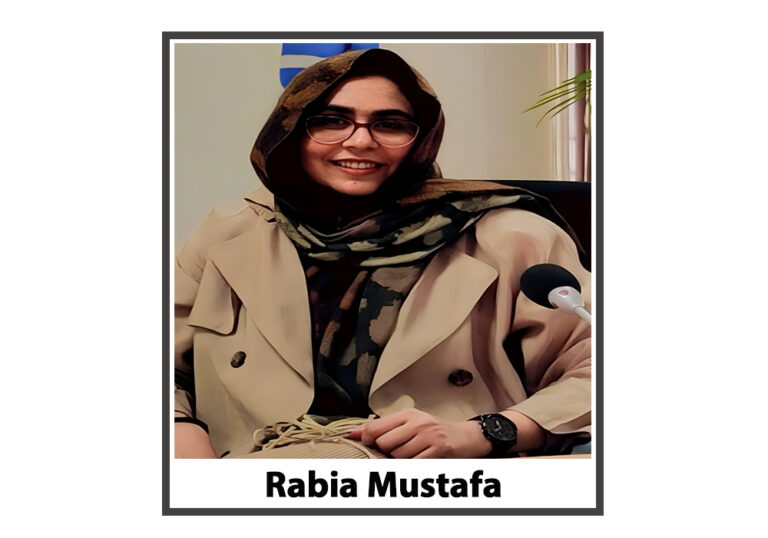
As a Pakistani, a journalist and a Punjabi, I believe that dividing Punjab is not in the national interest. Its unity, historical importance and cultural identity should be protected. If we genuinely want to strengthen Pakistan, we should strengthen the system rather than divide provinces, improve governance rather than expand administrative structures, and reduce the problems faced by ordinary citizens instead of placing an additional financial burden on them.
The division of Punjab is, in my view, unacceptable. A strong Punjab contributes to a strong Pakistan, and a strong Pakistan should be our shared destination.