iran says oman
| |

Iran says Oman deal nears completion but insists U…

Iran said on Sunday that a deal with Oman establishing new shipping lanes through the Strait of Hormuz has entered its final stages, though Tehran maintained the critical waterway will remain closed until Washington satisfies a broader set of conditions tied to the ongoing standoff between the two countries.

A US official told Reuters on Friday that an agreement between Iran and Oman appeared close and could soon lead to the reopening of the strait, a passage that carried roughly a fifth of global oil and liquefied natural gas shipments before Iran shut it down in response to American and Israeli military strikes earlier this year.

Iranian Foreign Minister Abbas Araqchi confirmed on Sunday that negotiations over the strait, which sits between Iran and Oman, had reached their final stages. However, he repeated comments made a day earlier stressing that the waterway would not reopen unless additional conditions set by Tehran were met first. Iran’s Mehr news agency quoted Araqchi as saying the emerging agreement would establish the new shipping lanes to be used once the United States fulfils those conditions and the strait formally reopens.

Araqchi said Iran and the United States are not currently engaged in direct talks and that Tehran has no plans to begin them as long as Washington continues to breach an interim agreement the two countries signed in June. He added that messages between the two sides are being exchanged through intermediaries rather than direct contact.

Iran demands compensation and sanctions relief

The United States launched air strikes against Iran in late February, saying the campaign aimed to prevent the Islamic Republic from acquiring nuclear weapons or using missiles and regional proxy forces to threaten the wider Middle East. Washington and Tehran agreed to a ceasefire in June, but the United States reimposed a blockade on Iranian shipping in the Gulf in July, a move Iran characterised as a violation of a truce that had already shown signs of collapse.

A US official, speaking to Reuters on condition of anonymity, said the blockade on Iranian ports would lift once a deal restoring unimpeded commercial shipping is formally announced. The official added that any American actions would remain directly tied to Iran fulfilling its own commitments under the emerging agreement, pointing to a carefully sequenced approach that both sides appear to be navigating cautiously.

The arrangement under discussion appeared, according to sources who previously spoke to Reuters, to grant Tehran a degree of control over vessels entering the Gulf through the strait, an arrangement that shipping industry sources have said would be difficult to implement in practice.

The precise current status of the agreement remained unclear on Sunday, and Iran’s latest statements suggested several additional factors could still complicate its finalisation. Araqchi said the strait’s reopening would depend in part on the United States providing compensation to Iran for what Tehran describes as widespread attacks on its territory and interests.

Mohammad Baqer Zolqadr, secretary of Iran’s top national security body, outlined a broader list of demands, including an end to US threats against Iran, a halt to what Tehran calls aggression against its allies in Lebanon, the Palestinian territories, Yemen and Iraq, the lifting of the shipping blockade and broader sanctions, and the release of frozen Iranian financial assets.

Supreme Leader’s condition remains unclear

Ultimate decision making authority in Iran rests with Supreme Leader Mojtaba Khamenei, who has not appeared in public since an air strike killed his father and predecessor on February 28, the first day of the joint US and Israeli air campaign against Iran. State media reported on Sunday that Iranian President Masoud Pezeshkian met with Khamenei in late July, and a paramilitary leader promised that footage of the supreme leader would soon be released publicly. Khamenei was reportedly injured in the same strike that killed his father, according to earlier reporting.

Separately, the United Arab Emirates said on Saturday that Iran had attacked a vessel affiliated with its state oil company. Iran did not immediately respond to the allegation. The country’s powerful Revolutionary Guards have attacked commercial vessels in the past, arguing that ships transiting the strait without coordinating their passage with Iranian authorities are not protected from such action.

Houthi attacks widen regional shipping crisis

Iran’s strikes on shipping in the Strait of Hormuz have coincided with intensified attacks from its Yemen based allies, the Houthis, who have targeted vessels at a separate chokepoint located between the Red Sea and the Gulf of Aden on the opposite side of the Arabian Peninsula.

The Houthis declared a naval blockade against Saudi Arabia in the Red Sea last month, framing the move as retaliation for what they described as a Saudi imposed siege in Yemen, an accusation the Saudi government has firmly denied. Riyadh continues to back Yemen’s internationally recognised government in the country’s ongoing conflict.

The group claimed responsibility for an attack on Saudi Aramco’s Jazan refinery on Sunday, coming just two days after the kingdom signed a defence pact with fellow Sunni Muslim majority nations Turkey and Pakistan amid growing concern over regional instability stemming from the US and Israeli military campaign against Shiite led Iran.

Saudi Arabia’s energy ministry confirmed that a fire broke out at the refinery following the attack but was later extinguished without causing any injuries, and that authorities were continuing to manage the aftermath of the incident. The ministry did not specify a cause for the blaze.

Houthi military spokesperson Yahya Saree said on social media platform X that the group used a drone to strike the facility. The Houthis have targeted Aramco sites in Jazan before, a refinery that processes approximately 400,000 barrels of crude oil daily in southwestern Saudi Arabia.

It remains unclear whether or to what extent Pakistan or Turkey would participate in any Saudi response to the latest attack. Turkish Foreign Minister Hakan Fidan said the newly formed alliance between the three countries was not directed against Iran or any other nation, describing it instead as a general commitment to regional security. Fidan added that the allied nations would determine through consultation what degree, form and type of support they would provide one another in the event of any future attack.
Similar Posts

  • | | |

    Roads sealed around Karachi Press Club ahead of PT…

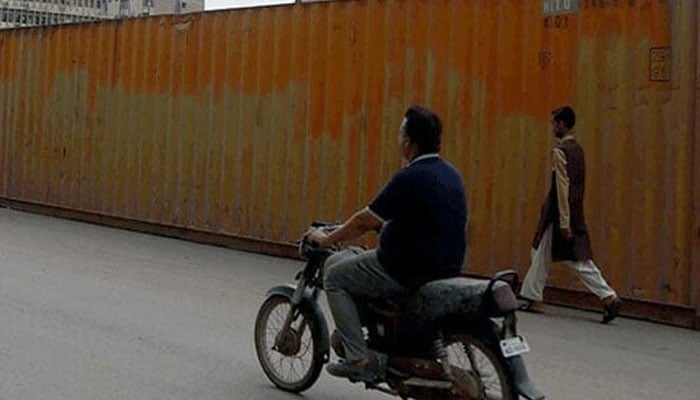
    Several roads surrounding the Karachi Press Club were closed on Wednesday as authorities implemented security measures ahead of a possible protest by Pakistan Tehreek-e-Insaf (PTI), causing traffic congestion in nearby areas. According to traffic police, the closures have led to increased vehicle movement on surrounding roads as commuters seek alternate routes. Officials said the diversions were introduced to ensure a smooth flow of traffic and minimise disruption during the expected demonstration. Traffic coming from MR Kiani Chowrangi has been redirected towards Thana Gali, while vehicles approaching Fawara Chowk are being diverted to Aiwan-e-Sadr Road and Zainab Market. Authorities have also rerouted traffic from the Coast Guard area towards the lane leading to the Passport Office to ease congestion around the Press Club. Traffic police have advised motorists to follow the designated diversion plans and cooperate with officials on duty to avoid delays. The precautionary measures come amid expectations of a PTI protest in the city, with law enforcement agencies maintaining heightened security in and around the area to ensure public safety and maintain order.

  • | |

    18 Girls’ Schools in Upper Dir recommended for t…

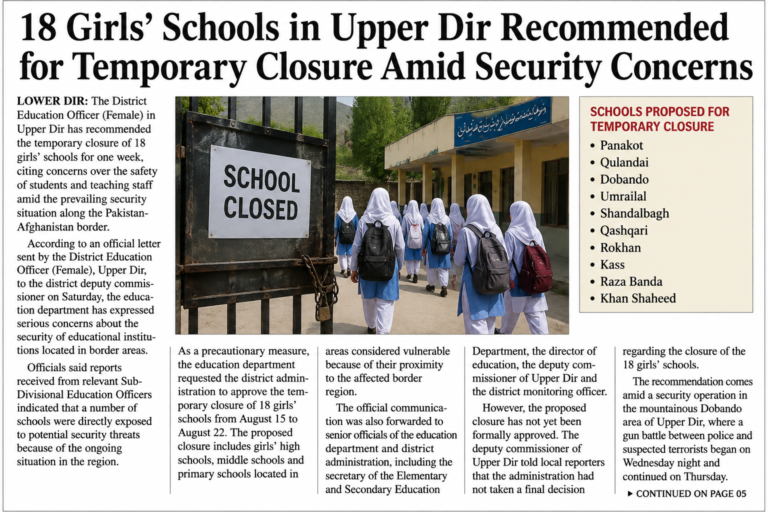
      LOWER DIR: The District Education Officer (Female) in Upper Dir has recommended the temporary closure of 18 girls’ schools for one week, citing concerns over the safety of students and teaching staff amid the prevailing security situation along the Pakistan-Afghanistan border. According to an official letter sent by the District Education Officer (Female), Upper Dir, to the district deputy commissioner on Saturday, the education department has expressed serious concerns about the security of educational institutions located in border areas. Officials said the uncertain situation has raised fears about the safety of students and teachers travelling to and attending schools in vulnerable areas. The letter stated that reports received from relevant Sub-Divisional Education Officers indicated that a number of schools were directly exposed to potential security threats because of the ongoing situation in the region. As a precautionary measure, the education department requested the district administration to approve the temporary closure of 18 girls’ schools from August 15 to August 22. The proposed closure includes girls’ high schools, middle schools and primary schools located in areas considered vulnerable because of their proximity to the affected border region. The schools included in the recommendation are situated in Panakot, Qulandai, Dobando, Umrailal, Shandalbagh, Qashqari, Rokhan, Kass, Raza Banda and Khan Shaheed. The official communication was also forwarded to senior officials of the education department and district administration, including the secretary of the Elementary and Secondary Education Department, the director of education, the deputy commissioner of Upper Dir and the district monitoring officer. However, the proposed closure has not yet been formally approved. The deputy commissioner of Upper Dir told local reporters that the administration had not taken a final decision regarding the closure of the 18 girls’ schools. The recommendation comes against the backdrop of heightened security concerns in the mountainous areas of Upper Dir. A security operation is currently underway in Dobando, where a gun battle between police personnel and suspected terrorists began on Wednesday night and continued into Thursday. Officials said the opposing sides remained positioned against each other during the operation and that heavy weapons were reportedly being used. At the time of the reports, however, authorities had not confirmed any casualties resulting from the encounter. The latest security concerns come after a separate deadly incident in neighbouring Lower Dir last month. Two policemen were martyred and 16 others were injured during an exchange of fire with suspected terrorists at Haidari Top, a mountainous location in the district. According to officials, law enforcement personnel had launched a search-and-strike operation in the area after receiving information about the presence of suspected terrorists. During the operation, armed militants reportedly launched a sudden attack on the security personnel. The ensuing gun battle continued for several hours, resulting in casualties among the law enforcement personnel. The security situation has prompted authorities to remain cautious, particularly in areas where schools are located close to conflict-affected or sensitive zones. The education department’s recommendation to temporarily suspend classes is intended as a preventive measure rather than a permanent closure. The final decision regarding the 18 girls’ schools will rest with the district administration. Officials are expected to assess the security situation before deciding whether educational activities can continue safely or whether the temporary closure should be implemented. For now, authorities are closely monitoring developments in the border areas, while the education department has emphasised that the safety of students and teaching staff remains the primary concern.

  • |

    England on track to eliminate hepatitis C by 2030

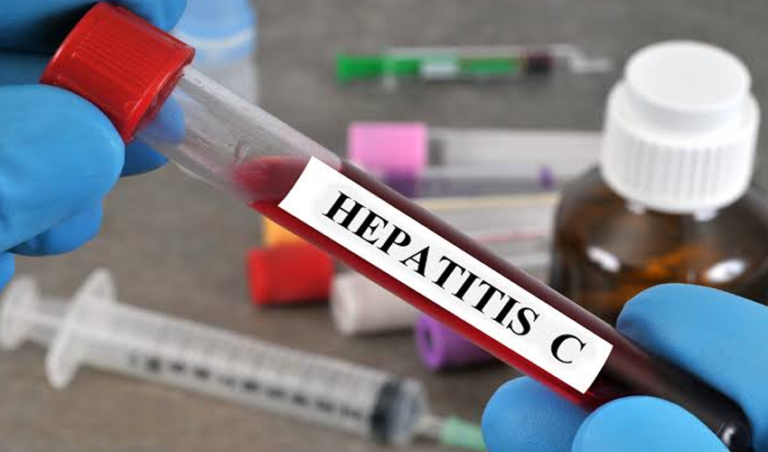
    More than 100,000 people in England have received potentially life-saving treatment for hepatitis C in the past decade, as the NHS steps up efforts to eliminate the virus as a public health threat by 2030. New NHS figures show that more than 100,000 people have been diagnosed and treated since pioneering antiviral medicines were introduced in 2015, putting England among a handful of countries that have already exceeded the World Health Organisation benchmark of treating 80% of known hepatitis C cases. (NHS England) Hepatitis C is a viral infection that can damage the liver and, if left untreated, can lead to serious and potentially life-threatening conditions including cirrhosis, liver failure and liver cancer. The infection can remain undetected for years because many people experience no noticeable symptoms until significant liver damage has already occurred. However, modern treatment has transformed the disease. A free course of antiviral tablets lasting between eight and 12 weeks can cure more than 95% of cases. The NHS says effective treatment could reduce the number of people requiring liver transplants by 80% over the next decade, while also reducing cases of liver cancer and cirrhosis. Deaths from hepatitis C have already fallen by 36% over the past ten years. (NHS England) NHS urges people at risk to get tested The latest figures have prompted the NHS to urge people who may be at greater risk of having undiagnosed hepatitis C to order a free and confidential home-testing kit. Those particularly encouraged to test include people who have moved to England from certain Eastern European countries, anyone who has had a tattoo abroad, and people who currently use or have previously used injectable drugs. Adults born in Ukraine, Romania, Estonia, Latvia, Poland, Albania, Lithuania, Bulgaria, Czechia and Slovakia are also being urged to test. The NHS says some people from these countries may have been exposed to the virus through medical or dental procedures before 1991, when modern sterilisation standards were introduced. The free home-testing service is designed to reach people who may not otherwise come into contact with drug and alcohol services, sexual health services, GPs or A&E departments. Thousands of hidden cases identified The NHS has significantly expanded hepatitis C testing over the past five years. A first-of-its-kind programme offering hepatitis C testing to patients having blood tests in participating A&E departments has identified around 1,900 previously undiagnosed cases since 2022. GP practices are also asking new patients whether they received a blood transfusion before 1996, helping identify people who may have been infected through the contaminated blood scandal. The treatment programme was made possible on a large scale following a landmark 2019 agreement between the NHS and pharmaceutical companies Gilead Sciences, MSD and AbbVie, which enabled access to modern curative treatments. (NHS England) ‘Determined to finish the job’ Professor Frankie Swords, NHS national medical director, said hepatitis C could cause serious harm including liver failure and cancer, while many people could remain unaware they have the virus. He said treating more than 100,000 people in a decade was a major achievement but stressed that the NHS would continue looking for people with undiagnosed infections. “England is now leading the world in the mission to eliminate this disease and on course to beat the WHO’s 2030 target,” Professor Swords said. He added that the NHS was “determined to keep up the momentum and finish the job”. “With hepatitis C curable in more than nine out of ten cases, we are committed to finding and treating everyone who needs support,” he said. (NHS England). Patient urges others to take the test Among those treated is 65-year-old Paul Eatwell from Blackburn, Lancashire, who discovered he had hepatitis C after routine liver-function tests following a change of GP. His new doctor ordered additional tests, including screening for hepatitis C. Paul said he initially could not believe the result because he had no symptoms and could not understand how he might have contracted the virus. The precise source of his infection was never established, although possible risk factors included surgery in South Africa several decades ago. He said the specialist team helped answer his questions and reassured him about the condition. Paul said treatment was far less difficult than he had imagined, involving one tablet a day for 12 weeks and several blood tests. He urged anyone who believes they may have been exposed to hepatitis C to get tested, saying that knowing their status could provide peace of mind. ‘Leading the world’ Health and Social Care Secretary Yvette Cooper said the progress demonstrated the impact of NHS treatment and prevention programmes. She said hepatitis C was now curable in the vast majority of cases and described the UK’s progress as part of efforts to “wipe out this disease for good”. “This is exactly the kind of preventative, forward-looking healthcare that we want the NHS to deliver across the board – catching illness earlier, easing pressure on hospitals, and giving people the chance to live longer, healthier lives,” Cooper said. (NHS England. Dr Sema Mandal, deputy director of Blood Safety, Hepatitis, STIs and HIV at the UK Health Security Agency, said the sharp fall in cases since 2015 demonstrated the impact of expanded testing and access to modern treatments. She said treating more than 100,000 people in ten years had brought England closer than ever to eliminating hepatitis C as a public health threat. The Hepatitis C Trust also called for continued long-term investment to maintain the progress made by the national programme, particularly among marginalised communities that can face barriers to healthcare. Rachel Halford, chief executive of The Hepatitis C Trust, said continued funding would be essential to ensure people at greatest risk were not left behind. Hepatitis B remains a challenge While England’s progress against hepatitis C is described as world-leading, health authorities stress that elimination of viral hepatitis as a whole also includes hepatitis B. Further work is therefore required to improve diagnosis and access to treatment for people living with hepatitis B. A national

  • | |

    Transporters announce nationwide wheel-jam strike

    A nationwide wheel-jam strike is set to begin on August 8 after transporters’ associations announced a complete suspension of freight operations in protest against rising operational costs, frequent fuel price revisions and what they described as unfair treatment by authorities. The Pakistan Mini Mazda Association and the All Pakistan Goods Transport Owners Association said the strike could bring cargo movement across the country to a standstill, warning that imports and exports may face serious disruptions if the government fails to address their concerns. Addressing a joint press conference in Lahore, Pakistan Mini Mazda Association Central President Tanveer Jatt urged the government to hold immediate talks with transport representatives. He demanded that petroleum prices be revised on a monthly basis instead of daily and called for relief from toll taxes and excessive traffic fines, arguing that current policies have placed an unbearable financial burden on transport operators. All Pakistan Goods Transport Owners Association President Chaudhry Owais Gujjar stressed that axle-load regulations should be enforced strictly according to the law and alleged that corruption had become widespread during implementation. He also claimed that transporters, despite paying billions of rupees annually in toll taxes, continue to face poor road infrastructure, which contributes to accidents. Gujjar further accused officials of the Regional Transport Authority (RTA) Secretariat and the Highway Patrol Police of routinely harassing transporters on highways, urging the authorities to focus on their official responsibilities instead of creating difficulties for drivers. Transport leader Khalid Arain said the government’s policies had left transporters with no option but to protest. He maintained that transport operators in Pakistan receive little support despite paying advance taxes and claimed that no compensation had been provided to vehicle owners whose trucks were destroyed in militant attacks. He also criticized the heavy use of traffic fines, saying overloading rules should be enforced through consultation rather than punitive measures. Arain expressed hope that the dispute could be resolved quickly if meaningful negotiations were held between the government and transport representatives before the strike begins.

  • | | |

    Azad Kashmir elections 2026: second phase polling …

    The second phase of the Azad Kashmir Legislative Assembly Elections 2026 is being held today, with polling taking place in the Muzaffarabad Division and migrant constituencies. Voters in nine constituencies of Muzaffarabad Division and 12 migrant seats will exercise their right to vote as the electoral process moves forward. Election authorities completed preparations for the polling process, including the transportation of election materials and deployment of staff at polling stations. Voting will begin at 8:00 am and continue until 5:00 pm without interruption. The Muzaffarabad Division includes three districts — Muzaffarabad, Neelum, and Jhelum Valley. A total of 890,621 registered voters are eligible to cast their ballots across nine constituencies in the division. According to election officials, 1,483 polling stations have been established throughout Muzaffarabad Division to facilitate voters. A total of 208 candidates are contesting the nine seats, including nominees from major political parties such as the Pakistan Peoples Party, Pakistan Muslim League-Nawaz, Istehkam-e-Pakistan Party, other political groups, and independent candidates. In addition to the Muzaffarabad Division seats, polling is also being conducted for 12 seats reserved for Kashmiri migrants living in different parts of Pakistan. These include six seats from the Jammu region and six seats from the Valley region, where registered Kashmiri voters will participate in the election. The migrant constituencies include Jammu seats from LA-34 Jammu-1 to LA-39 Jammu-6, while Valley seats range from LA-40 Valley-1 to LA-45 Valley-6. Speaking to Geo News, Azad Jammu and Kashmir Chief Election Commissioner Justice (retd) Ghulam Mustafa Mughal said elections are conducted in phases due to security considerations. He stated that although uncertainty existed in Muzaffarabad earlier, the law and order situation has improved and is better than before. Authorities have made security arrangements to ensure a peaceful voting process and have urged citizens to participate responsibly. The Election Commission has emphasized that maintaining a secure environment and ensuring transparency remain key priorities during the polling process. The second phase of the Azad Kashmir Elections 2026 is expected to determine representatives for important constituencies and further shape the political landscape of the region.

  • | |

    ECP begins Islamabad local polls preparations

    The Election Commission of Pakistan (ECP) has started the delimitation process for holding local government elections in Islamabad. The commission said the formal process will begin on August 1, 2026, and will continue until October 13, 2026. The delimitation of constituencies is a major step before announcing the election schedule. An ECP spokesperson said that after the completion of the delimitation process and publication of the final constituencies, the commission will consult the federal government regarding the date for Islamabad’s local government elections. The spokesperson also shared updates about local government elections in Punjab and Khyber Pakhtunkhwa. In Punjab, delimitation authorities have been directed to submit their decisions to the relevant committees by August 7. The final delimitation list for the province will be published on August 17. The ECP said it is fully prepared to conduct local government elections in Punjab after completing all necessary legal requirements and consultations. Regarding Khyber Pakhtunkhwa, the commission said delimitation has been completed in 23 districts, while work is continuing in seven more districts. The spokesperson said the ECP held discussions with the Khyber Pakhtunkhwa chief secretary and local government secretary on July 14 about the election schedule. Provincial authorities were given additional time after requesting support for completing arrangements. The commission said recent amendments to the Khyber Pakhtunkhwa Local Government Act created legal issues that affected the delimitation process. The ECP informed the provincial government about these concerns and sought cooperation to resolve the matter. The spokesperson said the commission has faced delays in local government elections because federal and provincial governments often change local government laws close to election dates. He said the ECP has repeatedly completed delimitation exercises and prepared election schedules, but changes in legal frameworks affect the process. The commission recommended that major changes to local government laws and boundaries should be completed at least one year before elections. It said this would help ensure a smooth and timely electoral process.

Leave a Reply

Your email address will not be published. Required fields are marked *