umerkot flour millers
|

Umerkot flour millers reject Rs128/kg official rate, seek fresh price review

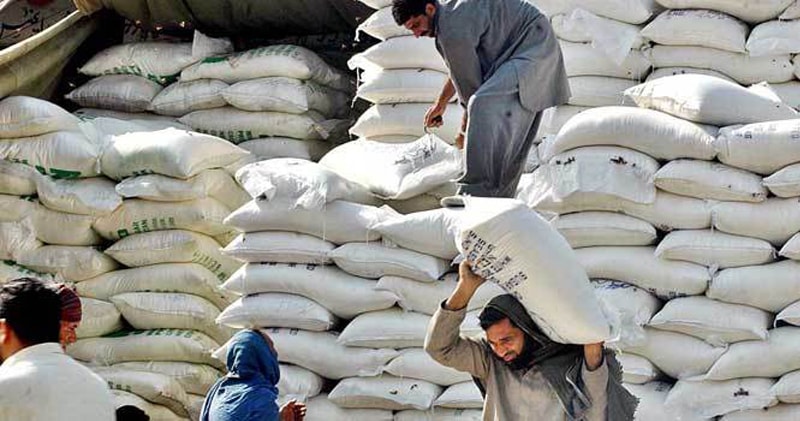
UMERKOT: Flour mill owners in Umerkot district have rejected the government-fixed price of Rs128 per kilogram, arguing that the sharp increase in wheat prices has pushed their production costs far above the officially notified rate.

The millers said the prevailing wheat price in the open market had climbed to around Rs125 per kilogram, while additional expenses related to milling, labour, electricity, transportation and other operations had increased the overall cost of producing flour to nearly Rs140 per kilogram.

They maintained that selling flour at Rs128 per kilogram was therefore commercially unsustainable and would force mill owners to operate at a loss.

In this regard, representatives of the flour milling industry have submitted written applications to the Mirpurkhas commissioner and the Umerkot deputy commissioner, requesting authorities to reconsider the existing flour price and determine a new rate based on prevailing market conditions and production costs.

The mill owners also raised objections to what they described as excessive administrative action against flour mills across the district. They specifically complained about raids and wheat seizures allegedly carried out by assistant commissioners in Umerkot, Kunri, Samaro and Pithoro.

According to the millers, government policy allows flour mill owners to maintain wheat stocks of up to 850 bags per stone at their mills or designated warehouses. They alleged that despite the provision, local administrative officials had conducted raids on mills and storage facilities and seized wheat stocks.

The mill owners termed the alleged seizures unjustified and said such actions were creating additional difficulties for an already financially pressured industry. They urged the authorities to ensure that enforcement measures were carried out strictly in accordance with the relevant government policy.

The millers further called for an investigation into alleged irregularities involving food department inspectors. They demanded that senior provincial officials examine the complaints and take appropriate action if any wrongdoing is established.

They appealed to the Sindh chief minister, provincial food secretary, Mirpurkhas commissioner, Umerkot deputy commissioner and other concerned authorities to intervene in the matter and review the officially fixed flour price.

The mill owners argued that the price should be determined after taking into account the current cost of wheat as well as electricity, labour, transportation, maintenance and other expenses associated with flour production.

They warned that continued enforcement of a price they consider economically unviable could increase financial losses for flour mills and put further pressure on the district’s milling industry.

The millers said they were willing to cooperate with the administration in maintaining the availability of flour and preventing unjustified price increases, but stressed that any official pricing mechanism must reflect actual market and production costs.

They also urged the provincial government to establish a transparent mechanism for monitoring wheat stocks and flour prices so that disputes between millers and local administrations could be resolved through clear rules rather than repeated raids and seizures.

Similar Posts

  • | | | |

    Trump reveals why Secret Service changed his plane

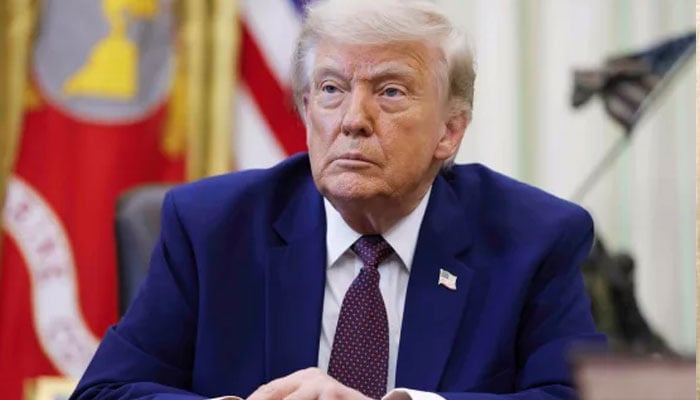
    WASHINGTON: US President Donald Trump has confirmed that his surprise plane switch during his departure from Turkey last month was carried out on the advice of the Secret Service, amid concerns over a potential threat linked to Iran. Trump said the aircraft he had initially been expected to travel on could have faced a “greater risk,” adding that he does not trust Iran. His remarks came after reports revealed that his departure from Ankara following the NATO summit involved an elaborate security operation. According to reports, Trump publicly boarded Air Force One in front of cameras, creating the impression that he would fly out of Turkey on the presidential aircraft. However, he was later secretly transferred to a smaller C-32A military aircraft. The move was reportedly carried out using an airport catering truck to conceal his transfer. Journalists and some White House staff reportedly remained under the impression that Trump was aboard Air Force One. Reporters were also instructed to keep their window shades closed, adding to the secrecy surrounding the operation. Trump said he followed the Secret Service’s instructions when the aircraft change was made and did not challenge the security decision. The unusual operation reportedly stemmed from heightened concerns over Iranian threats against the US president. Trump’s latest comments have now confirmed key details of the previously undisclosed flight arrangement. The episode has drawn attention because of the extraordinary measures used to conceal the president’s movements. It also highlights the heightened security concerns surrounding Trump amid continuing tensions between Washington and Tehran. For a president whose movements are normally tracked closely by the media and security officials, the covert transfer from one aircraft to another remains one of the most unusual presidential travel episodes of the year.

  • |

    South Korea investigates election officials over alleged vote turnout manipulation

    South Korean investigators have launched a major investigation into the National Election Commission after allegations that officials altered voter turnout figures during the June 3 local elections. Authorities searched the commission’s offices on Thursday as part of a widening probe into what could become one of the country’s most serious election controversies in recent years. The investigation follows widespread problems that disrupted voting on election day. Dozens of polling stations ran out of ballot papers, creating confusion for voters across the country. The shortages occurred during the first nationwide local elections held after President Lee Jae Myung took office last year. The incident sparked public criticism, street protests, and growing demands for greater transparency in the country’s election system. The controversy also forced National Election Commission chief Roh Tae-ak to resign. President Lee responded by ordering a full investigation into the failures that affected the election process. Since then, police and prosecutors have been examining whether the problems were caused by simple mistakes or deliberate misconduct. According to investigators, there is evidence that officials from both the National Election Commission and the Gyeonggi Provincial Election Commission entered false voter turnout figures into the election reporting system. Authorities believe some staff members changed numbers without following the commission’s official approval procedures. Investigators suspect the changes were made to fix earlier reporting mistakes while officials waited for accurate turnout data from polling stations. Instead of correcting the figures through the required process, they allegedly adjusted turnout numbers across several voting locations to make the overall totals appear consistent. Reports suggest one example involved a polling station where officials accidentally recorded 1,000 voters instead of the actual 100. Rather than immediately correcting the mistake, investigators believe the excess figures were temporarily distributed among other polling stations with the expectation that later voter turnout would balance the totals. Authorities are now examining whether similar adjustments were made elsewhere during the election. Under the commission’s regulations, any correction to turnout figures must receive formal approval before being entered into the system. Investigators believe those procedures may have been bypassed in several cases. Officials leading the investigation confirmed that two election workers have already been placed under formal investigation on suspicion of falsifying official electronic records. Authorities are now trying to determine whether the alleged actions were limited to lower level employees or whether senior officials knew about or approved the changes. Analysts say the case has drawn attention to long standing concerns about oversight within South Korea’s election commission. Because the commission operates as an independent constitutional body, critics argue that its internal monitoring and disciplinary systems have not always been strong enough to prevent misconduct. The ballot paper shortages also affected voters directly. Data provided by the commission to lawmakers showed that at least 90 people were unable to cast their ballots because voting papers were unavailable at their polling stations. The controversy has also fueled political tensions. Supporters of former president Yoon Suk Yeol, who is currently in jail while facing trial on insurrection charges, have renewed claims that the country’s elections require closer scrutiny. Some far right groups have repeated allegations of foreign interference despite the absence of verified evidence supporting those claims. In recent weeks, university students have joined demonstrations calling for a complete investigation into the election commission. Protesters are demanding stronger safeguards to protect voting rights and restore public confidence in South Korea’s democratic institutions. As the investigation continues, authorities say they will examine every level of the election process to determine whether any broader misconduct took place.

  • | |

    US appeals Court again blocks Trump’s $100,0…

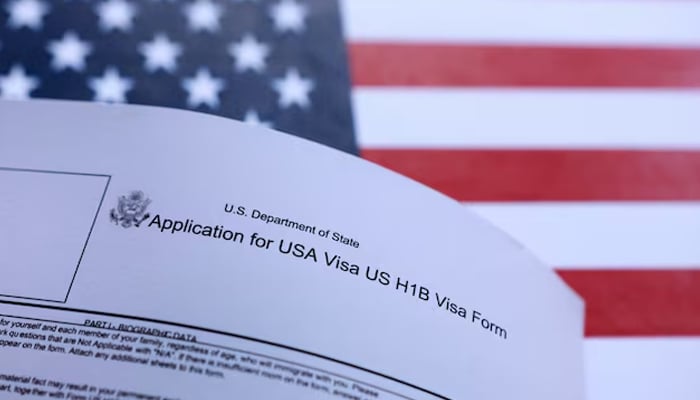
    The Trump administration has suffered another legal setback after a US federal appeals court refused to reinstate a controversial $100,000 fee for H-1B visas, dealing a fresh blow to the administration’s immigration policy. A three-judge panel of the First US Circuit Court of Appeals in Boston ruled that the administration had failed to demonstrate a strong likelihood of success in its appeal or prove that it had acted within its legal authority when imposing the massive fee increase. The decision comes in a lawsuit filed by attorneys general from 20 Democratic-led states, who challenged the legality of the policy soon after it was introduced. The appeals court’s ruling leaves in place an earlier decision issued on June 8, when a lower court declared the $100,000 H-1B visa fee unlawful. That court concluded that Congress had never granted the executive branch the authority to impose a charge of that magnitude, describing it as a tax that exceeded the administration’s legal powers. President Donald Trump introduced the fee increase through an executive order issued last year, arguing that the H-1B visa program had been widely used by companies to replace American workers with lower-paid foreign professionals. The administration maintained that the significantly higher fee would discourage misuse of the program and encourage employers to prioritize hiring US workers. Critics, however, argued that the measure would severely disrupt industries that rely on highly skilled international talent, particularly the technology, healthcare and engineering sectors. Under current immigration rules, the United States issues 65,000 H-1B visas annually, along with an additional 20,000 visas for applicants holding advanced academic degrees from US institutions. The visas are generally granted for periods ranging from three to six years. Before Trump’s proposed increase, employers typically paid between $2,000 and $5,000 in government filing fees for an H-1B visa, depending on the size of the company and other applicable charges. The proposed $100,000 fee would not have applied to foreign nationals already in the United States on student visas who later transitioned to H-1B status. The latest court ruling represents another significant legal obstacle for the Trump administration’s immigration agenda and ensures that the dramatic fee increase will remain suspended while the broader legal battle continues.

  • | | |

    ‘Imran could face Morsi’s fate,’ sister warn…

    Pakistan Tehreek-e-Insaf (PTI) founder Imran Khan has expressed fears about his safety and allegedly told his sister that he could face a fate similar to that of former Egyptian president Mohamed Morsi, according to Dr Uzma Khan. Speaking at a press conference in Islamabad, Uzma said she was deeply concerned about her brother’s physical and mental condition following his prolonged confinement in Adiala Jail. She claimed Imran had repeatedly complained about being kept in solitary confinement and said he believed he was being treated inhumanely. According to Uzma, Imran told her that his concerns were not being properly heard by jail authorities. She said he had complained about the lack of human contact and believed that the isolation was affecting his health. Uzma further claimed that a doctor who examined Imran on August 10 attributed his anxiety and high blood pressure to his prolonged solitary confinement. She also said newspapers and television access had only been provided to him for a limited period. The PTI founder’s sister said she attempted to reassure him during their meeting, telling him that people across the country stood with him and that he should remain hopeful. Dispute over hospital transfer Uzma also provided details of the events surrounding Imran’s proposed transfer to Shifa International Hospital. She said she reached Adiala Jail between 8pm and 8:30pm after being contacted by authorities. She waited there with Imran’s physician, Dr Faisal Sultan. According to Uzma, they were later informed that Imran had been taken away, but she was not initially told where he had been taken. She said she was subsequently taken in a vehicle accompanied by a security convoy. After travelling for some time, she was informed that they had reached the Pakistan Institute of Medical Sciences (PIMS). Uzma said she reminded officials that the Supreme Court had ordered Imran’s transfer to Shifa International Hospital. She was reportedly told that he had instead been taken to PIMS for an eye examination. When she eventually met her brother, Uzma said Imran appeared surprised to see her. She told him that he was expected to undergo a comprehensive medical examination at Shifa. She said doctors at PIMS checked his blood pressure and examined his eyes. Dr Faisal Sultan separately said he had been summoned and taken to Shifa International Hospital but was repeatedly given unclear responses when he asked when Imran would arrive. He said he eventually concluded that the PTI founder would not be brought to the hospital. Government seeks review of Supreme Court order The dispute intensified after the federal government approached the Supreme Court seeking a review of its August 18 order concerning Imran’s medical examination and proposed transfer to Shifa International Hospital. The government had earlier filed a review petition, but it was returned after objections were raised by the Supreme Court registrar’s office. The government subsequently refiled the petition after addressing those objections. In its revised plea, the government argued that the August 18 order had been issued beyond the court’s jurisdiction and contained errors of law that warranted reconsideration. The government also relied on the Pakistan Prison Rules, 1978, arguing that the transfer of a convicted prisoner to a hospital is governed by a prescribed legal procedure. It referred specifically to Rule 197, which deals with the mechanism for transferring prisoners for medical treatment. The government further invoked Article 10-A of the Constitution, which guarantees the right to a fair trial and due process. It argued that adequate notice and an opportunity of hearing should be provided to both sides. The government therefore asked the apex court to review and recall its earlier order. Government rejects allegations of non-compliance Information Minister Attaullah Tarar defended the government’s position and rejected claims that the Supreme Court’s directive had been ignored. In a statement posted on X, Tarar said Imran had been taken for a medical examination during the early hours of August 21 under appropriate security arrangements. He said a team of doctors, including specialists in ophthalmology, cardiology and general medicine, examined Imran and declared him medically fit. Tarar said Uzma remained present during the medical examination and treatment process. According to the minister, Imran was subsequently returned to Adiala Jail at around 5am. In another statement, Tarar clarified that the examination was conducted at PIMS and that doctors from Shifa International Hospital were also present. He attributed the decision to use PIMS to security concerns surrounding the route to and area around Shifa International Hospital, which he said had been created by PTI workers. The minister maintained that the government had provided medical facilities to Imran in the past and would continue to do so whenever required. Opposition accuses government of contempt Opposition parties, however, strongly criticised the government’s handling of the matter. Opposition leaders alleged that the Supreme Court’s order had not been implemented in the manner directed and questioned the circumstances under which Imran was separated from his sister and physician. National Assembly Opposition Leader Mehmood Khan Achakzai and Senate Opposition Leader Allama Raja Nasir Abbas criticised the government’s decision and said those responsible should be held accountable. Achakzai questioned the circumstances surrounding the events during the night and described the episode as evidence of wider political problems in the country. Raja Nasir Abbas alleged that the government had effectively disregarded the Supreme Court’s decision by not transferring Imran to Shifa International Hospital as expected. He said the opposition would continue its legal and political struggle over the matter. The opposition leaders also expressed concern about Imran’s health and called for his medical treatment to be conducted transparently. Opposition alliance plans Supreme Court action The opposition’s joint parliamentary party, operating under the Tehreek Tahaffuz Aiyeen-e-Pakistan (TTAP) platform, also held a meeting at Parliament House. The meeting was chaired by Achakzai and attended by Raja Nasir Abbas, PTI Chairman Barrister Gohar Ali Khan, PTI Secretary General Salman Akram Raja, Khyber Pakhtunkhwa Chief Minister Sohail Afridi and other opposition lawmakers. The participants discussed Imran’s health, the Supreme Court order, the country’s political

  • | |

    Rihanna back in the studio as A$AP Rocky confirms …

    Rihanna fans may finally have a reason to celebrate after years of waiting. According to A$AP Rocky, the global superstar is officially back in the recording studio and actively working on new music. The exciting update came during Rocky’s appearance on the latest episode of The Jason Lee Show, where the rapper was asked about persistent rumors surrounding Rihanna’s long-awaited ninth studio album. Rather than keeping fans guessing, Rocky confirmed that the singer has returned to work on fresh material.  “She in the studio right now,” Rocky said during the interview. “Yeah, I said it. Sorry, babe. Like, bro, she working. She cooking, no funny s–t. Damn, I’ma get in trouble for this.”  His comments immediately sparked excitement across social media, where fans have spent years eagerly awaiting Rihanna’s next album. The Barbadian singer has not released a full-length studio album since Anti in 2016, despite remaining one of the world’s most-streamed artists. Over the past decade, she has focused on expanding her successful Fenty empire, acting projects, and raising her family with A$AP Rocky.  During the interview, Rocky also dismissed speculation that the couple is secretly working on a joint album. While he confirmed Rihanna is creating new music, he made it clear that fans should not expect a collaborative project featuring both artists. The latest update aligns with Rihanna’s own recent comments about her long-awaited album. Earlier this year, she revealed that she had finally found the creative direction she wanted and was determined to make music that truly reflects her artistic vision instead of chasing commercial trends. She has repeatedly said the lengthy wait will be worthwhile because she refuses to release anything that does not meet her expectations.  Although neither Rihanna nor her team has announced a release date or shared details about the project’s sound, Rocky’s comments are the clearest indication yet that the album is actively taking shape. Fans have grown accustomed to years of rumors and teases, but this confirmation from someone closest to the singer has renewed optimism that new music could finally be on the horizon.  The revelation has already generated widespread buzz online, with many fans expressing cautious excitement after nearly a decade without a studio album. While some remain skeptical until an official announcement arrives, others believe Rocky’s remarks suggest Rihanna’s musical comeback is closer than ever. For now, one thing appears certain: Rihanna is back in the studio, and according to A$AP Rocky, she is “cooking” something special. After years of anticipation, the wait for her next musical chapter may finally be nearing its end. 

  • |

    PBS revises import data after billions of dollars in discrepancies

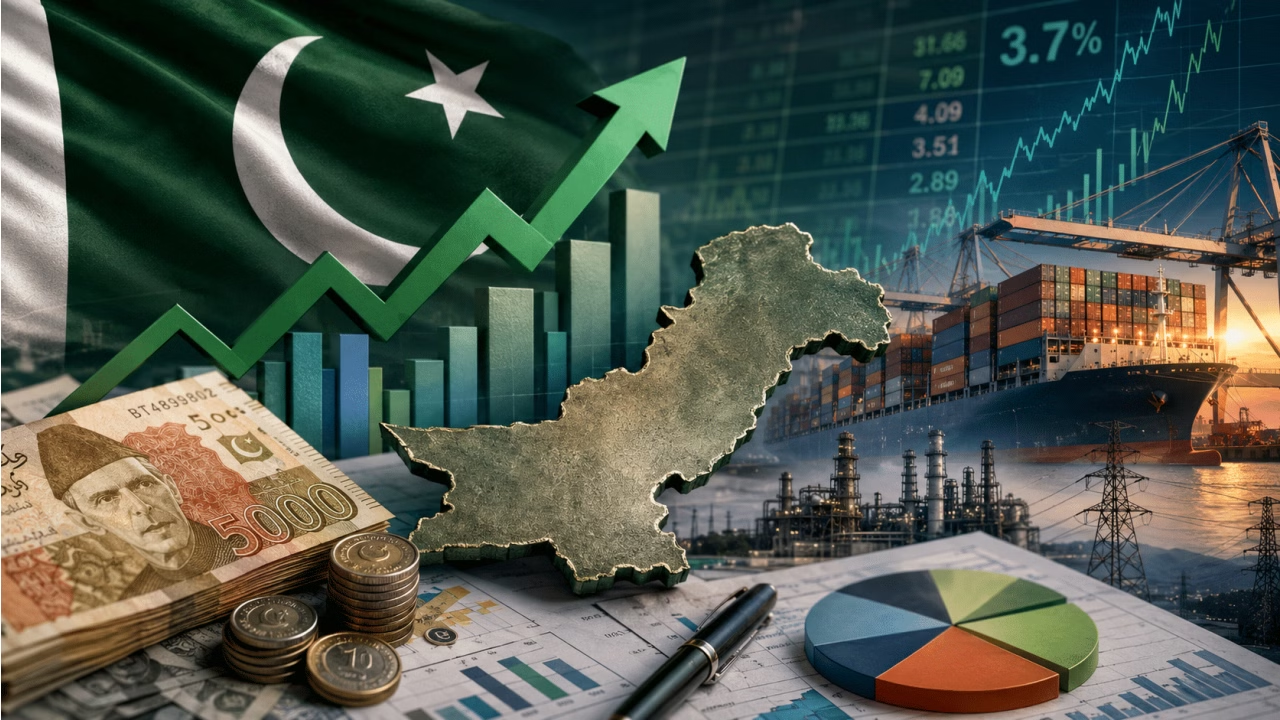
    The Pakistan Bureau of Statistics (PBS) has revised the country’s monthly and annual import figures after uncovering major discrepancies in trade data, with the adjustments reaching billions of dollars over certain periods. The data revisions, which could amount to as much as $30 billion for some periods, are expected to have a notable impact on Pakistan’s Gross Domestic Product (GDP) calculations and other key economic indicators. The statistical agency has incorporated the updated import figures across several major sectors as part of the data reconciliation process. According to senior government officials, the PBS has completed a detailed report outlining the discrepancies and the methodology used to revise the import statistics. The report has been submitted to the Ministry of Finance, which is currently examining its potential implications. The ministry is expected to make the findings public by the end of August 2026. Differences emerge between PBS and SBP data The issue came to light after officials identified significant differences between import figures compiled by the PBS and corresponding data maintained by the State Bank of Pakistan (SBP). The discrepancies were initially detected while comparing Pakistan’s trade figures with China. Further scrutiny subsequently revealed differences in specific tariff lines and categories of imports that had not been fully reflected in the PBS data. Following the discovery, the Pakistan Single Window and other relevant government institutions became involved in the reconciliation process. The objective was to identify the source of the differences, verify transaction-level information and ensure that import statistics accurately reflected the country’s external trade. The matter later attracted the attention of the International Monetary Fund (IMF), which has been closely monitoring Pakistan’s economic data and statistical reporting under its reform programme. IMF seeks greater transparency The IMF had previously highlighted weaknesses in Pakistan’s procedures for collecting, compiling and consolidating import data. It called for improvements in the statistical framework and greater transparency about the scale and economic impact of the discrepancies. Under the agreed reform requirements, the PBS was tasked with publishing revised monthly and annual import statistics by the end of August 2026. The statistical agency is also expected to provide an explanation of the changes and their impact on previously reported figures. The revisions are particularly significant because imports are an important component of national accounts and external-sector statistics. Changes in import values can influence the calculation of GDP, trade balances, current account figures and other macroeconomic indicators. GDP impact under review The Ministry of Finance is examining the PBS report largely because of the potential impact of the revised import figures on national economic data. Officials are assessing how the changes could affect previously reported GDP estimates and other indicators based on import statistics. The scale of the revisions means that the exercise could result in adjustments to historical economic data, depending on how the revised figures are incorporated into the national accounts. Officials, however, are expected to provide further details once the Ministry of Finance completes its review and the PBS publishes the revised statistics. IMF review mission approaching The development comes ahead of the IMF’s next review of Pakistan’s economic reform programme. The Fund’s review mission under the country’s $7 billion Extended Fund Facility (EFF) is expected to visit Pakistan by early September 2026. The publication of revised import data before the mission’s arrival is likely to be closely watched, as strengthening the reliability and transparency of economic statistics remains an important element of Pakistan’s commitments under the IMF programme.

Leave a Reply

Your email address will not be published. Required fields are marked *