iran says pakistanturkeysaudi
| | | |

Iran says Pakistan-Turkey-Saudi pact not aimed at Tehran

Iran has said it has no reason to believe that the new security agreement between Pakistan, Turkey and Saudi Arabia is aimed against Tehran.

Iranian Foreign Ministry spokesperson Esmaeil Baghaei said the agreement should not be viewed as a direct threat to Iran. He said the new regional security arrangement reflects a broader change in how countries in the Middle East are approaching their security needs.

Baghaei said regional states are increasingly recognising that the United States cannot guarantee long-term security in the region. He also accused Washington of contributing to instability in the Middle East.

He said regional security arrangements could help strengthen stability if they take into account the political and historical realities of the region. He also called for such arrangements to be broad and inclusive.

Baghaei said Iran would not resume direct negotiations with the United States while Washington continues to violate an interim agreement between the two sides.

Iran has also linked the reopening of the Strait of Hormuz to several demands from Washington.

Iranian Foreign Minister Abbas Araghchi said Tehran and Oman were close to finalising an agreement on new shipping routes through the strategic waterway. He said the agreement was in its final stages.

However, Araghchi stressed that an agreement with Oman would not automatically lead to the reopening of the strait. He said the United States would first need to meet several conditions set by Tehran.

Iran is demanding compensation for damage caused by US attacks. It is also calling for an end to US military threats and sanctions against Iran.

Iran has further demanded an end to attacks against its regional allies. Other demands include the removal of restrictions on Iranian shipping and the release of frozen Iranian assets.

The Strait of Hormuz is a major international route for oil and gas shipments. Its prolonged closure has raised concerns over global energy supplies and shipping.

Iran and the United States are currently not holding direct talks. Tehran says it will not enter direct negotiations while Washington continues to breach the interim agreement reached earlier this year.

Messages between the two countries are being exchanged through intermediaries.

Iran has also made a major change in its national security leadership. Former Revolutionary Guards commander Mohsen Rezaei has been appointed secretary of the Supreme National Security Council.

Rezaei replaces Mohammad Bagher Zolghadr, who had been appointed to the position in March.

No official reason was given for the change. The move, however, comes at a sensitive time for Iran as tensions with the United States and Israel remain high.

Rezaei, 71, is a senior figure in Iran’s political and security establishment. He led the Islamic Revolutionary Guard Corps from 1981 to 1997.

He served during much of the Iran-Iraq war. He later spent more than two decades as secretary of Iran’s Expediency Discernment Council.

Rezaei also served as vice president for economic affairs from 2021 to 2023 under former President Ebrahim Raisi.

Iran’s Supreme Leader Mojtaba Khamenei has also appointed Rezaei as his representative on the Supreme National Security Council.

Zolghadr has been appointed as Khamenei’s political adviser.

The Supreme National Security Council coordinates Iran’s security and foreign policy. It includes senior military, intelligence and government officials.

Meanwhile, differences between the United States and Israel are reportedly growing over military operations across the region.

Israeli broadcaster Channel 13 reported that Washington is pushing Israel to move toward ending fighting on three fronts. These include Gaza, Lebanon and Iran.

US Central Command chief Admiral Brad Cooper reportedly conveyed the message during a visit to Israel.

Washington wants progress toward reducing military operations and closing the three active fronts. Israeli officials, however, have indicated that they want to maintain freedom to act against Iran.

Israeli military officials reportedly told their US counterparts that Israel intends to retain the ability to strike Iran if Tehran continues developing its nuclear programme or rebuilding its ballistic missile capabilities.

Washington is also pushing for further Israeli withdrawals from positions in southern Lebanon.

In Gaza, the United States is seeking progress toward a broader settlement. It is also supporting the deployment of a multinational force in the territory.

Israeli security officials have reportedly objected to some US demands. These include reducing military operations and targeted killings in Gaza.

The developments point to growing differences between Washington and Tel Aviv over how to manage conflicts involving Iran, Lebanon and Gaza.

At the same time, the United States appears to be adopting a more cautious approach toward Iran. Tehran, however, continues to link the reopening of the Strait of Hormuz to major concessions from Washington.

Similar Posts

  • |

    Nimra Khan urges parents to prioritize financial stability in marriage

    Following reports of differences in her second marriage, Pakistani actress and model Nimra Khan has shared advice for parents about what they should consider before marrying their daughters. Nimra Khan has been a prominent figure in Pakistan’s entertainment industry for several years. Throughout her career, she has remained in the spotlight for both her professional achievements and personal experiences. She previously made headlines after surviving a serious traffic accident and has also spoken publicly about difficulties surrounding her first marriage, including allegations of domestic abuse. More recently, Nimra Khan surprised fans by announcing her second marriage and sharing moments of happiness with her followers. However, speculation about problems in the relationship began circulating after both she and her current husband appeared to share cryptic posts on social media. While their posts have fueled discussions about their relationship, neither of them has made a clear or official announcement confirming a separation. Amid the ongoing speculation, Nimra has increasingly shared messages about unhealthy relationships and emotionally painful behavior. Her recent posts appear to emphasize the importance of self-respect, independence and making careful decisions when choosing a life partner. The actress has also suggested that women should not feel pressured to remain in an unhappy relationship simply because they are married. According to the message she has been promoting, living independently can sometimes be a better choice than spending life with the wrong person. In her latest social media activity, Nimra Khan reshared a message from a father addressing parents of daughters. The viral message advised parents to be careful when selecting a husband for their daughters and warned them against marrying their children to men who are financially dependent on others. The message used the term “beggars” to describe men who continually rely on others financially. Its central point was that parents should assess a potential groom’s financial circumstances and ability to take responsibility before finalizing a marriage. Nimra appeared to agree with the message and supported the idea that financial stability should be considered when families are discussing a marriage proposal. Her reaction has drawn attention because it comes at a time when her own personal life has become the subject of considerable public speculation. However, financial circumstances are only one aspect of choosing a suitable life partner. Compatibility, character, emotional maturity, mutual respect, responsibility and the ability to maintain a healthy relationship are also important factors that families and individuals can consider before marriage. Nimra’s latest message has once again sparked discussion on social media about the responsibilities of parents when arranging marriages. It also highlights the importance of ensuring that women enter marriage with awareness, confidence and a clear understanding of the person they are choosing to spend their lives with. While the actress has not directly confirmed the status of her second marriage, her recent posts have continued to generate interest among fans, with many closely following her social media updates.

  • | |

    Heavy rains trigger flooding in Chilas, 6 killed a…

    CHILAS: Torrential rains triggered flooding in Chilas, disrupting daily life, damaging farmland, and claiming lives as severe weather continued to affect several parts of Khyber Pakhtunkhwa. Floodwaters inundated streams and water channels, causing widespread destruction to agricultural land and crops. Authorities also closed the Babusar Road to all traffic after floodwaters made the route unsafe for travel. According to the Provincial Disaster Management Authority (PDMA), six people have lost their lives and another six have been injured in rain-related incidents across Khyber Pakhtunkhwa since July 29. The agency said at least 65 houses have also been damaged. Rain-related emergencies were reported in Abbottabad, Peshawar, Swat, Buner, Khyber, Chitral and several other districts, where rescue and relief efforts remain underway. Meanwhile, the Flood Forecasting Division in Lahore reported that low-level flooding continues at the Kalabagh, Chashma and Guddu barrages along the Indus River, with authorities closely monitoring the evolving situation.

  • | |

    Pakistani passport ranks fourth weakest globally

    Pakistan’s passport has been ranked the fourth weakest in the world in the latest Henley Passport Index. The Pakistani passport stands at 101st place in the global ranking. Its holders can access 29 destinations without obtaining a visa in advance or through visa-on-arrival facilities. The Henley Passport Index evaluates passports based on the number of destinations their holders can enter without securing a visa before travelling. The index covers 199 passports and 227 travel destinations. The latest ranking shows that Pakistan’s passport remains ahead of only three passports. These belong to Iraq, Syria and Afghanistan. The ranking highlights the limited international mobility available to Pakistani passport holders compared with citizens of many other countries. Pakistan’s neighbouring countries have performed better in the latest index. China ranks 60th globally. India is placed at 81st. Iran stands at 96th. Despite its low overall ranking, Pakistani citizens can travel to several destinations without obtaining a visa before departure. Visa-free access is available for Pakistani passport holders to Barbados, the Cook Islands, Dominica, Haiti, Micronesia, Montserrat, Rwanda, St Vincent and the Grenadines, The Gambia, Trinidad and Tobago, and Vanuatu. Pakistani travellers can also obtain visas upon arrival in a number of countries. These include Burundi, Cambodia, the Comoro Islands, Djibouti, Guinea-Bissau, Madagascar, the Maldives, Mozambique, Nepal, Niue, Palau, Samoa, Senegal, Sierra Leone, Timor-Leste and Tuvalu. In addition, Pakistani citizens can obtain electronic travel authorisations for Kenya, Seychelles and Sri Lanka. The passport ranking is widely used as an indicator of international travel access. A higher position generally means that passport holders can enter more destinations without obtaining a visa in advance. Singapore continues to hold the strongest passport in the latest ranking. It tops the index with access to 192 destinations. Japan, South Korea and the United Arab Emirates share second place. Their passport holders can access 188 destinations. Sweden ranks third, with access to 187 destinations. The latest figures underline the significant gap between Pakistan and the countries at the top of the global passport ranking.

  • |

    UEFA opposes FIFA’s $20bn commercial venture proposal

    FIFA is facing growing criticism over its proposal to establish a new commercial subsidiary valued at $20 billion, a move that would oversee the commercial and operational management of the FIFA World Cup and other major international tournaments. The governing body plans to launch the new entity under the name FIFA Forward Enterprise (FFE). According to the proposal, the company would be responsible for handling commercial rights, sponsorship operations, event management, and other business activities linked to FIFA’s flagship competitions. While FIFA intends to retain full control of the new company, it plans to sell up to 20 percent of its shares to outside investors. The sale is expected to raise approximately $4.2 billion, which FIFA says will be reinvested into the global development of football. The proposal has sparked strong opposition, particularly from the Union of European Football Associations (UEFA), which argues that the plan risks turning the governance of football into a commercial asset. UEFA believes the sport’s core values should not be influenced by external investors, warning that football’s integrity and independence must remain protected. FIFA, however, insists that the new structure is designed to strengthen, rather than undermine, the global game. The organization says the funds generated through the partial sale of the company will support football development projects around the world, including investments in infrastructure, coaching programs, grassroots initiatives, women’s football, youth development, and financial assistance for member associations. FIFA President Gianni Infantino defended the proposal, saying the organization remains committed to ensuring equal opportunities for football development across all regions. He emphasized that any net profits generated through the new subsidiary would be reinvested directly into football rather than distributed elsewhere. Infantino also stressed that FIFA would continue to exercise full authority over football governance, competition regulations, the international match calendar, and the organization of its tournaments. According to FIFA, the creation of the subsidiary would not affect the governing body’s decision-making powers or its responsibility for managing the sport. Reports have suggested that the group of potential investors could be led by an investment platform associated with Joshua Kushner, although FIFA has not officially confirmed the identities of any future shareholders. The proposal has also drawn criticism from several political figures and football stakeholders, who argue that the FIFA World Cup is one of the world’s most prestigious sporting events and should not become part of a structure involving private investment. Critics believe that introducing outside shareholders, even without granting them control, could create commercial pressures that may influence the long-term direction of the sport. Despite the backlash, FIFA has made it clear that the proposal has not yet been finalized. Before any changes are implemented, the plan will be presented to FIFA’s Council and all 211 member associations for review and approval. The final decision will depend on whether FIFA’s members believe the new commercial structure can generate greater financial support for football while preserving the organization’s independence, governance, and commitment to the global growth of the game.

  • |

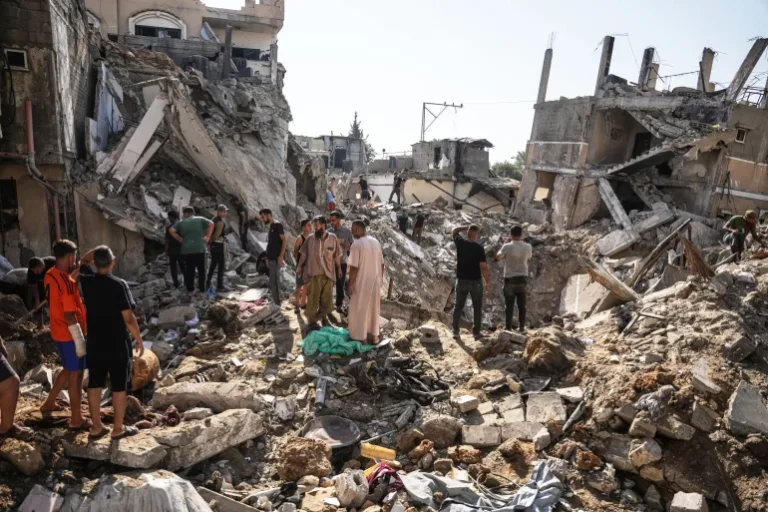
    Eight Palestinians killed in fresh Gaza strikes

    At least eight Palestinians were killed in fresh Israeli airstrikes across the Gaza Strip on Sunday, according to Gaza’s civil defence authorities, as violence continued despite renewed diplomatic efforts aimed at restoring a ceasefire. Officials said the latest strikes targeted several locations across the enclave, including Deir el-Balah, Khan Younis and Gaza City. Among the victims were a man and a woman who were killed when an Israeli helicopter struck a residential apartment in southern Deir el-Balah. Additional attacks claimed the lives of three people in Khan Younis and another person in Gaza City’s Old City. The latest escalation came just days after the United States unveiled a new roadmap intended to revive the stalled Gaza ceasefire agreement. The proposed plan reportedly includes steps toward Hamas’ disarmament and a phased Israeli military withdrawal from the territory. However, both sides remain divided over the conditions for implementing the proposal. Hamas has maintained that it will only place its weapons under supervision after Israeli military operations end and troops withdraw in accordance with the previously agreed ceasefire framework. Israeli officials, meanwhile, have insisted that any withdrawal depends on what they describe as the complete and genuine disarmament of Hamas. Israeli Prime Minister Benjamin Netanyahu has not publicly commented on the latest proposal, while some members of his coalition have rejected the initiative and called for continued military operations against Hamas. Diplomatic contacts are continuing in an effort to reduce tensions and revive negotiations. Former Palestinian official Mohammed Dahlan said discussions involving senior US representatives were ongoing and focused on securing an end to the fighting, although no breakthrough has yet been announced. Meanwhile, another Israeli strike reportedly destroyed a medical supply warehouse in central Gaza, causing extensive damage and raising further concerns over the humanitarian situation.

  • |

    China launches Arctic route to bypass global shipping chokepoints

    China is preparing to open a regular container shipping route through the Arctic as disruptions at major maritime chokepoints continue to affect global trade. The new service will operate through Russia’s Northern Sea Route along the Arctic coast. It is being presented as an alternative route between Asia and Europe. Chinese shipping company Sea Legend is expected to launch its first regular service on the route. The service will connect Ningbo in China with Felixstowe in the United Kingdom. The route has been described as the “Ice Silk Road”. It is designed to provide faster access to European markets. It could also improve trade links with Turkey and North Africa. The Arctic route could significantly reduce sailing times between China and Europe. The journey between Ningbo and Felixstowe normally takes around 40 days by traditional routes. The Northern Sea Route could cut the travel time by roughly half under suitable conditions. The route has gained attention as shipping companies look for alternatives to heavily congested and politically sensitive waterways. The Strait of Hormuz and the Bab al-Mandab have become major areas of concern for international shipping. Rising tensions in these regions have increased risks for vessels and raised costs for shipping companies. Marine risk experts say the Arctic is attracting greater interest from shipowners because it can offer shorter journeys and reduce exposure to geopolitical conflict zones. The Northern Sea Route is divided into 28 sections. Different rules and operating requirements apply along the route. Ships generally need permission from the Northern Sea Route administration, which is controlled by Russia’s state nuclear energy company Rosatom. Interest in the Arctic route is not new. Several international shipping companies have previously tested the Northern Sea Route. However, many European operators later avoided regular use of the route because of worsening relations with Russia. Concerns over the potential environmental impact of increased shipping in the fragile Arctic ecosystem have also remained a major issue. The changing climate has added another dimension to the debate. Shrinking sea ice has made some Arctic routes more accessible during parts of the year. The Arctic is now becoming an increasingly important area of competition among major powers. Russia considers the region strategically important for its economy and national security. It also views the Northern Sea Route as a major trade corridor. China has described itself as a “near-Arctic state” and has promoted the concept of a “Polar Silk Road”. Beijing sees greater Arctic access as an opportunity to expand trade and strengthen its global supply chains. The United States, meanwhile, has opposed efforts that could give Russia and China excessive control over Arctic routes. Washington has repeatedly supported freedom of navigation and greater international access to the region. The growing use of the Arctic shipping corridor could therefore have implications beyond commercial trade. For China, the route offers a potential way to reduce dependence on traditional maritime passages. For Russia, it could strengthen the economic importance of its Arctic coastline.

Leave a Reply

Your email address will not be published. Required fields are marked *