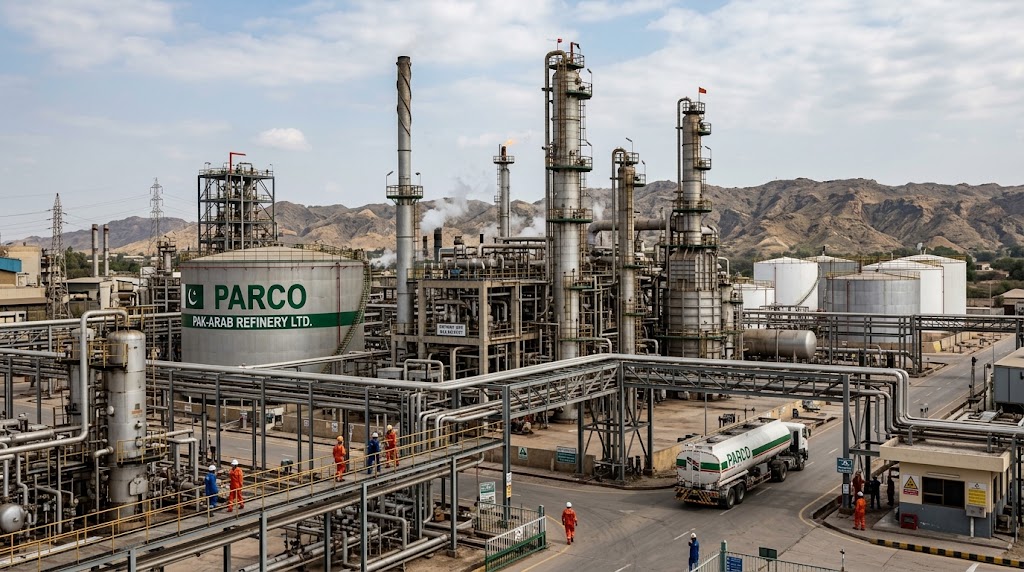
rs65m edhi robbery
| |

Rs65m Edhi robbery triggers outrage as workers dem…

KARACHI: A Rs65 million robbery at an Edhi Foundation centre in Karachi has sparked protests, with families of affected employees demanding the recovery of the stolen money and the immediate arrest of those responsible.

The demonstration was held outside the Karachi Press Club on Sunday, where relatives of Edhi Foundation workers, labour representatives, civil society activists and citizens gathered to voice their anger. Protesters carried placards and chanted slogans calling for justice and the safe recovery of funds intended to pay workers’ salaries.

Edhi Foundation Chairman Faisal Edhi joined the protest and expressed concern over the financial hardship faced by employees from low-income families. He said the money stolen from the foundation’s Sohrab Goth centre had been kept specifically for salary payments.

According to Faisal Edhi, four armed men entered the centre, took the Rs65 million and escaped. He said no arrests had been made so far and urged Sindh Chief Minister to take immediate action to ensure the suspects were arrested and the stolen funds recovered.

“These workers come from poor families, and their households have been left without financial support,” Faisal Edhi said, assuring employees that the foundation would stand by them during the difficult situation.

Human Rights Commission of Pakistan Chairman Asad Iqbal Butt also condemned the incident, saying the robbery at a humanitarian organisation raised serious concerns about security and law enforcement. He called on the Sindh government to provide immediate financial assistance to the Edhi Foundation and compensate it for the stolen amount.

National Trade Union Federation Secretary General Nasir Mansoor, Pakistan Peoples Party Labour Bureau leader Habibuddin Junaidi and other representatives also attended the demonstration in support of the affected workers.

Family members of the employees appealed to the provincial government to ensure that salaries were paid without further delay. They also demanded stronger security at Edhi Foundation centres across Karachi and called for the arrest and prosecution of the robbers.

The protesters further questioned the Sindh police leadership over the lack of arrests and demanded an explanation for the delay in bringing the suspects to justice.

The robbery has left many Edhi employees and their families facing immediate financial uncertainty, turning the incident into not only a major security concern but also a humanitarian issue for the workers who depend on their salaries to support their households.
Similar Posts

  • |

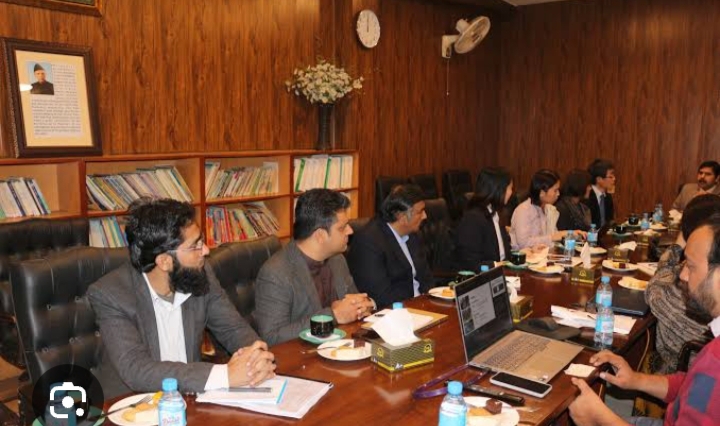
    JICA delegation visits Literacy Centres in Lahore

    LAHORE: A high-level delegation from the Japan International Cooperation Agency (JICA) visited Middle-Tech Literacy Centres in Lahore following an invitation from Literacy and Non-Formal Education Secretary Syed Haider Iqbal. The delegation included JICA President Dr. Akihiro Tanaka, Ambassador of Japan to Pakistan Shuichi Akamatsu, and JICA Pakistan Chief Representative Yusuke Shinozaki. During the visit, the officials toured literacy centres in Fatah Garh and Tajpura, reviewed the facilities available to students, and observed the teaching and learning activities. The delegation also interacted with students and distributed gifts among them. JICA representatives further handed over Package E textbooks to students who had completed Package D, enabling them to continue their education and move on to the next stage of their learning journey. During the visit, Secretary Literacy Syed Haider Iqbal briefed the Japanese delegation on the department’s ongoing initiatives for non-formal education. He highlighted projects being implemented with JICA’s support, along with other programmes aimed at improving access to education for children and young people who remain outside the formal schooling system. The secretary also outlined the department’s future plans and targets for expanding literacy, strengthening non-formal education and promoting skills development across Punjab. The JICA delegation appreciated the efforts of the Literacy and Non-Formal Education Department to improve literacy rates and provide educational opportunities to underserved communities across the province. The officials also acknowledged the department’s efforts to equip learners with skills that can contribute to their personal development and future economic opportunities. The meeting also focused on strengthening cooperation between the Literacy Department and JICA to expand educational opportunities for out-of-school children. Both sides discussed ways to enhance their partnership and explore further areas of collaboration to bring more children into the education system. The visit underscored the importance of international cooperation in addressing educational challenges and expanding access to learning opportunities, particularly for children who have been unable to attend mainstream schools.

  • |

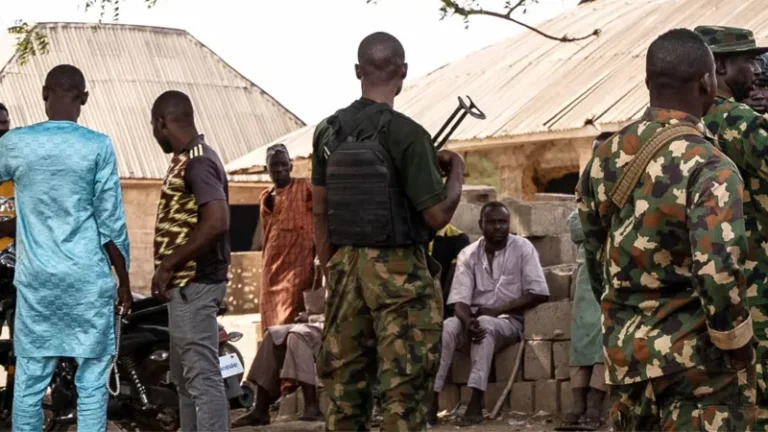
    Nigerian security forces rescue over 300 hostages in record single-day operation

    Nigerian joint security forces have rescued 308 abducted citizens from the Kainji Lake National Park in Niger state, marking the largest single-day hostage recovery operation in the country’s history. The intelligence-led operation involved the Nigerian military, police, Department of State Services, and the National Counter-Terrorism Centre. Those freed include 163 residents abducted during a February attack on the Woro and Nuku communities in Kwara state, alongside 145 individuals seized from neighbouring Niger state. During the February assault on Woro, the suspected killed more than 150 people and burned large parts of the village after residents refused to renounce the Nigerian government. Human rights monitoring groups reported that many victims of the raid were found bound and executed. President Bola Ahmed Tinubu commended the security services for their coordination, stating that the successful rescue demonstrates enhanced operational alignment among Nigeria’s defense and intelligence branches. The freed hostages are currently undergoing medical evaluation and receiving psychosocial support at a federal military facility before being reunited with their families.

  • |

    Pakistan refineries ready to sign long-delayed upgrade agreements 

    Pakistan’s oil refineries have agreed to move ahead with long-delayed agreements for upgrading their ageing plants, even as they continue to raise objections over a new financial penalty linked to the petroleum policy. Under the revised arrangement, refineries will be required to surrender 2.5 percent of the deemed duty retained on diesel for the period of delay. Industry representatives have termed the condition unfair, arguing that the delays were largely beyond their control and should not result in a financial burden on the refineries. Despite the disagreement over the penalty, refinery companies have indicated that they do not intend to hold up the signing of the agreements and are prepared to proceed with the modernization programme. The government’s Brownfield Refinery Policy, originally approved in August 2023, was introduced to encourage investment in the modernization and expansion of Pakistan’s existing refining capacity. The policy has subsequently been amended twice in an effort to address implementation issues and facilitate investment in the sector. Petroleum Minister Ali Pervaiz Malik has indicated that the long-pending agreements will be finalized shortly, while officials in the Petroleum Division are expecting the documents to be signed by the end of August. Agreements to Be Signed With ISGS A key change under the revised mechanism is that the upgrade agreements will now be executed with Interstate Gas Systems (ISGS), which operates under the Petroleum Division. Previously, the agreements were expected to be concluded through the Oil and Gas Regulatory Authority (Ogra). The change in the implementing entity is part of the government’s efforts to move the refinery-upgrade programme forward after delays in finalizing the contractual framework. Industry representatives, however, have maintained that refinery companies had already taken substantial steps to comply with the earlier arrangements and should not be penalized for delays that occurred afterward. Refineries Object to 2.5% Penalty Adil Khattak, Chief Executive Officer of Attock Refinery Limited and Chairperson of the Energy Committee of the Overseas Investors Chamber of Commerce and Industry, said Attock Refinery and National Refinery had completed several important formalities ahead of the previous deadline of October 22, 2024. According to Khattak, the companies had initialed agreements with Ogra, secured approval from their respective boards and arranged Rs1 billion bank guarantees each as part of the requirements. He said the companies were nevertheless being asked under the revised arrangement to surrender 2.5 percent of the deemed duty retained on diesel for the period between the previous deadline and the signing of the new agreements. The financial implications could be substantial. Khattak said Attock Refinery alone could face a penalty of around Rs7.5 million for every day of delay, increasing the industry’s concerns over the cost of the prolonged implementation process. Refineries argue that imposing the financial charge is inappropriate because they had already completed the required formalities within the earlier timeframe and were not responsible for subsequent delays in finalizing the agreements. Draft Agreements Circulated The Petroleum Division has now circulated draft upgrade agreements among the refineries, marking another step towards implementation of the long-delayed modernization programme. Officials are expected to hold further consultations with the Ministry of Finance, Controller of Accounts and ISGS before the agreements are finalized. Although refinery companies have reservations about the penalty clause, industry representatives have indicated that the disagreement will not prevent them from signing the agreements. The refineries are instead seeking a resolution of the financial issue separately while allowing the broader modernization programme to proceed. Upgrade Seen as Critical for Energy Security The modernization of Pakistan’s refining sector has gained greater importance as the country remains heavily dependent on imported petroleum products to meet domestic demand. Khattak estimated that delays in upgrading local refineries are costing Pakistan approximately $1.5 billion annually through additional fuel imports and the resulting foreign exchange outflows. Industry officials argue that upgrading domestic plants would allow refineries to produce a greater proportion of higher-value petroleum products while reducing dependence on imports. The issue has also acquired greater significance amid repeated disruptions and uncertainty in international energy markets. Greater domestic refining capacity and improved processing technology could provide Pakistan with an additional buffer against external supply shocks and volatile global fuel prices. Attock Refinery Moves Toward Financing Attock Refinery has already made considerable progress on the technical side of its proposed modernization project. The company has largely completed its front-end engineering and design work and has begun discussions with banks to arrange financing for the planned investment. The next stage will depend on the finalization of the government agreement and the completion of financing arrangements. For Pakistan, the successful implementation of the brownfield refinery upgrade programme could help improve domestic fuel production, reduce import dependence and ease pressure on foreign exchange reserves. However, industry stakeholders say timely decisions on the remaining contractual and financial issues will be essential if the government wants to avoid further delays in a programme that was originally launched several years ago.

  • | |

    Doctor suspended after performing laparoscopic sur…

    Islamabad: The Medical Tribunal has upheld a one year suspension of Dr Irfan Ashraf after finding that he performed laparoscopic surgery despite not completing the required training for independent laparoscopic procedures and operated at a healthcare facility that lacked an Intensive Care Unit and other essential facilities needed to deal with serious complications. The Tribunal also upheld a Rs100,000 fine and a ban preventing Dr Irfan Ashraf from performing laparoscopic procedures until he completes proper certified training. The judgment, announced on July 8, 2026, came in an appeal filed by Muhammad Zahid Niaz, whose father Niaz Ahmad died after a chain of medical treatment that began with laparoscopic surgery at Saleem Polyclinic in Mian Channu on December 31, 2016. The case took a serious turn when the disciplinary inquiry examined the actual training record of Dr Irfan Ashraf. The inquiry found that although he had taken part in laparoscopic procedures during his postgraduate training, most of his experience was as an observer or assistant. According to the judgment, Dr Irfan Ashraf had not completed the required number of procedures at the higher training levels needed to show independent surgical ability. The record showed that he had not completed even a single Level V procedure, which represents the stage at which a trainee is expected to perform laparoscopic surgery independently without supervision. The Tribunal said this was not simply a case where a normal surgical complication had occurred. The main concern was that Dr Irfan Ashraf undertook an elective laparoscopic operation without having demonstrated the required independent competence and at a facility that did not have the necessary backup facilities. The patient, Niaz Ahmad, suffered an injury to the common bile duct and hepatic vascular structures during the surgery. He was later taken to Bahawal Victoria Hospital in Bahawalpur for further treatment. He subsequently received treatment at Sheikh Zayed Hospital in Lahore and underwent an interventional radiological procedure at Lahore Medical Complex. Despite prolonged treatment at several hospitals, he died on March 4, 2017. The Punjab Healthcare Commission had earlier investigated the matter. It found that Saleem Polyclinic did not have the required infrastructure, qualified human resources and licensing needed for such surgical procedures. The Commission imposed a financial penalty on the owner of the healthcare establishment and referred the conduct of Dr Muhammad Saleem Akhtar and Dr Irfan Ashraf to the medical regulator for disciplinary action. The medical disciplinary committee later appointed Prof Dr Tanwir Khaliq, an experienced general surgeon, as an independent medical expert. He examined the medical record and assessed the standard of care, the management of laparoscopic complications and the facilities available at the clinic. Prof Dr Tanwir Khaliq concluded that the operation had been performed at a relatively small healthcare facility without an ICU and other essential backup facilities. He also found that Dr Irfan Ashraf was not sufficiently proficient in laparoscopic surgery, particularly when dealing with complications. The Tribunal noted that Dr Irfan Ashraf himself acknowledged that Saleem Polyclinic did not have an ICU or the facilities required to manage serious complications from laparoscopic surgery. The Tribunal also noted that Dr Irfan Ashraf had been working as a Senior Registrar at Bahawal Victoria Hospital, where better surgical support was available. When questioned about why the operation was carried out at the private facility, the explanation was that the patient wanted the surgery there. The Tribunal rejected this reasoning. It said a patient’s preference cannot remove a surgeon’s professional responsibility to determine whether a healthcare facility is safe enough for the planned procedure. The case also raised questions about what doctors tell patients about their professional skills. The disciplinary committee found that Dr Irfan Ashraf had represented himself as independently competent to perform laparoscopic surgery even though his training record did not show that he had completed the required independent procedures. The Tribunal said the evidence supported three major findings against Dr Irfan Ashraf. He performed an elective laparoscopic operation at a facility that could not properly manage foreseeable complications. He represented himself as independently competent despite incomplete training. He also exposed the patient to avoidable risk by choosing a facility without the necessary support instead of a properly equipped tertiary hospital. However, the Tribunal did not hold every doctor involved in the patient’s treatment responsible. Dr Muhammad Saleem Akhtar, the owner of Saleem Polyclinic, received a warning rather than a disciplinary punishment. The Tribunal found that there was no evidence that he personally performed the operation or took part in the surgical decision making. The Tribunal said ownership of a healthcare facility alone was not enough to impose the same disciplinary punishment on Dr Muhammad Saleem Akhtar as the operating surgeon. However, the warning required him to ensure that his facility was not used for procedures beyond its capacity. Dr Khurram Shafiq Khan was also cleared of professional negligence. His involvement came later, after the patient had already suffered complications from the earlier surgery. His role was connected with an embolization procedure to control bleeding from the hepatic artery. After examining his role, the disciplinary committee found no clear connection between the procedure performed by Dr Khurram Shafiq Khan and the patient’s eventual death. The Tribunal found no reason to disturb that decision. Muhammad Zahid Niaz had appealed because he believed the punishment against Dr Irfan Ashraf was too weak considering that his father’s treatment ultimately ended in death. He also wanted stronger action against Dr Muhammad Saleem Akhtar and Dr Khurram Shafiq Khan. The Medical Tribunal, chaired by Justice (Retired) Safdar Saleem Shahid, rejected the request for harsher punishment. The Tribunal said a tragic medical outcome does not automatically mean that every doctor involved was negligent. It explained that medical procedures can have known complications even when reasonable care is taken. The important question is whether a doctor failed to meet the level of skill and care expected from a competent doctor in similar circumstances. In the case of Dr Irfan Ashraf, however, the Tribunal found that the disciplinary committee had enough evidence

  • |

    Trump backs Infantino as FIFA power struggle intensifies

    WASHINGTON: US President Donald Trump has thrown his support behind embattled FIFA president Gianni Infantino, warning that removing the football chief would be a “terrible mistake” as opposition to Infantino grows within several major football confederations. Trump’s intervention came after UEFA, CONCACAF and the Asian Football Confederation (AFC) jointly criticised Infantino in an unusually strong open letter, accusing him of damaging trust and placing his authority above the wider football community. “If, for any reason, they even considered replacing President Gianni Infantino,” Trump said on Truth Social, “FIFA would be making a terrible mistake.” The US president described Infantino as “fantastic” and praised his leadership of the expanded 2026 World Cup, which was hosted by the United States, Canada and Mexico. Trump also argued that the tournament had been the most successful World Cup ever and warned that FIFA could struggle to maintain the same level of success and profitability without Infantino. The public backing is significant because Infantino is facing growing resistance over a controversial proposal to bring private investment into FIFA competitions, including the World Cup. The plan was eventually withdrawn after fierce opposition from European football authorities. UEFA had threatened to boycott future World Cups if the investment proposal went ahead, describing the arrangement as an opaque and questionable deal. The pressure ultimately played a major role in Infantino abandoning the plan. The FIFA president received renewed support from senior officials during an emergency meeting in Morocco last week. However, UEFA, CONCACAF and AFC dismissed that backing, arguing that the meeting did not address the concerns raised by the confederations. The three bodies accused Infantino of failing to uphold the principles of accountability and collective leadership. They stressed that football’s governing structure should not revolve around one individual. The dispute could have major consequences ahead of the FIFA presidential election scheduled for March 2027. Infantino, who has led FIFA for a decade, is seeking a fourth and final term. Candidates must declare their intentions by November 18. CONCACAF president Victor Montagliani is regarded as a potential challenger, although Infantino continues to enjoy support from several influential football bodies. The Confederation of African Football has backed him, while South American governing body CONMEBOL remains broadly supportive. Several individual national associations have also expressed support. However, FIFA’s voting system means individual member associations—not confederations—will ultimately decide the election. Infantino’s position had appeared secure after the successful 48-team World Cup, but the private investment controversy has dramatically changed the political landscape. The latest confrontation has therefore turned the road to the 2027 FIFA election into an increasingly intense power struggle, with Trump now openly backing Infantino while several major football authorities demand greater accountability and collective decision-making.

  • | |

    Iqra Aziz shares first photos of daughter Sophia

    Pakistani actor Iqra Aziz has delighted fans by revealing the face of her daughter, Sophia Hussain, for the first time through a heartwarming family photoshoot shared on social media. The actress posted a series of adorable pictures featuring her son, Kabir Hussain, and daughter Sophia. The siblings were dressed in matching white outfits, creating a charming and elegant look that quickly captured the attention of fans online. Iqra and her husband, actor and director Yasir Hussain, welcomed their daughter earlier this year. While announcing Sophia’s birth in January, the actress had shared the happy news with her followers but chose not to reveal the baby’s face at the time. The newly shared photographs mark Sophia’s first public appearance on Iqra’s social media accounts. Fans flooded the comments section with congratulatory messages, praising the children’s adorable bond and calling Sophia a striking resemblance to her mother. Known for her performances in several hit television dramas, Iqra Aziz has remained one of Pakistan’s most admired actors. Alongside her successful acting career, she often shares glimpses of her family life with fans, making her social media updates widely followed.

Leave a Reply

Your email address will not be published. Required fields are marked *