
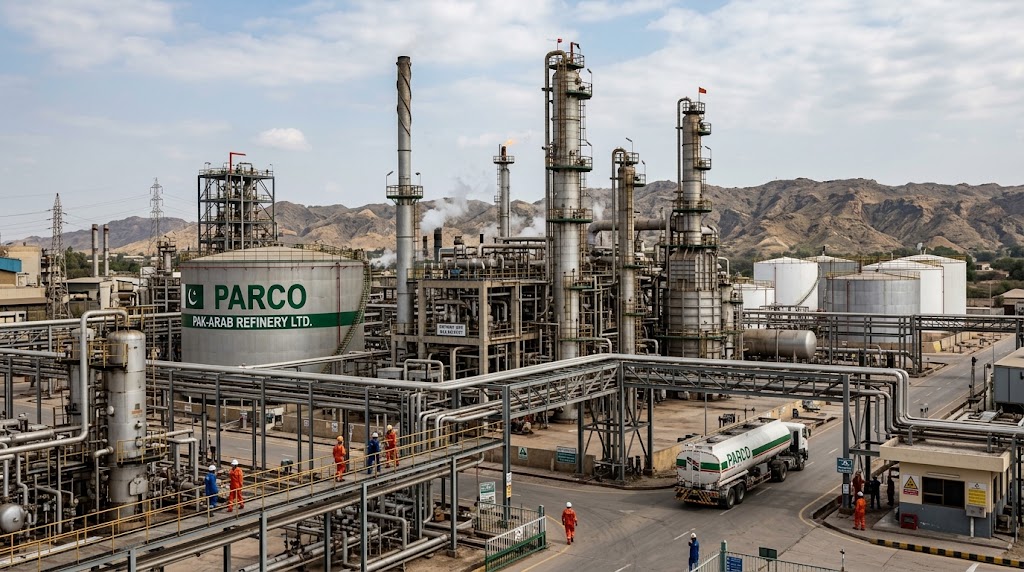
pakistan refineries ready
|

Pakistan refineries ready to sign long-delayed upgrade agreements 

Pakistan’s oil refineries have agreed to move ahead with long-delayed agreements for upgrading their ageing plants, even as they continue to raise objections over a new financial penalty linked to the petroleum policy.

Under the revised arrangement, refineries will be required to surrender 2.5 percent of the deemed duty retained on diesel for the period of delay. Industry representatives have termed the condition unfair, arguing that the delays were largely beyond their control and should not result in a financial burden on the refineries.

Despite the disagreement over the penalty, refinery companies have indicated that they do not intend to hold up the signing of the agreements and are prepared to proceed with the modernization programme.

The government’s Brownfield Refinery Policy, originally approved in August 2023, was introduced to encourage investment in the modernization and expansion of Pakistan’s existing refining capacity. The policy has subsequently been amended twice in an effort to address implementation issues and facilitate investment in the sector.

Petroleum Minister Ali Pervaiz Malik has indicated that the long-pending agreements will be finalized shortly, while officials in the Petroleum Division are expecting the documents to be signed by the end of August.

Agreements to Be Signed With ISGS

A key change under the revised mechanism is that the upgrade agreements will now be executed with Interstate Gas Systems (ISGS), which operates under the Petroleum Division.

Previously, the agreements were expected to be concluded through the Oil and Gas Regulatory Authority (Ogra).

The change in the implementing entity is part of the government’s efforts to move the refinery-upgrade programme forward after delays in finalizing the contractual framework.

Industry representatives, however, have maintained that refinery companies had already taken substantial steps to comply with the earlier arrangements and should not be penalized for delays that occurred afterward.

Refineries Object to 2.5% Penalty

Adil Khattak, Chief Executive Officer of Attock Refinery Limited and Chairperson of the Energy Committee of the Overseas Investors Chamber of Commerce and Industry, said Attock Refinery and National Refinery had completed several important formalities ahead of the previous deadline of October 22, 2024.

According to Khattak, the companies had initialed agreements with Ogra, secured approval from their respective boards and arranged Rs1 billion bank guarantees each as part of the requirements.

He said the companies were nevertheless being asked under the revised arrangement to surrender 2.5 percent of the deemed duty retained on diesel for the period between the previous deadline and the signing of the new agreements.

The financial implications could be substantial. Khattak said Attock Refinery alone could face a penalty of around Rs7.5 million for every day of delay, increasing the industry’s concerns over the cost of the prolonged implementation process.

Refineries argue that imposing the financial charge is inappropriate because they had already completed the required formalities within the earlier timeframe and were not responsible for subsequent delays in finalizing the agreements.

Draft Agreements Circulated

The Petroleum Division has now circulated draft upgrade agreements among the refineries, marking another step towards implementation of the long-delayed modernization programme.

Officials are expected to hold further consultations with the Ministry of Finance, Controller of Accounts and ISGS before the agreements are finalized.

Although refinery companies have reservations about the penalty clause, industry representatives have indicated that the disagreement will not prevent them from signing the agreements.

The refineries are instead seeking a resolution of the financial issue separately while allowing the broader modernization programme to proceed.

Upgrade Seen as Critical for Energy Security

The modernization of Pakistan’s refining sector has gained greater importance as the country remains heavily dependent on imported petroleum products to meet domestic demand.

Khattak estimated that delays in upgrading local refineries are costing Pakistan approximately $1.5 billion annually through additional fuel imports and the resulting foreign exchange outflows.

Industry officials argue that upgrading domestic plants would allow refineries to produce a greater proportion of higher-value petroleum products while reducing dependence on imports.

The issue has also acquired greater significance amid repeated disruptions and uncertainty in international energy markets. Greater domestic refining capacity and improved processing technology could provide Pakistan with an additional buffer against external supply shocks and volatile global fuel prices.

Attock Refinery Moves Toward Financing

Attock Refinery has already made considerable progress on the technical side of its proposed modernization project.

The company has largely completed its front-end engineering and design work and has begun discussions with banks to arrange financing for the planned investment.

The next stage will depend on the finalization of the government agreement and the completion of financing arrangements.

For Pakistan, the successful implementation of the brownfield refinery upgrade programme could help improve domestic fuel production, reduce import dependence and ease pressure on foreign exchange reserves.

However, industry stakeholders say timely decisions on the remaining contractual and financial issues will be essential if the government wants to avoid further delays in a programme that was originally launched several years ago.


Similar Posts

  • |

    Cuba plunges into darkness as national electric grid collapses

    Cuba’s state-owned grid operator, Union Electrica de Cuba, announced that the national electricity system collapsed late on Sunday night, leaving approximately 10 million residents without power. The widespread outage marks the fourth major blackout to hit the country in recent weeks following three similar grid failures recorded throughout July. The worsening energy crisis is driven by severe fuel shortages, which have left the nation’s ageing power generation facilities unable to meet basic electrical demand. Sanctions and geopolitical shifts have severely restricted the island’s ability to import crude oil. Following the ouster of Venezuelan President Nicolas Maduro in January, a US-imposed oil blockade cut off Cuba’s primary source of imported fuel, while alternative shipments from Mexico have also stopped under pressure from Washington. To mitigate the escalating power supply emergency, the Cuban government has initiated unprecedented reforms by allowing private businesses and foreign-backed entities into its domestic wholesale fuel market.

  • | |

    Pakistan stands firmly with Saudi Arabia: PM

    Prime Minister Shehbaz Sharif has reaffirmed Pakistan’s full support for Saudi Arabia during a telephone conversation with Saudi Crown Prince Mohammed bin Salman. The two leaders discussed the regional security situation, recent developments in the Middle East and the importance of maintaining peace and stability. During the conversation, the prime minister strongly condemned the recent Houthi attacks on Saudi oil tankers in the Red Sea. He described the attacks as unacceptable and said they were a clear violation of international law. He added that such actions pose a serious threat to international maritime security, commercial shipping and the free movement of global trade. Shehbaz Sharif said attacks targeting commercial vessels not only endanger regional stability but also threaten the global economy by disrupting vital shipping routes. He stressed that the international community must work together to ensure the safety of maritime trade and prevent further escalation in the region. The prime minister reaffirmed Pakistan’s complete solidarity with Saudi Arabia. He said he, Field Marshal Syed Asim Munir and the people of Pakistan stand firmly with the Saudi leadership and the brotherly people of the Kingdom during this challenging period. He emphasized that Pakistan fully supports Saudi Arabia’s efforts to safeguard its security and territorial integrity. Shehbaz Sharif also reiterated Pakistan’s unwavering commitment to the sovereignty, independence and prosperity of Saudi Arabia. He said the deep-rooted relationship between Islamabad and Riyadh is based on shared faith, mutual respect and decades of close cooperation in political, economic and security matters. Saudi Crown Prince Mohammed bin Salman thanked Pakistan for its consistent support and appreciated the strong brotherly ties between the two countries. He acknowledged Pakistan’s continued commitment to regional peace and stability. The prime minister conveyed his best wishes to King Salman bin Abdulaziz, Custodian of the Two Holy Mosques, and expressed hope for his continued good health and well-being. Shehbaz Sharif also stressed that Pakistan would continue cooperating with Saudi Arabia and the international community to promote peace, security and stability across the Middle East. He emphasized the importance of ensuring uninterrupted maritime traffic through the Red Sea and the Strait of Hormuz, saying these waterways are critical for global trade, energy supplies and international economic stability.

  • | |

    Pakistan, Saudi Arabia, Türkiye form military pow…

    According to the Global Firepower Index, the combined military capabilities of Pakistan, Saudi Arabia and Türkiye have become more significant following the signing of a mutual defence agreement between the three countries. The assessment describes the agreement as more than a conventional defence arrangement, saying it represents an effort to bring the military capabilities of three major regional powers into a coordinated defence partnership. Together, the three countries have approximately 1.4 million active military personnel, around 3,415 military aircraft, 6,046 tanks and 344 naval assets, according to the assessment. Pakistan plays a major role in the partnership, with around 660,000 active military personnel and a nuclear capability that significantly strengthens the combined strategic deterrence of the three countries. Türkiye contributes a strong defence industry and advanced military capabilities. It has around 192 naval assets and substantial expertise in drones, missiles, sensors and electronic warfare. Saudi Arabia, meanwhile, provides the largest financial contribution to the partnership. Its annual defence budget is estimated at around $63.9 billion. The kingdom’s strategic geographical position also gives it considerable importance within the proposed defence partnership. The combined annual defence spending of Pakistan, Saudi Arabia and Türkiye is estimated at approximately $124.4 billion. The figures indicate that the three countries collectively possess substantial manpower, air power, land forces and naval capabilities. Their combined resources could provide the partnership with greater strategic weight in regional security matters. The assessment also highlights the different strengths each country could bring to the alliance. Pakistan contributes significant manpower and nuclear deterrence, Türkiye offers defence technology and military-industrial capabilities, while Saudi Arabia provides substantial financial resources and strategic geographic importance. Together, these capabilities could create a broader and more diversified defence partnership among the three countries.

  • | |

    Dar, Wang Yi discuss bilateral ties and SCO cooper…

    Deputy Prime Minister and Foreign Minister Ishaq Dar held a meeting with Chinese Foreign Minister Wang Yi on the sidelines of the Shanghai Cooperation Organisation (SCO) Council of Foreign Ministers’ meeting in Cholpon-Ata, Kyrgyzstan. The two leaders reviewed Pakistan-China relations, exchanged views on regional developments and discussed expanding cooperation through multilateral platforms. The meeting reaffirmed the close and longstanding partnership between Pakistan and China. Both sides discussed ways to further strengthen bilateral cooperation in areas of mutual interest, including diplomacy, regional peace, economic collaboration and strategic coordination. During the discussions, Dar thanked Wang Yi for appreciating Pakistan’s diplomatic efforts aimed at promoting regional peace and stability. He said Pakistan remains committed to dialogue, cooperation and peaceful engagement in addressing regional challenges. Wang Yi congratulated Pakistan on its upcoming responsibilities within the Shanghai Cooperation Organisation. He extended his best wishes as Pakistan prepares to assume the chairmanship of the SCO Council of Heads of State for 2026–27 and host the SCO Summit in 2027. He expressed confidence that Pakistan would make a positive contribution to advancing the organisation’s objectives. Both foreign ministers also exchanged views on the regional and international situation. They agreed that continued consultation and cooperation among SCO member states are important for promoting peace, economic development, connectivity and regional stability. Earlier in the day, Dar met Kyrgyz President Sadyr Japarov at the presidential residence in Cholpon-Ata. During the meeting, he conveyed greetings from President Asif Ali Zardari and Prime Minister Shehbaz Sharif and thanked the Kyrgyz leadership for hosting the SCO foreign ministers’ meeting. The meeting with President Japarov focused on regional and global developments as well as the growing role of the SCO in strengthening cooperation among member states. Dar highlighted the importance of maintaining close collaboration as Pakistan prepares to lead the organisation during its upcoming chairmanship. The foreign minister is representing Pakistan at the two-day SCO Council of Foreign Ministers’ meeting, attended by foreign ministers from China, Russia, India, Iran, Kazakhstan, Kyrgyzstan, Tajikistan, Uzbekistan, Belarus and Pakistan. The meeting is reviewing key regional and international issues while preparing the agenda for the next SCO summit.

  • | |

    Karachi braces for drizzle as humidity persists

    KARACHI: Karachi is expected to experience partly cloudy and humid weather over the next 24 hours, with the Meteorological Department forecasting a possibility of light drizzle in the city tonight. Temperatures are likely to remain between 32 and 34 degrees Celsius during the day, while the minimum temperature recorded over the past 24 hours was 27.5°C. The weather is expected to remain humid as sea breezes continue to sweep across the city from the southwest at around 15 kilometres per hour. The humidity level has been recorded at 75 per cent. Residents may experience some relief from the persistent heat if the forecast drizzle occurs, although the overall weather is expected to remain warm and humid.

  • |

    UK Parliament hears fresh concerns over human rights in Indian-Occupied Jammu & Kashmir

    The human rights situation in Indian-occupied Jammu and Kashmir (IIOJK) came under renewed scrutiny in the House of Lords on Thursday after Lord Qurban Hussain urged the British Government to clarify its position in light of a Genocide Watch report published earlier this year. During the debate, Lord Qurban Hussain said the report warned that the situation in Indian-occupied Jammu and Kashmir had reached a critical stage and alleged that eight of the ten recognised stages associated with genocide had already been reached. He asked how seriously the British Government viewed the report and what action it was taking to help prevent further deterioration. The British peer, who said members of his family live on both sides of the Line of Control, urged the Government to explain its assessment of the report and its approach towards the human rights situation in Indian-occupied Jammu and Kashmir. Responding for the Government, Lord Collins of Highbury, Parliamentary Under-Secretary of State at the Foreign, Commonwealth and Development Office (FCDO), reiterated the UK’s longstanding position on human rights. He said the UK continues to express concern over violence and loss of life and supports full, transparent and impartial investigations into allegations of abuse by Indian police and security forces. He added that the British Government continues to raise human rights issues with India through diplomatic channels. Lord Qurban Hussain’s intervention highlights continuing concern among a number of British parliamentarians over the human rights situation in Indian-occupied Jammu and Kashmir, with renewed calls for accountability, respect for fundamental rights and a peaceful resolution of the longstanding dispute.

Leave a Reply

Your email address will not be published. Required fields are marked *