university road corridor
| |

University Road corridor to be completed by Septem…

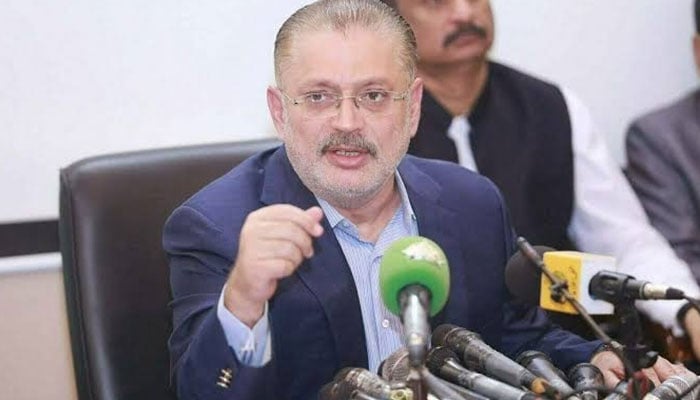
Sindh Senior Minister for Transport Sharjeel Inam Memon has said that 80 to 85 per cent of the work on the corridor along Karachi’s University Road has been completed.

He said the remaining work is expected to be finished by September 15, after which the road project will be fully completed.

Sharjeel Memon made the remarks during a visit to the BRT Red Line project. He reviewed the ongoing construction work and the traffic situation along University Road.

The minister said traffic is currently moving smoothly on the road and that there are no major disruptions to the flow of vehicles.

He also announced that a large number of double-decker buses are expected to arrive in Karachi next month. Electric vehicles will also be introduced as part of efforts to improve the city’s public transport system.

According to the minister, the Sindh government has already approved 500 electric buses. He added that Pink Scooties would soon be made available for women as part of initiatives aimed at improving mobility and transportation options.

Sharjeel Memon said the provincial government was working on several public service projects across different sectors. He maintained that the Pakistan Peoples Party comes to power through the public mandate and focuses on completing development and welfare projects after assuming office.

Speaking about Thar, the minister said the region has extensive coal reserves that can be used to generate relatively inexpensive electricity. He said Thar coal could also be utilised to meet the energy requirements of power plants across Pakistan.

He further highlighted what he described as the Pakistan Peoples Party’s contribution to the country, including its role in Pakistan’s development as a nuclear power.

Discussing the performance of the Sindh government, Memon said work was continuing around the clock in different departments. He said significant progress had been made on a housing programme aimed at constructing 2.1 million homes, with a large number of houses already completed.

The minister described the housing initiative as one of the largest projects of its kind in the world.

He also referred to the Shahrah-e-Bhutto, saying heavy traffic on the newly constructed road demonstrated its importance and success. He claimed Sindh was the only province focusing on practical development rather than political propaganda.

On Karachi’s transport needs, Memon said public transport services would be expanded across the city without discrimination.

He said voters could support any political party, but the government would continue to provide transport facilities in every part of Karachi.

The minister also highlighted developments in Sindh’s healthcare sector. He said the provincial government was providing free and modern medical facilities and had introduced several initiatives before similar measures were adopted elsewhere.

Memon also pointed to the province’s air ambulance service, saying the facility had already been operational for some time.

Similar Posts

  • |

    SEF, Sindh Boy Scouts launch initiative to expand scouting across Foundation-assisted schools*

    KARACHI: The Sindh Education Foundation (SEF), Government of Sindh has initiated a collaboration with the Sindh Boy Scouts Association by holding a Group Scout Leadership Seminar aimed at promoting leadership, discipline and community service among students enrolled in Foundation Assisted Schools. The seminar, held at the Sindh Boy Scouts Association headquarters in Karachi, brought together representatives from 32 Foundation Assisted Schools, including head teachers, faculty members and students. The event was attended by SEF Managing Director Gahanwer Ali Laghari, Deputy Managing Director Shahpara Rizvi, Regional Head Karachi Ashfaque Hussain Meerani, senior directors, assistant directors and other officials. The Sindh Boy Scouts Association was represented by Provincial Scout Secretary Syed Akhter Meer, and other office-bearers. Addressing the seminar, Provincial Scout Secretary Syed Akhter Meer welcomed the participation of SEF schools and said introducing students to the history and values of scouting would encourage them to become part of a global movement focused on leadership, character building and service. He also recalled the support extended to the scouting movement by the late Prof Dr Anita Ghulam Ali during her tenure at SEF, saying it was encouraging to witness the Foundation continuing the same commitment under the leadership of Managing Director Gahanwer Ali Laghari. Participants were also briefed on the history of the scouting movement in Sindh, its achievements and future roadmap through a presentation highlighting the organisation’s contribution to youth development. Former senior bureaucrat Ghulam Ali Pasha said leadership and discipline could not be developed through classroom education alone, stressing that scouting provides young people with practical exposure to teamwork, responsibility and community service. He described such initiatives as essential for preparing students to become confident and responsible leaders. Speaking on the occasion, SEF Managing Director Gahanwer Ali Laghari said the Foundation’s mandate extended beyond improving access to education and academic outcomes. “Alongside quality education, we want our students to develop leadership, discipline and a sense of responsibility. Through scouting, they will have an opportunity to become part of an international movement that promotes these values,” he said. Laghari announced that SEF and the Sindh Boy Scouts Association would jointly organise a series of scouting activities across Foundation Assisted Schools throughout the province. He said the initiative had been launched with schools in Karachi and would gradually be expanded to all SEF-supported schools. “Our objective is to engage the entire network of Foundation Assisted Schools, and we are hopeful that within the next one-and-a-half years, scouting activities will be introduced across the province,” he added. The initiative is expected to provide students with greater opportunities for leadership development, teamwork and community engagement alongside their academic education.

  • | | |

    Gastroenteritis and Cholera cases rise in Lahore 

      Gastroenteritis and cholera cases have started emerging in Lahore and surrounding areas, raising concerns about the quality of drinking water, food hygiene and sanitation in the city. Health officials have reported a significant number of patients suffering from gastrointestinal illnesses at basic health centres, dispensaries and district health units across Lahore. Chief Executive Officer (CEO) Health Lahore, Dr Asif Niazi, said that gastroenteritis cases were being reported at basic health centres, dispensaries and district health units. According to him, approximately 7,000 people were affected by gastroenteritis during the month of July. Dr Niazi further revealed that basic health centres were receiving an average of 271 gastroenteritis patients every day. He said that a significant proportion of those affected were children, with most patients falling between the ages of five and 10. The increasing number of cases has also been observed at major teaching hospitals in Lahore. Senior Medical Officer Dr Mustafa Kamal said that patients suffering from gastroenteritis and cholera were being brought to teaching hospitals for treatment. He stated that Sir Ganga Ram Hospital was receiving between 150 and 200 such patients within a 24-hour period. According to Dr Kamal, a high incidence of dysentery is one of the major symptoms associated with cholera. He added that cholera cases were also being reported in the emergency department and outpatient department of Mayo Hospital. The health officials have linked the rise in gastrointestinal diseases to unsafe drinking water and unhygienic food. Senior Medical Officer Dr Kazim said that contaminated water was one of the major factors contributing to the spread of cholera and other gastrointestinal illnesses. He also warned against consuming food sold by roadside vendors, saying that unhygienic food from carts and stalls could increase the risk of cholera and diarrhoea. According to the medical officer, ice sold in local markets could also be a potential source of contamination and may contribute to the spread of cholera and diarrhoea. Health experts have repeatedly emphasized the importance of clean drinking water, proper sanitation and food hygiene in preventing waterborne diseases. Gastroenteritis can cause symptoms such as diarrhoea, vomiting, abdominal pain and dehydration, while cholera can become particularly dangerous if severe dehydration is not treated promptly. The situation is particularly concerning for children, who can become dehydrated quickly after repeated episodes of diarrhoea or vomiting. With most reported gastroenteritis patients reportedly between five and 10 years of age, health authorities and families may need to pay particular attention to children’s water and food consumption. Residents have been advised to take precautions by drinking safe and properly treated water, maintaining hand hygiene and avoiding food and beverages prepared under unhygienic conditions. Particular caution may also be necessary when purchasing ice, as contaminated water used in its preparation can potentially transmit waterborne infections. The rising number of cases has highlighted the need for improved monitoring of drinking-water sources, food outlets and roadside vendors in Lahore and its surrounding areas. Authorities may also need to strengthen public awareness campaigns about preventive measures and ensure that affected patients have timely access to medical treatment. With thousands of cases reported in July and hospitals continuing to receive patients, health officials are closely monitoring the situation. Ensuring access to clean water and safe food remains essential to controlling the spread of gastroenteritis, cholera and other waterborne diseases across Lahore.

  • | |

    New provinces debate gains momentum as coalition p…

    A renewed debate over the creation of new provinces in Pakistan has gathered political momentum after two major coalition partners publicly endorsed Interior Minister Mohsin Naqvi’s proposal to restructure the country’s administrative system. However, the ruling Pakistan Muslim League-Nawaz (PML-N) has yet to officially comment, fueling speculation over its stance on the sensitive issue. The discussion began after Naqvi argued that Pakistan’s existing administrative framework had become ineffective and called for a national consensus on establishing smaller provinces to improve governance and public service delivery. His remarks quickly drew support from coalition allies, including the Muttahida Qaumi Movement-Pakistan (MQM-P) and the Istehkam-e-Pakistan Party (IPP). Federal Health Minister Mustafa Kamal described the proposal as an urgent national necessity rather than a political choice, stressing that decentralizing administrative powers was essential for effective governance. The MQM-P has long advocated the creation of an additional province in Sindh, making the party one of the strongest supporters of the initiative. Privatization Minister Abdul Aleem Khan of the IPP also endorsed the proposal, suggesting that each of Pakistan’s four existing provinces could eventually be divided into three administrative regions. He argued that smaller provinces would bring government closer to the people and reduce the hardships faced by citizens traveling long distances to provincial capitals. Despite growing support from coalition partners, the proposal faces significant constitutional and political challenges. Any change to provincial boundaries requires a two-thirds majority in the affected provincial assembly, making consensus difficult to achieve. The Pakistan Peoples Party (PPP), which governs Sindh and is also part of the federal coalition, has expressed strong reservations, warning that such a move could create more problems than solutions. Opposition leaders have also criticized the proposal, arguing that the government lacks the political mandate for such a major constitutional change. They insist that strengthening democratic institutions and improving governance should take priority over redrawing provincial boundaries. Political analysts have offered differing views on the initiative. Some believe creating new provinces could deepen ethnic and regional divisions, while others see the debate as an attempt to shift public attention away from pressing national issues, including recent unrest in Azad Jammu and Kashmir and ongoing security challenges in Balochistan. Many experts argue that empowering local governments under the 18th Constitutional Amendment would be a more practical and effective way to improve governance without altering provincial boundaries. Mustafa Kamal also acknowledged that stronger local governments are essential regardless of whether new provinces are eventually created. With the PML-N maintaining silence and key coalition partners taking opposing positions, the proposal has opened a fresh political debate that is likely to remain at the center of Pakistan’s national discourse in the coming months.

  • |

    UN General Assembly extends rights chief’s term despite US objections

    The United Nations General Assembly has voted by a large majority to grant UN High Commissioner for Human Rights Volker Turk a second four-year term, despite strong opposition from the United States, Russia and Israel. The decision came after member states rejected calls to delay the vote and instead backed Secretary General Antonio Guterres’ recommendation to keep Turk in office when his current term expires in October. The 193-member General Assembly approved the extension with 144 countries voting in favor, while 10 countries voted against the proposal and 13 abstained. Before the final vote, member states also rejected a Russian proposal that would have extended Turk’s mandate only until the end of 2026 instead of giving him another full term. Turk has become one of the UN’s most outspoken voices on global human rights issues during his first term. He has repeatedly criticized Russia’s military actions in Ukraine and raised concerns over Israel’s conduct during the conflict in Gaza. He has also called for investigations into deaths that occurred in US immigration detention facilities. His willingness to publicly challenge major world powers has drawn criticism from several governments, including Washington, Moscow and Tel Aviv. The vote reflected growing tensions between the United States and the United Nations under President Donald Trump’s administration. In recent years, Washington has reduced financial support for several UN agencies and withdrawn from multiple international bodies. The administration has argued that reforms are needed before the United States continues its current level of participation and funding. Before the vote, the United States urged the General Assembly to postpone the decision for further consultations. US Representative for UN Management and Reform Jeff Bartos warned member states that approving the appointment without additional debate would damage the organization’s credibility. He said the United States would review its future engagement, participation and financial contributions if the assembly ignored its concerns. The US State Department also criticized the process before the vote, describing it as rushed and lacking sufficient discussion among member countries. Officials argued that member states should have been given more time to examine the proposal before making a final decision. Despite those objections, a broad coalition of countries supported Turk’s reappointment. The European Union strongly backed the extension, along with many African and Latin American nations. China also voted in favor of the proposal, helping secure the overwhelming majority needed for approval. UN Secretary General Antonio Guterres nominated Turk for a second term after working closely with him for several years. Guterres, who is due to leave office in December, praised Turk’s experience and commitment to defending human rights around the world. Turk, an Austrian lawyer, has spent decades working within the United Nations in senior positions based in Geneva as well as field assignments, including Kosovo. With the latest vote, he will become the first UN High Commissioner for Human Rights to serve two full four-year terms since the position was established in 1993. Human Rights Watch welcomed the decision, arguing that strong and independent leadership is needed at a time when democratic freedoms are facing increasing pressure in many parts of the world. The organization’s UN director, Louis Charbonneau, said the global human rights situation requires a commissioner willing to challenge powerful governments regardless of their influence. Russia and Israel strongly criticized the outcome after the vote. Russia’s deputy ambassador to the United Nations accused Turk of showing political bias and making unfair allegations against Moscow. Israeli officials also condemned the decision, describing it as a mistake and arguing that the appointment should have been left to the next UN secretary general rather than being decided during Guterres’ final months in office. The result highlights the continuing divisions within the United Nations over human rights issues and the organization’s relationship with some of its most influential member states. While a large majority of countries supported Turk’s leadership, the objections raised by the United States, Russia and Israel suggest that debates over the UN’s role and future direction are likely to continue throughout his second term.

  • |

    Bokshi set to hit Indian theatres on October 9, 2026

    The makers of Bokshi have unveiled a striking new poster for the upcoming folk-horror film, offering audiences another glimpse into the mysterious and unsettling world created by filmmaker Bhargav Saikia. The film, which has already attracted attention on the international festival circuit, is now preparing for its theatrical release in India on October 9, 2026. Produced independently by Lorien Motion Pictures, Bokshi marks Saikia’s debut as a feature-film director. The project combines elements of folklore, mythology, psychological horror and coming-of-age drama, creating an atmosphere that explores the blurred boundaries between ancient beliefs and reality. Before heading to Indian cinemas, Bokshi travelled through several prestigious international film festivals. The film premiered at the International Film Festival Rotterdam in 2025, marking an important first step in its global festival journey. It was later screened at a number of genre-focused events, gaining further recognition for its distinctive approach to horror and storytelling. The film also achieved the distinction of being the only Indian feature selected forther 2025 editions of the Sitges International Fantastic Film Festival in Spain, the Neuchâtel International Fantastic Film Festival in Switzerland and SXSW Sydney in Australia. Its presence at these internationally recognised festivals helped build anticipation among audiences interested in Indian genre cinema. Speaking about the film’s upcoming release, director and producer Bhargav Saikia expressed his excitement about finally presenting Bokshi to Indian viewers. He said the team was delighted to bring the film home after an eventful festival run that included appearances at major international festivals such as Rotterdam and Sitges. Saikia also described Bokshi as a horror film created with young audiences in mind and said it was designed to be experienced on the big screen. The theatrical setting is expected to complement the film’s atmospheric visuals, unsettling themes and supernatural elements. The story centres on Anahita, a troubled teenager who joins a school trek to a remote prehistoric site. What initially appears to be an ordinary educational journey soon takes a frightening turn when Anahita discovers a connection between the mysterious location and an ancient legend. As the story progresses, Anahita finds herself caught between folklore and reality. The experience forces her to question what is real and what may be connected to the myths surrounding the site, setting the stage for a psychological and supernatural mystery. Written by debutant Harsh Vaibhav, the film features Prasanna Bisht, Mansi Multani and Siddharth Shaw in key roles. Veteran actress Shernaz Patel lends her voice to the titular character, adding another layer to the film’s mysterious narrative. Adding to its distinctive identity, Bokshi is a multilingual production featuring Hindi, English and Nepali. It also introduces Boksirit, a fictional language developed specifically for the film’s world. With its festival journey now behind it, Bokshi is gearing up to meet Indian audiences on October 9, 2026. The new poster further heightens curiosity around a film that promises to combine traditional folklore with psychological tension and contemporary horror.

  • |

    Paris Jackson reveals intense treatment during sobriety journey

    Paris Jackson has opened up about her difficult road to sobriety, revealing that she underwent intensive electroconvulsive therapy after coming dangerously close to attempting to take her own life. The 28-year-old singer, who is the daughter of late pop legend Michael Jackson, recently reflected on her struggles and recovery while speaking on Jay Shetty’s On Purpose podcast. Paris revealed that she has now been sober for six years, but reaching that milestone involved confronting some of the darkest moments of her life. She recalled a period when she came “very, very close” to attempting suicide and eventually received electroconvulsive therapy as part of her treatment. According to Paris, she underwent nine sessions within three weeks. Describing how close she was to making an attempt, she said she was only “centimeters away” from doing so. The singer also provided a detailed account of what the treatment involved. While electroconvulsive therapy can have a frightening reputation, Paris explained that modern procedures are carried out under general anesthesia, meaning patients are unconscious during the treatment. She recalled having to prepare for the procedure by replacing the metal jewelry from her facial piercings with plastic earrings. After arriving at the hospital, she said she changed into a hospital gown before being given anesthesia. Paris explained that she was then secured in place and given a bite guard before the electrical stimulation was administered. Although the treatment was performed while she was unconscious, she said the experience still came with difficult physical effects afterward. The singer described experiencing what she called “gnarly side effects” and recalled feeling sharp pains after waking up from the sessions. Despite the challenges she endured, Paris has continued moving forward with her recovery and has now maintained six years of sobriety. Her willingness to discuss such a painful period has given fans a more personal look at the struggles behind her journey. Paris has previously spoken about her experiences with addiction, emotional struggles and recovery. Her latest comments further highlight the seriousness of the crisis she experienced and the extensive treatment she received while working toward a healthier life. By openly discussing her past, Paris is shedding light on the realities of recovery and the different forms of professional support people may receive during severe mental health crises. Her six-year sobriety milestone represents a significant achievement after what she described as an extremely difficult chapter in her life.

Leave a Reply

Your email address will not be published. Required fields are marked *