
pakistan exports rise
| |

Pakistan exports rise 13.1% to $3.94 billion in Ju…

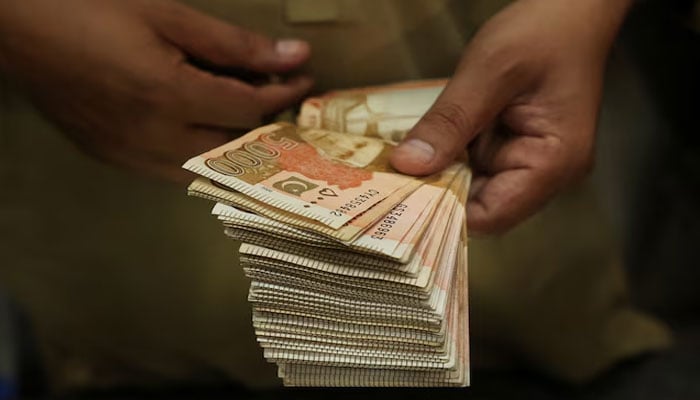
ISLAMABAD: Pakistan’s exports of goods and services rose by 13.1 percent year-on-year to $3.94 billion in July 2026, providing an encouraging start to the new fiscal year and signalling continued improvement in the country’s external sector.

Federal Minister for Planning, Development and Special Initiatives Ahsan Iqbal shared the figures on Saturday while presenting the Monthly Development Update for August 2026. He said exports stood at $3.48 billion in July 2025, meaning the latest increase reflects stronger performance across several major export categories.

According to the minister, merchandise exports increased by 9.4 percent to around $3 billion in July 2026 from $2.8 billion a year earlier. When services exports are included, the combined figure reached approximately $3.9 billion, compared with $3.5 billion in July last year.

Key export sectors show growth

Ahsan Iqbal said the improvement in exports was supported by higher shipments across several important sectors. Surgical goods recorded the strongest growth among the highlighted export groups, increasing by 16.3 percent.

Food exports rose by 8 percent, while leather goods registered growth of 7.8 percent. Textile exports, one of Pakistan’s largest sources of foreign exchange, also increased by 3.9 percent during the month.

The minister said the figures indicated that Pakistan’s external sector had started the new fiscal year on a positive trajectory, although maintaining this momentum would require continued reforms, improved competitiveness and greater diversification of export products and markets.

Manufacturing sector stages strong recovery

The positive external-sector performance coincided with a broad-based recovery in domestic industrial activity.

According to Ahsan, Large-Scale Manufacturing (LSM) expanded by 5 percent during fiscal year 2025-26, reversing a 0.74 percent contraction recorded in the preceding fiscal year.

He said the recovery was spread across the industrial sector, with 16 of the 22 LSM sectors registering positive growth.

The automobile sector posted the highest increase at 57.8 percent, followed by transport equipment at 42.4 percent. Electrical equipment production grew by 14.3 percent, tobacco by 12.6 percent and food manufacturing by 7 percent.

The figures, he said, reflected an improvement in industrial activity and could provide support to investment, employment and overall economic growth if the recovery remains sustained.

FBR collection, remittances improve

The government also reported improvement in tax revenues at the beginning of FY2026-27.

Federal Board of Revenue tax collection increased by 8.4 percent to Rs820.9 billion in July 2026, according to the minister. He said stronger revenue mobilisation, together with fiscal discipline, was helping improve the country’s overall financial position.

Workers’ remittances also remained a major source of support for Pakistan’s external account. Remittance inflows reached $3.63 billion in July 2026, up 13 percent from approximately $3.2 billion in the same month of 2025.

Ahsan said the latest increase followed record remittances of $41.6 billion received during the previous fiscal year.

He noted that remittances not only strengthened Pakistan’s foreign exchange position but also provided direct financial support to millions of households across the country.

Current account deficit remains contained

Despite continued pressure on the external account, the current account deficit remained relatively contained.

The deficit stood at $328 million in July 2026, compared with $529 million during the same month of the previous year. The minister described the development as another indication of improved external-sector stability.

He also highlighted the growing contribution of Pakistan’s technology sector. Information and Communication Technology exports reached $417 million in July 2026, underlining the increasing role of digital services in generating foreign exchange.

The government has been seeking to expand technology exports as part of a broader strategy to diversify Pakistan’s sources of external earnings beyond traditional sectors such as textiles and agricultural products.

Inflation moderates

Ahsan Iqbal also pointed to a moderation in consumer price pressures at the start of the new fiscal year.

Consumer Price Index inflation eased to 9.2 percent in July 2026, compared with 11.7 percent in May 2026. The minister said the decline suggested that inflationary pressures were beginning to moderate.

He added that changes in the year-on-year inflation rate were also influenced by base effects as well as the impact of international food and energy prices.

The government is aiming to maintain price stability while supporting economic activity and protecting the purchasing power of households.

Fiscal position strengthens

The planning minister said Pakistan’s fiscal position had also improved significantly during FY2025-26.

The fiscal deficit narrowed to 2.6 percent of GDP from 5.4 percent in FY2024-25. According to Ahsan, this represented the lowest fiscal deficit recorded in two decades.

He said stronger fiscal management would remain essential during FY2026-27 as the government seeks to maintain macroeconomic stability while creating room for development spending and economic expansion.

Development spending and job creation

Public investment is another major component of the government’s economic strategy.

Projects approved during July 2026 are expected to create around 7,851 direct jobs and 14,053 indirect employment opportunities across different sectors. The minister said employment generation would remain an important objective of development planning, particularly as the country seeks to create greater opportunities for its young population.

He said Pakistan had undergone a difficult period of economic adjustment and that the stability achieved in recent years had required significant effort.

Under the government’s URAAN Pakistan initiative, the next phase would focus on converting macroeconomic stability into long-term economic transformation, with exports positioned as a key driver of growth.

According to Ahsan, higher exports could help generate employment, increase household incomes, expand opportunities for young people and improve living standards.

Rs211.3 billion authorised for development projects

The Ministry of Planning authorised Rs211.327 billion, equivalent to 21.1 percent of the relevant allocation, during July 2026 to facilitate timely financing for priority development projects.

The minister said the move was aimed at ensuring that strategically important schemes received funding without unnecessary delays.

During July, the Central Development Working Party (CDWP) also reviewed a number of development proposals. It approved nine projects, three position papers and one concept clearance proposal, while nine projects were recommended for consideration by the Executive Committee of the National Economic Council (ECNEC).

Three projects were deferred, while one project and one position paper were returned to their respective sponsoring agencies for further review and necessary amendments.

Government seeks more efficient development spending

Ahsan said the government had also undertaken a detailed review of projects considered by the CDWP in an effort to eliminate unnecessary components and improve the use of limited public funds.

The review resulted in the streamlining of non-essential components and generated savings of Rs1.02 billion during July 2026.

The minister said these savings would allow scarce development resources to be redirected towards projects with greater economic and social impact.

He maintained that the government’s focus in FY2026-27 would remain on sustaining the economic recovery, consolidating fiscal and external stability, accelerating structural reforms and improving the effectiveness of development expenditure.

Similar Posts

  • | | |

    PM Shehbaz unveils first Youth Employment Policy

    ISLAMABAD: Prime Minister Shehbaz Sharif has announced Pakistan’s first Youth Employment Policy. He said the government is focusing on education, skills, employment and entrepreneurship for young people. Addressing a ceremony in Islamabad, Shehbaz said a significant amount of money had been allocated for youth development this year. He stressed the importance of equal educational opportunities. He said every child should have access to quality education.The prime minister said Pakistan could not achieve the vision of Quaid-e-Azam if quality education remained limited to wealthy families. He criticised the gap between privileged and poor students. He said elite institutions provide better facilities to children from affluent families. According to Shehbaz, this inequality has contributed to Pakistan’s weak performance in the education sector. He said his government had worked to bring students from remote and less-developed areas into the education system. The prime minister also highlighted the Daanish Schools programme. He said its network is being expanded beyond Punjab. New Daanish Schools are being established in Azad Jammu and Kashmir and Gilgit-Baltistan, he added. Shehbaz said young people must be given access to modern education and technology. He warned that Pakistan would fall further behind if its youth were not prepared for the changing global economy. 35% quota for women The prime minister announced important measures under the new employment policy. He said women would receive a 35% quota across the labour force.He also announced a 10% annual quota for startups. The measure is aimed at encouraging young entrepreneurs and creating new employment opportunities. Shehbaz said young people should not only look for jobs. They should also be encouraged to establish businesses and create employment for others. Daanish University in Islamabad The prime minister also announced progress on Daanish University in Islamabad.He said the university is being established to provide modern and quality education. Classes are expected to begin next year.Shehbaz said financial difficulties should not prevent talented students from pursuing higher education. He said students with strong academic results would be given opportunities even if they could not afford expensive education. The prime minister pledged that his government would take every possible step for youth development. He said higher education and employment would remain among the government’s key priorities. Shehbaz also highlighted the government’s laptop distribution programme. He said around 700,000 laptops had already been distributed among deserving students.According to the prime minister, the laptops were awarded strictly on merit. He recalled that the programme had faced criticism in the past. Some critics had accused the government of using laptops for political purposes.Shehbaz rejected the criticism and said deserving students received the devices based on their academic performance. He further announced that 250,000 students would receive Chromebooks this year.The devices will also be distributed on merit. The prime minister said investment in education and digital skills was essential for Pakistan’s future.He said young people represent the country’s biggest resource. Providing them with education, technology and employment opportunities, he added, would help build a skilled workforce and strengthen the national economy.The new Youth Employment Policy is therefore being presented as a broader government effort to connect education with employment and entrepreneurship.

  • |

    US judge dismisses bribery and fraud case against Gautam Adani despite procedural concerns

    A US federal judge has formally dismissed criminal bribery and fraud charges against Indian billionaire Gautam Adani, bringing an end to a high-profile prosecution while issuing a sharp rebuke over how the Department of Justice handled the case. US District Judge Nicholas Garaufis approved the Justice Department’s request to drop all charges with prejudice, permanently barring prosecutors from refiling the case. The decision closes an investigation launched in 2024 that accused Adani and senior executives of paying over $250 million in bribes to Indian officials to secure solar energy contracts while misleading American investors. In a 47-page order, Judge Garaufis voiced deep concern over procedural irregularities, noting that senior Justice Department official R. Trent McCotter negotiated the dismissal directly with Adani’s defence team without consulting the FBI agents and career prosecutors handling the investigation. The judge also scrutinized whether Adani’s public pledge to invest $10 billion in the United States and create 15,000 jobs influenced the outcome. While Garaufis ultimately concluded the investment promise did not legally dictate the government’s decision, he warned that the unusual handling of the case raised troubling questions about public perception of equal justice. The dismissal follows efforts by Adani’s legal team, led by prominent attorney Robert J. Giuffra Jr., who argued that much of the alleged conduct occurred outside US jurisdiction and no longer aligned with federal enforcement priorities. Adani, who maintained his innocence throughout the proceedings, welcomed the ruling in a statement, expressing deep respect for the judicial process.

  • | | |

    Australian Tourist Spends 13 Hours Drinking at Pattaya Bar, Then Refuses to Pay 32,540-Baht Bill

    PATTAYA, Thailand An Australian tourist allegedly spent nearly 13 hours drinking at a beer bar in Pattaya, buying rounds for staff throughout the day, before refusing to settle a bill of more than 32,000 baht after a staff member allegedly refused to go out of the bar with him, causing the bar owner to take […]

  • |

    Six planets to grace the sky before sunrise today

    Karachi: Skywatchers will have an opportunity to witness a rare planetary gathering before sunrise today, as six planets are expected to appear across the eastern horizon. According to experts from the Pakistan Space and Upper Atmosphere Research Commission (SUPARCO), Jupiter, Mercury, Mars, Saturn, Uranus and Neptune will be positioned in the morning sky during the pre-dawn hours. The planetary display is expected to be visible approximately 45 to 60 minutes before sunrise, with observers advised to look towards the eastern horizon for the best chance of spotting the celestial bodies. Experts said Mars, Saturn and Jupiter should be visible to the naked eye under suitable weather and viewing conditions. However, Mercury will appear very close to the horizon, making it comparatively more difficult to observe, particularly if there are buildings, trees or haze obstructing the view. The remaining two planets, Uranus and Neptune, are much fainter and will require a telescope or binoculars for observation. Astronomy experts have clarified that although the planets may appear to form a line or group from Earth, they are not actually arranged in a straight line in outer space. The apparent alignment is the result of the viewing angle from Earth and the planets’ positions along their respective orbits around the Sun. For those hoping to observe the phenomenon, experts recommend choosing a location with a clear view of the eastern horizon and minimal light pollution. Early morning skies with clear weather will provide better viewing conditions.

  • | | |

    Parliament should focus on Pakistan’s real c…

    Pakistan is an Islamic republic whose Constitution defines not only the structure of the state but also its ideological foundation. It explicitly states that the country should create an environment in which Muslims can live their lives in accordance with the teachings of the Quran and Sunnah. Against this constitutional backdrop, it is surprising that the issue of women wearing the abaya—or an Islamic financial institution including the abaya in its employee dress code—has become a matter of concern for a parliamentary committee. This naturally raises an important question: Who is setting the country’s priorities, and are these truly the issues that deserve Parliament’s attention? Pakistan continues to face pressing challenges, including rising inflation, unemployment, an unequal tax system, a struggling economy, and serious shortcomings in education and healthcare. These are the issues that directly affect the daily lives of millions of citizens. If a parliamentary standing committee, whose primary responsibility is financial oversight, chooses to focus instead on the dress code of Islamic banks, it is reasonable for the public to question whether legislative priorities are aligned with the country’s most urgent needs. The debate also raises questions about consistency. Critics have objected to the abaya as part of an institutional dress code, yet there is little discussion about uniforms in many government departments that follow Western styles of dress. Women serving in the police, the Federal Investigation Agency (FIA), and several other public institutions are commonly required to wear trousers and shirts as part of their official uniforms. If clothing is to become a matter of parliamentary debate, then similar standards should apply across the board. Selective criticism can create the perception of bias. Supporters of Islamic dress codes argue that the issue extends beyond clothing itself and reflects broader concerns about cultural and religious identity. From this perspective, the concern is not simply about the abaya but about a mindset that views visible expressions of religious identity as obstacles to modernization. They question whether institutions with an Islamic identity should be expected to abandon their traditions in the name of progress. This leads to a broader debate: Who defines what it means to be modern? Does modernization necessarily require reducing the public expression of religious values or adopting Western cultural norms? For institutions operating within Pakistan’s Islamic banking framework, supporters argue that their identity is rooted not only in financial principles but also in ethical and religious values. If such institutions adopt internal policies that comply with Pakistani law and reflect constitutional and religious principles, they contend that those choices should be respected. The discussion also draws comparisons with international examples. In countries such as France, restrictions on religious clothing have generated significant criticism from human rights advocates. Supporters of religious freedom argue that Pakistan, which was established with a distinct religious and cultural identity, should carefully consider whether adopting similar approaches is consistent with its own constitutional framework and historical foundations. Ultimately, the central argument is that Parliament should devote its time and resources to addressing issues that directly affect governance, economic stability, and public welfare. Matters of personal attire, religious belief, and institutional identity, many argue, should not become subjects of unnecessary official intervention when the country faces far more pressing social and economic challenges.

  • | | |

    AJK polling underway at 23 atations in Bagh

    BAGH: Voting is underway at 23 polling stations across two constituencies in Azad Jammu and Kashmir’s (AJK) Bagh district, in a closely watched exercise following disputes and allegations of irregularities during the region’s phased elections. Polling began at 8am on Saturday and is scheduled to continue until 5pm, with authorities deploying additional security personnel to ensure voters can cast their ballots without fear or disruption. The polling is being held in LA-15 (Bagh Central) and LA-16 (Eastern Bagh), where voting could not take place at several stations during the third phase of the elections earlier this week. The AJK Election Commission subsequently withheld the results of both constituencies and ordered polling at the remaining stations. In LA-15, PPP candidate Sardar Ziaul Qamar had secured 16,637 votes in the stations where polling was held, followed by PML-N’s Mushtaq Ahmed Minhas with 15,015 votes. Jamaat-i-Islami candidate retired Brig Dr Muhammad Khan stood third with 12,259 votes. Meanwhile, the withheld result in LA-16 involves 14 polling stations with 7,238 registered voters. Results from the remaining stations had placed PML-N’s Sardar Mir Akbar in front with 19,515 votes, giving him a lead of 3,225 votes over PPP’s Sardar Qamaruz Zaman. The contest has remained tense, with candidates from all five parties accusing their rivals of large-scale rigging. Election authorities, however, have stressed that adequate security has been arranged. AJK Chief Election Commissioner retired Justice Ghulam Mustafa Mughal said sufficient police and law-enforcement personnel had been deployed at polling stations to provide voters with a “fear-free environment”. The latest polling is part of an election process conducted in phases amid unrest and law-and-order concerns across the region. The third phase was initially planned for all 11 constituencies of Poonch Division but was limited to Bagh and Haveli districts after security concerns emerged. The Election Commission has already announced the result for LA-14 (Bagh-I), where Jammu Kashmir Awami Dast-o-Bazu Party candidate Sajid Iqbal Abbasi won by a substantial margin. The election in neighbouring LA-17 (Haveli), however, has become the subject of a separate dispute after AJK Prime Minister Faisal Mumtaz Rathore was declared the winner. His PML-N rival, Engineer Mohsin Aziz, challenged the result, prompting the Election Commission to hear arguments from both sides. With voting now underway at the remaining 23 stations, attention is focused on turnout, security and whether the fresh polling will finally settle the disputed contests in Bagh.

Leave a Reply

Your email address will not be published. Required fields are marked *