pakistan requests 10bn
| | |

Pakistan requests $10bn US foreign exchange stabil…

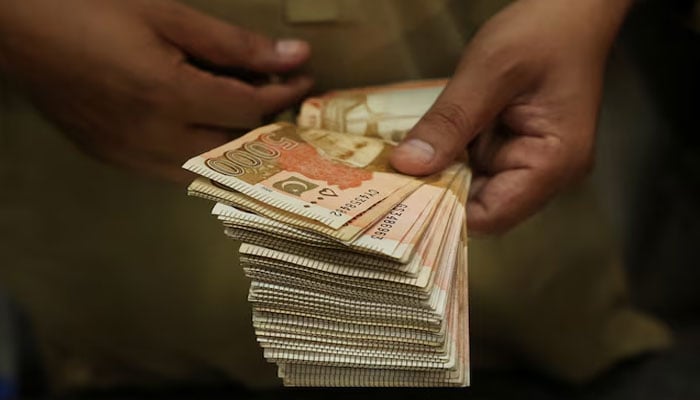
Pakistan has requested a $10 billion foreign exchange stabilization facility from the United States in an effort to strengthen its economy and improve its external financial position. The proposed facility is expected to help increase the country’s foreign exchange reserves, ease pressure on the Pakistani rupee, and reduce dependence on emergency financial assistance from international lenders.

According to reports, the Pakistani government has submitted a formal proposal to US Treasury Secretary Scott Bessent seeking a five-year bilateral Exchange Stabilization Support Facility. If approved, the financial arrangement could provide Pakistan with greater economic stability at a time when the country continues to face external financing challenges.

The proposed fund is designed to support Pakistan’s foreign exchange reserves, which remain under pressure despite recent improvements in the country’s economic outlook. Stronger reserves would help stabilize the rupee, improve investor confidence, and provide the government with greater flexibility in managing external debt repayments.

The request comes after Pakistan’s reported diplomatic efforts during the Iran conflict. According to the report, Islamabad played a facilitating role in communication between Tehran and Washington. The diplomatic engagement is believed to have enhanced Pakistan’s strategic importance and may have contributed to closer economic discussions with the United States.

If Washington approves the request, Pakistan could reduce its dependence on short-term financial support from multilateral institutions, including the International Monetary Fund (IMF). The facility would also help the country better manage future external financing needs while maintaining stability in the foreign exchange market.

Pakistan is currently implementing wide-ranging economic reforms under the IMF’s $7 billion Extended Fund Facility (EFF). The programme requires the government to increase tax revenues, reduce public spending, improve fiscal discipline, and introduce structural reforms aimed at strengthening the economy.

The country narrowly avoided a sovereign default in 2023 after securing a $3 billion IMF emergency programme. That support was later followed by the approval of the larger $7 billion EFF programme. Although the reforms have improved economic indicators, Pakistan still relies heavily on external borrowing, financial assistance from friendly countries, and the rollover of existing loans to meet its financing requirements.

Economic experts believe that a US-backed stabilization facility would provide a significant boost to Pakistan’s financial position. It could strengthen foreign exchange reserves, support currency stability, improve investor confidence, and reduce the need for repeated emergency borrowing.
Similar Posts

  • |

    Students protest Cambridge exam leaks

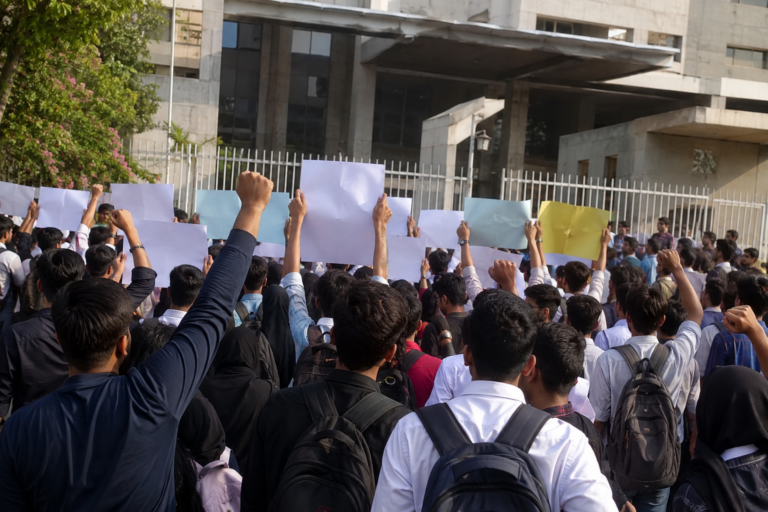
    ISLAMABAD: Accountability4Cambridge has called for a student protest against Cambridge Assessment International Education (CAIE) over alleged examination paper leaks during the 2026 examination cycle, saying the incidents have raised serious concerns about fairness and the credibility of Cambridge examinations. The student group said reports of leaked papers emerged in 2024 and increased in 2025, but Cambridge failed to provide sufficient public explanations or demonstrate that it had effectively strengthened its examination security system. According to Accountability4Cambridge, leaked material from several major papers circulated before scheduled examination times in 2026. The group compiled evidence from 17 alleged cases, including screen recordings showing time-zone information that it says established that the material was available before the relevant examinations. Cambridge recognised four cases and took action, but the students say the remaining evidence was not adequately addressed. The group raised the issue before the Senate Standing Committee on Federal Education and Professional Training on May 18 and again on June 16. Following the meetings, a sub-committee comprising IBCC, Cambridge, Accountability4Cambridge, the British Council, the Ministry of Education and NCCIA was formed. During a July 13 meeting, the students presented the 17 recordings and asked Cambridge to respond. After Cambridge questioned the reliability of the videos, Accountability4Cambridge sought forensic verification from the National Cyber Crime Investigation Agency (NCCIA). The group said NCCIA’s report, received on July 29, found no evidence of tampering in the submitted recordings. Accountability4Cambridge subsequently requested another sub-committee meeting to present the forensic findings. The meeting was initially scheduled for August 7 but was postponed to August 12 after Cambridge said it was unavailable. The students have also criticised Cambridge’s decision to use S1 paper marks instead of assessed marks. They argue that using compromised papers for grading could unfairly benefit students who accessed leaked material while disadvantaging those who did not. Accountability4Cambridge is demanding reversal of the S1 marking decision, lower grade thresholds for Computer Science and Mathematics, recognition of additional leaks supported by forensic evidence, publication of a detailed investigation report and a transparent mechanism for handling compromised examinations. The group has also urged schools to demand greater accountability from Cambridge. Founder Samaak Iqbal Malik said the dispute concerns the integrity of the entire examination system rather than a few individual papers. The organisation has announced a student demonstration outside the IBCC office in G-10, Islamabad, at 1pm on Wednesday, August 12, calling for immediate action before the controversy further affects students’ academic futures.

  • | |

    Makkah Defence pact aims at regional security not …

    Turkish Foreign Minister Hakan Fidan has said the recently signed defense agreement between Pakistan, Saudi Arabia and Turkey is designed to strengthen regional cooperation and security rather than target Iran. Speaking in Ankara, Fidan said the agreement follows the principle of collective defense reflected in Article 5 of the North Atlantic Treaty Organization (NATO), under which an attack on one member is treated as an attack on all. He explained that the new framework will include a ministerial committee and a general secretariat modeled partly on NATO’s structure. The secretariat is expected to be based in Saudi Arabia. Fidan also indicated that Egypt could potentially join the arrangement once outstanding technical matters are resolved, suggesting that the emerging security framework could expand beyond the three founding countries. The Turkish foreign minister stressed that the agreement should not be viewed as an alliance directed against any particular country. Instead, he described it as a mechanism intended to promote cooperation, strengthen defense capabilities and contribute to peace and stability across the region. The agreement, signed by Pakistan, Saudi Arabia and Turkey in Makkah, has attracted considerable attention across the Muslim world amid growing regional security concerns. Several Islamic countries and the Organisation of Islamic Cooperation have welcomed the initiative. Turkish President Recep Tayyip Erdogan has also said the agreement could enhance regional security while encouraging greater cooperation in the defense industry. The development marks another step in the long-standing strategic relations among Pakistan, Saudi Arabia and Turkey and could potentially reshape security cooperation in the wider Middle East and South Asian region.

  • |

    Mushfiqur breaks Bangladesh record before Australia Test

    SYDNEY: Bangladesh’s veteran wicketkeeper-batter Mushfiqur Rahim created a unique record before even taking the field in his first Test match in Australia, adding another milestone to an already remarkable international career. Mushfiqur entered the Australia Test having already played 103 Test matches, making him the most experienced player ever to feature in a Test in Australia for the first time. The achievement underlined the longevity of his career. While most players make their first appearance in a country relatively early in their Test journey, Mushfiqur reached the landmark after more than a century of matches. Before him, the record among Bangladeshi players belonged to fellow batter Mominul Haque, who had played 78 Tests before making his first Test appearance in Australia. Mominul now moves to second place on the list, while Mushfiqur’s 103-match experience puts him well ahead of the previous mark. The Bangladesh veteran’s achievement also eclipsed a record previously held by former Sri Lankan captain Marvan Atapattu. Atapattu played his first Test in Australia in 2004 after appearing in 73 Tests, making him the most experienced player to make a first Test appearance in the country at the time. Mushfiqur’s milestone therefore represents another significant chapter in a career that has made him one of Bangladesh’s most accomplished Test cricketers. However, the Bangladesh star’s achievement in Australia is not the biggest record of its kind in Test cricket. That global record belongs to England fast-bowling great James Anderson, who had played an extraordinary 175 Tests before making his first Test appearance in Pakistan. Mushfiqur’s milestone nevertheless stands out as a remarkable testament to his consistency and longevity. At 103 Tests, he arrived in Australia not as a newcomer to Test cricket, but as one of Bangladesh’s most experienced players — making his first Test in the country a historic occasion before the match had even begun.

  • | |

    Zimbabwe ferry disaster death toll climbs to 68

    HARARE: The death toll from a ferry disaster on Zimbabwe’s Lake Kariba has risen to 68 after rescuers recovered 22 more bodies, police said on Saturday. The ferry, operated by the government’s Rural Infrastructure Development Agency, overturned on Tuesday while travelling through rough waters. The vessel was carrying villagers and fish traders who rely on the lake for their livelihoods. Authorities said the boat was licensed to carry 90 passengers but had 114 adults and five crew members on board, along with an unknown number of children. The overcrowding has raised concerns about safety standards as the search for the remaining victims continues. Lake Kariba lies along Zimbabwe’s border with Zambia and is a vital source of transport and trade for communities living around the lake.

  • |

    Global chip market set to cross $1 trillion as AI demand surges

    The global semiconductor industry is on track to surpass $1 trillion in annual revenue in 2026, driven largely by the rapid expansion of artificial intelligence infrastructure. AI-related chips are reshaping the semiconductor business. Although advanced AI processors represent only a tiny share of total chip shipments, they are expected to generate almost half of the industry’s overall revenue this year. The surge reflects the enormous investment being made in AI data centres around the world. The five largest global technology hyperscalers have allocated more than $600 billion to AI data-centre infrastructure in 2026. The growing demand is also increasing the importance of advanced chip manufacturing. Producing a sophisticated 3-nanometre processor can take around six months, highlighting the complexity and limited capacity of the global supply chain. Taiwan Semiconductor Manufacturing Company (TSMC) remains central to the production of the world’s most advanced processors. The company manufactures an estimated 90% of the most sophisticated chips, making it a critical supplier for the rapidly expanding AI industry. This concentration has also raised concerns about supply-chain vulnerability. Any major disruption to advanced chip production could affect technology companies, AI developers and governments that are investing heavily in artificial intelligence. Nvidia has emerged as one of the biggest beneficiaries of the AI boom. The company reported revenue of $215.9 billion, strengthening its position as a leading supplier of processors used to train and operate advanced AI models. The chip industry’s challenges extend beyond processors. High-bandwidth memory (HBM), which is essential for AI computing, has become another major supply constraint. Much of the available HBM production capacity is already committed through 2026. The global memory market is also expected to generate substantial revenue, with estimates putting fiscal 2026 revenue at around $594.7 billion. The figures underline how quickly AI is transforming the global semiconductor industry. Demand is shifting toward fewer but far more valuable advanced chips, while manufacturers face pressure to expand capacity and secure critical components. As AI investment continues to grow, semiconductor production is increasingly becoming a strategic issue for technology companies and governments. The ability to manufacture advanced processors and memory at scale could determine how quickly the next phase of AI development progresses.

  • |

    Protests erupt in Bologna after man’s death during police restraint

    Thousands of people marched through the Italian city of Bologna after the death of a Moroccan born man who died while being restrained by police, prompting a criminal investigation and violent clashes that left dozens of officers injured. The protests were held in memory of Abderrahim Fakir, whose death on Sunday has sparked widespread public anger and renewed debate over police conduct in Italy. Demonstrators gathered to demand justice before a smaller group broke away from the main rally and clashed with riot police late into the night. Authorities said 64 police officers were injured during the unrest as protesters threw objects, confronted security forces and set two vehicles on fire. Police eventually brought the situation under control. The incident that led to the demonstrations began after officers responded to reports of a man behaving erratically in Bologna’s Pilastro neighbourhood. According to police, Fakir was seen kicking garage doors before officers attempted to calm him. They later used pepper spray during the confrontation. A video widely shared by Italian media shows two police officers holding Fakir face down on the ground while another man restrains his legs. Emergency medical workers are also visible nearby. In the footage, Fakir can be heard asking the officers to stop before he gradually stops moving. After he became unresponsive, officers handcuffed him and attempted to wake him before medical staff intervened. Prosecutors have opened a manslaughter investigation involving the police officers and emergency workers who were present at the scene. The inquiry will examine whether the restraint methods or medical response contributed to Fakir’s death. Several witnesses told local media that although Fakir appeared distressed, he was unarmed and did not pose a threat to anyone nearby. His sister, Khadija Fakir, called for a full investigation and said the family wanted answers about how he died while in police custody. Bologna Mayor Matteo Lepore also expressed shock after watching the video and organised Monday’s public demonstration in support of Fakir’s family. During the rally, Fakir’s niece addressed the crowd, describing her uncle as a caring and respected member of the community. She said he deserved compassion, dignity and help rather than the outcome that followed. Although the main demonstration remained peaceful, officials said a small number of protesters later turned violent. Mayor Lepore condemned the unrest while drawing a distinction between peaceful demonstrators and those who resorted to violence. The police union defended the officers’ actions and argued that the available video showed they had acted appropriately under difficult circumstances. Union representatives said the officers immediately handed over body camera footage to investigators and insisted the use of force was justified because officers faced resistance during the incident. Prime Minister Giorgia Meloni called for a thorough investigation into Fakir’s death while strongly condemning the violence that followed. She said determining the truth about the incident was essential but stressed that attacks on law enforcement could not be justified. Fakir’s death has drawn comparisons with previous high profile cases involving deaths in police custody in Italy. Opposition politicians have criticised the government’s strong support for police, while human rights advocates say the investigation must establish whether officers followed proper procedures during the arrest. The case has intensified public discussion over policing practices and accountability across the country.

Leave a Reply

Your email address will not be published. Required fields are marked *