makkah defence pact
| |

Makkah Defence pact aims at regional security not …

Turkish Foreign Minister Hakan Fidan has said the recently signed defense agreement between Pakistan, Saudi Arabia and Turkey is designed to strengthen regional cooperation and security rather than target Iran.

Speaking in Ankara, Fidan said the agreement follows the principle of collective defense reflected in Article 5 of the North Atlantic Treaty Organization (NATO), under which an attack on one member is treated as an attack on all.

He explained that the new framework will include a ministerial committee and a general secretariat modeled partly on NATO’s structure. The secretariat is expected to be based in Saudi Arabia.

Fidan also indicated that Egypt could potentially join the arrangement once outstanding technical matters are resolved, suggesting that the emerging security framework could expand beyond the three founding countries.

The Turkish foreign minister stressed that the agreement should not be viewed as an alliance directed against any particular country. Instead, he described it as a mechanism intended to promote cooperation, strengthen defense capabilities and contribute to peace and stability across the region.

The agreement, signed by Pakistan, Saudi Arabia and Turkey in Makkah, has attracted considerable attention across the Muslim world amid growing regional security concerns. Several Islamic countries and the Organisation of Islamic Cooperation have welcomed the initiative.

Turkish President Recep Tayyip Erdogan has also said the agreement could enhance regional security while encouraging greater cooperation in the defense industry.

The development marks another step in the long-standing strategic relations among Pakistan, Saudi Arabia and Turkey and could potentially reshape security cooperation in the wider Middle East and South Asian region.
Similar Posts

  • |

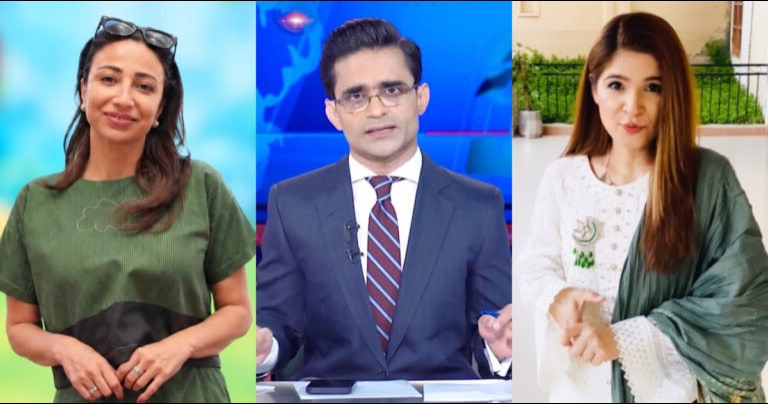
    Shahzeb Khanzada’s stance for women applauded by celebrities

    Shahzeb Khanzada is one of Pakistan’s most prominent television anchors and journalists. He hosts his current affairs show every night, where he regularly discusses important national issues and highlights matters affecting ordinary citizens. Over the years, he has also become known for speaking openly about social injustices and calling attention to issues that often fail to receive the attention they deserve. At a time when concerns about violence, abuse and public safety are growing across the country, Khanzada recently used his platform to speak strongly against violence targeting women and children. His remarks came amid widespread public concern over a number of disturbing cases that have emerged in recent weeks, once again raising questions about the safety of vulnerable members of society. Khanzada strongly condemned violence against women and emphasized the responsibility of individuals and society to stand against such acts. He made it clear that remaining silent after becoming aware of violence against a woman cannot simply be treated as neutrality. According to his stance, people who know that a woman is being subjected to brutality but deliberately choose not to speak up also carry a moral responsibility for allowing such violence to continue. His comments struck a chord with many viewers and public figures. Several celebrities took to social media to appreciate the journalist for using his influential platform to address an issue that requires collective attention. They praised him for refusing to remain silent and for highlighting the importance of protecting women from violence and abuse. Actress Ayesha Omar was among those who appreciated Khanzada’s efforts. She thanked him for consistently speaking up on important social matters and acknowledged his willingness to address difficult subjects publicly. Her response reflected the sentiments of many people who believe that influential personalities have an important role to play in raising awareness about serious social problems. Politician and public figure Mussadiq Malek also expressed his support for Khanzada. He urged people to protect and stand behind individuals who use their platforms to speak against injustice. His comments further highlighted the importance of supporting voices that draw public attention to violence and social issues. Actress Samiya Mumtaz also praised Khanzada for raising his voice. She thanked him for speaking about the issue and joining the conversation surrounding violence against women. The reactions from these well-known personalities demonstrate how strongly Khanzada’s message resonated with people from different backgrounds. His comments have also sparked further discussion about the responsibility of media figures, celebrities and ordinary citizens in confronting violence. Cases involving women and children have repeatedly generated anger and concern across Pakistan, with social media often becoming a platform where people demand justice and accountability. However, public outrage alone cannot address the deeper problems behind such incidents. Greater awareness, responsible reporting, stronger legal protection and a willingness to intervene when someone is at risk are all important parts of creating a safer society. Khanzada’s stance has therefore received appreciation not only because he discussed a sensitive issue on television, but also because he emphasized the importance of refusing to normalize silence around violence. The support from celebrities such as Ayesha Omar, Mussadiq Malek and Samiya Mumtaz shows that his message has found an audience beyond his regular viewers. As conversations surrounding women’s safety and violence continue, Khanzada’s remarks have added another prominent voice to the growing demand for greater accountability and protection. His decision to use his platform for the issue has been widely appreciated by those who believe that speaking against injustice is an important responsibility of public figures.

  • | | |

    Narathiwat Province in Thailand’s Deep South Escalates Martial Law Powers After Deadly Attack Kills Five Border Rangers

    NARATHIWAT, Thailand Security forces in Thailand’s southern border province of Narathiwat have intensified the application of martial law powers following a deadly assault on a checkpoint that left five paramilitary rangers dead and several civilians injured. On the evening of July 22nd, 2026, at approximately 6:45 p.m., a group of about six attackers dressed in […]

  • |

    Türkiye, Saudi Arabia and Pakistan to establish new defence cooperation mechanisms

    ANKARA: Türkiye, Saudi Arabia and Pakistan are set to establish new political and military coordination mechanisms following the signing of a landmark joint defence agreement, as the three countries move to strengthen strategic cooperation amid growing security concerns in the region. Türkiye’s Defence Ministry said on Thursday that the framework agreed by the three countries would bring senior political and military leadership into a structured mechanism aimed at enhancing coordination on defence and security matters. The three nations signed the Makkah Joint Defence Agreement on August 7, marking a significant development in their security relations. The agreement comes at a time of heightened tensions across the Middle East, with the escalation of regional hostilities raising security concerns among Gulf states and other countries in the region. Under the agreement, an armed attack against any one of the three countries would be treated as an attack against all members. The provision establishes a collective-defence commitment similar in principle to the collective security arrangement contained in Article 5 of the North Atlantic Treaty Organisation (NATO). High-level political and military coordination According to the Turkish Defence Ministry, the new mechanisms will involve the defence ministers, foreign ministers and military chiefs of Türkiye, Saudi Arabia and Pakistan. The arrangement is expected to provide the three countries with a regular platform for consultations on regional security developments, defence policy and potential threats. It could also facilitate closer coordination between their armed forces and government institutions. The agreement reflects the growing strategic importance of cooperation between the three Muslim-majority countries, particularly as regional security challenges continue to evolve. Joint military exercises planned The Turkish ministry also said the three countries were planning joint military exercises under the new defence framework. Such exercises could provide opportunities for their armed forces to improve interoperability, exchange operational experience and strengthen their ability to coordinate during potential security crises. Defence cooperation is also expected to extend beyond military exercises. The Turkish side said the agreement could pave the way for greater collaboration in the defence industry, including joint production, technology sharing and other forms of industrial cooperation. The expanded defence-industry partnership could allow the three countries to explore opportunities for developing and producing defence equipment together while sharing technical expertise and capabilities. Agreement follows rising regional tensions The pact was signed against the backdrop of heightened tensions in the Middle East, which have raised concerns over the security of Gulf countries and critical energy infrastructure. The escalation has also highlighted the importance of collective security arrangements and closer coordination among regional powers. For Pakistan, the agreement represents another step towards strengthening defence and strategic ties with Türkiye and Saudi Arabia. Islamabad has traditionally maintained close military and diplomatic relations with both countries. The agreement is therefore expected to broaden cooperation from traditional bilateral defence relations towards a more structured trilateral framework involving political consultations, military coordination and defence-industrial collaboration. Pakistan’s Deputy Prime Minister and Foreign Minister Ishaq Dar has also clarified the scope and intent of the Makkah agreement, stressing the nature of the arrangement and its broader security objectives. The three countries are now expected to work out the details of the new mechanisms, including the structure of ministerial consultations, military coordination and proposed joint exercises.

  • |

    UN Security Council begins informal voting to choose next secretary general

    The United Nations Security Council will begin its first round of informal voting on Thursday to measure support for candidates seeking to become the next UN secretary general. The confidential ballots mark the start of a selection process that will eventually determine who succeeds Antonio Guterres when his second five year term ends later this year. Seven candidates from different regions are currently competing for the position. They include Argentina’s Rafael Grossi, who heads the UN nuclear watchdog, former Chilean President Michelle Bachelet, former Costa Rican Vice President Rebeca Grynspan, former Ecuadorian Foreign Minister Maria Fernanda Espinosa, former Guyanese Foreign Minister Carolyn Rodrigues-Birkett, former Senegalese President Macky Sall and Ugandan diplomat Olara Otunnu. Additional candidates are still allowed to enter the race before the selection process concludes. The next secretary general will take charge of the United Nations at a time when the organization faces mounting criticism over its effectiveness and structure. Calls for reform have increased as member states push for a more efficient institution, arguing that the UN must reduce bureaucracy, eliminate overlapping responsibilities among its agencies and improve its ability to respond to global crises. The first stage of the selection process involves informal straw polls conducted behind closed doors among the Security Council’s 15 members. During these secret ballots, council members indicate whether they encourage, discourage or have no opinion on each candidate. The votes are non binding but provide an early indication of which candidates have the strongest support and which face significant opposition. At this stage, all Security Council members use identical ballots, meaning diplomats can see the overall level of support for each candidate without knowing whether opposition comes from one of the council’s five permanent members. Those permanent members are China, France, Russia, the United Kingdom and the United States, each of which holds veto power over the final recommendation. As the selection process moves forward, the permanent members will use ballots in a different color during later rounds of voting. This allows diplomats to determine whether any candidate has received a negative vote from a veto holding country, information that often plays a decisive role in narrowing the field. There is currently no clear favorite to replace Guterres. Previous UN leadership contests have required several rounds of voting over many weeks before a consensus candidate emerged. Diplomats expect this year’s process could continue throughout the summer and possibly into late September or early October if no candidate gains broad enough support. If the Security Council remains divided, the process could take even longer. Once the council agrees on a single candidate, it will formally recommend that person to the 193 member UN General Assembly. The recommendation requires at least nine votes in favor and no veto from any of the five permanent members. The General Assembly then votes to confirm the appointment, a step that has traditionally been considered a formality after the Security Council reaches agreement. The current president of the Security Council is the Democratic Republic of the Congo. Its ambassador to the United Nations, Zenon Mukongo Ngay, confirmed that the first round of straw polls will take place on Thursday morning. He also said that Ugandan candidate Olara Otunnu will participate in the voting despite not taking part in the informal public hearings completed by the other candidates. According to his biography, Otunnu played an important role in shaping the current selection process. He states that he introduced the system of informal straw polls while serving as president of the Security Council in 1981. That method has since become a key part of the process used to identify the candidate most likely to secure broad international support before the final appointment is made.

  • | |

    Sonakshi Sinha praises Gen Z after minister’s resignation

    Bollywood actress Sonakshi Sinha has applauded India’s Generation Z after Union Education Minister Dharmendra Pradhan resigned following weeks of nationwide student protests over alleged irregularities and paper leaks in the 2026 NEET-UG entrance examination. The actress, who had publicly supported the protesting students throughout their campaign, celebrated the development with an emotional message on social media. Dharmendra Pradhan stepped down from his position on Saturday, July 25, after sustained demonstrations by students demanding accountability over alleged examination paper leaks and concerns about the fairness of the 2026 NEET-UG medical entrance test. The protests gained momentum across India, with thousands of students calling for reforms in the examination system. Soon after the resignation made headlines, Sonakshi took to Instagram to congratulate the young protesters, whom she credited for bringing about change through their determination and persistence. Although she belongs to the millennial generation, the actress said the students had inspired her and completely changed her perception of Gen Z. In the caption accompanying her video, Sonakshi wrote, “Sorry what i meant to say was that i’m proud of you and THANK YOU. Brb now… millenial sathiya gayi hai. 25.07.2026. What a day!!!” The post quickly attracted widespread attention, with many social media users praising her for acknowledging the efforts of the student movement. In the video, the Dabangg actress expressed her admiration for the younger generation. She said, “Brother, you have no idea what you’ve achieved today. I’m an artist, bro, but Gen Z is the art. You know, I used to underestimate Gen Z.” She admitted that she had previously misunderstood the generation, saying, “I’d think, ‘They just do things on a whim, get tired, and nothing really comes of it.’” However, she acknowledged that the protests had changed her opinion completely. Praising the students’ determination, Sonakshi continued, “But I take my hat off to you for this. Salute! Look at me now—I want to be you; I want to be Gen Z. What have you all done? It’s unbelievable.” In a light-hearted gesture, the actress even performed sit-ups in the video as a playful apology for previously underestimating Generation Z. Her remarks quickly went viral across social media platforms, where many users appreciated her willingness to acknowledge the impact of student activism. Supporters said her message reflected the growing recognition of Gen Z’s role in driving social and political conversations, while others praised the students for remaining united throughout the protests. Sonakshi’s post has since become one of the most widely shared celebrity reactions to the minister’s resignation, highlighting the influence of youth-led movements and the growing public support for greater transparency and accountability in India’s education system. 

  • | |

    LHC acquits man sentenced to life for wife’s…

    LAHORE: The Lahore High Court ( LHC) has overturned the life imprisonment sentence of a man convicted of murdering his wife, ruling that the prosecution failed to establish his guilt beyond reasonable doubt. Justice Tariq Saleem Sheikh issued a detailed 19-page written judgment, allowing the appeal filed by the convict, Tanveer, and ordering his immediate release. According to the verdict, Tanveer maintained that he was on duty at a petrol station at the time of the incident and denied any involvement in the killing of his wife. The court observed that the prosecution had failed to produce reliable and convincing evidence to support the allegations against him. The judgment concluded that the available evidence was insufficient to sustain the conviction, leading the court to set aside the trial court’s decision and acquit the appellant. Tanveer had been sentenced to life imprisonment in 2022 by a trial court after being found guilty of his wife’s murder. In addition to the prison term, he was fined Rs400,000. He later challenged the conviction before the Lahore High Court, which has now ruled in his favor.

Leave a Reply

Your email address will not be published. Required fields are marked *