inside house secrets
| | |

Inside the ‘House of Secrets’: How Britain sec…

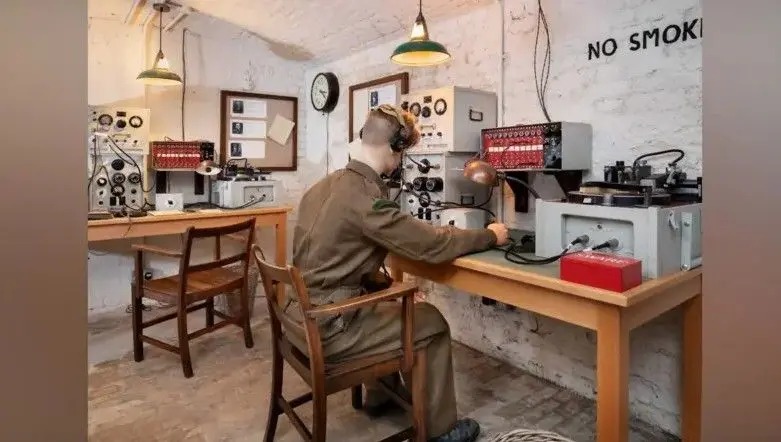
A newly opened museum in North London is shedding light on one of Britain’s most remarkable intelligence operations of the Second World War. Known as the Trent Park House of Secrets, the site reveals how British intelligence secretly monitored conversations between captured German generals and senior military officers, gathering information that proved invaluable to the Allied war effort.

Located in Enfield, North London, Trent Park was originally a luxurious country estate owned by British politician Philip Sassoon during the 1920s and 1930s. The mansion was famous for hosting lavish gatherings attended by influential figures, including politicians, artists, writers, and members of the British royal family. Guests reportedly included Winston Churchill, Charlie Chaplin, and Wallis Simpson.

However, the estate took on a dramatically different role after the outbreak of World War II. British authorities transformed the elegant residence into a highly secret intelligence facility where captured German military leaders were housed under comfortable conditions. The relaxed atmosphere encouraged prisoners to speak freely, unaware that nearly every conversation was being secretly monitored.

Hidden listening devices were installed throughout the mansion, while intelligence officers worked from concealed rooms in the basement, recording and analyzing discussions between German officers. The operation enabled Britain to collect valuable military intelligence without relying on interrogation or coercion.

Historians believe the conversations captured at Trent Park provided critical insights into German military strategy, battlefield developments, and even the internal thinking of senior Nazi commanders. Some recorded discussions also revealed information about war crimes and the treatment of prisoners, offering important historical evidence after the war.

The foundation responsible for restoring the estate says Trent Park deserves recognition alongside Bletchley Park, Britain’s famous codebreaking center, because both sites played crucial roles in Allied intelligence operations. While Bletchley Park focused on decrypting enemy communications, Trent Park relied on covert surveillance and psychological techniques to obtain sensitive information directly from high-ranking prisoners.

The newly opened museum allows visitors to explore restored rooms, historical exhibits, and the basement areas where surveillance equipment was once operated. Through interactive displays and archival material, guests can learn how one seemingly peaceful country house became the center of a sophisticated intelligence mission that remained largely unknown for decades.

Today, the Trent Park House of Secrets stands as a powerful reminder of the creativity and innovation behind Britain’s wartime intelligence network. By preserving this remarkable chapter of history, the museum offers visitors a unique opportunity to understand how hidden conversations inside one mansion helped shape the outcome of World War II.

Similar Posts

  • | | |

    Pakistan, US renew Fulbright partnership for five …

    Pakistan and the United States have renewed their cooperation in higher education through a new five-year agreement between the Higher Education Commission (HEC) and the United States Educational Foundation in Pakistan (USEFP). The agreement will run from the 2026-27 financial year through 2031-32. It will continue several major academic exchange and scholarship programmes for Pakistani students, researchers and professionals. The renewed partnership covers the Fulbright Master’s and PhD programmes. It also includes the Visiting Scholar Programme for post-doctoral researchers, the Foreign Language Teaching Assistant Programme and the Hubert H. Humphrey Fellowship Programme. Under the new arrangement, the partners aim to support 66 Pakistani PhD scholars over the five-year period. Additional opportunities will be available through the other programmes covered by the agreement. The initiative is designed to help Pakistani students and academics access advanced education and research opportunities in the United States. Scholars are expected to bring back their expertise and contribute to the country’s academic and socio-economic development. The HEC will provide at least $4.54 million each year under the agreement. Its overall financial commitment for the five-year period has been capped at Rs6.48 billion. The funding will be released according to an agreed schedule. The arrangement includes an initial payment of $2 million by June 30, followed by another $2 million by January 31. The remaining amount will be released by April 30, subject to the availability of government funds. Any interest generated from HEC funds held by USEFP will be used again for student grants. This will provide additional support to beneficiaries of the programme. The selection of candidates will remain strictly merit-based. There will be no fixed quotas based on region, group or category. HEC representatives will also participate in selection panels. The commission will help identify areas of study that are considered important for Pakistan’s development and national priorities. The two institutions will establish a Joint Review Committee to monitor the programme. The committee will meet twice a year to assess progress, performance and the overall impact of the initiative. Financial oversight has also been included in the agreement. USEFP will provide annual audited financial statements to HEC. Relevant financial records will also remain available for review by the commission when required. The partnership will also focus on increasing awareness about international education opportunities. HEC and USEFP plan to conduct joint outreach activities across Pakistan. The initiative will use HEC’s network of universities and higher education institutions to reach a wider pool of potential applicants. The agreement also leaves room for future cooperation in areas such as faculty exchanges, administrator exchanges and other academic initiatives. The renewed arrangement builds on the earlier Fulbright-HEC PhD partnership signed in February 2016. Under that agreement, $25.786 million was committed to support 125 Pakistani scholars between 2016 and 2020.

  • | |

    Four bodies recovered after Broad Peak avalanche

    The bodies of four climbers have been recovered after a deadly avalanche struck Broad Peak, the world’s 12th-highest mountain, located in Pakistan. Rescue teams are continuing an extensive search for the remaining missing climbers in difficult weather and terrain. The avalanche hit the mountain during the climbing season, leaving around 10 mountaineers missing. The victims include climbers from Nepal, Pakistan, China and the United States, highlighting the international nature of the expedition. Search and rescue teams remain on the mountain despite harsh conditions. The operation is being carried out in a challenging high-altitude environment, where steep slopes, freezing temperatures and unstable snow have made rescue efforts extremely difficult. Tourism Minister Nikk Nam Karim said every possible effort is being made to locate the missing climbers. He said rescue teams are working continuously to search the affected area and provide assistance to those involved in the incident. The minister added that the Tourism Department is supporting the rescue mission by providing logistical assistance. Authorities are coordinating with rescue teams and other relevant agencies to ensure the search operation continues without interruption. Broad Peak, which rises to more than 8,000 metres in the Karakoram mountain range, is one of Pakistan’s most challenging peaks and attracts climbers from around the world every year. However, the mountain is also known for its unpredictable weather and avalanche risks, particularly during the peak climbing season. Officials have not yet released the identities of the recovered climbers.

  • |

    Andrew Garfield sets his terms for a Spider-Man return

    Andrew Garfield has finally given fans a real answer on when he might swing back into the Spider-Man suit. The 42-year-old actor first played the superhero in The Amazing Spider-Man and its 2014 sequel. He returned briefly in 2021, teaming up with Tobey Maguire for a surprise cameo in Tom Holland’s No Way Home. That appearance only fueled the speculation. Fans have been asking him about a full comeback ever since, and Garfield has mostly dodged the question with vague replies. That changed recently. With Brand New Day now out in theatres, the topic resurfaced in a new interview, and this time Garfield spelled out his actual condition. He said any future project would need to feel nothing like the Spider-Man stories audiences already know. The actor wants something genuinely unexpected, a version of the character dropped into a completely different kind of film. As an example, he floated the idea of a road trip movie built around Spider-Man, something far removed from the usual superhero formula. The comment set off a wave of reactions online. Fans have started pitching their own concepts for what a Garfield return could look like. Much of the excitement ties back to a running theory that Tom Holland’s latest Spider-Man film quietly teased Miles Morales through a post-credits scene. Riding that theory, one fan on X proposed that Garfield’s Spider-Man could take on a mentor role opposite Miles, rather than headline another solo outing. There’s also a sense among supporters that Garfield has been shortchanged by the studio. Both Maguire and Holland got three Spider-Man films apiece, while Garfield only appeared in two before his brief cameo. Many fans see that gap as proof he deserves another proper shot at the role. For now, nothing is confirmed. But Garfield’s comments make one thing clear: a simple return to the character wouldn’t be enough for him. He’s looking for something that reinvents what a Spider-Man movie can even be, not just another sequel wearing the same mask. Whether Sony or Marvel ever build a project around that idea is still unknown. Until then, Garfield’s fans will keep speculating, and keep hoping he gets the film he’s actually asking for.

  • | |

    Mufti Muneeb-ur-Rehman criticizes Pakistan’s…

      Renowned Islamic scholar Mufti Muneeb-ur-Rehman has strongly criticized Pakistan’s judicial and economic systems, stating that a justice system that fails to deliver justice even after forty years cannot be considered a true system of justice but rather a system of oppression. He made these remarks while addressing a public ceremony in Karachi, where he spoke about the country’s pressing legal and economic challenges. During his speech, Mufti Muneeb-ur-Rehman expressed concern over the prolonged delays in the judicial process. He argued that when people have to wait decades for justice, the very purpose of the legal system is defeated. According to him, justice delayed for such an extended period effectively becomes justice denied, leaving citizens frustrated and deprived of their fundamental rights. He emphasized that a judicial system should provide timely and fair decisions so that public confidence in the rule of law remains intact. The scholar also urged those in positions of authority to focus on resolving Pakistan’s domestic problems instead of concentrating solely on international issues. He remarked that while government leaders often discuss and engage with global affairs, the country’s internal challenges require immediate attention. He specifically called upon policymakers and those holding power to prioritize the welfare of the people by addressing the nation’s economic difficulties. One of the major issues highlighted by Mufti Muneeb-ur-Rehman was the problem of Independent Power Producers (IPPs). He appealed to the government to find a practical and sustainable solution to the IPP issue, which has been widely debated due to its impact on electricity prices and the country’s financial stability. According to him, resolving this matter would help reduce the economic burden on both the government and ordinary citizens. Speaking about the national economy, Mufti Muneeb-ur-Rehman painted a concerning picture of Pakistan’s financial condition. He stated that after distributing the constitutionally allocated shares to the provinces and making payments on interest obligations, the federal government is left with very limited financial resources. This situation, he suggested, reflects the severity of the country’s fiscal challenges and highlights the urgent need for comprehensive economic reforms. He stressed that policymakers should adopt measures that promote financial stability, reduce unnecessary expenditures, and improve revenue generation without placing excessive burdens on the public. The event also featured an address by Maulana Bashir Farooqi, who criticized the government’s approach toward eliminating the interest-based financial system. He argued that the authorities are not demonstrating sufficient seriousness in transitioning toward an Islamic banking framework. According to him, meaningful reforms require not only policy changes but also practical steps to prepare financial institutions for such a transformation. Maulana Bashir Farooqi announced that his organization is willing to provide training for approximately 100,000 employees working in conventional banks. He explained that this initiative aims to equip banking professionals with the knowledge and skills necessary to operate within an interest-free Islamic banking system if the government decides to pursue such reforms. He maintained that the availability of trained professionals would facilitate a smoother transition and strengthen the implementation of Islamic financial principles in the country’s banking sector. The speeches delivered at the Karachi ceremony underscored concerns regarding Pakistan’s judicial efficiency, economic management, and financial policies. Both religious leaders called on the government to prioritize domestic reforms, strengthen public institutions, address long-standing economic challenges, and work toward a system that better serves the interests of the people.

  • |

    Zelensky accuses Iran of direct role in Russia’s war against Ukraine

    Ukrainian President Volodymyr Zelensky has accused Iran of directly participating in the war against Ukraine through its continuous military support for Russia. Speaking on potential threats following a recent incident involving an Iranian vessel, Zelensky urged caution to prevent the opening of another front while stressing that Ukraine must remain prepared for all scenarios. He stated that Tehran became a direct participant by supplying Moscow with thousands of attack drones from the outset of the full-scale invasion and subsequently granting licences for local production. He added that both Iran and North Korea have effectively attacked Ukraine by supplying Russia with weaponry, including missiles, drones, and artillery ammunition. In response, Iranian Foreign Ministry spokesperson Ismail Baghaei rejected assertions that Tehran had sought negotiations with the United States to end hostilities, asserting that Iran will independently determine matters of war and peace. Baghaei added that Washington had initially expected an Iranian surrender within days of commencing attacks, yet months later, the United States continues to face severe challenges in the region.

  • | |

    SC orders full medical record of Imran Khan

    The Supreme Court has ordered authorities to submit the complete medical record of Pakistan Tehreek-e-Insaf founder Imran Khan and provide detailed information about his meetings with his sisters over the past three years. A three-member bench led by Justice Shahid Waheed heard petitions concerning Imran’s access to his family, personal doctors and medical records. During the hearing, the court was informed that Imran’s sisters had met him 48 times during the last three years. The judges sought the complete record of these meetings. The court also asked authorities to provide details of telephone calls between Imran and his children. Justice Shahid Waheed questioned why Islamabad High Court orders concerning meetings with Imran had not been implemented. The court summoned why  officials from Adiala Jail and directed them to explain the situation at the next hearing. The court was particularly concerned about Imran’s medical information. Justice Waheed directed the Islamabad advocate general to submit the complete medical record instead of a summary. The judge questioned why the full record could not be provided to the court. Justice Naeem Akhtar Afghan also raised questions about a recommendation for Imran to undergo angiography. He asked whether the procedure could be carried out while Imran remained in jail. The Islamabad advocate general replied that the procedure could be performed at a hospital outside the prison. Justice Waheed expressed concern over the medical reports presented before the court. He observed that the reports indicated problems with Imran’s pulse and heart and suggested that some of his vital organs could be affected. The court also discussed the importance of family meetings for Imran’s health. Justice Waheed made it clear that meetings with Imran’s sisters should not be treated as a concession. “Meeting his sisters is not a favour; it is their fundamental right,” the judge observed. Imran’s sister, Uzma Khanum, was present during the proceedings. However, Justice Afghan stopped her from addressing the court directly and advised her to speak through her lawyer. Her counsel, Uzair Bhandari, assured the court that Imran’s sisters would not hold a media briefing outside Adiala Jail after meeting him. He also requested that Imran’s personal physician, Dr Asim Yusuf, and Uzma Khanum be allowed to meet the PTI founder. The court further sought comprehensive details about the legal cases against Imran. Authorities were asked to clarify the number of cases in which he is facing trial, the cases resulting in convictions and those in which his sentences have been suspended. The proceedings came after a medical board recommended greater interaction between Imran and his immediate family. The board said regular family contact could help manage his anxiety and blood pressure. According to the medical information presented to the court, Imran has experienced fluctuating blood pressure, palpitations, headaches, restlessness and anxiety. A cardiologist at the Pakistan Institute of Medical Sciences examined him on August 1. His blood pressure was recorded at 140/100mmHg. The doctor recommended measures to reduce mental stress, including increased family interaction and access to reading material. A four-member medical board examined Imran again on August 10. His blood pressure was recorded at 140/80mmHg. The board recommended daily walking and relaxation. It also suggested more frequent interaction with his immediate family and spouse to help control his anxiety and blood pressure. The medical report stated that Imran had undergone at least 39 medical examinations since his imprisonment. Jail doctors were also reportedly checking him three times a day. The report said his ECG was normal. It also stated that his eyesight had improved significantly after treatment for an eye condition. The PTI has challenged the completeness and authenticity of the medical information. The party has demanded examinations by Imran’s personal doctors, Dr Asim Yusuf and Dr Faisal Sultan, as well as an independent medical board. The government, however, has rejected allegations that Imran is being denied proper medical care. Government officials maintain that he is receiving treatment from qualified specialists and that his medical care and meetings are being managed according to the law and court orders.

Leave a Reply

Your email address will not be published. Required fields are marked *