inside mitsubishis longterm
| | |

Inside Mitsubishi’s long-term P7-B bet on PH-made hybrid vehicles

MANILA, Philippines – Why would Mitsubishi Motors pour P7 billion into making hybrid vehicles in the Philippines, when it is still much cheaper to build cars in neighboring Thailand or Indonesia?

For the Japanese automaker, the answer is partly that it has been here too long, and the Philippine market matters too much, to pass on local manufacturing.

“This country is very special, very important, and we’d like to commit to this nation for a long time,” Mitsubishi Motors Philippines Corporation (MMPC) chairman Noriaki Hirakata told reporters on Monday, August 10.

So, Mitsubishi is making another bet on its Sta. Rosa plant. By 2028, it wants to build hybrid models locally, assemble its battery pack in the Philippines, and gradually bring more work to Filipino suppliers. Pilot production could begin around mid-2027.

“We promised we’ll assemble the battery in Philippines and we will try to localize this product as much as possible,” Hirakata said.

That does not mean Mitsubishi will immediately have a fully local battery supply chain. The battery components will initially still be made abroad and brought into the Philippines for assembly, while Hirakata said battery-pack assembly itself would make up only a small part of the overall P7-billion investment.

Still, the ambition goes beyond adding a locally made model to Mitsubishi’s Philippine lineup. The company sees room to expand production further and even send Philippine-made hybrids to developing overseas markets.

Why Mitsubishi asked for the government’s help

The bigger obstacle now is scale.

Toyota and Mitsubishi together produce slightly fewer than 100,000 vehicles annually in the Philippines, Hirakata said, less than a tenth of the more than 1.5 million units each in Thailand and Indonesia.

“[The] Philippine plant is not that cost-competitive yet because we don’t have economies of scale,” Hirakata said.

Mitsubishi brought that problem directly to government. Hirakata said Mitsubishi Motors president and CEO Takao Kato met President Ferdinand Marcos Jr. in early April and signaled the company’s readiness to join a planned EV incentive program. 
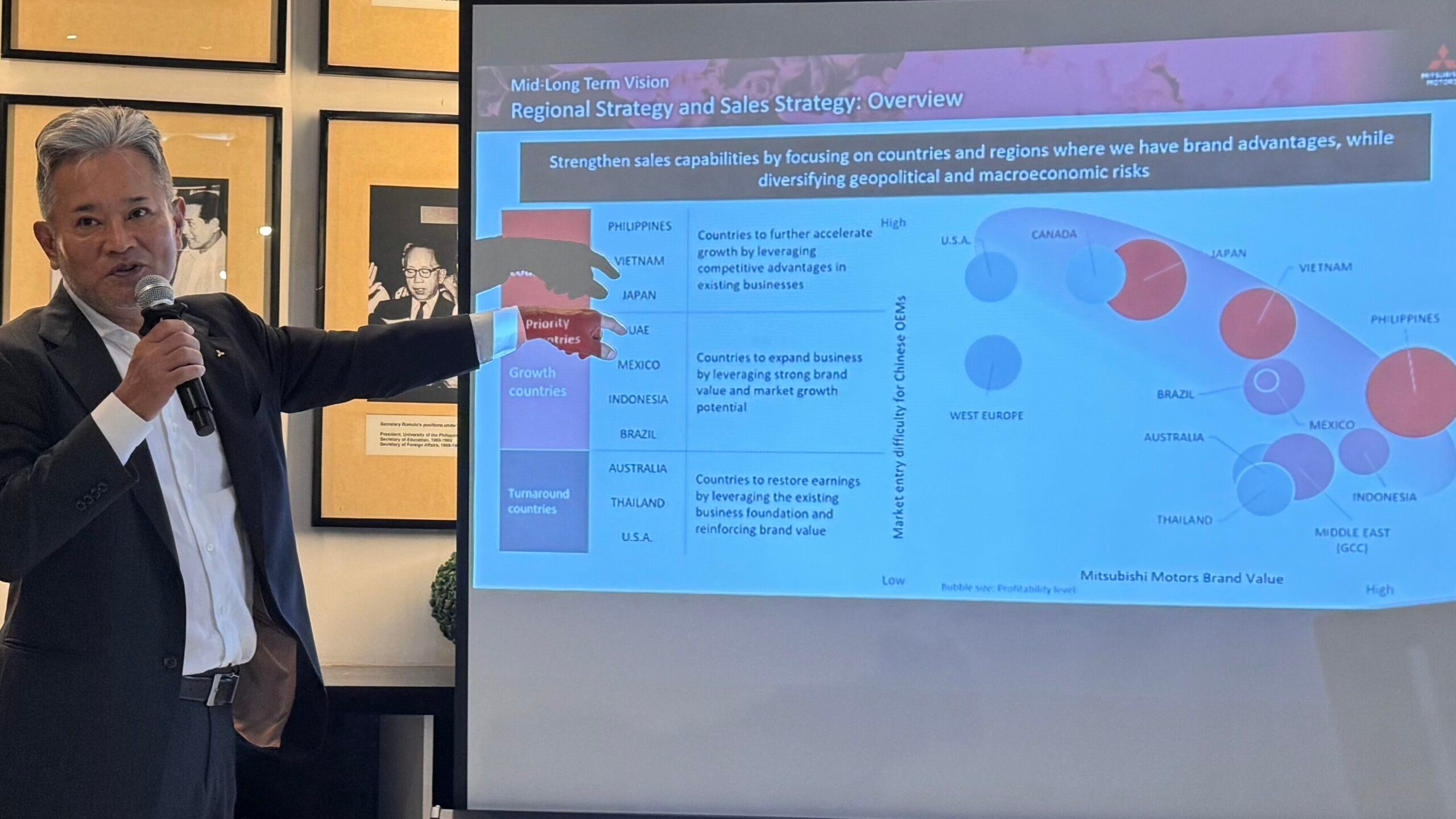
VALUABLE. MMPC chairman Noriaki Hirakata points out that the Philippines tops Mitsubishi Motors’ list of priority countries, given its high brand value. Photo by Lance Spencer Yu/Rappler.

Discussions later became more detailed with Finance Secretary Frederick Go, with Mitsubishi arguing that subsidies were needed to narrow the cost gap with Indonesia.

Hirakata said Go “took our request very seriously,” linking those talks to the eventual Electric Vehicle Incentive Strategy (EVIS). Under the program, automakers must invest at least P5 billion and meet production requirements to qualify for incentives. Mitsubishi’s entire P7-billion commitment is tied to EVIS.

But the government also wanted more than basic knockdown assembly. As such, Mitsubishi committed to bring in newer production technology, assemble battery packs locally, and gradually source more components from Philippine suppliers, although battery components will initially still be manufactured abroad.

“We want our plant to be competitive compared with other plants in Asia, even in Japan,” Hirakata said.

Mitsubishi has been here before. Hirakata credited the earlier Comprehensive Automotive Resurgence Strategy (CARS) program with helping keep both Mitsubishi and Toyota manufacturing locally.

“If there’s no CARS program, Toyota nor Mitsubishi couldn’t maintain this plant,” he said, adding that EVIS discussions have been smoother because government already has experience administering an automotive incentive program.
Must Read

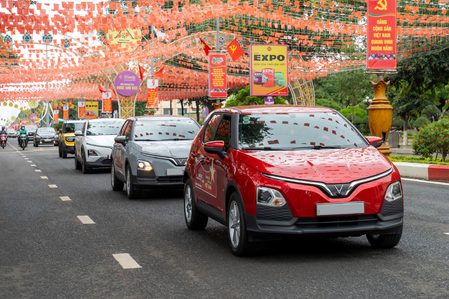
Electric vehicles make headway amid Iran war


Electric vehicles make headway amid Iran war

A late challenge to BYD?

By the time Mitsubishi begins local hybrid production in 2028, it will also face competitors that have spent years fortifying their electric vehicle businesses in the Philippines.

Hirakata acknowledged that some customers have already gone to BYD, but argued Mitsubishi’s six-decade presence gives it something newer entrants cannot quickly reproduce.

“There are certain customers already to BYD,” he said, but added that many Filipinos continue asking Mitsubishi when its hybrids will arrive.

“I don’t believe BYD established the brand over only one or two years,” Hirakata said.

Mitsubishi is effectively betting that brand loyalty and its existing customer base can buy it time despite entering the race later than some rivals. The company is targeting around 20% market share this year and at least 25% over the medium term.

Bigger plant, possible exports

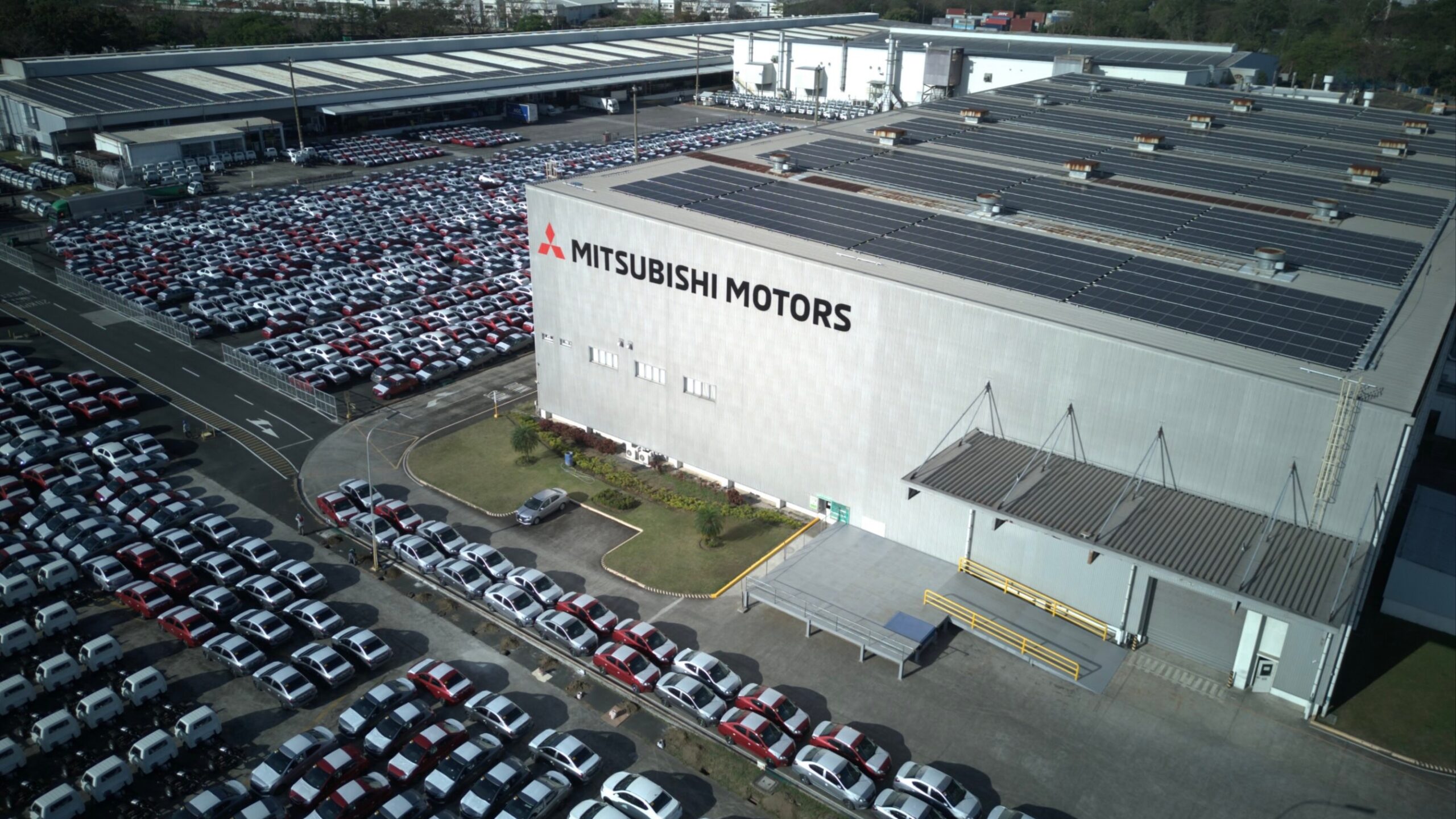
The 23-hectare Sta. Rosa facility currently has an annual capacity of 50,000 vehicles and is already operating at around 80% to 90% capacity, or roughly 40,000 to 45,000 vehicles a year. It currently manufactures Mitsubishi’s Mirage G4 and L300 models.

Hybrid production will need additional capacity. Hirakata said 70,000 units could be the next step, depending on demand, while the project could initially require another 300 to 500 engineers at the plant.

Mitsubishi is also exploring exports of the Philippine-made hybrid, with Hirakata saying the company does not intend to limit potential shipments to ASEAN. Subject to safety and emissions requirements, he said the vehicle could eventually be sold in other developing markets, including the Middle East, Latin America, and Africa.

“We are seeking for the export opportunity of this newly produced hybrid vehicle,” Hirakata told reporters. “By exporting vehicles form the Philippines, we can improve the trade balance of the nation.” – Rappler.com
Must Read

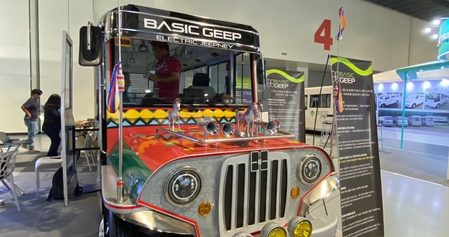
Are Filipinos shifting to green vehicles?


Are Filipinos shifting to green vehicles?

Similar Posts

  • |

    Pakistan unveils new oil import framework to attract global suppliers

    ISLAMABAD: Pakistan has decided to introduce a new policy framework aimed at facilitating international oil suppliers, improving the availability of petroleum products and strengthening the country’s energy security. Under the proposed Import Policy 2026 through Customs-Bound Storage, foreign petroleum suppliers will be allowed to bring oil and petroleum products into Pakistan and place them in customs-controlled storage facilities without immediately becoming liable for domestic duties and taxes. The new mechanism is designed to provide greater flexibility to international suppliers while creating an additional buffer of petroleum stocks within the country. Suppliers will be able to retain their products in designated customs-bound storage facilities and subsequently decide whether to sell the stocks in Pakistan or re-export them to other destinations. According to the proposed framework, international suppliers will be able to supply petroleum products to local oil marketing companies (OMCs) and refineries when market conditions and domestic requirements warrant such sales. Alternatively, they may re-export the products without necessarily having to enter them into the domestic market. The policy is expected to create a more flexible operating environment for global oil traders and suppliers, potentially encouraging them to establish a stronger presence in Pakistan’s petroleum supply chain. The customs-bound storage mechanism would also allow petroleum products to be stored in the country while remaining under customs control. This could help suppliers manage their inventories more efficiently and respond more quickly to changes in domestic demand. Officials and policymakers see the proposed framework as a step towards improving Pakistan’s petroleum supply security, particularly during periods of heightened international market volatility or disruptions in global energy supplies. The availability of additional stocks within the country could also help reduce the risk of sudden supply shortages by providing a readily accessible reserve that can be released into the domestic market when required. For local oil marketing companies and refineries, the framework could broaden their access to international suppliers and create additional options for sourcing petroleum products. Increased competition among suppliers may also contribute to greater efficiency in the petroleum import and distribution system. The initiative is part of broader efforts to modernise Pakistan’s oil import arrangements and make the energy sector more responsive to changing international market conditions. By allowing foreign suppliers to maintain petroleum inventories under customs control, the government aims to strike a balance between facilitating international trade and maintaining regulatory oversight of products entering the country. The new policy framework is expected to establish clearer procedures governing the import, storage, domestic sale and re-export of petroleum products, while providing international suppliers with greater commercial flexibility.

  • Thailand’s E-Commerce Vendors Push Back Against High Platform Fees  

    BANGKOK – The Thai E-Commerce Association recently held a major meeting with the Trade Competition Commission of Thailand (TCCT). Online vendors also joined the talks to express their deep frustration with the industry. They raised serious concerns over unfair business practices and skyrocketing commission fees charged by major e-commerce platforms. Many small business owners are struggling […]

  • | |

    Russia extends fuel export ban until January 2027

    Russia has extended its ban on diesel and petrol exports until January 31, 2027, as the government seeks to stabilise domestic fuel supplies and curb rising prices. In a statement, the Russian government said the export restrictions will remain in force until the end of January next year. The move is aimed at ensuring adequate fuel availability in the domestic market amid continued pressure on the country’s energy sector. The latest decision follows an earlier temporary ban on diesel exports that was imposed from July 8 to July 31. Russia has also previously restricted exports of petrol and jet fuel in an effort to address supply shortages at home. According to reports, the export curbs come after repeated Ukrainian drone attacks on Russian oil refineries, which have disrupted refining operations and reduced fuel production in several regions. The attacks have contributed to fuel shortages and rising domestic prices, prompting authorities to prioritise local demand over exports. The government believes extending the restrictions will help ease pressure on consumers and maintain stability in the country’s fuel market. Russia is one of the world’s leading exporters of refined petroleum products, and any changes to its export policy are closely monitored by global energy markets. Analysts say prolonged export restrictions could influence regional fuel supplies and international energy prices if they remain in place for an extended period. The government has not indicated whether the ban will be lifted before the January deadline, saying it will continue to monitor domestic fuel availability and market conditions.

Leave a Reply

Your email address will not be published. Required fields are marked *