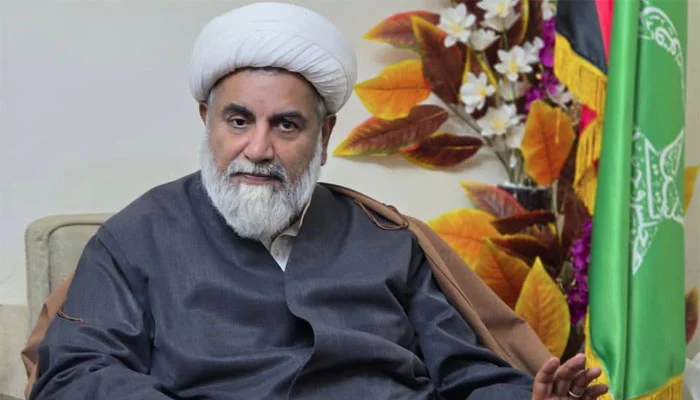
russia extends fuel
| |

Russia extends fuel export ban until January 2027

Russia has extended its ban on diesel and petrol exports until January 31, 2027, as the government seeks to stabilise domestic fuel supplies and curb rising prices.

In a statement, the Russian government said the export restrictions will remain in force until the end of January next year. The move is aimed at ensuring adequate fuel availability in the domestic market amid continued pressure on the country’s energy sector.

The latest decision follows an earlier temporary ban on diesel exports that was imposed from July 8 to July 31. Russia has also previously restricted exports of petrol and jet fuel in an effort to address supply shortages at home.

According to reports, the export curbs come after repeated Ukrainian drone attacks on Russian oil refineries, which have disrupted refining operations and reduced fuel production in several regions.

The attacks have contributed to fuel shortages and rising domestic prices, prompting authorities to prioritise local demand over exports. The government believes extending the restrictions will help ease pressure on consumers and maintain stability in the country’s fuel market.

Russia is one of the world’s leading exporters of refined petroleum products, and any changes to its export policy are closely monitored by global energy markets. Analysts say prolonged export restrictions could influence regional fuel supplies and international energy prices if they remain in place for an extended period.

The government has not indicated whether the ban will be lifted before the January deadline, saying it will continue to monitor domestic fuel availability and market conditions.
Similar Posts

  • | |

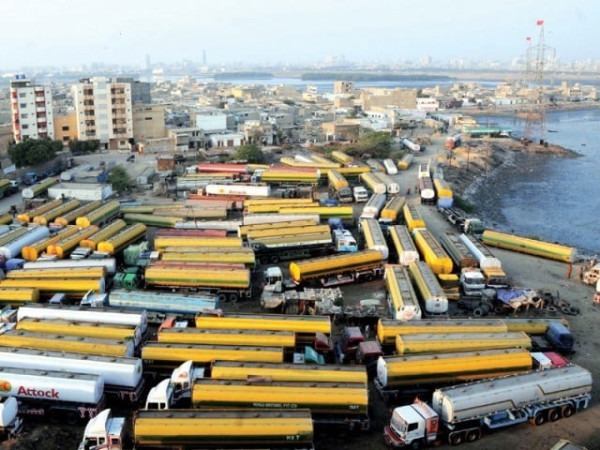
    Oil tankers call off immediate strike as petroleum…

    A potential nationwide disruption to fuel transportation has been temporarily put on hold after Pakistan’s Petroleum Minister agreed to meet representatives of the Oil Tankers Contractors Association following the group’s 72-hour ultimatum. The meeting is scheduled for Monday, July 27, where both sides are expected to discuss the association’s long-standing demands and explore ways to prevent a countrywide strike. During a joint press conference, leaders of the Pakistan Oil Tankers and Contractors Association said they had repeatedly raised their concerns with the authorities over the past year and a half. They stated that if the government accepts their demands, they will formally announce the decision. However, if negotiations fail, they will unveil their next course of action, which could include a nationwide suspension of oil tanker operations. The association is demanding an immediate end to commercial loading practices and an increase in transportation rates. According to the representatives, oil tanker freight charges have remained unchanged for the past three years despite a sharp rise in operating expenses. They also pointed out that motorway and National Highway Authority (NHA) toll taxes have increased by nearly 180 percent during the same period, making current transport rates financially unsustainable. Association leaders further alleged that despite months of negotiations and official correspondence, the Oil and Gas Regulatory Authority (OGRA) and the Petroleum Division failed to address their concerns, leaving them with no option but to threaten industrial action. The outcome of Monday’s meeting is expected to determine whether the dispute is resolved through dialogue or escalates into a nationwide strike that could affect fuel transportation and supply across the country.

  • |

    NEPRA seeks Rs34bn recovery from power consumers as industrial sector opposes tariff hike

    ISLAMABAD: The federal government has proposed recovering around Rs34 billion from consumers of distribution companies (Discos) and K-Electric through the quarterly tariff adjustment (QTA) for April-June 2026, translating into an estimated increase of Rs1.34 per unit. The proposed adjustment has been attributed largely to higher capacity-related costs resulting from a decline in electricity consumption during the quarter. However, representatives of the industrial sector have strongly opposed the proposed increase, arguing that businesses are already facing high electricity costs and cannot absorb another financial burden. The National Electric Power Regulatory Authority (NEPRA) held a public hearing on Wednesday to examine the QTA request, during which representatives of industries, power distribution companies and the government presented their positions. Initially, the power distribution companies had requested an adjustment of Rs23.031 billion for the second quarter of fiscal year 2026 under the QTA mechanism. The amount was later revised upward to Rs33.778 billion. According to the figures presented before NEPRA, the largest component of the proposed adjustment is related to capacity charges, amounting to Rs46.280 billion. Variable operation and maintenance costs account for another Rs4.936 billion. The calculation also includes a negative adjustment of Rs13.517 billion related to Use of System Charges (UoSC) and the Market Operator Fee (MOF), which partially offsets the overall increase. Similarly, Rs3.040 billion has been included to account for the impact of transmission and distribution losses on monthly Fuel Charges Adjustments (FCA). A further negative adjustment of Rs21.175 billion has been made under the incremental consumption package. The distribution companies have also claimed Rs14.211 billion for costs relating to Small Power Producers (SPPs) and Captive Power Producers (CPPs) that they say remained unrecovered. Industrial sector voices concern During the hearing, industrial representatives raised strong objections to the proposed QTA adjustment, warning that another increase in electricity prices could further weaken the competitiveness of Pakistan’s manufacturing sector. Rehan Javed, Aamir Sheikh and Tanveer Barry conveyed their concerns to NEPRA officials in the presence of representatives from the Ministry of Energy and the distribution companies. The representatives argued that industries were already operating under considerable cost pressures and that any additional increase in electricity tariffs would raise production expenses and make it more difficult for local businesses to compete in domestic and international markets. Tanveer Barry, representing the Karachi Chamber of Commerce and Industry (KCCI), particularly questioned the sharp rise in capacity-related charges. According to Barry, capacity charges had increased from around Rs36 billion in the first quarter to more than Rs50 billion in the period under review. He said the increase could ultimately translate into a much larger financial burden for consumers. He estimated that the combined impact could place an additional burden of approximately Rs3.50 per unit on consumers, depending on the final adjustment approved by the regulator. Barry also pointed out that eight distribution companies had reported positive capacity charges, while three had recorded negative adjustments. He urged NEPRA to examine the calculations and underlying reasons for the variations before approving any additional burden on consumers. Lower electricity demand Officials of the Peshawar Electric Power Company (Pesco) told the hearing that electricity consumption had fallen by approximately five per cent during the period under review. They attributed much of the decline to weaker demand from domestic and commercial consumers. Increasing adoption of solar energy was also cited as one of the factors reducing demand from residential consumers. NEPRA Member Maqsood Anwar Khan questioned Pesco officials about whether load-shedding was also being carried out in areas where consumers regularly paid their electricity bills. The Pesco representatives acknowledged that load-shedding was taking place. Maqsood Anwar Khan observed that interruptions in electricity supply could themselves contribute to lower electricity sales, as consumers would naturally use less grid electricity when supply was unavailable. Solarisation becomes key point of debate The growing use of solar power also featured prominently during the hearing. The NEPRA member noted that the expansion of solar generation had provided relief to the national electricity system by reducing daytime demand from the grid. He observed that without the contribution of solar energy, pressure on the power system and the need for daytime load management could have been considerably greater. He further noted that increasing solarisation was shifting the pattern of load-shedding, with pressure becoming more visible during night-time hours when solar generation was unavailable. The NEPRA member also disagreed with the assertion that solarisation alone was responsible for a decline in electricity sales, maintaining that the impact of rooftop and distributed solar generation should be assessed in a broader context. Industry questions capacity payments Industrial representatives also questioned why consumers should continue to shoulder substantial capacity payments when many areas were still experiencing load-shedding. Barry argued that consumers were effectively being asked to pay for electricity generation capacity while not receiving uninterrupted power supply. He further raised concerns about capacity payments being made to older and relatively inefficient power plants. According to him, the under-utilisation of generating units was contributing to higher capacity-related costs and ultimately increasing the price of electricity for consumers. The industrial sector also questioned whether the dispatch of power plants was fully aligned with the Economic Merit Order (EMO), arguing that deviations from the merit order could contribute to unnecessary costs. The representatives called on NEPRA to undertake a detailed review of the QTA calculations before reaching a final decision. They urged the regulator to defer the proposed increase, warning that higher electricity costs would place additional pressure on industries, increase production expenses and potentially undermine Pakistan’s export competitiveness. NEPRA is expected to examine the claims and objections raised during the public hearing before determining the final quarterly tariff adjustment applicable to consumers.

  • | |

    Raja Nasir Abbas condemns PIMS hospital tragedy, q…

    ISLAMABAD: Leader of the Opposition in the Senate Allama Raja Nasir Abbas has described the PIMS Hospital incident as an extremely painful and unbearable tragedy, expressing deep concern over the loss of lives and the suffering of affected families. Speaking to the media after arriving at the Pakistan Institute of Medical Sciences (PIMS), Raja Nasir Abbas criticized the government’s response to the incident and questioned whether removing a health secretary could be considered an adequate action in response to such a serious tragedy. He said that simply removing a senior health official would not address the underlying issues that led to the incident. According to him, the government must look beyond administrative changes and take practical measures to prevent similar incidents from occurring in the future. “Do you think that by removing one health secretary, you have done your job?” he questioned while speaking to the media. The Senate opposition leader also expressed sympathy for the families who lost their children in the incident. He asked people to imagine the pain and suffering of parents whose children were burned to death. “What must the parents whose children were burned to death have gone through?” he asked, while condemning what he described as the actions and handling of the situation by the authorities. Raja Nasir Abbas said that such incidents raise serious questions about the quality of public services and the government’s responsibility toward citizens. He stressed that people rely on state institutions for essential services, particularly healthcare and education, and expect these institutions to provide safe and reliable facilities. The opposition leader also drew a comparison between the public education and healthcare systems and the growing reliance on private institutions. He said that when government schools fail to meet people’s expectations, families are often forced to turn toward private educational institutions. Similarly, when people do not receive satisfactory treatment or adequate medical facilities at government hospitals, they are compelled to seek treatment from private hospitals. He argued that this trend places an additional financial burden on ordinary citizens, particularly families who cannot afford expensive private healthcare or education. Raja Nasir Abbas emphasized that government institutions should be strengthened so that citizens can receive essential services without having to depend on private alternatives. He suggested that authorities need to identify weaknesses within public-sector institutions and take effective steps to improve their performance. His comments came during his visit to PIMS, where he spoke about the incident and the concerns surrounding the hospital’s safety and management. The tragedy has prompted questions about safety arrangements, institutional accountability and the government’s responsibility for protecting patients and their families. The opposition leader’s remarks also highlighted the broader issue of public confidence in government institutions. When public hospitals fail to provide adequate care or safe facilities, people who cannot afford private treatment are particularly vulnerable. He called for greater accountability and better management of public-sector institutions, arguing that administrative decisions alone cannot resolve systemic problems. The incident has intensified debate over hospital safety and emergency preparedness, with calls for authorities to investigate what happened and determine whether negligence or shortcomings contributed to the tragedy. Raja Nasir Abbas maintained that the government must take meaningful measures rather than limiting its response to the removal of individual officials. He stressed that improving public hospitals and ensuring the safety of patients should remain a priority. He further expressed solidarity with the bereaved families and condemned the circumstances surrounding the deaths, saying that the suffering of parents who lost their children could not be ignored.

  • |

    Govinda recalls how he inspired Salman Khan before Partner

    Indian actor Govinda once opened up about a difficult phase in Salman Khan’s life before the two actors came together for their successful comedy film Partner. According to Govinda, Salman was going through a period of personal pain and emotional distress at the time, which had made him unusually quiet and withdrawn. Recalling their interaction before the shooting of the 2007 film, Govinda said he felt the need to speak to Salman and encourage him. He believed that when a person is struggling with personal issues, whether related to love, expectations or disappointment, it can become difficult for anyone else to help them overcome their emotions. Govinda remembered telling Salman that he had spent enough time focusing on things outside himself and now needed to look inward. He encouraged the actor to concentrate on his own well-being and work on rebuilding his confidence. The veteran actor also spoke to Salman about his physical fitness. Govinda recalled that he himself was going through a challenging period and weighed around 114 kilograms after stepping away from politics. Despite his own struggles, he tried to motivate Salman and remind him of his potential. Govinda reportedly told Salman that he did not look like a typical hero at that point because he appeared unhappy and sad. Rather than allowing himself to remain trapped in that difficult phase, Salman was encouraged to move forward and regain his confidence. According to Govinda, Salman asked him what he should do next. In response, Govinda advised him to exercise regularly for several hours each day. He also reminded Salman of the qualities that made him special as an actor and a leading man. Govinda compared Salman’s potential with that of legendary actor Dharmendra. He believed Salman had been blessed with a supportive family, a good appearance, personality and the qualities needed to become a major star. His advice was not simply about improving Salman’s physical appearance but also about helping him rediscover his confidence and strength. Govinda further recalled making a prediction about Salman’s career at the time. He told him that he believed he would continue to rule the film industry for the next 10 years. Looking back, Govinda said Salman ultimately proved that prediction right through his continued success and popularity. Their professional association later became particularly memorable through Partner, directed by David Dhawan. Released on July 20, 2007, the romantic comedy starred Salman Khan and Govinda in the lead roles, with the two actors developing a popular on-screen partnership. The film went on to become a notable commercial success and remains remembered for the chemistry and comic timing between its two leading stars. Govinda’s recollection of his conversations with Salman offers another glimpse into the relationship between the actors before they appeared together on screen. His advice also reflected the importance of self-confidence, discipline and perseverance during difficult periods. For Salman, that phase eventually became part of a larger journey that saw him strengthen his image as one of Bollywood’s most prominent stars.

  • | |

    Azma Bukhari fires back at Mohsin Naqvi over gover…

    Lahore: Punjab Information Minister Azma Bukhari has strongly responded to Interior Minister Mohsin Naqvi’s criticism of Pakistan’s governance system, arguing that he should not condemn the same structure that helped him rise to a senior position. In her reaction, Bukhari said Naqvi had advanced through the existing system and was now calling it a failure despite being one of its beneficiaries. She also claimed that the responsibilities entrusted to him had produced disappointing results, adding that the country’s leadership would decide how to address the matter if it was being raised seriously. Her remarks came after Naqvi, speaking at the Pakistan Economic Summit in Islamabad, described the current governance system as ineffective and incapable of solving the country’s long-standing challenges. The interior minister called for sweeping administrative reforms, including decentralizing authority and creating new administrative units, saying such changes are essential to improve governance and prevent Pakistan from facing the same problems in the years ahead.

  • | | | |

    Trump says Hormuz reopening near, warns Iran of consequences

    US President Donald Trump has said the Strait of Hormuz could reopen “very soon” as diplomatic efforts with Iran continue, while warning that Tehran would face a strong military response if negotiations fail. Speaking during an interview with Fox News, Trump expressed optimism about the ongoing talks, saying discussions had made significant progress. He claimed Iranian representatives had requested negotiations at a time when the United States was preparing for a large-scale military operation. According to Trump, Washington agreed to engage in dialogue after receiving signals from Tehran that it was willing to negotiate. He stressed that the United States remains committed to preventing Iran from acquiring nuclear weapons and said abandoning the talks would have serious consequences. The US president said negotiators spent the entire day in discussions and described the atmosphere as positive. He added that a successful agreement could help restore normal shipping through the Strait of Hormuz, one of the world’s most important energy routes. Trump also suggested that reopening the strategic waterway would ease pressure on global energy markets. He said lower oil prices could eventually translate into cheaper fuel costs for consumers and urged energy companies to reduce gasoline prices if market conditions improve. Speaking later to reporters in California, Trump said developments with Iran were moving in the right direction and indicated that greater clarity on the negotiations could emerge within the next 48 hours. Diplomatic efforts are reportedly being supported by regional mediators, including Oman and Qatar. Discussions are focused on restoring safe maritime navigation through the Strait of Hormuz while reducing tensions between Washington and Tehran. However, Iranian officials have maintained that progress depends on an end to US threats and continued respect for Iran’s sovereignty. The Strait of Hormuz is a vital global shipping lane through which a significant share of the world’s oil and liquefied natural gas exports passes. Any disruption to traffic through the waterway has immediate consequences for international energy markets and global trade. Financial markets reacted positively to reports of progress in the negotiations. Oil prices declined while Asian stock markets advanced on expectations that a diplomatic breakthrough could reduce regional tensions and restore uninterrupted shipping. Meanwhile, reports from Israel indicated growing concern over Washington’s diplomatic approach. Some Israeli officials reportedly believe the United States is prioritising a negotiated settlement with Iran, although no official Israeli government statement has confirmed those claims.

Leave a Reply

Your email address will not be published. Required fields are marked *