inside mitsubishis longterm
| | |

Inside Mitsubishi’s long-term P7-B bet on PH-made hybrid vehicles

MANILA, Philippines – Why would Mitsubishi Motors pour P7 billion into making hybrid vehicles in the Philippines, when it is still much cheaper to build cars in neighboring Thailand or Indonesia?

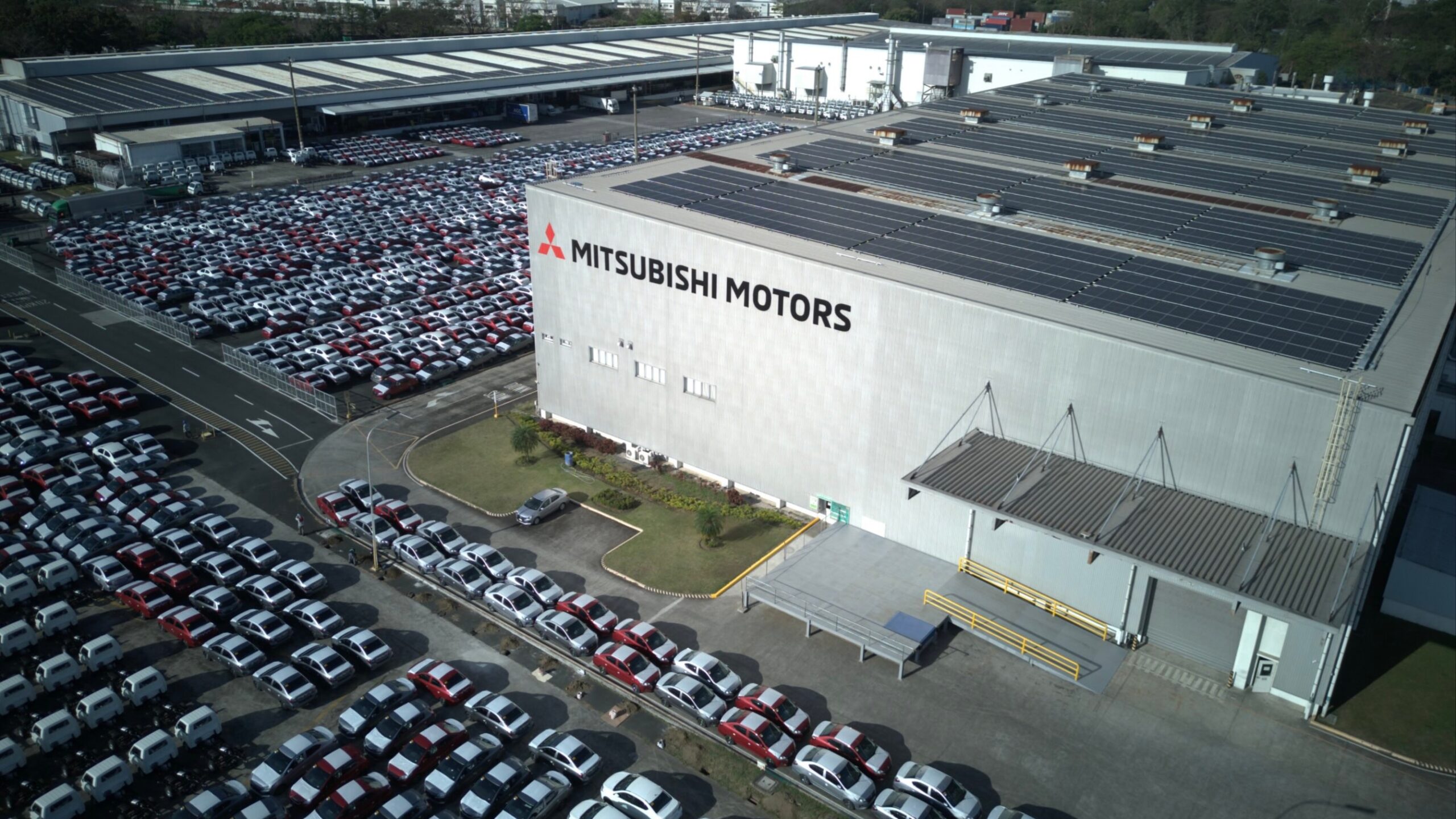
For the Japanese automaker, the answer is partly that it has been here too long, and the Philippine market matters too much, to pass on local manufacturing.

“This country is very special, very important, and we’d like to commit to this nation for a long time,” Mitsubishi Motors Philippines Corporation (MMPC) chairman Noriaki Hirakata told reporters on Monday, August 10.

So, Mitsubishi is making another bet on its Sta. Rosa plant. By 2028, it wants to build hybrid models locally, assemble its battery pack in the Philippines, and gradually bring more work to Filipino suppliers. Pilot production could begin around mid-2027.

“We promised we’ll assemble the battery in Philippines and we will try to localize this product as much as possible,” Hirakata said.

That does not mean Mitsubishi will immediately have a fully local battery supply chain. The battery components will initially still be made abroad and brought into the Philippines for assembly, while Hirakata said battery-pack assembly itself would make up only a small part of the overall P7-billion investment.

Still, the ambition goes beyond adding a locally made model to Mitsubishi’s Philippine lineup. The company sees room to expand production further and even send Philippine-made hybrids to developing overseas markets.

Why Mitsubishi asked for the government’s help

The bigger obstacle now is scale.

Toyota and Mitsubishi together produce slightly fewer than 100,000 vehicles annually in the Philippines, Hirakata said, less than a tenth of the more than 1.5 million units each in Thailand and Indonesia.

“[The] Philippine plant is not that cost-competitive yet because we don’t have economies of scale,” Hirakata said.

Mitsubishi brought that problem directly to government. Hirakata said Mitsubishi Motors president and CEO Takao Kato met President Ferdinand Marcos Jr. in early April and signaled the company’s readiness to join a planned EV incentive program. 
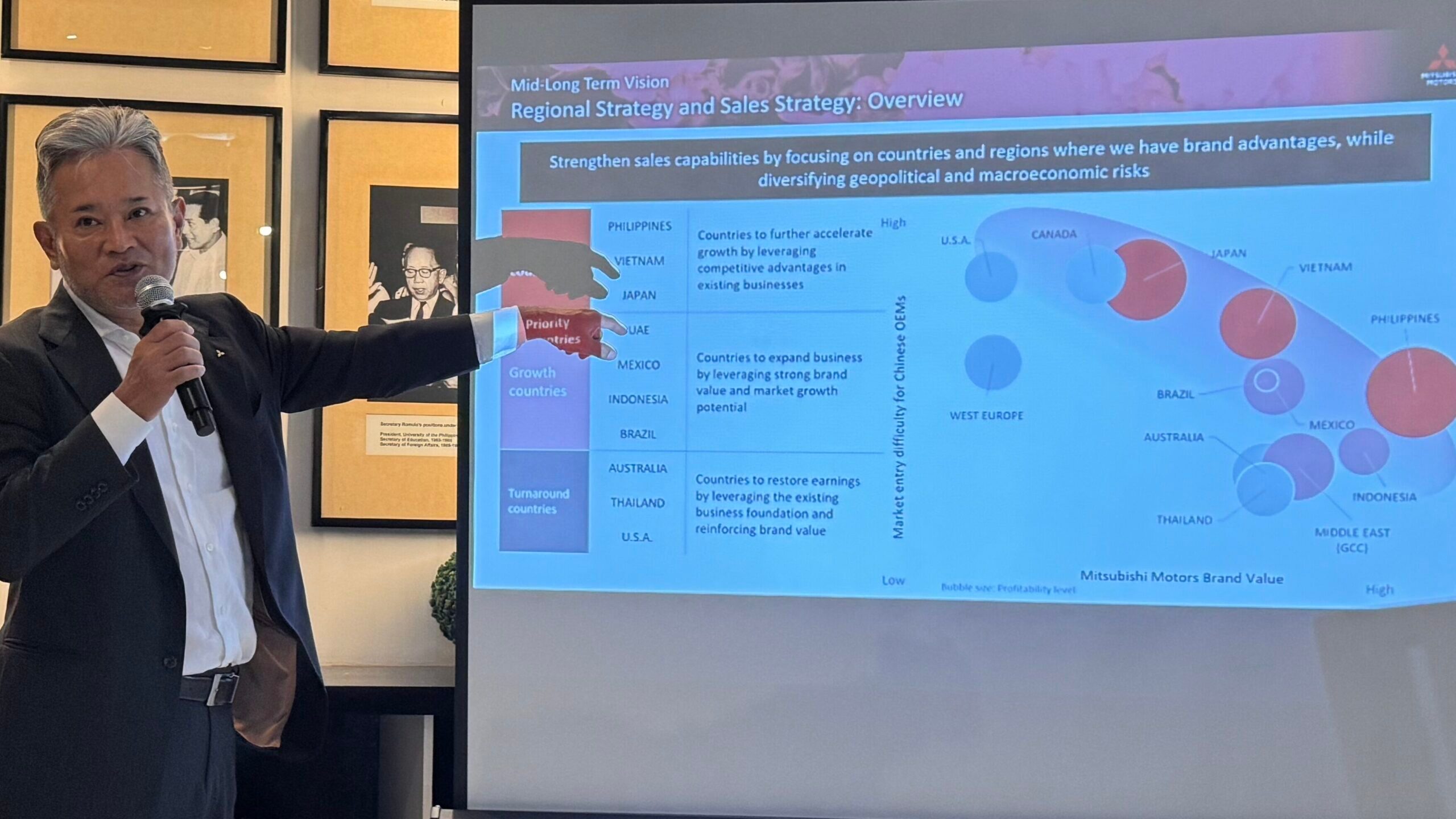
VALUABLE. MMPC chairman Noriaki Hirakata points out that the Philippines tops Mitsubishi Motors’ list of priority countries, given its high brand value. Photo by Lance Spencer Yu/Rappler.

Discussions later became more detailed with Finance Secretary Frederick Go, with Mitsubishi arguing that subsidies were needed to narrow the cost gap with Indonesia.

Hirakata said Go “took our request very seriously,” linking those talks to the eventual Electric Vehicle Incentive Strategy (EVIS). Under the program, automakers must invest at least P5 billion and meet production requirements to qualify for incentives. Mitsubishi’s entire P7-billion commitment is tied to EVIS.

But the government also wanted more than basic knockdown assembly. As such, Mitsubishi committed to bring in newer production technology, assemble battery packs locally, and gradually source more components from Philippine suppliers, although battery components will initially still be manufactured abroad.

“We want our plant to be competitive compared with other plants in Asia, even in Japan,” Hirakata said.

Mitsubishi has been here before. Hirakata credited the earlier Comprehensive Automotive Resurgence Strategy (CARS) program with helping keep both Mitsubishi and Toyota manufacturing locally.

“If there’s no CARS program, Toyota nor Mitsubishi couldn’t maintain this plant,” he said, adding that EVIS discussions have been smoother because government already has experience administering an automotive incentive program.
Must Read

Electric vehicles make headway amid Iran war


Electric vehicles make headway amid Iran war

A late challenge to BYD?

By the time Mitsubishi begins local hybrid production in 2028, it will also face competitors that have spent years fortifying their electric vehicle businesses in the Philippines.

Hirakata acknowledged that some customers have already gone to BYD, but argued Mitsubishi’s six-decade presence gives it something newer entrants cannot quickly reproduce.

“There are certain customers already to BYD,” he said, but added that many Filipinos continue asking Mitsubishi when its hybrids will arrive.

“I don’t believe BYD established the brand over only one or two years,” Hirakata said.

Mitsubishi is effectively betting that brand loyalty and its existing customer base can buy it time despite entering the race later than some rivals. The company is targeting around 20% market share this year and at least 25% over the medium term.

Bigger plant, possible exports

The 23-hectare Sta. Rosa facility currently has an annual capacity of 50,000 vehicles and is already operating at around 80% to 90% capacity, or roughly 40,000 to 45,000 vehicles a year. It currently manufactures Mitsubishi’s Mirage G4 and L300 models.

Hybrid production will need additional capacity. Hirakata said 70,000 units could be the next step, depending on demand, while the project could initially require another 300 to 500 engineers at the plant.

Mitsubishi is also exploring exports of the Philippine-made hybrid, with Hirakata saying the company does not intend to limit potential shipments to ASEAN. Subject to safety and emissions requirements, he said the vehicle could eventually be sold in other developing markets, including the Middle East, Latin America, and Africa.

“We are seeking for the export opportunity of this newly produced hybrid vehicle,” Hirakata told reporters. “By exporting vehicles form the Philippines, we can improve the trade balance of the nation.” – Rappler.com
Must Read

Are Filipinos shifting to green vehicles?


Are Filipinos shifting to green vehicles?

Similar Posts

  • |

    PIA-style model proposed for DISCO privatisation

    ISLAMABAD: The government has proposed a new financial structure for the privatisation of three major power distribution companies. The plan covers Faisalabad Electric Supply Company (FESCO), Gujranwala Electric Power Company (GEPCO) and Islamabad Electric Supply Company (IESCO).The proposal is based on the restructuring model used during the privatisation process of Pakistan International Airlines (PIA). Under the proposed plan, selected assets and liabilities of the three companies will be separated from their balance sheets.The government plans to establish a Special Purpose Vehicle (SPV) for this purpose. The SPV will be owned by the government. It will hold specific assets and liabilities removed from the DISCOs. The restructuring is aimed at making the companies more attractive to private investors. The government wants to offer financially stronger entities to potential buyers.Land assets are among the items expected to be separated from the DISCO balance sheets. Liabilities related to retired employees and pension benefits will also be shifted to the SPV.These pension-related liabilities were worth around Rs312 billion for the three companies as of June 2025. The final amount could change after the companies’ balance sheets are restructured. The government plans to use audited financial results for March 2026 as the basis for the final calculation.The three DISCOs had combined assets of around Rs1.2 trillion in June 2025. Their combined liabilities stood at approximately Rs1.05 trillion.The companies together reported net positive equity of around Rs145 billion. However, the financial position of the three companies varies considerably.GEPCO had negative equity of around Rs14.4 billion as of June 2025. The final figures may be different because the government is using March 2026 audited accounts for the restructuring process. The Privatisation Commission board has recommended that the Cabinet Committee on Privatisation approve the restructuring plans. The plans cover the first group of DISCOs selected for privatisation.The proposed arrangements have been prepared using audited financial statements for the period ending March 31, 2026. Officials believe the new structure could increase the value of the companies for the government.It is also intended to make the transactions commercially viable for private-sector investors. The government hopes the approach will attract stronger interest from domestic and international buyers.The strategy closely resembles the model adopted for PIA. During the airline’s privatisation process, the government separated more than Rs650 billion in liabilities from PIA’s balance sheet.The move was designed to leave the airline in a stronger financial position before its transfer to new owners. A similar approach is now being considered for the three DISCOs.The Privatisation Commission has been informed that both local and foreign investors have shown interest in the companies. The government has already announced deadlines for Expressions of Interest.Investors interested in FESCO must submit their Expressions of Interest by August 7, 2026. The deadline for GEPCO is August 21, 2026.For IESCO, the deadline has been set for September 7, 2026. FESCO has a relatively stronger financial position among the three companies.Its assets stood at around Rs410.3 billion as of June 2025. Its liabilities were approximately Rs347 billion.The company reported positive equity of around Rs63 billion. The equity position was supported by deposits for shares and gains from asset revaluation.FESCO also recorded a profit after tax of around Rs9.4 billion. Its non-current liabilities stood at approximately Rs217.6 billion.Staff retirement benefits accounted for around Rs123 billion of these liabilities. The company’s current liabilities were estimated at about Rs130 billion.Trade payables made up around Rs118 billion of the current liabilities. GEPCO reported a profit after tax of around Rs13.7 billion.Its total assets stood at approximately Rs238 billion. However, its equity remained negative at around Rs14.4 billion.The company’s total liabilities were around Rs252.5 billion. Staff retirement benefits accounted for approximately Rs79 billion.IESCO reported a loss after tax of around Rs1.42 billion during the same period. The company had total assets of approximately Rs547 billion.Its liabilities stood at around Rs450 billion. Despite recording a loss, IESCO had positive equity of around Rs97 billion. The company’s equity position was supported by a share deposit of approximately Rs67 billion. It also benefited from a surplus revaluation of around Rs158 billion.IESCO’s liabilities included staff retirement benefits worth around Rs110 billion. The company also carried deferred tax liabilities.The proposed privatisation is part of Pakistan’s wider power-sector reform programme. It is also linked to commitments made under Pakistan’s agreement with the International Monetary Fund (IMF).Pakistan has repeatedly pledged to reduce government involvement in the power distribution sector. The commitment to privatise at least three DISCOs has been made several times since 2013.Previous attempts, however, failed to reach completion. The IMF has urged Pakistan to implement structural reforms in the power sector.The broader objective is to reduce electricity costs for households and businesses. The reforms also aim to improve the operational efficiency of power distribution companies.The IMF has previously noted delays in the private-sector participation process for DISCOs. The first group, consisting of FESCO, GEPCO and IESCO, faced delays after potential investors raised concerns about the proposed transaction structure.The government has now said that those concerns have been addressed. Officials expect the privatisation process to move forward.The government is targeting completion of the first phase by early 2027. The proposed SPV will be an important part of the process.It is intended to separate selected financial burdens from the three companies before they are offered to private investors. The government hopes the restructuring will improve investor confidence and make the DISCO transactions more commercially attractive.

  • | | |

    Pakistan targets $1.5bn hybrid rice market in Chin…

    Pakistan has a major opportunity to increase its hybrid rice exports to China and could potentially secure exports worth up to $1.5 billion, according to industry experts. The opportunity has emerged as China looks for alternative sources of non-Basmati rice amid a decline in rice trade with India. Pakistani exporters believe the changing market conditions could allow the country to expand its presence in China. Shahzad Ali Malik, founding chairman of the Rice Exporters Association of Pakistan (REAP) and CEO of Guard Agricultural Research and Services, said Pakistan should move quickly to take advantage of the situation. He said Pakistan had a competitive edge because local farmers already grow Chinese hybrid rice varieties. With a coordinated strategy between the government and private sector, Pakistan could significantly increase its exports to the Chinese market. China is expected to remain one of the world’s largest rice importers. Its rice import demand for 2025-26 has been estimated at around 3.1 million tonnes. India had previously been an important supplier of non-Basmati rice to China. However, changes in Chinese import requirements and non-tariff restrictions have affected Indian rice shipments. This has created an opening for other suppliers. Pakistan is considered well placed to benefit because it already produces both Basmati and non-Basmati rice. Pakistan also has surplus stocks of several non-Basmati varieties. These include Chinese hybrid rice and IRRI varieties that are used in China for food processing and strategic food reserves. The hybrid rice segment offers particular potential. Pakistan uses hybrid seed parent lines imported from China. This could make it easier for Pakistani producers and Chinese buyers to maintain compatibility in varieties and quality standards. Pakistan also has an advantage in the non-GMO segment. Industry representatives believe this could strengthen the country’s position as Chinese buyers become more selective about imported rice. The Pakistan-China Free Trade Agreement could further support exports. Existing trade links and CPEC-related logistics may also help Pakistani exporters reduce transportation time and improve their competitiveness. The changing market could benefit both exporters and farmers. Lower competition from India may increase demand for Pakistani rice and could improve prices. Chinese buyers may also seek long-term contracts and assured supplies. Such arrangements could provide farmers with greater market certainty and encourage investment in rice production. However, industry experts say Pakistan must improve its export systems to take full advantage of the opportunity. The government and private sector will need to work together on contract farming, seed quality, certification and food safety requirements. Chinese authorities have strict standards for food safety and pesticide residues. Pakistani exporters will therefore need to ensure that rice consistently meets the required specifications. Seed companies can also play an important role. Improved hybrid seeds could increase yields per acre while helping farmers produce rice of consistent quality. Logistics will be another key factor. Industry representatives believe Pakistan’s ports and CPEC-linked infrastructure could help shorten delivery times and reduce costs. Rice is one of Pakistan’s most important export commodities and ranks second after textiles. An increase in rice exports could generate additional foreign exchange and provide greater economic opportunities for farmers, particularly in Punjab and Sindh. Malik estimated that Pakistan could increase its overall rice exports to around $5 billion within three to five years if the necessary planning, investment and policy support are provided. He also proposed establishing a Pakistan-China Rice Export Task Force. The proposed body could include rice exporters, seed companies and relevant government authorities. The task force could develop a long-term export strategy, coordinate with Chinese buyers and address regulatory and logistical challenges.

  • Thailand Freezes Cooking Gas Prices to Shield Families as Oil Debt Soars

    BANGKOK – Thailand will keep the cost of household cooking gas locked at 423 baht for a standard 15-kilogram cylinder. This helpful price freeze will last until October 31 to help local families manage their daily living costs. Furthermore, the government wants to stop food and essential service prices from jumping higher. However, this popular […]

Leave a Reply

Your email address will not be published. Required fields are marked *