
thailand freezes cooking

Thailand Freezes Cooking Gas Prices to Shield Families as Oil Debt Soars

BANGKOK – Thailand will keep the cost of household cooking gas locked at 423 baht for a standard 15-kilogram cylinder. This helpful price freeze will last until October 31 to help local families manage their daily living costs. Furthermore, the government wants to stop food and essential service prices from jumping higher.

However, this popular move comes with a massive financial cost for the country. The national Oil Fuel Fund is taking on more debt to cover the true price of cooking gas. In fact, the fund’s total deficit has now pushed past a staggering 71.8 billion baht.

Key Takeaways:

  • Thailand will hold household cooking gas prices at 423 baht per 15kg cylinder until late October.
  • The government actively increased the gas subsidy to protect citizens from rising everyday living expenses.
  • The national Oil Fuel Fund deficit has surpassed 71.8 billion baht due to these ongoing price subsidies.

Officials are blaming global market swings for this growing domestic financial pressure. According to a recent report by The Nation Thailand, worldwide energy prices remain highly unstable today. This ongoing volatility is mostly due to mixed signals coming from the United States and Iran.

These international tensions are creating huge uncertainty about vital shipping routes in the Middle East. Specifically, energy experts are worried about the Strait of Hormuz remaining open for commercial trade. If this crucial waterway closes, oil and gas prices around the world could spike instantly.

Therefore, the Thai Energy Ministry is watching these global developments very closely every single day. They want to make sure the country has enough affordable energy to keep local businesses running. Their ultimate goal is to protect hard-working Thai families from sudden, painful price shocks.

Increased Subsidies Protect Local Households

To keep consumer prices perfectly stable, the government had to increase the current gas subsidy. The financial support jumped significantly from 7.22 baht to 9.86 baht per kilogram recently. This quick government action successfully stopped the local retail price from matching high global costs.

Naturally, this tough decision forces the Oil Fuel Fund to absorb the extra financial burden. The fund actually lost over two billion baht in just one week during early August. Despite the rapidly growing debt, government leaders firmly believe this is the right choice for citizens.

The Energy Ministry officially promised to keep using the fund to manage domestic fuel costs. They are carefully monitoring both local refinery prices and the fund’s heavy financial burden. Ultimately, they want to ensure essential fuel prices stay fair for everyone living in Thailand.

Looking Ahead for Thailand’s Economy

The upcoming months will be critically important for Thailand’s long-term energy policies. Leaders must carefully balance public support with the harsh reality of a growing national debt. Helping households today could easily create some tough financial choices for the country in the future.

For now, Thai families can cook their daily meals without worrying about sudden price hikes. Local street food vendors and small businesses will also benefit from this steady, predictable fuel cost. Keeping the price of gas locked down helps keep the entire local economy stable and strong.

Still, economic experts naturally wonder how long the government can afford this expensive protective policy. If global trade conflicts worsen, the oil fund might urgently need a brand new survival plan. The Thai people simply hope that global energy markets will finally calm down soon.
 Trending News:

Gas Shortages and High Prices Derail Southeast Asia’s Energy Plans

Thailand’s Domestic Gas Production Remains Key to Long-Term Energy Security

Similar Posts

  • |

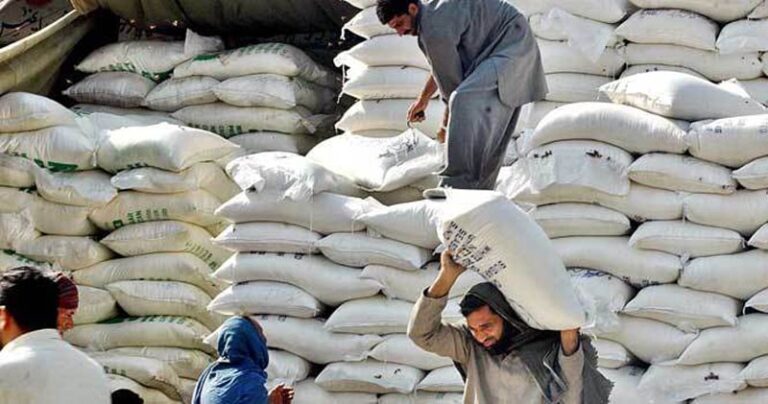
    Umerkot flour millers reject Rs128/kg official rate, seek fresh price review

    UMERKOT: Flour mill owners in Umerkot district have rejected the government-fixed price of Rs128 per kilogram, arguing that the sharp increase in wheat prices has pushed their production costs far above the officially notified rate. The millers said the prevailing wheat price in the open market had climbed to around Rs125 per kilogram, while additional expenses related to milling, labour, electricity, transportation and other operations had increased the overall cost of producing flour to nearly Rs140 per kilogram. They maintained that selling flour at Rs128 per kilogram was therefore commercially unsustainable and would force mill owners to operate at a loss. In this regard, representatives of the flour milling industry have submitted written applications to the Mirpurkhas commissioner and the Umerkot deputy commissioner, requesting authorities to reconsider the existing flour price and determine a new rate based on prevailing market conditions and production costs. The mill owners also raised objections to what they described as excessive administrative action against flour mills across the district. They specifically complained about raids and wheat seizures allegedly carried out by assistant commissioners in Umerkot, Kunri, Samaro and Pithoro. According to the millers, government policy allows flour mill owners to maintain wheat stocks of up to 850 bags per stone at their mills or designated warehouses. They alleged that despite the provision, local administrative officials had conducted raids on mills and storage facilities and seized wheat stocks. The mill owners termed the alleged seizures unjustified and said such actions were creating additional difficulties for an already financially pressured industry. They urged the authorities to ensure that enforcement measures were carried out strictly in accordance with the relevant government policy. The millers further called for an investigation into alleged irregularities involving food department inspectors. They demanded that senior provincial officials examine the complaints and take appropriate action if any wrongdoing is established. They appealed to the Sindh chief minister, provincial food secretary, Mirpurkhas commissioner, Umerkot deputy commissioner and other concerned authorities to intervene in the matter and review the officially fixed flour price. The mill owners argued that the price should be determined after taking into account the current cost of wheat as well as electricity, labour, transportation, maintenance and other expenses associated with flour production. They warned that continued enforcement of a price they consider economically unviable could increase financial losses for flour mills and put further pressure on the district’s milling industry. The millers said they were willing to cooperate with the administration in maintaining the availability of flour and preventing unjustified price increases, but stressed that any official pricing mechanism must reflect actual market and production costs. They also urged the provincial government to establish a transparent mechanism for monitoring wheat stocks and flour prices so that disputes between millers and local administrations could be resolved through clear rules rather than repeated raids and seizures.

  • Thailand Real Estate Lock-In Is Easing as FSBO Gains Ground

    Thailand’s Real Estate market is showing a new kind of movement. Owners who once held onto condos, villas, and land-backed homes because changing ownership structures felt difficult are now testing direct sales. That doesn’t prove a nationwide FSBO boom. However, more owner-listed properties, slower transactions, weaker purchasing power, and higher closing costs point to a […]

  • | | |

    Sindh assigns Rs8.5bn karachi projects to FWO

    The Sindh government has handed over four major infrastructure projects worth around Rs8.5 billion in Karachi to the Frontier Works Organisation (FWO), with work on three of the projects scheduled to begin on the ground in August. One of the key projects involves the construction of a flyover or interchange near the Northern Bypass on the M-9 Motorway. The Sindh Local Government Department has started the process of obtaining a no-objection certificate (NOC) from the National Highway Authority (NHA) because the project will be built over the motorway. The new interchange aims to improve traffic flow between Jinnah Avenue and Malir Cantonment Road and the routes connecting Hyderabad and Sohrab Goth Vegetable Market with Jinnah Avenue. Once completed, the facility will allow motorists to cross between both sides of the motorway without taking lengthy U-turns. Authorities have estimated the cost of this project at Rs2.3 billion. The budget also covers the rehabilitation and beautification of Jinnah Avenue, which is expected to improve the overall appearance and connectivity of the area. Another major project will see the construction of a flyover at an intersection on the M-9 near Al-Asif Square, providing a direct link to Abul Hasan Isphahani Road. The project carries an estimated cost of Rs2.1 billion, and construction is expected to formally begin in August. The flyover will facilitate traffic arriving from different directions and is expected to ease congestion at one of the city’s busy intersections. The government has also included the rehabilitation and improvement of roads along the Hawksbay corridor. The project covers an 8.5-kilometre stretch from the Y Junction to Machli Chowk, as well as the road extending from Machli Chowk towards Kaka Pir. Authorities have estimated the combined cost of these works at Rs4.162 billion, with construction also scheduled to begin in August. In addition, the Sindh government plans to launch work on another major project at the Malir Halt Underpass soon. The initiative forms part of the provincial government’s broader efforts to upgrade Karachi’s road infrastructure, improve traffic movement and address congestion at key entry and exit points across the city. The four projects, collectively worth approximately Rs8.5 billion, are expected to enhance connectivity and provide motorists with safer and more efficient routes across several important parts of Karachi.

  • | | |

    PSX extends decline as KSE-100 drops over 1,260 po…

    The Pakistan Stock Exchange (PSX) remained under pressure on Friday, with the benchmark KSE-100 Index extending its recent losing streak during the morning trading session as investor sentiment stayed weak. By the time trading was suspended for the routine Friday prayer break, the KSE-100 Index had fallen 1,264.14 points, or 0.74%, to 170,475.30. The market opened in negative territory and continued to fluctuate throughout the session. The index reached an intraday high of 171,208.55 before declining to a low of 169,512.88, reflecting persistent selling pressure across the market. Trading activity remained moderate, with more than 114 million shares changing hands during the morning session. The total value of traded shares stood at approximately Rs7.83 billion before the temporary suspension. Market participants said investors remained cautious as profit-taking continued in several heavyweight stocks. The absence of strong buying interest also contributed to the downward trend, keeping the benchmark index below its previous closing level. The market moved within a wide range of nearly 1,700 points during the session, highlighting continued volatility as investors assessed economic conditions and overall market sentiment. Analysts said investors are closely monitoring developments that could influence market direction, including corporate earnings, economic indicators and broader financial conditions. They added that confidence has remained subdued in recent sessions, resulting in increased selling activity. Trading is expected to resume after the Friday prayer break, with investors watching for signs of a recovery. Market experts believe the direction of the afternoon session will determine whether the benchmark index can recover some of its losses or end the week on another negative note.

Leave a Reply

Your email address will not be published. Required fields are marked *