lavrov rules out
|

Lavrov rules out immediate Ukraine ceasefire

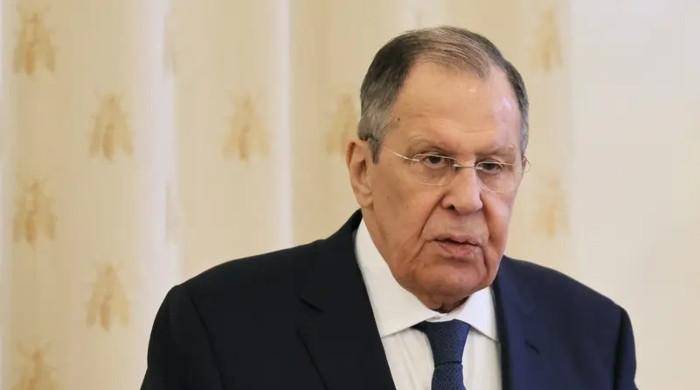
Russian Foreign Minister Sergei Lavrov has ruled out the possibility of an immediate ceasefire in Ukraine, arguing that any truce must form part of a long-term and sustainable settlement rather than serve as a temporary pause in the conflict.

In an interview with Russian state television, Lavrov said Moscow would continue to take stronger measures against Western support that, according to Russia, strengthens Ukraine’s military capabilities. He accused Western countries of prolonging the war by providing Kyiv with military and other forms of assistance.

Lavrov maintained that Russia would only consider a ceasefire if it could lead to a lasting political solution. He said an immediate halt to fighting would not address what Moscow considers the underlying causes of the conflict and could allow Ukraine to strengthen its forces and resume hostilities later.

The Russian foreign minister also accused the United States of involvement in attacks against Russia. His remarks came as Moscow seeks clarification from the US State Department over alleged American intelligence cooperation with Ukraine.

Despite the escalating rhetoric, Lavrov said Russia had not rejected dialogue with representatives of US President Donald Trump. He indicated that Moscow remained open to discussions with Trump’s envoys, suggesting that diplomatic channels between Washington and Moscow remain available.

Lavrov’s comments highlight the difficult path toward a ceasefire as Russia and Ukraine continue to disagree over the conditions for ending the war. Moscow has repeatedly called for a settlement that addresses its security demands, while Kyiv and its Western allies have pushed for a durable peace that preserves Ukraine’s sovereignty and security.

Similar Posts

  • |

    MH370 families renew search for answers as Beijing court hears appeal

    Twelve years after Malaysia Airlines Flight MH370 disappeared without a trace, relatives of Chinese passengers returned to a Beijing court seeking answers they say they have been denied for more than a decade. The families insist that financial compensation alone cannot resolve their pain and are urging the court to focus on establishing the truth behind one of aviation’s greatest unsolved mysteries. The appeal comes after a Beijing court ruled in December that Malaysia Airlines should pay compensation of 2.9 million yuan to each of eight Chinese families. While the ruling acknowledged their loss, two families challenged the decision, arguing that it failed to address the airline’s responsibility or explain what happened to the aircraft and the 239 people on board. Flight MH370, a Boeing 777 travelling from Kuala Lumpur to Beijing on March 8, 2014, disappeared from radar with 239 passengers and crew members. Nearly two thirds of those on board were Chinese nationals. Despite years of international search operations across the Indian Ocean, investigators have never located the aircraft’s main wreckage or recovered its flight recorders, leaving the fate of those on board unknown. The latest court hearing in Beijing was held behind closed doors, but family members gathered outside to express their frustration. Li Eryou, whose son was among the passengers, said the original court ruling left him feeling insulted because it focused only on financial compensation while ignoring the deeper questions surrounding the disappearance. Li said no one had apologized to the families during the past 12 years and argued that the case deserved to be treated as an international tragedy rather than a routine legal dispute. He believes the compensation awarded by the lower court does not reflect the seriousness of the disaster or the emotional suffering experienced by relatives who continue to live without closure. Over the years, aviation experts have proposed several possible explanations for the disappearance. Theories have included deliberate actions by the pilot, hijacking, a missile strike or a technical failure. Another widely discussed possibility suggests that a fire involving electronic equipment may have filled the cabin with smoke, causing everyone on board to lose consciousness before the aircraft continued flying on autopilot until it ran out of fuel and crashed into the Indian Ocean. However, none of these theories has been confirmed because investigators have never recovered enough evidence to determine exactly what happened. The absence of definitive findings has continued to fuel uncertainty and speculation, leaving many families convinced that important questions remain unanswered. Jiang Hui, whose mother was on the missing aircraft, said the appeal is not primarily about receiving more money. Instead, he said the families want the court to establish the facts surrounding the case and examine whether Malaysia Airlines responded appropriately after the aircraft disappeared. According to Jiang, determining responsibility and uncovering the truth are far more important than the compensation itself. People from 14 different countries were on board Flight MH370, including 50 Malaysian passengers and crew members. While legal proceedings continue in China, there are currently no similar cases pending against the airline in Malaysia. Last month, the Malaysian government announced that the search for MH370 would continue until June next year. The renewed operation is being carried out by private exploration company Ocean Infinity, which has previously led several unsuccessful search missions in the southern Indian Ocean. Although earlier efforts failed to locate the aircraft, relatives remain hopeful that new technology and expanded search areas could finally provide long awaited answers. Jiang welcomed Malaysia’s decision to extend the search and urged authorities to allow families to organize their own independent search missions alongside official efforts. For many relatives, discovering what happened to Flight MH370 remains their greatest priority, believing that only the truth can finally bring closure after more than a decade of uncertainty.

  • | | | |

    Two Chinese oil tankers safely cross Bab el-Mandeb…

    RIYADH: Two Chinese supertankers carrying Saudi crude oil have safely passed through the Bab el-Mandeb Strait, despite growing security concerns following the Houthi movement’s recently announced naval blockade targeting Saudi-linked shipping. According to international media reports and shipping data, the vessels successfully navigated one of the world’s busiest maritime chokepoints, even as commercial shipping across the region faces mounting disruption due to escalating tensions in the Middle East. The two tankers departed earlier this week from Saudi Arabia’s Yanbu Port, transporting crude oil to China. Maritime tracking data indicated that both ships identified themselves as carrying Chinese crews, a detail analysts believe may have helped reduce the risk of interception while transiting the strategically important waterway. The successful voyage comes at a time when regional shipping routes are under increasing pressure. While the Bab el-Mandeb passage remained open for these vessels, traffic through the Strait of Hormuz has slowed significantly amid heightened geopolitical tensions and security threats. Industry monitoring organizations reported that only one oil tanker crossed the Strait of Hormuz on Thursday, marking the lowest daily traffic recorded since May 7. The sharp decline reflects growing concerns among shipping companies over the safety of vessels operating in the Gulf region. The latest developments follow the Houthis’ announcement of a naval blockade against Saudi shipping, raising fears of further disruptions to global energy supplies. The Red Sea and nearby waterways serve as vital corridors for international trade, with millions of barrels of crude oil passing through them every day. Maritime security experts say shipping companies are increasingly reassessing routes, insurance coverage, and operational risks as tensions continue to rise. Some firms have warned that insurance policies for vessels operating in high-risk conflict zones could become more expensive or even be withdrawn if security conditions deteriorate further. Although the two Chinese tankers completed their journey through Bab el-Mandeb without incident, analysts caution that the broader security situation remains highly volatile. Any escalation involving key maritime routes could have significant consequences for global oil markets, freight costs, and international supply chains. The safe passage of the vessels offers temporary reassurance for energy markets, but observers note that commercial shipping in the region remains vulnerable as geopolitical tensions persist. Governments, shipping operators, and energy traders are closely monitoring developments, with particular attention focused on the strategic waterways that connect the Gulf to global markets.

  • |

    Indian activists challenge AI-powered police surveillance following student demonstrations

    Indian digital rights activists and student leaders are challenging Prime Minister Narendra Modi’s government in the Delhi High Court over the deployment of artificial intelligence-powered mass surveillance during recent youth protests in New Delhi. Student activist Aishe Ghosh filed a petition with the Delhi High Court seeking to declare the police’s mass surveillance of demonstrators unconstitutional. The lawsuit requests the immediate destruction of all personal and biometric data collected during the demonstrations and asks the court to establish clear binding guidelines governing the use of surveillance technologies at public gatherings. The controversy intensified after photographs circulated showing a mobile police surveillance unit, branded “Ikshana” and developed alongside security firm CP Plus, deployed at the main protest site. The vehicle featured telescopic masts providing 360-degree coverage, AI-powered cameras, and real-time facial recognition capabilities that displayed face accuracy metrics to match attendees against law enforcement databases. Furthermore, police officers were documented recording the social media handles of arriving participants. Digital rights organisations, including the Internet Freedom Foundation, have formally requested the Delhi Police Commissioner to delete all biometric data gathered during the events. Advocates emphasise that India currently lacks a dedicated legal framework governing police deployment of facial recognition systems, making such intrusive measures disproportionate and illegal. During court proceedings, Solicitor General Tushar Mehta defended law enforcement actions, arguing that expectations of privacy at a public gathering were misplaced and asserting that the security measures were absolutely necessary in the interest of public order. Delhi Police maintained that the technology was used solely to identify individuals with criminal histories and count crowd size without restricting freedoms. The court challenge continues despite the end of the student demonstrations, which were triggered by widespread examination paper leaks in national competitive tests. The protests culminated in the resignation of Union Education Minister Dharmendra Pradhan and the announcement of a government panel tasked with overhauling the national examination system.

  • |

    Gen Z-led protest movement poses major challenge to Modi government in India

      India is witnessing a significant wave of youth-led protests that has intensified political pressure on Prime Minister Narendra Modi’s government during its third consecutive term. The growing movement, driven largely by Generation Z, has emerged as one of the most prominent public challenges to the current administration, reflecting widespread dissatisfaction over unemployment, alleged examination scandals, and concerns about the country’s education system. The protest movement has gained momentum through a platform known as the “Cockroach Janata Party,” which has become a symbolic outlet for the frustration of young Indians. Although the name began as a satirical expression on social media, it has rapidly evolved into a broader movement that has attracted thousands of participants across different regions. The campaign highlights the growing anger among students and young professionals who believe that the government has failed to address issues affecting their future. The movement received further attention following the hunger strike and reported forced removal of activist Sonam Wangchuk, developments that protesters say strengthened public support for the demonstrations. Many participants argue that such actions have reinforced concerns about the government’s response to peaceful dissent and have encouraged more young people to join the protests. According to a reports , the demonstrations are being viewed as the biggest wave of public pressure faced by Prime Minister Modi since the beginning of his third term in office. The protests are rooted in several long-standing grievances, including examination irregularities, rising unemployment among educated youth, and declining confidence in India’s education system. Protesters believe that these issues have seriously affected career opportunities and undermined trust in public institutions Tensions escalated during a protest march toward the Indian Parliament, where clashes broke out between demonstrators and security personnel. Authorities attempted to stop protesters from reaching the Parliament complex, leading to confrontations that further heightened the political atmosphere Official figures released after the clashes stated that at least 180 people were injured, including 118 police officers and 60 protesters. The remaining injured individuals were not immediately identified. In response to the unrest, authorities temporarily suspended mobile internet services in several sensitive areas of the city, citing security concerns. Such restrictions have drawn criticism from rights groups and civil society organizations, which argue that internet shutdowns limit communication and restrict access to information during times of public unrest. One of the protesters’ primary demands is the resignation of the country’s Education Minister. Demonstrators argue that accountability is necessary in light of the alleged examination controversies and the broader crisis facing the education sector. The movement continues to be led primarily by young people, and many observers describe it as the collective voice of Generation Z demanding greater transparency, fairness, and employment opportunities. According to Deutsche Welle (DW), the campaign initially began as a satirical online movement but quickly transformed into an organized nationwide protest. What started as digital criticism on social media has evolved into large-scale street demonstrations that reflect deep frustration among young Indians over limited job prospects, educational challenges, and uncertainty about their future. As the movement continues to expand, political analysts believe it represents a critical test for the Modi government. Whether the administration chooses dialogue, policy reforms, or stronger security measures in response to the protests could significantly influence public opinion and shape India’s political landscape in the months ahead.

  • | | |

    US forces thwart Iranian missile barrage as region…

    WASHINGTON: A fragile pause in hostilities between the United States and Iran came to an abrupt end on Tuesday after Iranian forces launched multiple ballistic missiles toward US military positions in the Middle East, according to the US military. The US Central Command (CENTCOM) said the missiles were fired by Iran’s Islamic Revolutionary Guard Corps (IRGC) in what it described as a surprise attack. In a statement posted on X, CENTCOM reported that all incoming missiles were successfully intercepted, preventing any reported damage or casualties. However, it did not disclose the exact locations that were targeted. The latest exchange marks a renewed escalation after several days of relative calm. Both countries had refrained from military action over the weekend following nearly two weeks of intense conflict, during which the United States carried out nightly strikes on Iranian positions while Tehran responded with repeated missile and drone attacks against US allies across the Gulf region. The recent confrontation traces back to mid-July, when Iran targeted several commercial vessels in the Strait of Hormuz, triggering a sharp rise in regional tensions and prompting a sustained military response from Washington. The temporary ceasefire had raised hopes for diplomacy, with US President Donald Trump stating there was a strong possibility of progress in negotiations aimed at ending the conflict. The lull in fighting also contributed to a decline in global oil prices, reflecting growing market optimism that the crisis could be contained. Tuesday’s missile launch, however, signals that tensions remain high, casting fresh uncertainty over diplomatic efforts and raising concerns about the potential for another round of military escalation in the Middle East.

  • | | | |

    Trump warns Iran it has a ‘last chance’ to rea…

    US President Donald Trump has warned that Iran has a final opportunity to reach an agreement with the United States, saying he postponed planned military action to allow diplomacy one last chance. Speaking to reporters at the White House, Trump said several Gulf countries had urged Washington to delay military strikes against Iran in the hope that negotiations could produce a diplomatic breakthrough. According to the US president, those requests led him to postpone military action once again. Trump stated that multiple regional governments had contacted his administration, asking that Iran be given another opportunity to negotiate. He described the current moment as Iran’s “last chance” to avoid further escalation and urged Tehran to seize the opportunity for a peaceful resolution. When asked why this latest diplomatic effort differed from previous attempts, Trump replied that he wanted to give Iran one final opportunity before what he described as “complete destruction.” However, he did not provide additional details about the conditions that could trigger military action or a specific timeline. Despite his warning, Trump expressed optimism that negotiations could move forward quickly. He said the first phase of a potential agreement would involve reopening the Strait of Hormuz to unrestricted maritime traffic by Tuesday, while the second phase would focus on ending Iran’s nuclear program. The US president acknowledged that dismantling Iran’s nuclear program would not happen immediately and would require additional time to implement. He added that both the reopening of the Strait of Hormuz and measures related to Iran’s nuclear activities were included in a memorandum of understanding reportedly reached between the two sides in June. Trump’s remarks come amid renewed diplomatic efforts surrounding the long-running dispute over Iran’s nuclear program and regional security. Tensions between Washington and Tehran have remained high despite repeated attempts to revive negotiations. Earlier in the day, Trump also announced that talks with Iran were expected to take place. However, Iran has maintained that its current discussions are being conducted through Oman rather than in direct negotiations with the United States. The differing public statements highlight the continuing uncertainty surrounding the diplomatic process. No immediate response from Iranian officials was reported following Trump’s latest comments. It also remains unclear whether a formal agreement is close or whether the two sides have narrowed their differences on key issues, including nuclear activities and regional security. Observers say the coming days could prove significant as diplomatic contacts continue and both sides weigh the possibility of further negotiations against the risk of renewed confrontation in the region.

Leave a Reply

Your email address will not be published. Required fields are marked *