maya likely keep
| | | | |

Why is Maya likely to keep its transfer fee?

Free bank transfers are quickly becoming the norm. Maya, however, appears prepared to sit this one out. At least for now.

The Bangko Sentral ng Pilipinas (BSP) has spent years trying to make digital payments cheaper as it encourages Filipinos to move away from cash. Its latest push came through Circular No. 1238, which introduced new rules requiring electronic fund transfer charges to be based on costs.

Banks responded quickly. As of July 24, nearly all universal and commercial banks in the BSP’s transfer-fee table were already offering both InstaPay and PESONet transfers free to individual customers.

The fintechs have been more reluctant.

inside track logo

Maya cut its InstaPay transfer fee from P15 to P10 in July, but stopped there. GCash, GrabPay, and several other electronic money issuers continue to charge as well.

So when Rappler caught up with PLDT executives this week, we asked what exactly stands in the way of taking Maya’s fee all the way down to zero.

The answer, at least from PLDT’s side, is that Maya simply is not built like a traditional bank.

Different economics

Jinggay Nograles, PLDT head of investor relations, said the key difference lies in costs.

“If you look at a bank versus a digital financial platform like Maya, the cost structure of a bank and the cost structure of a fintech firm like Maya is quite different,” Nograles told Rappler during the briefing.

Maya is more than a digital bank. Its ecosystem spans a consumer wallet, merchant acquiring, payments, lending and banking, businesses that are still scaling and require technology and infrastructure spending. This makes it far different from, for example, a bank that’s had more than 175 years to fortify its revenue streams and customer base. (READ: Why exactly did BPI make transfers free?)

The P10 charge then is more than a little fee from PLDT’s perspective. Nograles said transfers remain “one of the pillars of revenues” for Maya even as its other businesses grow. Recall too that Maya achieved profitability just last year, and with an IPO on a horizon, compromising its revenue story is the last thing it would want to do.

“Maya needs to be a going concern,” she said. “Looking at that particular revenue stream, it does make sense for Maya to keep that P10 fee.”

PLDT’s reading is also that Maya is already complying with the BSP. Circular No. 1238 does not require transfers to be free. The BSP itself has since clarified that what it requires is cost-based pricing.

“So, they’re complying with BSP,” Nograles told Rappler in an exclusive interview. “The other banks are providing more than what the BSP is asking.”

Now, a little context on why we were asking PLDT about Maya in the first place.

Maya may no longer be a PLDT subsidiary, but the two companies have a deep history. Maya grew out of Voyager Innovations, which was once the digital innovation arm of PLDT and Smart. PayMaya itself was previously described as the group’s digital financial services arm.

Voyager was once a subsidiary of the PLDT group before outside investors came in. In 2018, PLDT began bringing in private equity giant KKR, Chinese tech giant Tencent, and eventually the World Bank’s International Finance Corporation, diluting its ownership below 50% while remaining the single largest shareholder. Voyager eventually evolved into today’s Maya, spanning its wallet and payments business as well as Maya Bank.

The relationship remains close. PLDT and parent First Pacific together own roughly 40% of Maya Innovations Holdings, while PLDT continues to recognize its share of Maya’s earnings. PLDT chairman Manuel V. Pangilinan is also chairman of Maya and regularly comments on its strategy, from profitability and competition with GCash to plans for an eventual IPO.

Must Watch

WATCH: No more InstaPay transfer fees? Here’s what changed.


WATCH: No more InstaPay transfer fees? Here’s what changed.

But the BSP still has questions

Maya itself is saying much less.

“As requested by the BSP, Maya has already submitted the required position on Circular No. 1238. We have no further comment at this time,” the fintech giant told Rappler on Friday, August 14.

The industry groups it belongs to have been more vocal.

The Digital Bank Association of the Philippines (DiBA PH) has welcomed the BSP’s clarification that Circular No. 1238 is a cost-based framework rather than a zero-fee mandate. Maya Bank is part of DiBA PH, whose president is Maya Bank president Angelo Madrid.

FinTech Alliance PH has similarly argued that providers should be able to recover legitimate costs needed to maintain secure and reliable financial services. Maya is also represented there: Madrid sits on the alliance’s 2026 board.

That clarification gives Maya more room to defend a non-zero fee. It doesn’t, however, automatically settle whether P10 is the right number.

The BSP has been asking Maya, GCash, and other institutions to explain the costs behind their charges. Deputy Governor Mamerto Tangonan said in July that the central bank was reviewing their submissions, stressing that the same pricing framework applies to banks and e-wallets regardless of their different business models.

When Rappler chatted with Tangonan again on July 29, he remained mum on where that review is currently headed, saying discussions with the e-wallets were still ongoing.

So is Maya’s P10 fee staying? Unless a regulator intervenes, it seems to make good business sense for the still-burgeoning fintech player to keep it that way. – Rappler.com

Must Read

Banks are dropping transfer fees. Here’s why it took so long.


Banks are dropping transfer fees. Here’s why it took so long.

Similar Posts

  • |

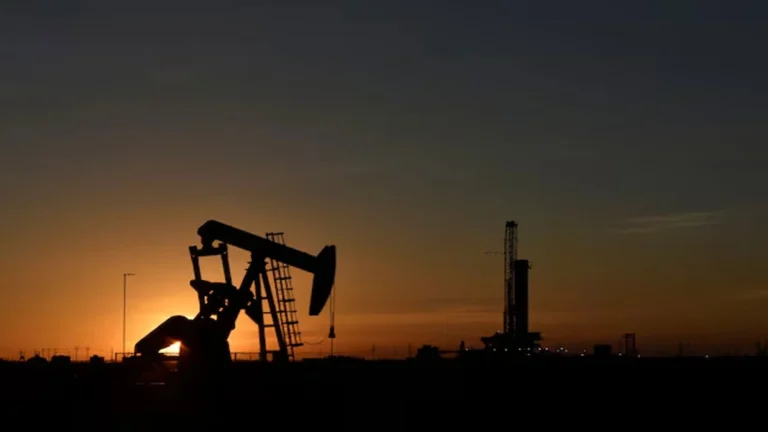
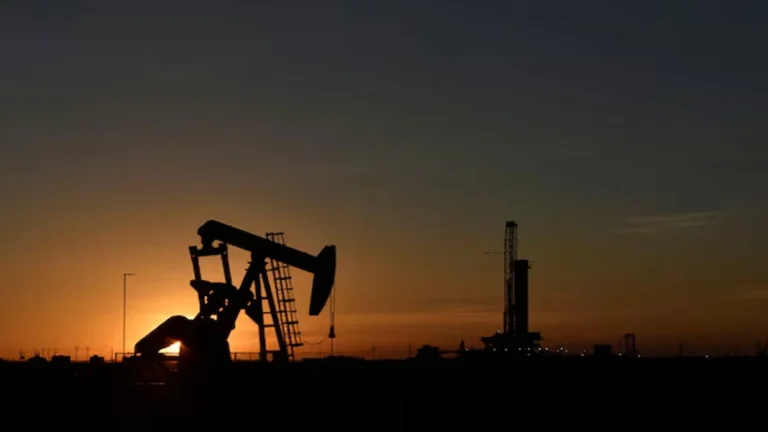
    Oil prices climb on fears of prolonged Middle East supply disruptions

    LONDON: Global oil prices moved higher on Friday and remained on course for weekly gains as fresh threats from the United States to maintain an indefinite naval blockade of Iran heightened concerns over the security of crude shipments from the Middle East. Brent crude futures gained $1.43, or 1.64%, to reach $88.50 a barrel by 0810 GMT. US West Texas Intermediate (WTI) crude also advanced, rising $1.56, or 1.92%, to $82.81 a barrel. The latest rally reflected growing market anxiety that the conflict in the region could persist for an extended period, potentially placing further pressure on one of the world’s most important oil supply routes. Bjarne Schieldrop, chief analyst at SEB Research, said the prospect of prolonged US pressure on Iran had increased uncertainty in the oil market. He noted that the latest developments offered little indication of a quick return to normal conditions in the region. US pressure raises supply concerns Oil markets reacted strongly after the United States warned on Thursday that its naval blockade of Iran could continue indefinitely while Washington considers additional economic measures against Tehran. US Treasury Secretary Scott Bessent said the administration was preparing further measures aimed at increasing economic pressure on Iran, signalling that Washington could take steps beyond those already announced. The comments added to concerns that tensions between the United States and Iran could remain elevated, making it more difficult for shipping and energy companies to operate normally in the region. Schieldrop said expectations for a rapid restoration of regular shipping through the Strait of Hormuz had weakened significantly as a result of the latest developments. The waterway is particularly important to global energy markets. Before the current conflict began in late February, roughly one-fifth of the world’s daily oil and liquefied natural gas supplies passed through the Strait of Hormuz. Any prolonged disruption could therefore have consequences far beyond the Middle East, potentially affecting crude availability, transportation costs and fuel prices in major consuming markets. Strait of Hormuz traffic under pressure Shipping activity through the strategic waterway declined below the monthly average toward the end of the week as tensions increased and both sides issued competing claims regarding control of the passage. The situation escalated further on Thursday when two vessels belonging to Abu Dhabi National Oil Company were attacked while travelling through the strait, according to the UAE’s state news agency WAM. The UAE government condemned the incident and attributed the attack to Iran, adding another layer of uncertainty for commercial shipping operators using the vital route. Market participants are closely monitoring developments in the strait because even a partial disruption could force vessels to take longer and more expensive alternative routes. Demand outlook limits oil gains Despite the immediate supply concerns, expectations of weaker global oil demand growth are acting as a counterweight to the price rally. Recent forecasts from the Organisation of the Petroleum Exporting Countries (OPEC) and the International Energy Agency (IEA) have pointed towards slower growth in oil consumption, suggesting that demand may not be strong enough to absorb a prolonged increase in prices without affecting economic activity. US inventory data also provided a bearish signal. American crude stockpiles recorded their biggest weekly increase in more than three and a half years, indicating that supplies in the world’s largest oil-consuming economy remain relatively comfortable. Norbert Rucker, head of economics and next-generation research at Julius Baer, said recent reports from the IEA and US Energy Information Administration showed that oil storage levels were holding up better than markets had initially feared. According to Rucker, stronger-than-expected inventories could eventually put downward pressure on crude prices if geopolitical risks ease. For now, however, the possibility of further escalation between Washington and Tehran is keeping traders focused on supply risks. The market is expected to remain highly sensitive to developments surrounding the Strait of Hormuz, particularly any signs of prolonged restrictions on tanker movements. Analysts said the direction of oil prices in the coming sessions would depend on whether geopolitical tensions intensify further or whether diplomatic efforts succeed in restoring more predictable shipping and energy flows from the region.

  • |

    Pakistan unveils new oil import framework to attract global suppliers

    ISLAMABAD: Pakistan has decided to introduce a new policy framework aimed at facilitating international oil suppliers, improving the availability of petroleum products and strengthening the country’s energy security. Under the proposed Import Policy 2026 through Customs-Bound Storage, foreign petroleum suppliers will be allowed to bring oil and petroleum products into Pakistan and place them in customs-controlled storage facilities without immediately becoming liable for domestic duties and taxes. The new mechanism is designed to provide greater flexibility to international suppliers while creating an additional buffer of petroleum stocks within the country. Suppliers will be able to retain their products in designated customs-bound storage facilities and subsequently decide whether to sell the stocks in Pakistan or re-export them to other destinations. According to the proposed framework, international suppliers will be able to supply petroleum products to local oil marketing companies (OMCs) and refineries when market conditions and domestic requirements warrant such sales. Alternatively, they may re-export the products without necessarily having to enter them into the domestic market. The policy is expected to create a more flexible operating environment for global oil traders and suppliers, potentially encouraging them to establish a stronger presence in Pakistan’s petroleum supply chain. The customs-bound storage mechanism would also allow petroleum products to be stored in the country while remaining under customs control. This could help suppliers manage their inventories more efficiently and respond more quickly to changes in domestic demand. Officials and policymakers see the proposed framework as a step towards improving Pakistan’s petroleum supply security, particularly during periods of heightened international market volatility or disruptions in global energy supplies. The availability of additional stocks within the country could also help reduce the risk of sudden supply shortages by providing a readily accessible reserve that can be released into the domestic market when required. For local oil marketing companies and refineries, the framework could broaden their access to international suppliers and create additional options for sourcing petroleum products. Increased competition among suppliers may also contribute to greater efficiency in the petroleum import and distribution system. The initiative is part of broader efforts to modernise Pakistan’s oil import arrangements and make the energy sector more responsive to changing international market conditions. By allowing foreign suppliers to maintain petroleum inventories under customs control, the government aims to strike a balance between facilitating international trade and maintaining regulatory oversight of products entering the country. The new policy framework is expected to establish clearer procedures governing the import, storage, domestic sale and re-export of petroleum products, while providing international suppliers with greater commercial flexibility.

  • Chiang Rai Railway Station Makes Steady Progress: Massive Rail Project Hits 66% Completion

    CHIANG RAI – The construction of the new Chiang Rai Railway Station is making excellent and steady progress. Located in the Wiang Chai district, this station serves as a major hub for the north. It now stands as a truly vital part of the brand-new Northern Double-Track Railway project. This exciting rail line will connect […]

Leave a Reply

Your email address will not be published. Required fields are marked *