Making sense of US firm KKR’s offer on Lopez family’s First Gen
Kohlberg Kravis Roberts & Co., the US investment firm known as KKR, emailed a proposal to First Philippine Holdings Corp. (FPH) and its power generation unit First Gen Corp. (First Gen) on July 10. KKR’s plan has three steps. First, it buys 8.43% of First Gen directly from FPH, and the two sign a shareholders’ agreement. Second, it offers to buy out everyone else who owns First Gen shares on the stock market, what’s called the public float, equal to 11.67% of the company. Third, that buyout is meant to support a request to take First Gen off the stock exchange entirely, a process called delisting. FPH laid all of this out in a letter to the Philippine Stock Exchange (PSE) dated August 13, Thursday.
But inside that letter sits what carries the real weight of the story: “KKR also said that any transaction, whether above the level of First Gen or at First Gen itself, which will give rise to a direct or indirect change of control, would trigger a mandatory tender offer and should command a full control premium which they expect to be no less than 30% above their offer price, or about P46 per share.”
Work out the math in that sentence and KKR’s own base offer price comes out to about P35 a share. That’s about 25% above First Gen’s P28 close on August 13. Spread across First Gen’s roughly 3.6 billion outstanding shares, the company values out to about P126 billion at that P35 price, and about P165 billion at the P46 control price.
P40 billion more, if ownership changes hands
That gap — P126 billion against P165 billion — is roughly P40 billion. By KKR’s own numbers, that is what it would cost extra to take actual control of First Gen, versus simply buying a bigger minority position in it. That number is denominated in First Gen shares, but the trigger for it is not limited to First Gen. FPH’s letter says the mandatory tender offer and control premium apply to a transaction “whether above the level of First Gen or at First Gen itself,” meaning a deal at FPH, Lopez Holdings, or Lopez Inc. can set off the same obligation.
Readers of this series will recognize the shape of that clause. It belongs to the same family as the poison pills already disclosed in First Gen’s deals with Prime Infra and its BDO credit facility, key-man provisions that punish the company if Piki Lopez loses his seat. KKR’s version is not that kind of poison pill. It has nothing to do with Piki. That difference is the real story here, and it changes what the Lopez family actually has to worry about next.
Burried under bigger Lopez news
FPH was equally direct about the proposal’s status. Its letter describes the offer as “preliminary, non-binding, not capable of acceptance, and not intended to create legally binding obligations, with KKR reserving the right, at any time and for any reason, to amend, vary, suspend, withdraw, or discontinue discussions regarding the proposal, including structure, timing, price, conditions or scope.” In plain terms, nothing here is signed, and KKR can walk away at any time. But that same letter is also very specific. It gives exact share counts. It gives an exact premium formula. That kind of detail is not how an early, casual feeler usually reads.
That disclosure landed in a week dominated by other Lopez news. Most of the attention since August 10 has gone to ABS-CBN, its P6-billion fund raising and the family contributions behind it, and to the sale of Crème Investment Corp.’s 25.68% stake in Lopez Inc. to businessman Ramon Ang.

KKR’s letter has nothing to do with either of those stories directly. It is worth reading anyway, and not as a footnote. Here is why. The words used around Ang’s entry into Lopez Inc. have so far avoided naming one scenario directly: what happens if the family’s dispute ends through a transaction, not through reconciliation, and who else has to be paid if it does. KKR’s letter puts a price and a scope on exactly that scenario.
On the day Ang’s purchase was announced, three people described it in terms that all pointed the same direction. Eugenio “Gabby” Lopez III, whose family branch sold the stake, called it a step toward family peace. “This dispute has not been good for any of us, or for the people who work in our companies. This allows us to take a step towards the restoration of family peace,” he said. Ang, in the same release, said the family branches that already held the controlling majority of Lopez Inc. would continue to lead it, framing his own arrival as a partnership rather than a takeover. Federico “Piki” Lopez, the Lopez Inc. president fighting to keep his seat, welcomed him in a statement of his own two days later: “We welcome Mr. Ramon Ang to Lopez Inc. with deep appreciation. We have been friends for a long time and so I do look forward to working together with him.” None of the three used the word control. All three used some version of partnership.
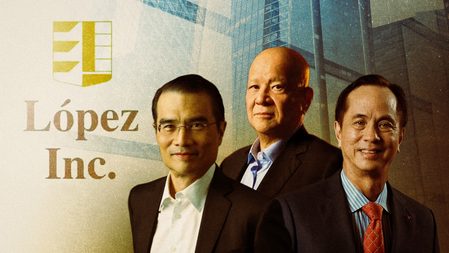
KKR’s letter does not contradict any of that language directly. But it puts a number on something important. If control of the companies above First Gen ever changes hands, there is now a real cost attached to that, spelled out on paper. It doesn’t matter what anyone chooses to call the transaction that causes it, a peace deal or anything else. The cost is the same either way. The three August statements describe an arrangement designed to look like nothing has changed at the top of the pyramid. But KKR’s letter is a reminder of something else. If something eventually does change there, the price of that change is no longer theoretical. It is on file with the PSE.
A 3rd tripwire, built differently from the first two
First Gen has already disclosed one set of conditions tied to control of the company. Its deals with Prime Infra and its BDO credit facility carry what have been dubbed “poison pills.” They are actually key-man clauses. These are provisions that activate specifically if Piki Lopez is removed from his role as First Gen chairman and CEO. (See story below.) As long as he holds that position, those deals hold at their agreed terms. Take him out, and the exposure runs to roughly P23.5 billion across the hydro and gas transactions, with separate acceleration risk on the BDO facility, the bank’s right to demand immediate repayment. That protection is built around one person holding one seat.

KKR’s condition, as FPH now confirms it, doesn’t mention Piki and isn’t built around any single executive. It is triggered by a transaction, meaning shares changing hands, at First Gen or at any of the companies above it: FPH, Lopez Holdings, or Lopez Inc. So, KKR is not protecting a manager. It is pricing what it would take for anyone to take over that whole structure, the layered chain of ownership running from Lopez Inc. down through Lopez Holdings and FPH to First Gen, the company where KKR itself already owns a stake.
The distinction matters. It means the Lopez family dispute now sits inside three separate financial tripwires, running on two different logics, at the same time. Prime Infra’s and BDO’s clauses are personal: do not remove this specific man, or risk roughly P23.5 billion in exposure. KKR’s is structural: do not let ownership change hands without paying a premium, now priced at roughly P40 billion. A resolution that clears the personal logic does not automatically clear the structural one.
Does the Ang transaction trip KKR’s wire?
The transaction closest to testing that question already happened, on August 10, when Ang bought Crème’s stake in Lopez Inc. Whether that purchase counts as the kind of change of control KKR’s letter describes is not a question this article can answer. It touches a legal theory known in the Philippines as the Cemco doctrine. This comes from a 2007 Supreme Court case.
The Cemco case established a rule: buying a parent company can, in some cases, count as indirectly buying the listed subsidiaries underneath it. If that happens, it can trigger tender offer obligations that nobody actually negotiated. Whether that doctrine extends to a case like this one is an open question. Lopez Inc. sits above a chain of listed companies: Lopez Holdings, ABS-CBN, First Philippine Holdings, First Gen, and Rockwell Land. Nobody has tested this doctrine on a structure quite like that before.

What can be stated plainly is the ownership math. Lopez Inc. is held across four family branches: Presta at 15.98%, Croslo, Piki’s branch, at 29.17%, Mantes at 29.17%, and Crème, the stake Ang bought, at 25.68%. Meaning, Ang’s purchase alone does not give him majority control of anything. That matches how all three men described the sale on August 10.
Does Piki still need the injunction to avoid the KKR premium?
KKR’s letter is about ownership moving. Piki’s injunction, the Mandaluyong court order keeping him in the Lopez Inc. presidency, is about a job title. It froze who holds the office. It did not move a single share.
That distinction leads to an honest, unresolved answer, one that will keep coming up as this story develops. Say the family dispute resolves through a court ruling on Piki’s role alone, with no share sale attached to it. Does that count as the indirect change of control KKR’s letter describes? That is genuinely unclear. Now say it resolves instead through a transaction: more shares sold, a buyout, one branch or an outside party building a controlling position. That is the scenario that plausibly crosses into KKR’s territory, because ownership above First Gen would have actually changed hands.
KKR is not new to First Gen
KKR first bought into First Gen in 2020, acquiring roughly 11.9% through a tender offer. It returned in October 2021 with a second tender offer for another 7.3%. That stake was worth roughly P8.68 billion. Together, the two purchases brought its position to approximately 19.9%, where it has stood since. By the time this proposal surfaced, KKR had already been a First Gen shareholder for 6 years and had already gone through the tender offer process with the company twice.
That 19.9%, though, is an economic interest, not a voting one. Economic interest is KKR’s share of what First Gen is actually worth, its profits, its assets, its value if sold. Voting interest is a different thing entirely: it’s KKR’s share of the actual votes cast to elect directors or approve major company decisions. The two numbers don’t have to match, and in KKR’s case, they don’t. At First Gen’s P28 close on August 13, that stake, based on the company’s 3.6 billion outstanding shares, is worth approximately P20 billion.
KKR holds its First Gen position through Valorous Asia’s subsidiary, Philippines Clean Energy Holding Inc. That stake carries only 14.1% in voting rights. The gap between the two numbers, roughly six points, is worth sitting with. KKR already carries close to a fifth of First Gen’s economic risk, but it does not have a matching say in how the company is run. The structure it proposed in July, buying more shares directly from FPH and entering a shareholders’ agreement, is one way to close that gap. It also explains why KKR wants a seat at the table that matches the money it already has in the company, not just a bigger check for more of the same arrangement it has today.
Piki himself had already pointed to KKR as a source of strength, months before any of this became public. At a townhall with First Gen and FPH employees on April 17, he named the firm as one of several institutional investors whose presence he read as a vote of confidence in his leadership. “And then, of course, you’ve got KKR at FGen, who, again, we met with. The amount of confidence they have and over the way we do things is, it’s just, it’s just tremendous,” he told employees.
Acknowledged, not negotiated
FPH and First Gen both told the PSE, in separate letters dated August 12, Wednesday, that they had received KKR’s offer, but that nothing beyond receiving it had happened. FPH’s letter states plainly: “To date, no agreements have been signed, no formal discussions between the parties have taken place, and no advisors or consultants have been appointed by FPH.”
FPH added one more detail: it is “evaluating the proposal, especially in light of recent developments.”
That combination is worth sitting with. A proposal detailed enough to specify exact share counts and a pricing formula for a change of control has not, on the companies’ own account, produced a single formal discussion between the two sides. Acknowledging a letter is not the same as negotiating one.
It also means KKR’s proposal arrived on July 10, a full month before Ang bought into Lopez Inc., and was still sitting unanswered by mid-August. It only became public because the PSE ordered both companies to clarify it.
Only the Ang sale, and then the PSE’s directive to disclose, forced it into public view.
What it means for the larger dispute
The Lopez family now has two separate reasons to be careful about how its internal fight ends. One is personal, built around keeping Piki in his seat. The other is structural, built around who ends up owning the pyramid above First Gen. That one does not go away, no matter who holds which title.
KKR’s letter also puts an independent price on the table for a piece of that pyramid. That happened the same week Ang set a price for Lopez Inc., and weeks after Barito Renewables put up an unsolicited offer on EDC. Three outside parties have now priced three different layers of the same structure within a matter of weeks, none of them needing the family’s agreement to do it. Any settlement the cousins negotiate from here has to be weighed against those numbers, not just against each other. – Rappler.com
Lala Rimando wrote about Philippine business, and managed newsrooms, including Newsbreak, ABS-CBN, Rappler, and Forbes, for over 25 years. She’s now based in La Union, taking care of her mom with dementia, and working on the multimedia biography of the late John Gokongwei.