indus runs dry

When the Indus Runs Dry: Why Words Alone Cannot Pr…

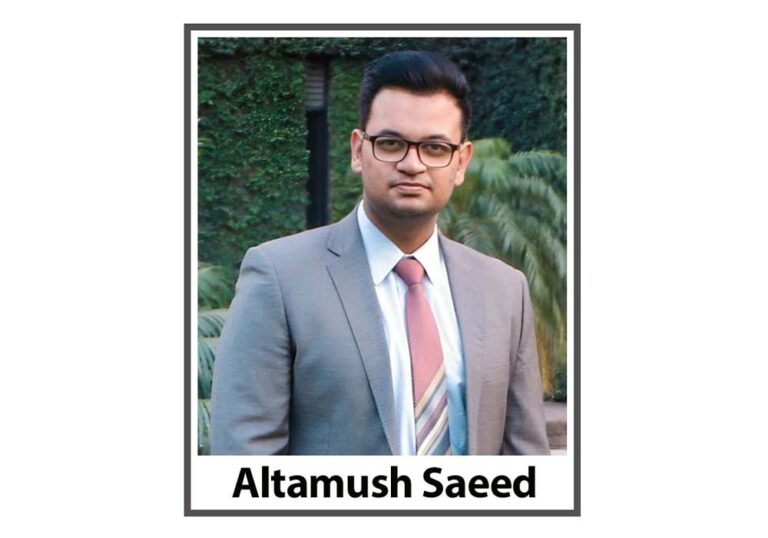
By General Ghulam Mustafa (Served in different staff and command assignments, commanded a Corps, raised and commanded Army Strategic Force Command)

&

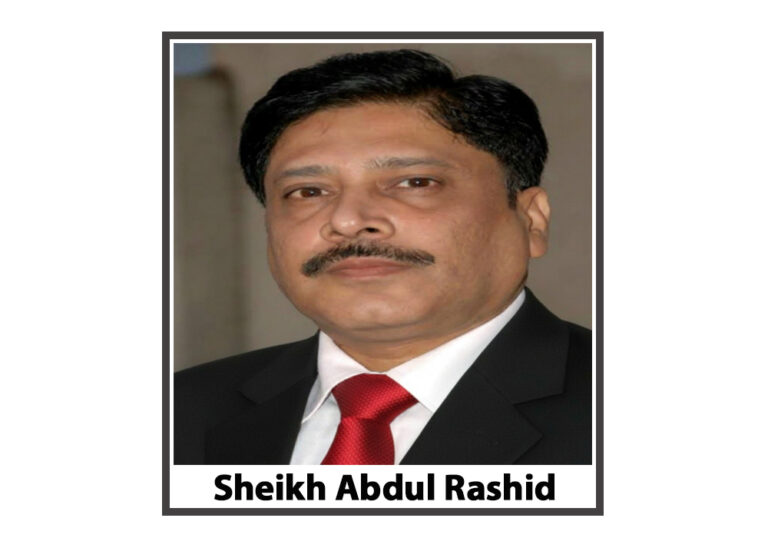
Engineer Arshad H Abbasi, Co-founder, Energy Excellence Centres at NUST and Engineering University Peshawar, International Transboundary Water Expert 

Prime Minister Sahib,

With the deepest respect, and as one voice among the 260 million you lead, we write to you today not to doubt your resolve, but to place before you what we believe you deserve to see in full — because a nation that trusts its Prime Minister also trusts him to be given the whole picture.

On August 13, 2026, on the eve of our Independence Day, you stood at the inauguration of the Yadgar-e-Fatah monument in Islamabad and gave voice to what every Pakistani feels in their heart. “I declare in clear terms that every single drop of Pakistan’s water is our red line,” you said, warning that if India “does not come to its senses,” it would be “responded to directly.” We were moved by those words, Sir, as was the nation. It was the latest chapter in a warning you have repeated for over a year, since India placed the 1960 Indus Waters Treaty in abeyance following the April 2025 Pahalgam attack — a treaty that had, for six decades, survived three wars precisely because water was once considered too sacred, too existential, to be weaponized.

It is with humility, then, and not with any wish to add to your burdens, that we ask you to consider what has been happening quietly at the river’s source while that red line was being drawn.

What Has Been Happening in Ladakh: Almost two and a half months before your Independence Day address, on May 27, 2026, India inaugurated what it proudly called a first: the country’s inaugural Rock Check Dam, built across the Indus itself near Upshi village in Leh district, at 11,400 feet. Built in a mere seven days from 180 metric tonnes of interlocking riverbed boulders, without a gram of cement, it now holds back a 1,500-foot pool capable of storing 40 million litres — roughly 200 acre-feet — of Indus water. We respectfully submit that it may be something more: the opening move of the Sindhu Jal Samriddhi Abhiyan, a Ladakh-wide water campaign launched by Lieutenant Governor Vinai Kumar Saxena.

It does not stand alone, Sir. It sits alongside the newly restored 43-kilometre Igoo–Phey canal; the Mahey Tokpo–Raldho canal at 14,000 feet, drawing from Yaya Tso Lake; the Brakdongthang Bodh Kharbu canal in Kargil; solar-powered lift-irrigation schemes at Latoo and Karsha; and Project Him Sarovar, a plan for fifty to one hundred small reservoirs across Leh and Kargil, unveiled on April 10, 2026, to capture glacier melt that would otherwise flow downstream toward us.

We ask this humbly: for whom is all this water truly being gathered? Leh district is home to barely 160,000 people. It is also home to the Western Air Command’s most strategically dense high-altitude military footprint on India’s borders — Leh Air Force Station, the newly upgraded Mudh-Nyoma fighter base, Thoise Air Force Station feeding the Siachen front, and the world’s highest airstrip at Daulat Beg Oldi. Add the XIV “Fire and Fury” Corps and the newly raised divisions garrisoning eastern Ladakh, and a different picture may be emerging — one where the deepest beneficiary of this irrigation campaign is not the Ladakhi farmer but the soldier and the forward base that no longer wishes to depend on a single vulnerable mountain road. The massive military presence, characterized by extensive garrisons and airbases in the fragile Siachen and Ladakh regions, acts as a primary catalyst for glacial retreat, directly exacerbating climate vulnerabilities in downstream Pakistan We say plainly, Sir, out of fairness: under Annexure E of the treaty, India is permitted non-consumptive storage of up to 0.40 million acre-feet on the Indus main stem in the Ladakh sector, and a 200-acre-foot check dam, judged alone, is a small thing against that number. Our concern is not any single dam. It is the pattern — check dams, canals, lift schemes, and a hundred small reservoirs, each defensible on its own, together forming a system capable of holding back water at precisely the moment a suspended treaty leaves India no obligation to release it.

You declare that Pakistan will not cede a single drop of water, yet the reality is otherwise. The diversion of Indus waters—driven by a stated Indian policy of zero flow to Pakistan—is already underway. Regrettably, your own ministries have taken this matter to global forums, even as the people of Ladakh bravely oppose this very diversion into their fragile permafrost lands.


Respectfully, we also note that your own minister is now questioning the very stability of governance in Pakistan. If that is so, Sir, we urge you—with humility and candour—to look inward before raising your voice outward.

And downstream, Sir, is where our entire modern economy waits. Tarbela Dam alone generates close to 4,888 megawatts today, with capacity meant to rise toward 6,418. The 4,500-megawatt Diamer-Bhasha Dam and the 4,320-megawatt Dasu Dam were built on the assumption of a river that keeps flowing. To choke that flow at its source, even gradually, even in the name of a farmer’s canal, is to threaten the affordability of electricity for a nation already straining under its cost — and the food and economic security bound up with it.

We wish to be clear: this is not written against Ladakh’s own people, or their right to a better harvest. It is worth remembering, respectfully, that Ladakh’s own most prominent son, the engineer and activist Sonam Wangchuk, our friend too, has spent years warning — through repeated hunger strikes over Ladakh’s fragile ecology and constitutional status — that his homeland’s landscape is being reshaped less for its own people than for priorities decided in Delhi. He has carried that protest in his own body, across multiple fasts since 2024.

A Humble Word on Timing- We say this, Prime Minister Sahib, with the greatest respect for the office you hold and for the conviction behind your Independence Day words. But we would be failing you if we did not gently note the timing. Your red line was declared after the treaty had already sat in abeyance for well over a year — a year in which the water security of 200 million citizens had already been left to unilateral decisions made far upstream, with no mechanism compelling India to release a single acre-foot it chooses to hold. A red line drawn after the line may already have been crossed is, we submit humbly, less a deterrent than a declaration — and we only wish, Sir, for it to be backed by the fullest possible information.

Which leads us, with some hesitation, to a quieter question — not for New Delhi, but closer to home. We do not for a moment doubt that you consider your Ministry of Water Resources and your Ministry of Foreign Affairs to be the strong arms of this cause, committed, as we are, to defending every drop the treaty still allows us. We say this as your loyal citizens, not your critics: if these ministries have indeed been tracking every check dam, every accelerated project, every cubic metre diverted, then the nation would be grateful, Sir, to see that tracking laid before you and before us — not only in speeches from Islamabad, but in a full and continuing account. A check dam at Upshi, a fast-tracked Sawalkote, a tunnel carrying Chenab water into another basin, flows deliberately stanched at Baglihar and Kishanganga — none of this is hidden intelligence, Sir. It has been reported in India’s own press, discussed by India’s own officials, cleared by India’s own cabinet. We ask only, with respect, that the ministries entrusted with this fight ensure that you, and through you the nation, are never the last to know rather than the first. Silence where information was available would not be caution, Sir — it would, however unintentionally, hand India’s quiet work an easier path.

We close, Sir, with one small and humble suggestion, offered in the same spirit of loyalty in which this letter is written. You have drawn your red line in words, and we believe you meant every one of them. Sonam Wangchuk, disagreeing with his own government on other matters entirely, has drawn his in the only currency that reliably moves power that isn’t listening: his own body, twenty-six days without food, once carried from the protest site itself. We do not ask you to fast, Prime Minister Sahib. We ask only that the same seriousness he brought to his cause be visible, plainly and continuously, in ours — so that when we say, together with you, that not a single drop will be compromised, the whole nation can see, and not merely hear, that it is being defended.
Similar Posts

  • Beyond’s the Bombing: The True Cost of Terrorism…

    By Laraib Ehsan “A nation does not only lose lives to terrorism it loses opportunities, confidence, and the promise of a peaceful future.” For over two decades, Pakistan has been at the forefront of the global war on terror. From suicide attacks on crowded marketplaces and educational institutions to the bombing of mosques, military facilities, and public infrastructure; terrorism has had an impact on the social fabric, economy, and politics of this nation. Despite progress achieved by Pakistan through the execution of extensive military and counter-terrorism operations, the revival of militant violence in recent years reminds us that the fight against terrorism requires continued vigilance. The true cost of terrorism is calculated not only in terms of the number of casualties but also in terms of the number of lives ruined, people displaced from their homes, and development hampered. According to the Global Terrorism Index (GTI) 2025 prepared by the Institute for Economics and Peace, Pakistan has been one of the countries worst affected by terrorism in 2024. The report showed a sharp rise in the number of terrorist attacks and casualties as a result of the increase in militant activity in Khyber Pakhtunkhwa and Balochistan. These two provinces have become the focal point of Pakistan’s current security threats where civilians, law enforcement officials, and government sites are regularly attacked. According to Security Report of the Pakistan Institute of Peace Studies 2025, presents equally worrying data. As per the report, 699 cases of terrorism were reported in Pakistan in 2025 leading to 1034 deaths and 1366 injuries occurring across the country.125 out of those killed included 354 civilians, 437 security personnel, and 243 militants. These statistics show that the phenomenon of terrorism has affected all parts of Pakistan, ranging from ordinary citizens to those responsible for ensuring the security of the state. Among all the provinces, Balochistan has suffered the most. It is rich in natural resources and significant in terms of strategic sites like Gwadar Port. Balochistan has seen not only attacks on law enforcement agencies, but also attacks on people, industrial workers, logistics, and infrastructure. Such incidents lead to loss of life as well as the reluctance of investors to invest in the region. A similar situation is happening in Khyber Pakhtunkhwa, with the major part of this region being made up of the merged districts along the border with Afghanistan. According to official statements of the Government of Pakistan and ISPR, the majority of the latest attacks were conducted by Fitna al-Khawarij, which is the official name given to Pakistani authorities to the banned Tehrik-e-Taliban Pakistan (TTP). The authorities have stated that such organizations try to exploit the safe havens they have across the border to carry out attacks on civilians and military personnel. The Impact caused by terrorism cannot be measured only in figures. Each attack leaves communities sorrowful, resulting in the creation of orphans, damaging lives, and making people unsure in the future. Schools are closed, businesses stop working, and basic health services are absent from such areas. The recent case Indicates that the threat is present. In 2025 and 2026, Pakistan witnessed multiple occurrences of deadly attacks in Baluchistan and Khyber Pakhtunkhwa aimed at security convoys, passenger transport systems, and public gatherings. One of the worst attacks was on the Jaffar Express train in Baluchistan as it targeted a passenger train carrying hundreds of civilians. The attack resulted in loss of lives, injuries to passengers, and large-scale rescue operations conducted by the security forces of Pakistan, along with other implications of terrorism, transportation disruptions, and psychological impact on travel. Despite the challenges facing Pakistan, the response of the country has always been multifaceted. It has employed its intelligence operations to respond to the attacks and adopted innovative methods for border management and coordination of various institutions in civilian and military spheres. Nevertheless, the recurring incidents of terror underline that military effects on terrorism cannot by themselves eliminate terrorism. Pakistan has made immense sacrifices during the last 20 years, with thousands of civilians dead and armed forces, police, Frontier Corps, and other law enforcement agencies sacrificing their lives for the security of their country. The strategy adopted by Pakistan against terrorism has changed substantially in the last twenty years. After a series of deadly terrorist incidents in Pakistan, the country implemented a wide-ranging counter terrorism policy consisting of military actions, intelligence sharing, border protection, and legal modifications. These operations, Operation Zarb-e-Azb (2014) and Operation Radd-ul-Fasaad (2017), destroyed terrorist facilities and disrupted the networks of terrorists working in the country. As stated in the Inter-Services Public Relations (ISPR), these operations led to the reduction of many terrorist organizations’ efficiency and helped restore state authority in previously affected territory. The Pakistan Army, together with the Pakistan Air Force, the Pakistan Navy, the Frontier Corps, the Police, and the intelligence services, has played a key role during the fight against terrorism in Pakistan. Thousands of soldiers and officers have become martyrs while saving civilian lives, defending borders, and conducting different intelligence led operations. Their sacrifices are in addition to the sacrifice made by police officers, rescuers, doctors, and ordinary people and represent one of the most significant contributions of Pakistan to the fight against terrorism in the world. Although military methods have diminished the power of terrorist organizations, specialists claim that it is not possible to defeat terrorism only by military efforts. As specified by the Financial Action Task Force (FATF), one of the most efficient means of fighting against terrorists is to stop their financing. Even though Pakistan has enhanced its anti-money laundering and counter-terrorist financing system in recent years, it is necessary to keep on practicing this idea and cooperating with other countries in order to avoid the rebirth of terrorist organizations. The economic Impact of terrorism is equally dangerous. The Pakistan Economic Surveys show that since 2001 terrorism has caused Pakistan direct and indirect economic damages of more than $150 billion. Namely, these damages include destroyed infrastructure, decreased foreign investments, reduced number of tourists,

  • The Illusion of Governance and the Structural Cris…

    When the highest echelons of a state pronounce that the apparatus of governance has completely collapsed, it ceases to be merely the remark of a federal minister. Instead, it becomes a stark, involuntary confession of the internal decay inherent in a post-colonial state structure—a testament that indelibly seals the collective and systemic failure of the ruling class. To any conscious citizen, political worker, or student of history, this acknowledgment contains little novelty; the populace has long been ground to dust by the gears of this obsolete machinery, experiencing its failure as an everyday reality. The true astonishment lies in hearing this unvarnished truth uttered from the very center of power. One is compelled to ask: what intellectual evolution prompts the masters of the state to confess to their own institutional bankruptcy? Is this an enlightened realization paving the way for genuine reform, or is it merely the prelude to a new political experiment—a fresh authoritarian corset designed to tighten the controls of a shifting state arrangement? History stands as a grim witness that whenever the crisis of the state is magnified by its custodians, the ultimate objective is invariably to sabotage constitutional continuity and clear the path for elite capture or adventurous political engineering. Time and again, this tragedy has been inflicted upon the nation’s destiny. The nation has repeatedly witnessed the rise of self-proclaimed saviors who concentrated all fountainheads of power within their own persons, only to leave behind a hollow illusion of stability that dissolved like a house of sand upon their departure, plunging the country into irreparable geographic, economic, and political trauma. Today, ominous signals point toward the resurrection of this very same discredited formula. The echoes of a renewed stranglehold and a controlled democracy emanating from the rhetoric of the interior ministry betray an elite class fundamentally terrified of true popular sovereignty and constitutional supremacy. For the past seventy years, this nation has been systematically denied a genuine democratic evolution because dominant power centers have persistently sought to subordinate all state organs to their exclusive writ. To dismiss this systemic trauma merely as a functional glitch in administration is to indulge in a deliberate evasion of reality. The truth is that this is not the collapse of a mere administrative mechanism, but rather the manifestation of Hamza Alavi’s classic thesis of the over-developed state—a persistent structural crisis dominated by entrenched elite capture. Within this post-colonial framework, the coercive control mechanisms of the British Raj have been preserved intact, where the primary objective of the state remains the extraction of resources and the concentration of power rather than public welfare. When political expression is stifled, electoral outcomes are systematically engineered, and parliament is reduced to a rubber stamp, the resulting paralysis is entirely inevitable. The crisis of governance is, at its core, a profound crisis of legitimacy. No administrative superstructure can endure without the genuine, uncoerced mandate of the people. When state policy-makers declare that the system has collapsed, they are essentially confessing to their own fiscal insolvency and administrative bankruptcy. Yet, the tragedy of this confession lies in its utility: rather than diagnosing the foundational causes, they weaponize this failure as a pretext to tighten their grip on power. History teaches us that whenever economic or administrative pressures mount, the centers of power invariably bypass the spirit of the constitution to erode it further. The dangerous concentration of authority in a few hands, the freefall of economic indicators, and the formulation of policies under the duress of international financial institutions—all while excluding the citizenry from meaningful participation—constitute the real malignancy eating away at the state. Democracy is far more than casting a ballot once every few years; it is an active architecture built on inclusive policymaking, freedom of expression, the rule of law, and the uncompromising protection of fundamental human rights. When these values are systematically strangled, the collapse of governance is not an accident, but a natural law. The priorities of the ruling elite have never accommodated the welfare of the common citizen. State resources are routinely sacrificed at the altar of corporate privileges, elite exemptions, and inflated administrative expenditures, while foundational human rights—education, health, and justice—are systematically withheld from the masses. History offers a relentless warning: states are not experimental laboratories where arbitrary political models can be tested on a whim. From Ayub Khan’s Basic Democracies to Zia-ul-Haq’s Majlis-e-Shoora, and Pervez Musharraf’s devolution experiments, every single top-down engineering project ended exclusively in national fragmentation and internal turmoil. Each time, a new savior arrives claiming to smash the system, only to leave the country deeper in the mire before exiting the stage. Should the interior minister’s declaration be used this time to midwife yet another hybrid experiment or authoritarian arrangement, it will prove fatal to the nation’s remaining political existence. Escaping this vicious cycle of institutional decay demands moving beyond raw emotion and tired conspiracy theories to embrace a rigorous, actionable roadmap for structural reform that must unfold with absolute urgency. First and foremost, political will must be harnessed to draft a comprehensive framework of constitutional and legal reforms that restores parliament to its rightful position of supremacy, ensuring that executive interference in legislation is thoroughly eliminated and parliamentary committees are empowered to reflect genuine public representation. In tandem with this, a revolutionary structural overhaul of the civil and military bureaucracies remains non-negotiable, requiring the archaic and paternalistic colonial-era administrative model to be dismantled and replaced with a modern public service framework rooted entirely in direct public accountability. Furthermore, fiscal autonomy and equitable resource distribution must be granted to the federal units as an imperative measure, systematically redirecting national wealth away from elite extravagance toward foundational public infrastructure, education, and healthcare for the marginalized segments of society. Finally, the judicial system must be thoroughly reformed to guarantee the common citizen swift and affordable access to justice, effectively resolving systemic contradictions through transparent legal recourse rather than arbitrary administrative fiat. The federal interior minister’s warning that the system has collapsed must therefore serve as an

  • PM Shehbaz Sharif and Field Marshal Syed Asim Muni…

    Pakistan’s growing diplomatic influence has entered a new phase as Prime Minister Muhammad Shehbaz Sharif and Field Marshal Syed Asim Munir lead the country’s strategic engagement with the world, strengthening alliances and projecting Pakistan as an important voice in regional peace and security. The signing of the Makkah Joint Defence Agreement between Pakistan, Saudi Arabia and Türkiye represents a major milestone in Pakistan’s foreign and security policy. The agreement brings together three influential nations through a framework of collective defence, enhanced military cooperation and a shared commitment to regional stability. In recent months, Pakistan’s defence capabilities and strategic importance have received increased international attention. The role of the Pakistan Army in national security and regional stability has been a central factor in shaping Pakistan’s strategic partnerships, while Field Marshal Syed Asim Munir’s engagement with international counterparts has highlighted the importance of defence diplomacy in promoting peace and cooperation. The global perception of Pakistan’s strategic role has evolved as Islamabad has continued to demonstrate its capacity to engage with major powers and regional stakeholders. Under Field Marshal Asim Munir’s leadership, Pakistan’s military diplomacy has focused on strengthening partnerships, supporting stability and advancing dialogue as a pathway to resolving regional challenges. Prime Minister Muhammad Shehbaz Sharif has complemented these efforts through active diplomatic outreach, engaging world leaders and strengthening Pakistan’s relationships with key allies. Whenever Pakistan’s leadership has engaged internationally, these visits have increasingly focused on expanding cooperation, improving economic ties and promoting peace initiatives. Pakistan’s diplomatic role in encouraging dialogue during tensions involving the United States and Iran also attracted international attention. US President Donald Trump acknowledged Pakistan’s leadership efforts in supporting peace and dialogue, reflecting the country’s potential role as a constructive bridge between nations. Pakistan continues to maintain strong strategic relations with major international partners, including China, while also enjoying deep historical and security ties with Saudi Arabia, Türkiye and other Middle Eastern countries. Iran has repeatedly highlighted the importance of its relationship with Pakistan and recognised the value of regional cooperation. The Makkah Declaration further strengthens this strategic momentum. The agreement reflects the shared commitment of Saudi Arabia, Türkiye and Pakistan to collective security and regional stability. It establishes that any armed attack against one of the three states will be regarded as an attack against all, while enhancing defence cooperation, military coordination and strategic collaboration. Built on historic relations, Islamic solidarity and common interests, the declaration aims to strengthen collective deterrence and contribute towards peace, security and prosperity. The emerging partnership between Pakistan’s political and defence leadership is being viewed by supporters as a coordinated national effort to protect Pakistan’s interests and expand its international role. Prime Minister Shehbaz Sharif’s diplomatic engagement and Field Marshal Syed Asim Munir’s strategic approach have together shaped a more proactive foreign policy outlook. The Makkah summit could become a defining moment in Pakistan’s international journey—strengthening its alliances, enhancing its strategic relevance and reinforcing its message that Pakistan seeks peace through cooperation, dialogue and responsible global engagement.

  • The Mechanics of Feelings, Thoughts, and Awareness

    Feelings operate like an inner radar system that signals what type of frequency our mind is currently broadcasting. A story beautifully highlights this reality: A young student once felt highly anxious before a critical meeting with his spiritual guide. He arrived tense, clutching his notebook and worrying about his performance. When he finally sat before the mentor, his breathing was heavy. The mentor smiled warmly, placed a gentle hand on his shoulder, and offered him a simple cup of water. In that single instant, all the accumulated tension drained away from the student. He felt completely safe and filled with high-frequency positive energy. Driving back from the meeting, even when someone cut him off on the road or honked aggressively, he remained utterly untroubled. Even if his corporate boss started shouting the moment he walked into the office, his inner peace remained unshaken because he was overflowing with positive energy. Now consider the absolute opposite scenario. You wake up with a jolt to a loud crashing sound outside. Moments later, you hear your spouse shouting from the adjacent room—it is the third time she is attempting to wake up the kids, and they are completely ignoring her. She is furious, venting her frustration on them and calling out to you as well. When you step out, she glares at you and demands that you go fetch breakfast because the kitchen gas supply is down. Rubbing your eyes, you head to the crowded marketplace, wait in a frustratingly long queue, and finally bring food home, only to see her brow still furrowed with deep tension. You hurriedly change and leave for work. In this deeply negative emotional state, even the most beautiful scenery on your commute cannot move you, and the warm smiles or pleasant mood of your office colleagues will fail to lift your spirits because your primary emotional anchor is entirely negative. When your thoughts are positive, the whole world looks beautiful; when your thoughts are negative, everything tastes bitter. Statistics reveal that a human mind processes nearly 70,000 thoughts per day, while core human feelings can be classified into two fundamental pillars: positive and negative. These two emotional streams branch out into roughly 30 to 60 distinct emotional expressions. Consider what is easier to manage: tracking 70,000 chaotic daily thoughts or monitoring 60 distinct feelings? The answer is obvious. By focusing your energy on regulating your feelings, your thoughts naturally align themselves, preventing you from getting lost in a labyrinth of mental anxiety. A vital question often arises: Can an individual actively stop or cancel out a deeply ingrained, negative thought sequence? The ultimate answer is no. If you forcefully try to fight, delete, or suppress a negative thought patterns, you end up giving it more power, and it anchors itself deeper in your subconscious. Imagine a spiritual guide telling you, ‘Close your eyes and meditate for five minutes, but whatever you do, absolutely do not think about a black monkey.’ Within seconds, your mind will be entirely flooded with images of a black monkey. This is because the subconscious mind cannot process a negative command in isolation; it focuses heavily on the core imagery provided. Instead of trying to aggressively cancel out negative thoughts, the correct strategy is replacement. The moment a negative sequence takes root, shift your attention entirely to an opposing positive thought or an active feeling of deep gratitude. Our mind cannot actively host two completely contrasting emotional states simultaneously. By choosing to step out of the mental labyrinth and leaning into positive memory, appreciation, or prayer, you naturally starve the negative loops of energy. Developing deep concentration and continuous awareness is the master key to mastering this mental landscape. While it sounds simple, maintaining absolute focus on your inner state requires active practice, especially when daily life pulls your attention in a hundred different directions. Engaging in regular, meditative prayer or mindful contemplation helps quiet the chatter of the ego and firmly anchors your spirit in a high-frequency state of gratitude. True inner mastery begins the moment you consciously choose which feelings you allow to run your day.

  • Punjab’s Waste Crisis Cannot Be Solved with …

    Every few months, Punjab returns to the same debate. Dog bites increase, public anxiety rises, and municipal authorities respond with culling campaigns. Dogs are shot, statements are issued, and for a few days it appears that decisive action has been taken. Then nothing changes. The bites continue, waste continues to pile up, and the cycle begins again. The uncomfortable truth is that Punjab does not have a stray dog problem in isolation. It has a waste management problem, an urban planning problem, and ultimately, a governance problem. One only needs to travel through the outskirts of Lahore or many of Punjab’s cities to see overflowing waste heaps, open dumping grounds, discarded food waste, and slaughterhouse refuse left unattended. These sites provide a constant food source for free-roaming animals. Where food accumulates, animals follow. This is not unique to Pakistan; it is basic ecology. Street dogs do not manufacture garbage. They survive on what human beings leave behind. As long as our streets, markets, canals and vacant plots continue to function as open feeding grounds, no amount of culling will produce a lasting reduction in dog populations. Removing one group of animals from an area where food remains plentiful simply creates space for others to move in. For decades, Punjab has relied on culling as its primary response, yet dog bites and rabies continue to challenge public health. That record alone should force us to ask whether we are treating the disease or merely its symptoms. The issue extends far beyond dog bites. Poor waste management contributes to contaminated water, insect infestations, rodent populations, respiratory illnesses and the spread of infectious diseases. It burdens hospitals, damages the environment and undermines the quality of life in our cities. Every neglected dumping site becomes a reminder that sanitation is not merely a municipal service; it is a public health obligation. This is precisely why the constitutional right to life under Article 9 has, over the years, been interpreted by Pakistan’s superior courts to include the right to live in a healthy and clean environment. Environmental jurisprudence in Pakistan has consistently recognised that life means far more than mere existence. It includes the conditions necessary for a life of dignity, health and safety. When waste remains unmanaged and environmental hazards are ignored, these constitutional guarantees lose much of their meaning. Animal welfare forms part of this larger constitutional conversation. Justice Athar Minallah’s jurisprudence transformed the legal understanding of animals in Pakistan by recognising that they are living beings with intrinsic value rather than mere property. More recently, Justice Khadim Hussain Soomro reaffirmed that cruelty towards animals cannot be separated from the constitutional promise of a humane and civilised society. These decisions did not elevate animal welfare above human welfare. They recognised that the two are inseparable. A society that neglects its environment inevitably harms both people and animals. That is why the internationally accepted One Health approach has become increasingly important. It rejects the false choice between protecting humans and protecting animals. Instead, it recognises that the health of people, animals and the environment are interdependent. Rabies control, waste management, environmental protection and humane animal population management are all part of the same public health strategy. Unfortunately, events on the ground often tell a different story. Reports continue to surface of dogs being shot despite the adoption of more humane management policies. Even more troubling are allegations that animal carcasses are sometimes left exposed instead of being disposed of through proper veterinary and municipal protocols. Around areas such as Saggian Pull, residents have repeatedly raised concerns about carcasses remaining in the open. If these reports are accurate, they expose a profound contradiction. Animals are killed in the name of preventing disease, yet their remains are allegedly left in conditions that can themselves create environmental and health hazards. Exposed carcasses attract scavengers, contaminate the surrounding environment, encourage insect activity and reflect a complete breakdown in biosecurity practices. Disease prevention does not end when an animal dies. Proper disposal is an essential part of public health. The solution does not lie in choosing between protecting people and protecting animals. That has always been a false debate. The real choice is between science and symbolism. Science tells us that cleaner cities, effective waste collection, proper disposal of slaughterhouse waste, vaccination programmes, sterilisation, environmental management and public education reduce disease risks far more effectively than periodic culling campaigns. Symbolism tells us that firing a gun creates the appearance of action while leaving the underlying causes untouched. Punjab has an opportunity to move beyond crisis management. It can strengthen municipal waste systems, enforce environmental laws, implement the Animal Birth Control Policy in both letter and spirit, improve vaccination programmes, and ensure that every department responsible for public health, veterinary services, local government and environmental protection works as part of a coordinated strategy rather than in isolation. The Constitution already points us in that direction. The courts have reinforced it. Science supports it. What remains is the political will to recognise that cleaner cities will save more human lives than another culling campaign ever could. Until Punjab confronts the mountains of waste accumulating in its streets, vacant plots and waterways, it will continue fighting the consequences of environmental neglect while ignoring the source of the problem. Bullets may remove a dog from sight, but they cannot remove the garbage that brought it there in the first place.

  • Beyond Riba: Reconstruction of Just Financial Orde…

    The preceding part of this series ended with a limit that productive finance cannot cross. Illness, unemployment, education, disability, orphanhood and temporary distress cannot always be converted into profitable investments. Human vulnerability itself cannot become another financial product. That is where a riba-free order must move beyond banking. A society may successfully redesign murabaha, musharakah, salam or ijarah and still remain unjust if a family facing cancer treatment must borrow at any cost, a student must enter adult life under debt, or a widow depends upon a local patron for survival. Prohibition of riba becomes socially meaningful only when basic human need is protected from financial extraction. Pakistan does not have to invent the institutional vocabulary from zero. It already has Pakistan Bait-ul-Mal, established under the Pakistan Bait-ul-Mal Act, 1991. Its official mandate includes assistance to the destitute, widows, orphans, persons with disabilities and other needy citizens, with support extending to medical treatment, education and rehabilitation. Its official position is that assistance is available to the poorest without differentiation of religion, creed, sect or region. This is an important foundation. It is not yet the structure required for a just financial order. Bait-ul-Mal should cease to be understood primarily as an agency dispensing discretionary relief to the “poorest of the poor”. Its larger purpose should be to guarantee a legally defined social floor. Food in destitution, essential healthcare, basic education, protection of children without support, disability assistance and temporary subsistence during involuntary unemployment should become matters of entitlement under transparent criteria, not favours obtained through political access. This distinction is fundamental. Charity depends upon the generosity of the giver. Entitlement rests upon the responsibility of society. It is one of the most emphasised Quranic directive on this idea. The directions given in the holy Quran need not be accepted in totality. This principle is accepted in all the classical juristic traditions. The practical discussion on this is important. In the transitional phase, all the scholarly works envisage gradual movement rather than an overnight abolition of existing economic arrangements. Individuals progressively devote more of their resources to collective purposes while organised society assumes responsibility for the basic necessities of life.   The transition, in any pragmatic scheme, is institutional rather than merely charitable. That insight deserves attention. An Islamic polity cannot measure success by the number of ration bags distributed after deprivation has occurred. Its test is whether institutions progressively remove the conditions that force citizens into dependence upon creditors, property owners, political patrons or charitable intermediaries. Bait-ul-Mal should therefore form the first pillar of social finance: the guarantee against destitution. The second should be waqf. Waqf historically converted wealth into enduring social capital. Whatever the juristic differences concerning its precise legal character, its institutional genius lies in removing an asset from ordinary private consumption and dedicating its benefit to a continuing purpose. Land, buildings and income-producing properties can support hospitals, schools, hostels, water systems, vocational institutions, research centres, shelters and community infrastructure across generations. Pakistan already possesses statutory waqf institutions. Punjab’s Auqaf Department, for example, operates under the Punjab Waqf Properties Ordinance, 1979, for the administration and regulation of waqf properties. Income arising from properties under its control is credited to the Auqaf Fund under the statutory framework. The potential is much larger than administration of shrines and mosques. Pakistan should develop professionally governed public waqf institutions—waqf lillah—at national, provincial and local levels. Public land lawfully dedicated for community benefit, voluntarily endowed private property and other permissible assets could constitute permanent pools of social capital. Their corpus should remain protected while their income finances clearly defined public purposes. This cannot become another avenue for bureaucratic or political capture. Every waqf property should be digitally registered. Its title, purpose, valuation, income, expenditure and beneficiaries should be publicly accessible. Independent audit, professional management and strict conflict-of-interest rules are indispensable. No minister, shrine manager, political family or local notable should be able to convert property dedicated for public benefit into an instrument of patronage. The third pillar is zakat. It should remain distinct from both the ordinary budget and waqf. Its compulsory redistributive character and specified purposes give it an institutional identity of its own. Combining every form of social finance into one government account would destroy these distinctions. The fourth pillar is qard hasan. Not every person requiring temporary liquidity is destitute. A worker may face a medical emergency. A small farmer may need funds after a flood. A graduate may require equipment to begin earning. A household may need a short bridge between unemployment and a new job. Such circumstances do not necessarily call for a grant. They require finance without extraction. Revolving qard hasan funds administered through Bait-ul-Mal, public waqf institutions and local cooperatives could provide precisely that bridge. Principal would return when the recipient regains capacity, allowing the same pool to assist another household. The institution earns no commercial return from distress; society recycles solidarity. This connects directly with the cooperative model discussed in Part IV. The ultimate objective cannot be to create permanent classes of beneficiaries. Social protection should lead towards economic agency. A citizen receiving emergency assistance today should, wherever possible, become tomorrow’s producer, saver and member of a cooperative financial institution. Bait-ul-Mal prevents collapse. Waqf creates enduring social assets. Qard hasan provides a bridge back to economic activity. Cooperatives enable citizens to pool savings, own institutions and finance one another. These mechanisms should operate together rather than as isolated schemes. The structure can be visualised as a ladder. At its base is an enforceable social floor below which no citizen is allowed to fall. Above it are education, healthcare and skills supported partly through public waqf. Temporary setbacks are met through qard hasan. Productive citizens then move towards cooperative and commercial risk-sharing finance of the kind discussed in Part IV. The direction is from dependency to capability, not from one form of dependency to another. Governance will determine whether this succeeds. Pakistan has repeatedly created institutions in the name of disadvantaged citizens and then allowed

Leave a Reply

Your email address will not be published. Required fields are marked *