punjab health survey
|

Punjab health survey data sparks security concerns

By Kashif Malik

​LAHORE – A potential threat to national integrity has surfaced under the guise of a health census, sounding alarm bells in the corridors of power and security agencies. According to sources, the Department of Health and Population, in collaboration with the World Bank, has allegedly granted global organizations access to the complete data of Punjab’s 125.8 million population and sensitive institutions under the multi-billion rupee ‘Community Outreach Initiative (COI)’ program.

Sources revealed that Secretary Health and Population Nadia Saqib facilitated the inclusion of this sensitive information into the app, bypassing standard security protocols.

​For this mega digital drive, 60,000 Community Health Inspectors (CHIs) have been equipped with modern digital tablets for fieldwork. Across the province, these inspectors are not only gathering detailed personal data—including names of heads of households, employment, professions, vehicles, agricultural landholdings, and individual family member details—but are also generating and uploading online ‘Polygon’ locations through satellite mapping. This system will effectively provide the World Bank with unhindered access down to every street and building across the province.

Sources disclosed that alongside the general populace, sensitive institutions and military cantonments have also been marked in this digital drive, posing a profound and critical security risk to national defense and integrity.

The biggest revelation to surface is that the inclusion of polygon locations via geo-tagging was carried out at the behest of an international NGO. Furthermore, the software responsible for collecting this highly sensitive national data of over 120 million citizens was handed over to a third-party private vendor rather than a government entity, with the vendor’s identity and contract details being kept strictly confidential.
​

According to security and defense experts, granting any foreign entity, NGO, or private vendor access to the detailed profiling of over 120 million individuals, along with satellite and polygon mapping of the country’s defense and sensitive installations, is tantamount to compromising national sovereignty.

Following these sensational revelations, deep concern has spread through security circles, prompting urgent demands for an immediate security audit of the project.

Similar Posts

  • | |

    Salman Raja demands Imran’s medical access

    ISLAMABAD: Pakistan Tehreek-e-Insaf leader Salman Akram Raja has called for meetings between the party’s founder, Imran Khan, and his sisters and medical team. Speaking to the media in Islamabad, Raja said PTI representatives had met the Registrar of the Supreme Court. During the meeting, they requested that the cases involving the party founder be taken up for hearing without further delay. The PTI leader also demanded that Imran Khan be allowed to meet his sisters. He said access to his doctors should also be restored so that his health can be properly monitored. Raja said the party had been assured that the pending cases would be scheduled for hearing next week. He added that the relevant cause list would also be issued. He expressed concern over the long gap between Imran Khan and his doctors. According to Raja, the PTI founder has not been able to meet his medical team for around one and a half years. Raja questioned the reason for preventing regular medical consultations. He said the issue was particularly important because of concerns about Imran Khan’s health. The PTI leader also discussed the former prime minister’s political activities. He said Imran Khan had the right to express his political views. However, Raja said the party was prepared to ensure that political discussions did not take place if they could affect Imran Khan’s health. He said the priority at present was his medical well-being and access to proper healthcare. Raja said the matter would be taken before the court next week. He indicated that the party would seek judicial intervention on meetings with family members and doctors. The PTI has repeatedly raised concerns over access to Imran Khan and his medical care. The latest demand comes as the party awaits hearings in several cases involving its founder.

  • | |

    CJP unveils nationwide women facilitation centres

    Chief Justice of Pakistan Justice Yahya Afridi has announced that Women Facilitation Centres will be established in courts across the country to make the justice system more accessible, supportive and efficient for women. The announcement was made during a meeting with representatives of the Sindh High Court Bar Association and the Karachi Bar Association at the Supreme Court’s Karachi Registry. The meeting focused on improving facilities for women litigants and addressing challenges faced by female lawyers in the legal profession. During the discussion, the chief justice said the proposed centres are part of broader judicial reforms aimed at creating a more welcoming and convenient environment for women seeking legal assistance. He stressed that women should have easier access to courts and receive the support needed to pursue their cases without unnecessary difficulties. Justice Yahya Afridi said the Women Facilitation Centres would provide a wide range of services under one roof. In addition to offering legal guidance, the centres would include mediation and alternative dispute resolution (ADR) facilities to help settle suitable cases quickly and reduce the burden on courts. He added that the centres would also provide psychological counselling and connect women with relevant government departments and support organisations whenever required. The initiative is intended to ensure that women receive both legal and social assistance throughout the judicial process. The chief justice informed the delegation that the judiciary has already selected the three best designs for the proposed centres. These model designs will be shared with all high courts to ensure a uniform system is introduced across Pakistan. The representatives of women lawyers welcomed the initiative and thanked the chief justice for giving priority to the needs of female litigants. They also highlighted several issues affecting women in the legal profession, including workplace challenges and barriers to equal opportunities within the justice system. Justice Afridi assured the delegation that the concerns raised during the meeting would be addressed on a priority basis. He said the judiciary would work closely with the relevant high courts and other institutions to develop practical solutions and improve facilities for women across the country’s judicial system.

  • | |

    Sohail Afridi denied meeting Imran at Adiala Jail

    RAWALPINDI: Khyber-Pakhtunkhwa Chief Minister Sohail Afridi was stopped from meeting Pakistan Tehreek-e-Insaf founder Imran Khan at Adiala Jail on Thursday. Afridi reached the Medicine Factory checkpoint on Adiala Road with several PTI leaders and lawmakers. Police stopped the delegation from moving towards the prison. The chief minister was accompanied by Mena Khan, Shafi Jan, Ahad Shah, Abdul Salam Afridi and Shahid Khattak. Police had earlier blocked Adiala Road from Gorakhpur towards the jail. Traffic was diverted to alternative routes. Afridi questioned the SHO Saddar Beroni about the restrictions. He also asked what instructions had been issued to the authorities. The chief minister remained at the checkpoint until the scheduled meeting time ended. He and the accompanying PTI leaders were not allowed to meet Imran. After the delegation left, police removed the barriers. Traffic on Adiala Road was restored. Speaking to the media, Afridi announced a protest call if he was not allowed to meet the PTI founder. He said PTI workers would come out across the country at 10pm. He urged them to gather at major intersections while carrying the national and party flags. Afridi also asked workers to stay focused on the party’s planned march towards Islamabad on September 27. He claimed that the PTI planned to bring two million people to Islamabad. He said the number could be even higher. The chief minister said the authorities should allow a meeting with Imran before September 28 if they wanted to reduce political tensions. Afridi also criticised the treatment of Imran and PTI since 2022. He accused the authorities of pushing the country towards instability because of political differences and stubbornness. He further criticised other political parties and questioned their role in the country’s political situation. The latest incident comes amid growing concern within PTI over Imran’s health and access to him. The party has repeatedly demanded that its founder be allowed to meet family members, lawyers and party leaders. Imran has remained incarcerated at Adiala Jail since 2023. His wife, Bushra Bibi, is also imprisoned. The PTI founder has faced several legal cases during his imprisonment. He and Bushra Bibi were sentenced to 17 years in prison in the Toshakhana-II case in December 2025. PTI has also raised concerns over Imran’s eyesight and medical treatment. Earlier this year, doctors from the Pakistan Institute of Medical Sciences examined him at the jail. PIMS later confirmed that he had received an anti-VEGF injection for a condition affecting his right eye. A later medical examination indicated improvement in his eyesight following treatment. Imran’s sisters and PTI supporters have also held regular gatherings outside Adiala Jail on designated meeting days. However, access to the former prime minister has remained restricted in recent months. Afridi’s unsuccessful visit on Thursday is likely to further intensify the political confrontation between PTI and the authorities.

  • | |

    NSPP conducts 5th three-day directors’ training …

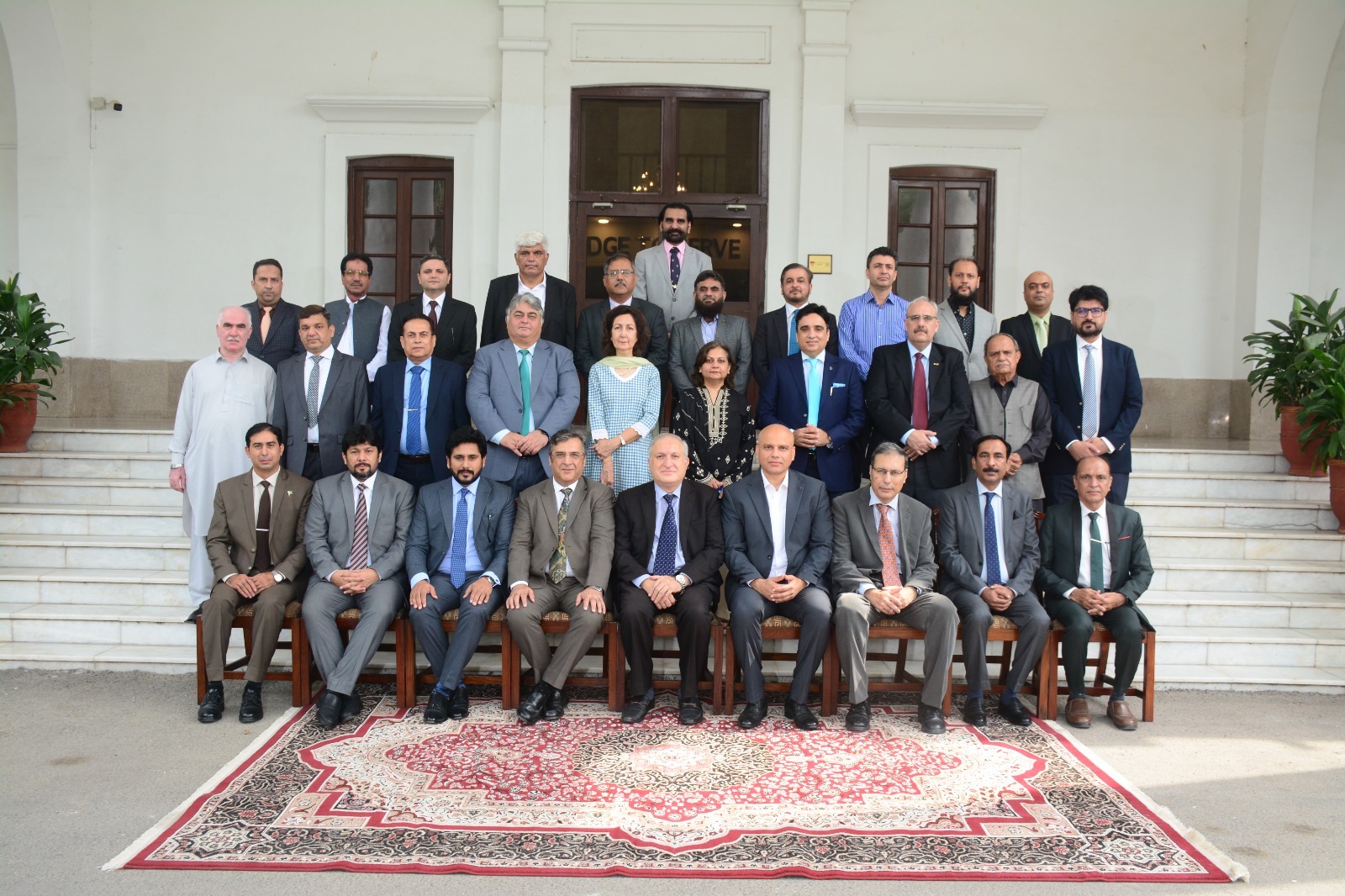
      LAHORE: The Executive Development Institute (EDI) of the National School of Public Policy (NSPP), Lahore, successfully conducted the fifth course of its three-day Directors’ Training Program (DTP) for State-Owned Enterprises (SOEs) from August 19 to 21, 2026. The training initiative was approved by the Securities and Exchange Commission of Pakistan (SECP) and focused on enhancing corporate governance, leadership and institutional performance within SOEs. A total of 21 participants from across Pakistan attended the program, representing federal and provincial governments as well as the private sector. Participants included officials and executives from the Ministry of Industries and Production, SECP, Pakistan Civil Aviation Authority, Pakistan Airports Authority, NESPAK, PASSCO, Northern Power Generation Company Limited, WAPDA, Water and Sanitation Services Company Haripur, Punjab Mineral Company, Punjab Police, Universal Service Fund, Pakistan Kidney and Liver Institute and Research Center, and Lahore Development Authority. Rector NSPP Mr. Farhan Aziz Khawaja welcomed the participants and highlighted the importance of strengthening corporate governance through quality professional training. He said the program aimed to establish a new benchmark in governance training with the support of SECP. He also emphasized the importance of transparency, accountability and responsible leadership in public-sector organizations. Dr. Naveed Elahi, Dean EDI, provided an overview of the training program and explained its focus on improving SOE governance and performance through effective leadership. He said the course addressed contemporary governance requirements, including directors’ legal responsibilities, board effectiveness, risk management and ethical decision-making. He encouraged participants to actively engage in case studies, simulations, discussions and networking opportunities throughout the training. The program featured a distinguished panel of guest speakers, including Mr. Abdul Rehman Warraich former SECP Commissioner; Dr. Ishrat Hussain, former Advisor to the Prime Minister; Mr. Kashif Ahmad Noor Military Accountant General; Mr. Farhan Aziz Khawaja, Rector NSPP/DG CSA; Dr. Irum Saba Director, IBA Karachi; Mr. Muhammad Anwar Sheikh retired Federal Additional Secretary, Finance Division; Mr. Mairaj A. Ariff, former Director General, NIPA Quetta; Dr. Kashif Zafar Dean-SST, UMT Lahore; Mr. Imtiaz Mahmood Company Secretary, SNGPL; Mr. Tariq Bajwa former Governor State Bank of Pakistan and Ex-SAPM on Finance; and Mr. Salman Amin Member, Competition Commission of Pakistan. The three-day course covered a wide range of topics, including principles of corporate governance, SOE reforms and legal frameworks, government stewardship, directors’ selection and performance evaluation, external and internal audits, audit committees, organizational culture, Islamic finance, financial risk governance, public service obligations, competitive neutrality, business planning, cybersecurity, digitization, reporting and disclosure, board composition and structure, as well as board simulations and case studies. During the closing session, Rector NSPP thanked the participants for their active participation and valuable contributions. He also appreciated the efforts of the Dean EDI and his team in successfully organizing the program. Participants showed keen interest throughout the course and actively participated in question-and-answer sessions. At the conclusion of the training, Rector NSPP, along with the Dean EDI, distributed certificates among the participants, formally marking the successful completion of the fifth Directors’ Training Program for State-Owned Enterprises.

  • | |

    245 technical institutes affiliated by FBISE face …

    Islamabad: Questions have been raised over the affiliation process of hundreds of technical institutes after an audit revealed that 245 technical institutions were affiliated with the Federal Board of Intermediate and Secondary Education (FBISE) before concerns over legal authority and inspection procedures were fully addressed. The issue came up during the 47th meeting of the Public Accounts Committee, held under the acting chairmanship of Syed Naveed Qamar, where lawmakers reviewed audit objections related to FBISE’s affiliation procedures. According to audit findings, FBISE affiliated 245 technical institutes during 2022 and 2023 and collected Rs. 26.750 million in affiliation fees. The audit questioned the process, stating that the original FBISE Act of 1975 mainly covered intermediate and secondary education and did not clearly mention technical institute affiliations. Officials informed the committee that the matter was reviewed by the Law and Justice Division, which issued a legal opinion on 15 June 2026. The opinion stated that FBISE has legal authority under relevant sections of the FBISE Act 1975 to conduct examinations, provide affiliations and issue certificates for technical education programmes including Matric Tech and Inter Tech programmes at secondary and higher secondary levels. During the discussion, PAC members stressed that clear policies and official notifications should be issued so that all concerned institutions have proper guidance regarding technical education affiliations. The committee questioned whether the legal position and policy framework were clearly communicated before allowing affiliations. Officials were directed to ensure that proper procedures and documentation are completed before moving forward. The audit also highlighted another issue related to the registration process of technical institutes. Audit observations indicated that provisional registrations were issued to technical institutes before physical inspections were completed. The audit noted that registrations were granted without complete details of teaching staff. Officials informed the committee that inspections were being carried out and most institutions had already been reviewed, while only a limited number of uninspected institutions remained pending as of March 2026. Officials also informed the committee about steps being taken to improve technical and modern education in schools. The Federal Directorate of Education has introduced coding, robotics and artificial intelligence programmes to encourage students towards technology fields. Officials said coding fellows were engaged through support from NUST, while additional technology fellows were also working to support IT education. The committee was also informed about the Matric Tech programme, which was introduced to provide practical skills to students who may not continue traditional education after matriculation and want to enter professional careers. Officials said the aim of the programme is to provide students with useful skills that can help them find employment and participate in modern industries. The meeting also discussed the shortage of teaching resources, especially in areas where educational facilities face staff challenges. Officials informed the committee that 1,699 teaching and non teaching fellows, including technology fellows, were engaged to support educational needs. The committee emphasized that technical education is important for preparing young people for future jobs but stressed that proper monitoring, legal clarity and transparent procedures must remain part of the system.

  • | |

    Medical colleges lower passing marks as seats rema…

    ISLAMABAD: A proposal to reduce the passing threshold for medical college admissions to 50 percent has emerged amid concerns over vacant seats despite efforts to lower merit requirements. The matter was discussed during a meeting of the National Assembly’s Standing Committee on National Health Services, chaired by MNA Mahesh Kumar. The committee also examined complaints alleging that some medical colleges were charging fees above the permitted limit. Committee Chairman Mahesh Kumar said medical colleges are allowed to charge annual fees of up to Rs1.8 million. He directed officials to provide details of institutions allegedly collecting higher fees from students. The chairman also questioned why seats were still remaining vacant after merit requirements had already been relaxed. He suggested that the passing marks could be set at 50 percent and that the proportion of difficult questions in the Pakistan Medical and Dental Council’s entrance examination could also be reviewed. Federal Health Minister said 61 medical colleges had applied for permission to increase their fees. However, he clarified that colleges cannot raise fees independently and that only 35 of the 61 institutions had fulfilled the required conditions for a fee increase. Colleges failing to meet the prescribed criteria would not be permitted to charge higher fees. The President of the PMDC informed the committee that notices had been issued to medical colleges against which complaints of excessive fee collection had been received. Committee member Mustafa Kamal said vacant seats were also a concern for the authorities, but argued that high fees alone could not explain the situation. He pointed out that colleges charging around Rs3.5 million had not faced vacant seats, suggesting that other factors may also be contributing to the problem. The PMDC president further informed the committee that 468 additional seats had been approved for government medical colleges in Punjab, while 315 seats had been added for students from the former FATA region. When the committee chairman asked about an increase in medical seats in Sindh, the PMDC president said no additional seats had been allocated because the province had not submitted an application for an increase.

Leave a Reply

Your email address will not be published. Required fields are marked *