cbi charges husband
|

CBI charges husband, mother-in-law in Bhopal woman’s suicide case


The Central Bureau of Investigation (CBI) has filed a chargesheet against the husband and mother-in-law of 31-year-old Tewisha Sharma, who died by suicide at her in-laws’ home in Bhopal, India, just months after her marriage. The agency has accused the two of subjecting her to continuous mental harassment and abetting her suicide.

Tewisha was found hanging at her in-laws’ residence in the Katara Hills area of Bhopal on May 12. Her family had alleged that she was being harassed over dowry and had claimed that she may have been murdered.

Tewisha and her husband, Samarth Singh, had married by choice after meeting through a dating application in 2024. They got married in December 2025.

In its 30-page chargesheet submitted to the court on August 14, the CBI named Samarth Singh and his mother, Giri Bala Singh, as accused. According to the investigation, the couple allegedly subjected Tewisha to sustained emotional and psychological abuse. The agency alleged that her husband used derogatory language while referring to her past relationships, while her mother-in-law allegedly supported her son and ignored Tewisha’s complaints.

The chargesheet states that Tewisha sent a WhatsApp message to her sister-in-law only hours before her death, asking her to let her die peacefully. A few minutes later, CCTV footage reportedly showed her walking towards the roof of the house.

At around 9:41 p.m., Tewisha called her father while crying. According to the chargesheet, she told him that her husband had become extremely aggressive and violent and that she was frightened. She asked her parents to come to her immediately. She later spoke to her mother on the phone, but the call was disconnected.

At approximately 10:23 p.m., CCTV footage allegedly showed Samarth and his mother going towards the roof. Tewisha was subsequently brought downstairs and taken to AIIMS Bhopal, where she was declared dead at around 10:55 p.m.

The CBI also alleged that Tewisha had shares worth approximately INR 2 million in her demat account. According to the chargesheet, her husband and mother-in-law were pressuring her to transfer the money into a joint bank account. Tewisha allegedly refused, saying the money belonged to her father.

Several WhatsApp messages were also included in the chargesheet. In them, Tewisha reportedly described her life as a “hell” and asked her mother to take her away. In another message, she said she felt suffocated at home and could not see a future in the marriage.

The CBI said Tewisha had complained to her mother a day before her death that she was being blamed for her temperament and alleged drug use, while her husband’s alleged emotional neglect of her was being ignored.

An initial post-mortem concluded that she died from asphyxia caused by hanging. After her family challenged the findings, the Madhya Pradesh High Court ordered a second post-mortem by a medical board at AIIMS Delhi. The second examination also concluded that the cause of death was asphyxia due to hanging and classified the death as suicide. No significant injuries indicating physical assault were reportedly found on her body.

The CBI clarified that its case is not that Tewisha was physically murdered. Rather, it alleges that prolonged mental harassment and emotional abuse drove her to take her own life. A forensic psychological assessment also reportedly found signs of hopelessness, persistent mental distress and a lack of emotional support.

Similar Posts

  • |

    UK Parliament hears fresh concerns over human rights in Indian-Occupied Jammu & Kashmir

    The human rights situation in Indian-occupied Jammu and Kashmir (IIOJK) came under renewed scrutiny in the House of Lords on Thursday after Lord Qurban Hussain urged the British Government to clarify its position in light of a Genocide Watch report published earlier this year. During the debate, Lord Qurban Hussain said the report warned that the situation in Indian-occupied Jammu and Kashmir had reached a critical stage and alleged that eight of the ten recognised stages associated with genocide had already been reached. He asked how seriously the British Government viewed the report and what action it was taking to help prevent further deterioration. The British peer, who said members of his family live on both sides of the Line of Control, urged the Government to explain its assessment of the report and its approach towards the human rights situation in Indian-occupied Jammu and Kashmir. Responding for the Government, Lord Collins of Highbury, Parliamentary Under-Secretary of State at the Foreign, Commonwealth and Development Office (FCDO), reiterated the UK’s longstanding position on human rights. He said the UK continues to express concern over violence and loss of life and supports full, transparent and impartial investigations into allegations of abuse by Indian police and security forces. He added that the British Government continues to raise human rights issues with India through diplomatic channels. Lord Qurban Hussain’s intervention highlights continuing concern among a number of British parliamentarians over the human rights situation in Indian-occupied Jammu and Kashmir, with renewed calls for accountability, respect for fundamental rights and a peaceful resolution of the longstanding dispute.

  • |

    Passengers recount terrifying turbulence on Air India flight

    At least 17 passengers and crew members were injured after an Air India flight encountered severe turbulence while travelling from Phuket, Thailand, to New Delhi, prompting frightened passengers to fear the aircraft might crash. According to Indian media, the flight was carrying 137 passengers and eight crew members when it was hit by sudden and intense turbulence mid-air. The violent shaking reportedly caused the aircraft to drop abruptly, leaving several passengers and crew members injured. The aircraft also sustained minor damage during the incident. The flight landed safely at Indira Gandhi International Airport in New Delhi, where emergency medical teams were waiting. Injured passengers were taken from the aircraft on stretchers and transported to nearby hospitals for treatment. An Italian passenger described the ordeal as one of the most terrifying experiences of her life. She said the turbulence was so powerful that her sister was thrown out of her seat, while her mother suffered a head injury. She added that several passengers were hurt, including one man whose face was covered in blood. “We thought we were going to die,” the passenger said, recalling the frightening moments during the flight. Air India, however, said none of the passengers or crew members suffered life-threatening injuries. The airline stated that those injured were taken to hospital as a precaution for medical evaluation. According to the airline, five people were discharged shortly after receiving treatment, while the remaining injured passengers continue to receive medical care. The incident has once again drawn attention to the dangers posed by severe in-flight turbulence, although aviation experts note that such events are relatively rare and commercial aircraft are designed to withstand extreme weather conditions.

  • |

    Houthis clash with Yemeni government forces as regional tensions escalate

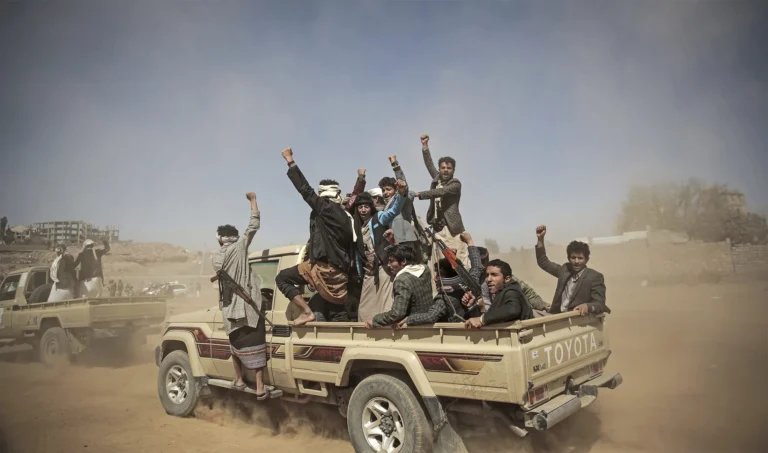
    Fighting between Iran-backed Houthi rebels and Yemeni government troops intensified in Taiz province, claiming the life of at least one government soldier and critically injuring another amid fears of a renewed civil war. Yemeni military officials reported that the recent flare-up is part of a broader wave of Houthi assaults across multiple provinces that have killed dozens of government troops over the past week. Concurrently, the Houthis claimed responsibility for a drone attack targeting a Saudi Aramco oil refinery in Jazan, marking the second reported strike on the facility following an incident last weekend that caused a localized fire. The military escalation coincides with a Houthi-announced blockade on Saudi maritime shipping, further threatening crucial red sea trade corridors. In response to regional instability, the US Navy directed the USS George Washington to deploy toward the Middle East, replacing the USS Abraham Lincoln following reported operational strains and crew welfare concerns aboard the long-deployed carrier.

  • |

    QatarEnergy buys US LNG cargoes amid Hormuz crisis

    QatarEnergy has purchased 33 liquefied natural gas (LNG) cargoes from the United States this year to reduce supply disruptions caused by the ongoing conflict in the region and the closure of the Strait of Hormuz, according to industry sources. The LNG shipments have been arranged for key Asian markets, including South Korea, Taiwan, Bangladesh, India and Japan, as Qatar works to maintain supplies for its long-term customers. The move comes after QatarEnergy declared force majeure on some of its LNG contracts following the shutdown of shipping routes through the Strait of Hormuz. The waterway is a critical global energy corridor through which a significant portion of the world’s oil and gas supplies passes. The company’s decision to purchase additional LNG cargoes from the US represents a major increase compared with previous years. In 2025, QatarEnergy had purchased only four spot LNG cargoes, while the number has now risen sharply to 33 in 2026. The additional purchases are aimed at protecting Qatar’s reputation as one of the world’s most reliable energy suppliers and ensuring that customers continue receiving gas despite regional instability. Industry sources said the US LNG purchases represent a goodwill effort by QatarEnergy to support important Asian buyers affected by the disruption. The 33 cargoes are estimated to equal around one-third of QatarEnergy’s monthly LNG exports before the conflict and are valued at nearly $1 billion. Qatar is among the world’s largest LNG exporters, with Asia accounting for around 80% of its LNG shipments. Countries such as Japan, South Korea and India rely heavily on Qatari gas supplies for energy security. The Strait of Hormuz crisis has created uncertainty in global energy markets, forcing major producers and consumers to seek alternative supply arrangements. QatarEnergy has not officially commented on the reported LNG purchases, but the move highlights efforts by energy companies to adjust supply chains amid geopolitical tensions.

  • Global humanitarian crisis

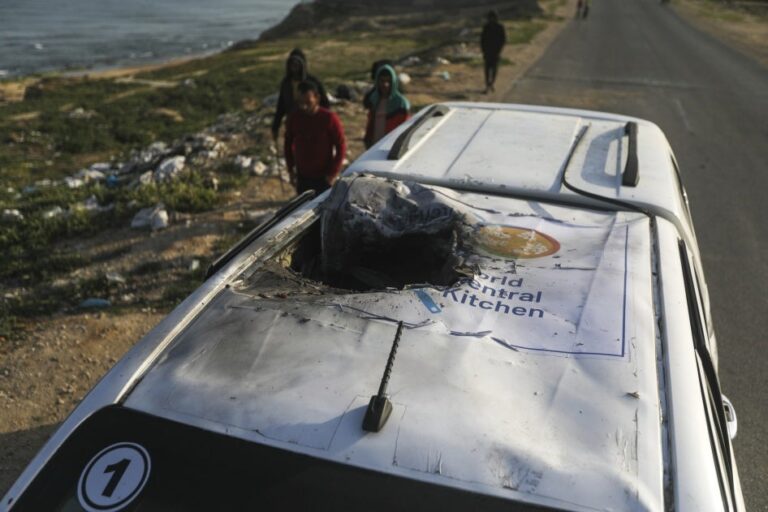
    Across multiple war zones around the globe, military hostilities and direct attacks on aid workers are pushing millions of civilians to the brink. Frontline personnel operating in Ukraine, the Middle East and Sudan are struggling to deliver basic survival services under increasingly perilous conditions. Strikes on Essential Infrastructure and Relief Assets in Ukraine Violence across Ukraine continues to inflict heavy civilian casualties. It claimed lives and injuring children across nine major regions, including Kyiv, Kharkiv, Odesa and Zaporizhzhia. The intense shelling has directly hindered humanitarian operations beyond damaging residential neighborhoods and essential municipal utilities. A recent strike in the city of Dnipro destroyed a primary World Health Organization (WHO) supply warehouse. The attack wiped out crucial medical inventory earmarked for frontline healthcare facilities. Meanwhile, emergency personnel in the Kherson region reported damage to a civilian evacuation transport and a direct hit on a World Food Programme (WFP) partner truck carrying essential food supplies. Despite these continuous risks, relief organizations remain active on the ground, delivering immediate trauma care, psychological support, and essential survival provisions to impacted communities. Rising Hostilities and Explosive Hazards Across the Middle East The security landscape in southern Lebanon and Gaza remains extremely volatile. Peacekeepers with the UN Interim Force in Lebanon (UNIFIL) monitored hundreds of artillery rounds and dozens of airspace incursions by Israeli forces over a single weekend. Direct fire incidents were recorded near UN observer positions in Meiss ej Jebel, alongside sightings of naval activity along the coast. Crucially, peacekeepers are working to clear hazardous remnants of war, having uncovered loaded rocket launchers, unexploded shells, and improvised explosive devices scattered across southern villages. In Gaza, ongoing military activity continues to imperil non-combatants and expand basic survival needs. Unexploded ordnance represents one of the most severe long-term dangers to returning residents and reconstruction crews. Specialist teams have identified and marked more than 1,000 explosive items across the Gaza Strip since late 2023. These clearance operations are vital for allowing workers to clear heavy rubble, restore water infrastructure, and safely access damaged facilities. To prevent further civilian casualties, mine safety specialists conducted targeted educational workshops reaching over 63,000 individuals in the past month alone. Sudan’s Escalating Displacement and Extreme Budget Drought In Africa, Sudan’s protracted conflict is driving mass displacement while relief budgets rapidly dry up. Severe insecurity around El Obeid in North Kordofan State has uprooted thousands of residents seeking sanctuary, forcing aid agencies to scramble to supply two million liters of drinkable water to roughly 133,000 displaced individuals facing acute shortages. Further west, intense fighting in the Sirba locality of West Darfur displaced around 18,000 civilians in a single week, sending thousands fleeing across the border into neighboring Chad. Compounding the human toll is a crippling financial deficit. The global humanitarian appeal for Sudan remains underfunded at just 41 percent, having received only $1.2 billion of the required $2.9 billion. This severe shortage has already forced the closure of multiple health centers in Central Darfur, leaving an estimated 75,000 displaced people completely cut off from basic healthcare services. Growing Risks of Regional Spillover in Yemen   The fragile stability in Yemen is also facing its most precarious moment since the 2022 truce. UN Envoy Hans Grundberg warned that recent escalations risk dragging the nation into a broader regional conflict, erasing years of diplomatic progress. Relief agencies emphasize that without immediate de-escalation, sustained diplomacy, and dedicated financial backing from international donors, global humanitarian networks will remain severely stretched, leaving millions of vulnerable civilians without access to life-saving assistance.

  • |

    Gulf nations back Omani plan for voluntary transit payments to resolve Hormuz maritime crisis

    Gulf Cooperation Council member states have formally endorsed a diplomatic initiative proposed by Oman to introduce voluntary service fees for commercial vessels transiting the Strait of Hormuz, seeking to restore global energy shipments disrupted by the broader conflict involving the United States, Israel, and Iran. The framework, modeled after the cooperative navigation safety mechanism used in Asia’s Malacca Strait, allows shipowners to make optional financial contributions toward environmental protection, search-and-rescue services, and navigational maintenance rather than paying mandatory tolls. Designed as a compromise between Tehran’s demand for administrative authority over shipping lanes and Washington’s insistence on unimpeded international transit, the Omani proposal explicitly prevents Iran from exercising exclusive operational control over the waterway while offering a structured path toward reopening commercial transit routes. The diplomatic breakthrough coincides with a temporary lull in direct aerial bombardments after US President Donald Trump called off a two-week bombing campaign following advice from military commanders. Despite the pause in direct strikes between Washington and Tehran, regional tensions remain elevated due to ongoing proxy drone activity across Jordan, Saudi Arabia, and Iraq, alongside continued US naval enforcement actions against non-compliant commercial vessels. While market reactions to the suspension of airstrikes sent global crude prices down sharply, formal resolution remains subject to upcoming diplomatic negotiations in Washington and the broader implementation of the bilateral framework agreement.

Leave a Reply

Your email address will not be published. Required fields are marked *