qatarenergy buys lng
|

QatarEnergy buys US LNG cargoes amid Hormuz crisis

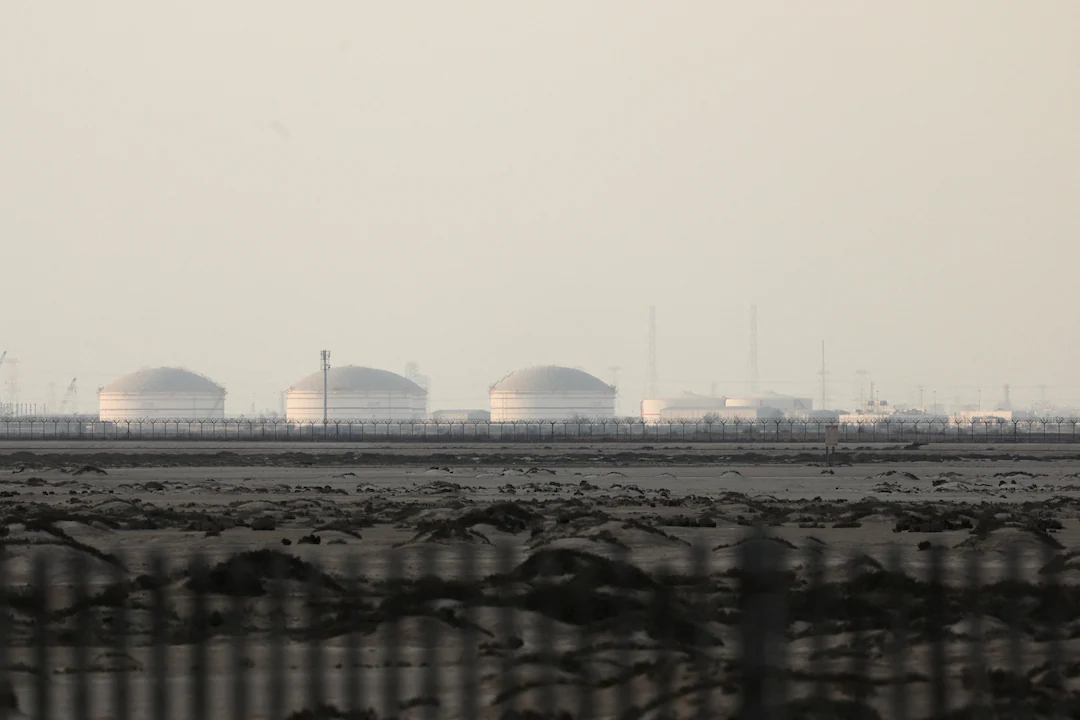
QatarEnergy has purchased 33 liquefied natural gas (LNG) cargoes from the United States this year to reduce supply disruptions caused by the ongoing conflict in the region and the closure of the Strait of Hormuz, according to industry sources.

The LNG shipments have been arranged for key Asian markets, including South Korea, Taiwan, Bangladesh, India and Japan, as Qatar works to maintain supplies for its long-term customers.

The move comes after QatarEnergy declared force majeure on some of its LNG contracts following the shutdown of shipping routes through the Strait of Hormuz. The waterway is a critical global energy corridor through which a significant portion of the world’s oil and gas supplies passes.

The company’s decision to purchase additional LNG cargoes from the US represents a major increase compared with previous years. In 2025, QatarEnergy had purchased only four spot LNG cargoes, while the number has now risen sharply to 33 in 2026.

The additional purchases are aimed at protecting Qatar’s reputation as one of the world’s most reliable energy suppliers and ensuring that customers continue receiving gas despite regional instability.

Industry sources said the US LNG purchases represent a goodwill effort by QatarEnergy to support important Asian buyers affected by the disruption.

The 33 cargoes are estimated to equal around one-third of QatarEnergy’s monthly LNG exports before the conflict and are valued at nearly $1 billion.

Qatar is among the world’s largest LNG exporters, with Asia accounting for around 80% of its LNG shipments. Countries such as Japan, South Korea and India rely heavily on Qatari gas supplies for energy security.

The Strait of Hormuz crisis has created uncertainty in global energy markets, forcing major producers and consumers to seek alternative supply arrangements.

QatarEnergy has not officially commented on the reported LNG purchases, but the move highlights efforts by energy companies to adjust supply chains amid geopolitical tensions.

Similar Posts

  • | |

    Sindh extends Section 144 for one more month

    The Sindh government has extended Section 144 across the province for another month, keeping several restrictions in place to maintain law and order. According to a notification issued by the Sindh Home Department in Karachi, the renewed restrictions will come into effect on August 1 and will remain enforced for the next month. The notification states that wall chalking, public rallies, demonstrations and the display of weapons in public places will continue to remain prohibited throughout the province. The government said the measures have been taken as part of efforts to preserve public peace and prevent any activities that could disrupt law and order. Authorities have directed law enforcement agencies to ensure strict implementation of the restrictions. Officials said action will be taken against anyone found violating the provisions of Section 144 during the enforcement period. The notification also clarified that only security guards employed by registered private security companies will be permitted to carry weapons while performing their official duties. No other individuals will be allowed to display or carry weapons in public unless authorised under the law. Section 144 is a legal provision that empowers district administrations to impose temporary restrictions on public gatherings and certain activities in the interest of public safety. It is often enforced during periods of heightened security concerns or to prevent possible disturbances.

  • |

    Ukrainian drones strike Russian oil refineries deep inside enemy territory as energy attacks escalate

    Ukraine has launched a series of long-range drone strikes targeting major oil processing facilities deep within Russian territory, hitting the Slavneft-Yanos refinery in Yaroslavl and the Bashneft-Novoil plant in Bashkortostan. Ukrainian President Volodymyr Zelensky confirmed the strikes, stating that the operations targeted facilities located up to 1,300 kilometres from the Ukrainian border to disrupt fuel supplies and revenues used to fund Russia’s military campaign. Ukrainian forces also struck two Russian patrol boats and shadow fleet oil tankers in the Black Sea. Russian officials in Yaroslavl reported that emergency crews responded to multiple fires at the Slavneft-Yanos site after falling drone debris ignited fuel storage tanks, injuring four people. Russian air defence forces claimed to have intercepted hundreds of Ukrainian drones across several regions overnight. Simultaneously, Russian forces launched retaliatory strikes against Ukrainian energy and transport infrastructure. Heavy bombardment in the southern city of Kherson caused a complete blackout and severely disrupted internet connectivity, while additional Russian drone and missile strikes in Kharkiv, Dnipropetrovsk, and Odesa killed at least 11 people and damaged residential areas, rail infrastructure, and cargo vessels.

  • | |

    Netflix hit with $105 million film theft lawsuit

    Netflix is facing a $105 million lawsuit after filmmakers accused the streaming giant of mishandling an unreleased movie, alleging that a master copy of their World War II thriller Fortitude was stolen from the company’s Los Angeles offices, jeopardising the film’s commercial future. According to a lawsuit filed Thursday in a California federal court, writer-producer Simon Afram and his production company Op-Fortitude claim Netflix failed to properly safeguard an unencrypted copy of the film after requesting it for internal review. The complaint states that Netflix first expressed interest in acquiring Fortitude after receiving promotional materials in December 2025. The company later requested a working version of the film in June so executives could screen it internally. The filmmakers said Netflix instructed them to provide the movie through a digital cinema package (DCP), a format commonly used to protect films from unauthorised access during screenings. According to the lawsuit, one of the film’s producers personally delivered the unencrypted drive to Netflix’s Sunset Bronson Studios office on June 15. The producer allegedly instructed the company to delete the files after the screening and notify him when the drive was ready for collection. Ten days later, the filmmakers claim they were informed that the drive had been stolen. An email included in the court filing quotes Netflix’s Head of Film Acquisitions, Sean Berney, who wrote: “This is a first for us. Unfortunately, someone stole a good amount of drives from our office desks this past week. We’ve been working through this with our security teams to no luck. Our piracy teams are on high alert with the breach and will monitor.” Netflix later determined that the other missing drives contained no data. The lawsuit further alleges that Netflix refused to confirm whether it had filed a police report and declined the filmmakers’ request to involve the Los Angeles Police Department, despite the producers filing their own report. Netflix has rejected the allegations, saying it does not accept responsibility for the loss. In a statement, the company said it disputes bearing “the risk of loss for a film delivered without the proper industry-standard safeguards,” while adding that it had offered to monitor piracy websites for any unauthorised release of the film. The streamer also claimed it stopped sharing details of its internal investigation after lawyers representing Afram demanded $165 million, describing the demand as a “hostile attempt to extort money” rather than an effort to resolve the dispute in good faith. The filmmakers argue that the theft has significantly damaged the film’s market value because any potential distributor would now have to be informed that an unencrypted copy may still exist. They claim the incident has complicated acquisition discussions, insurance coverage and marketing plans while increasing the risk of an online leak before the movie’s official release. According to the lawsuit, the producers have paused negotiations with several interested domestic and international distributors until the matter is resolved. Directed by Simon West, Fortitude is based on a true World War II story about British intelligence operatives outsmarting Nazi leadership. The film stars Nicolas Cage, Matthew Goode, Ed Skrein, Jordi Mollà and Alice Eve.

  • |

    US accuses China’s Moonshot AI of stealing technology from American rival

    The United States has accused Chinese artificial intelligence company Moonshot AI of illegally using technology from a leading American AI developer, escalating tensions between the world’s two largest technology powers. The allegations were made by White House Science and Technology adviser Michael Kratsios, who claimed the Chinese company copied the capabilities of a US model to develop its own advanced AI system. Kratsios said Moonshot AI used a technique known as distillation to build its recently unveiled Kimi K3 model. Distillation is a process in which a smaller or less advanced AI model repeatedly interacts with a more powerful model to learn from its responses and improve its own performance. While the technique has legitimate uses within companies that own both models, using it to copy another company’s proprietary system without permission could violate intellectual property rights. According to Kratsios, the US government has information indicating that Moonshot AI extracted capabilities from Anthropic’s AI technology during the development of Kimi K3. He also alleged that the company gained access to restricted Nvidia servers powered by the advanced GB300 Grace Blackwell computing platform, despite US export controls designed to limit China’s access to cutting edge semiconductor technology. Moonshot AI has not publicly responded to the accusations. The Chinese embassy in Washington, Anthropic, Nvidia, and the White House had also not issued detailed comments following the allegations. The claims come just days after Moonshot AI introduced Kimi K3, an advanced open source language model that attracted global attention for its strong performance. Many industry experts said the model significantly narrowed the gap between Chinese and American AI technology. Moonshot described Kimi K3 as being capable of competing with some of the most advanced AI systems developed in the United States. The allegations have intensified concerns within Washington over the protection of American technology. US Treasury Secretary Scott Bessent recently said authorities are investigating whether Chinese AI companies have copied the capabilities of American competitors through large scale distillation efforts. He warned that sanctions remain an option if Chinese firms are found to have engaged in intellectual property theft. Bessent said the United States supports open source artificial intelligence because it encourages innovation and wider access to technology. However, he stressed that open source development does not give companies permission to copy protected American research or commercial products. The dispute comes at a sensitive time in US China relations. President Donald Trump is expected to meet Chinese President Xi Jinping in September as both countries continue negotiations on trade, technology, and security issues. Artificial intelligence has become one of the most important areas of competition between the two nations. The United States first imposed restrictions on exports of Nvidia’s most advanced AI chips to China in 2022 over concerns that the technology could strengthen China’s military capabilities. Since then, governments have increased efforts to prevent the illegal transfer and smuggling of high performance semiconductor chips into China. Moonshot AI plans to release Kimi K3 as an open source model on July 27, allowing developers around the world to download, modify, and build applications using the software. The planned release has generated significant interest because it would become one of the largest freely available AI models developed by a Chinese company. The latest accusations are not the first involving Anthropic. Earlier this year, the American AI company accused Chinese technology giant Alibaba of using similar distillation methods to copy the capabilities of its Claude AI models. Anthropic urged US lawmakers to strengthen legal protections for American AI technology and introduce tougher penalties for companies found to be stealing intellectual property. The White House has also announced broader measures to protect American innovation from foreign cyber and technology theft. Officials say the government is working more closely with leading AI companies to detect and prevent organised efforts aimed at copying proprietary research. As investigations continue, the allegations against Moonshot AI are expected to become another major issue in the growing technological rivalry between the United States and China.

  • | |

    Musadik Malik calls for smarter water management

    Climate Minister Musadik Malik has called for a major shift in Pakistan’s water management strategy, saying the country must focus not only on storing water but also on regulating its supply throughout the year. Speaking at a briefing at the National Disaster Management Authority (NDMA), Malik said effective water management was essential for protecting food supplies, supporting agriculture and reducing the impact of climate-related disasters. His remarks came as Pakistan faces another difficult monsoon season. At least 107 people have died and 297 others have been injured since the current rainy season began on June 26, according to disaster management authorities. The Pakistan Meteorological Department has forecast another strong spell of monsoon rains from July 29. Heavy rainfall could trigger urban flooding, flash floods and landslides in several parts of the country. Malik said Pakistan needed different climate strategies for different regions instead of relying on a single nationwide approach. Plans are being developed for cities facing extreme heat, northern areas vulnerable to floods and landslides, and agricultural regions where changing weather patterns are threatening food production. He stressed that water must be available when farmers need it during the Rabi and Kharif seasons. According to the minister, simply allowing large quantities of floodwater to escape without regulating or storing it creates serious risks for agriculture and food security. Malik described water infrastructure as a national security issue. He said the government would focus on improving water regulation, telemetry and storage systems. It would also work with provincial governments to improve zoning and construction standards in disaster-prone areas. National Food Security Minister Rana Tanveer Hussain said Pakistan would require greater water storage capacity in the coming years. He said the country faced two linked challenges: controlling floods and dealing with water shortages. Tanveer said climate change was already changing crop cultivation and sowing patterns. He stressed that agriculture would need to adapt to shifting weather conditions to protect food supplies. The minister said Pakistan was among the countries most vulnerable to climate change, with agriculture facing some of the strongest impacts. He recalled the huge economic losses caused by the 2022 floods but said the country’s disaster response capabilities had improved since then. He said the government had started modifying crop cycles and cultivation patterns in response to changing climatic conditions. Authorities are also working on a broader strategy to strengthen agricultural resilience. Tanveer highlighted several major water projects. He said the Diamer-Bhasha Dam would provide around 6.4 million acre-feet of additional storage capacity, while the Mohmand Dam would add nearly one million acre-feet. He also mentioned progress on the Dasu project and expressed hope that the K-IV water supply project for Karachi would be completed by the end of this year or early next year. Finance Minister Muhammad Aurangzeb described climate change and population growth as major long-term challenges for Pakistan. He called for a coordinated response involving all parts of the government. Aurangzeb said the country was now better prepared financially to respond to natural disasters. He said the government had decided to use domestic resources for rescue and relief operations instead of relying primarily on international assistance. He said Pakistan had launched a $2 billion programme aimed at strengthening climate resilience and reducing environmental risks. Around $700 million annually has also been allocated for disaster management, vulnerability reduction and protection of lives and infrastructure. The finance minister said Pakistan’s disaster financing approach had changed significantly since the 2022 floods. The country had previously relied heavily on international commitments, but authorities are now increasing domestic funding for climate adaptation and emergency response. Information Minister Attaullah Tarar said preparations for the current monsoon season had started before the rains arrived. He credited NDMA’s National Emergencies Operation Centre (NEOC) with improving forecasting and early warning capabilities. Tarar said the system had helped authorities issue timely alerts about dangerous weather events. He urged citizens to follow official warnings and take precautions during periods of heavy rainfall. Meanwhile, flooding continues in parts of Punjab and other regions. The Provincial Disaster Management Authority said water levels in the Chenab River had shown some improvement, while low-level flooding persisted at several locations along the Indus.

  • | |

    Gaza funeral held for 112 bodies retrieved from ru…

    Palestinians in Gaza held funeral prayers on Tuesday for 112 people whose remains were recovered from the rubble of homes destroyed during the war between Israel and Hamas. Thousands of mourners gathered for the funeral in Gaza City’s Sabra neighborhood, where the bodies, draped in Palestinian flags, were laid out near the ruins of the destroyed homes before the procession began. The victims are set to be buried afterward at the Baptist Cemetery in the Zeitoun neighborhood, south of Gaza City. The dead belonged to the Al Hasayneh and Abu Sharia families, who were killed when their homes were bombed while they were sheltering inside on November 23, 2023. Given the scale of the casualties, the funeral ranks among the largest recorded in Palestinian history. Civil defense teams recovered the bodies from the rubble on Saturday. A Civil Defence statement said the victims included 40 children, 38 women and seven people with disabilities. Civil Defence official Mohammad Abu Dan said search teams have so far been unable to locate 157 additional bodies still believed to be buried under the rubble. More than 73,000 people have been killed and over 174,000 injured in Gaza since the war began in October 2023, according to local health authorities. Despite a ceasefire agreement that took effect on October 10, 2025, Israeli forces have continued carrying out attacks across the territory, killing 1,250 Palestinians and injuring 4,110 others since the truce began, Gaza’s Health Ministry said. Palestinian authorities estimate that around 9,500 people remain missing under the rubble of buildings destroyed across the territory. A day earlier, at least 19 Palestinians were killed by Israeli fire over a 24 hour period, pushing the overall death toll since October 2023 to 73,375, according to the Health Ministry. Officials said the toll included 18 people killed directly by Israeli forces and one person who died from wounds sustained in an earlier attack. The ministry reported that 35 additional injured people were taken to hospitals during the same period, bringing the total number of injuries to 174,220. The ministry said Saturday that 152 people were killed in Gaza during July, the highest monthly death toll recorded since the start of the year, despite the ceasefire that took effect in October 2025. The truce followed nearly two years of war that began on October 8, 2023, and caused widespread destruction across the territory, affecting an estimated 90 percent of civilian infrastructure. The United Nations has put the cost of reconstruction at approximately 70 billion dollars, underscoring the scale of rebuilding that lies ahead even as sporadic violence continues despite the formal end of large scale hostilities.

Leave a Reply

Your email address will not be published. Required fields are marked *