shazia marri demands
| |

Shazia Marri demands accountability over PIMS trag…

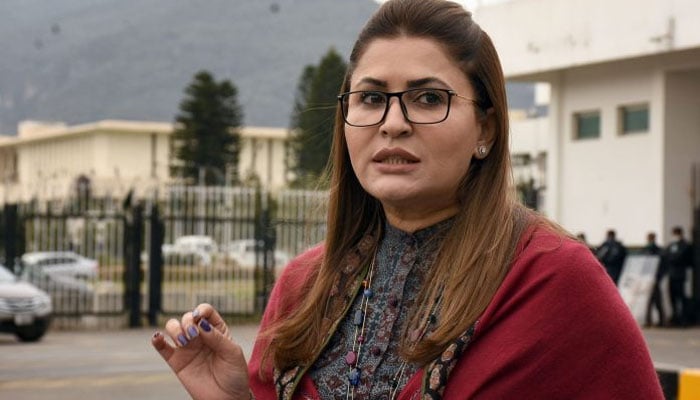
ISLAMABAD: Pakistan Peoples Party (PPP) leader and Member of the National Assembly Shazia Marri has strongly criticised the federal government over the deaths of newborn babies in the Pakistan Institute of Medical Sciences (PIMS) fire, calling the incident a serious example of administrative negligence.

In a statement, Marri said innocent children had lost their lives, yet no one appeared to be taking responsibility for the tragedy.

She alleged that ordinary citizens were paying the price for what she described as incompetence and poor management by the federal government.

Marri demanded that those responsible for the incident be identified and proceeded against according to the law.

She questioned the federal health minister’s position, asking what justification there was for remaining in office if the minister could not ensure the safety and proper administration of a major government hospital.

The PPP leader said the deaths of newborns could not simply be dismissed as an accident while ignoring possible administrative failures.

She called for a transparent and impartial investigation into the PIMS fire and urged authorities to determine whether negligence or shortcomings in hospital management contributed to the loss of lives.

Marri also questioned the hospital’s fire safety arrangements and emergency response.

She asked where the required safety measures were when the fire broke out and why immediate rescue and emergency procedures could not prevent the deaths.

The PPP leader demanded strict legal action against anyone found responsible following the investigation.

She said the federal government should accept responsibility for the incident and ensure justice for the families who lost their children.

Marri described the loss of innocent lives as irreparable and said those found guilty of negligence should not be given any concession.

Her remarks came amid widespread public anger following the PIMS tragedy, which has prompted demands for accountability, improved fire safety systems and stronger emergency preparedness at government hospitals.

Similar Posts

  • |

    Pakistan hockey team Beats South Korea 3-1 in hist…

    Pakistan hockey team eased past South Korea 3-1 in the opening match of the four-test series at the Naseer Bunda Hockey Stadium on Thursday, marking the first time in 20 years that an international hockey team has toured Pakistan for an official bilateral series. The 13th-ranked Green Shirts dominated the 22nd-ranked Korea throughout the match. Sufyan scored twice, while newly appointed captain Abu Bakar Mahmood added a goal to cap off an excellent performance. South Korea managed just one goal in reply. The series marks a significant milestone for Pakistan hockey, which has struggled to attract international teams to its shores over the past two decades due to security concerns and the sport’s declining profile in the country. Earlier, President of the Pakistan Hockey Federation (PHF), Mohyuddin Ahmad Wani welcomed the Korean team’s arrival and described the tour as a landmark moment for the revival of international hockey in Pakistan. “This is a proud and memorable occasion for Pakistan hockey. After almost two decades, we are once again welcoming an international team to our home grounds,” he said. “We extend a warm welcome to the Korean National Hockey Team and are confident that this series will strengthen the longstanding friendship between our two countries while promoting high-quality international hockey.” The second match of the series will be played on 2 August, followed by the third and fourth fixtures on 4 and 7 August, respectively. The series is seen as a crucial step in Pakistan’s efforts to revive the sport and attract more international competition in the future.

  • Thailand Tightens Reporting on Non-Resident Cash Inflows to Manage Baht

    BANGKOK – Thailand is implementing stricter monitoring of capital inflows from non-residents as part of a broader effort by the central bank to manage the rapid appreciation of the baht. Starting Monday, Thai banks will be required to report any non-resident capital inflows exceeding $200,000, including the purpose and supporting documentation. Thai Baht Hits Four-Year […]

  • | | |

    Bangladesh moves toward talks with China to buy J-…

    Bangladesh is preparing to begin formal discussions with China over a possible purchase of J-10CE fighter jets and attack helicopters according to a government adviser. Prime Minister’s Information and Broadcasting Adviser Zahed Ur Rahman said Tuesday that a government committee is working on a draft agreement that could pave the way for negotiations with Beijing. The potential deal would represent one of Bangladesh’s largest defence purchases in recent years and could further strengthen the country’s military relationship with China. Beijing is already Bangladesh’s biggest supplier of defence equipment. The J-10CE fighter jet has received increased international attention since fighting between India and Pakistan in May 2025. Pakistan said its J-10CE aircraft were involved in shooting down Indian fighter jets during the clashes. India has disputed those claims. Ur Rahman said Bangladesh had observed reports about the aircraft’s performance during the conflict as it considers options to modernise its air force. Bangladesh is reportedly considering purchasing as many as 24 J-10CE fighter jets although officials have not confirmed the final number. Pakistan is currently the only confirmed foreign operator of the export version of the Chinese aircraft. The adviser did not reveal how many jets Bangladesh could ultimately purchase the expected cost of the agreement or when deliveries might begin. Those details, he said, would be decided during negotiations. The possible fighter-jet purchase comes as Bangladesh seeks to upgrade its military capabilities. The country has maintained close defence ties with China for years with Beijing supplying a wide range of military equipment. Over the past two decades, China has provided Bangladesh with warships, fighter aircraft, tanks and missile systems, making it Dhaka’s largest source of military hardware. If Bangladesh proceeds with the J-10CE acquisition, the move could further deepen defence cooperation between Dhaka and Beijing while giving Bangladesh a modern multirole fighter capable of performing air-to-air and air-to-ground missions.

  • Thailand to Lift Afternoon Alcohol Sales Ban Ahead of New Year, Minister Confirms

    BANGKOK – Deputy Prime Minister Sophon Zarum announced on Tuesday that the long-standing ban on alcohol sales between 2 p.m. and 5 p.m. will be officially lifted in time for the New Year celebrations. The move follows the conclusion of a 15-day public hearing process, allowing the new regulation to be enacted ahead of the […]

  • |

    Pakistan secures US $629.5 million in agreements following landmark Pakistan-China Pharmaceutical B2B Conference

    Syed Mustafa Kamal, Federal Minister for National Health Services, Regulations and Coordination has announced a major breakthrough for Pakistan’s pharmaceutical sector following the successful Pakistan-China Pharmaceutical Business-to-Business (B2B) Conference held in Islamabad on 17–18 July. Addressing a press conference, the Minister said the conference marks a significant milestone in the government’s efforts to transform Pakistan’s pharmaceutical industry into a globally competitive sector, attract foreign investment, strengthen local manufacturing, and reduce dependence on imported pharmaceutical products. “The purpose of sharing this success is to present a positive image of Pakistan to our people and the world. While challenges exist, it is equally important to highlight our achievements that restore confidence in Pakistan’s economy and its investment potential,” the Minister said. The two-day conference brought together 240 Chinese delegates representing 140 leading Chinese pharmaceutical companies and 430 Pakistani delegates from 210 local companies, making it one of the largest Pakistan-China engagements ever held exclusively for the pharmaceutical sector. To maximize business outcomes, the Ministry of National Health Services facilitated six weeks of virtual business matchmaking before the conference, ensuring participating companies entered the event with well-developed business discussions rather than first-time introductions. As a result, the conference generated 340 bilateral business meetings, culminating in: 22 commercial agreements worth US$629.5 million 84 Memoranda of Understanding (MoUs) with an estimated value of approximately US$800 million, many of which are expected to mature into formal investment agreements. The signed agreements span six strategic sub-sectors critical to the future of Pakistan’s healthcare industry: Active Pharmaceutical Ingredients (APIs) – 2 agreements Local Vaccine Production – 8 agreements Clinical Trials – 2 agreements Generic Formulations & Injectables – 2 agreements Medical Devices Manufacturing – 8 agreements The Minister emphasized that the government’s objective extends beyond signing MoUs, focusing instead on legally binding commercial agreements that lead to tangible investments, technology transfer, industrial growth, and employment generation. Highlighting the government’s broader pharmaceutical reforms, the Minister noted that Pakistan has, for the first time, developed and approved a National Local Vaccine Production Policy, creating the policy framework necessary for domestic vaccine manufacturing. Currently, Pakistan administers 13 vaccines under its national immunization programme, all of which are imported. The new policy aims to establish local production capacity, improve health security, and reduce import dependence. The Minister also identified several strategic priorities being pursued jointly with Chinese partners, including: Development of Pakistan’s clinical trials ecosystem; Promotion of Traditional Chinese Medicine and herbal medicines; Local manufacturing and export of medical devices; Establishment of vocational and technical training programmes for the pharmaceutical and biotechnology workforce; and Indigenous production of Active Pharmaceutical Ingredients (APIs), as Pakistan currently imports approximately 95% of the raw materials used to manufacture medicines despite producing nearly 85% of its pharmaceutical products locally. The Minister observed that healthcare is a permanent and growing global industry, and with Pakistan’s population exceeding 250 million, strengthening domestic pharmaceutical manufacturing has become both an economic and strategic necessity. He further highlighted the government’s regulatory reforms, particularly within the Drug Regulatory Authority of Pakistan (DRAP), where approximately 85% of regulatory processes have now been digitized. The reforms have substantially reduced processing times, enhanced transparency, minimized human intervention, and improved ease of doing business. As an example, the Minister noted that the registration of medical devices, which previously required years to complete, can now be processed entirely online, with approvals being issued within 20 days, significantly improving investor confidence. The Minister acknowledged the collective efforts of the Embassy of Pakistan in Beijing, led by Ambassador Khalil Hashmi, the Ministry of National Health Services, DRAP, the Trade Development Authority of Pakistan (TDAP), the Board of Investment (BOI), the Ministry of Information and Broadcasting, Islamabad Police, law enforcement agencies, and all public officials whose coordinated efforts ensured the successful organization of the conference. He also appreciated the active participation of the Pakistani pharmaceutical industry and Chinese business partners, whose collaboration translated business dialogue into concrete investment commitments. Concluding the press conference, the Minister described the conference as the beginning of a long-term strategic partnership between Pakistan and China in the healthcare and pharmaceutical sectors. He reaffirmed the government’s commitment to ensuring that the signed agreements are implemented expeditiously and translated into operational projects that strengthen Pakistan’s pharmaceutical manufacturing capacity, create employment opportunities, increase exports, and contribute to national economic growth.

  • | |

    LHC sets judges’ schedule from August 10

    The Lahore High Court (LHC) has issued the judges’ roster for the sixth week of its summer vacation. The new roster will come into effect from August 10. It will cover proceedings at the principal seat in Lahore and the court’s regional benches. According to the roster, two division benches at the Lahore Principal Seat will hear appeals from Monday. Four judges will also work as single benches and hear cases of different categories. A two-member division bench headed by Chief Justice Aalia Neelum will hear appeals of all types. Another two-member division bench headed by Justice Sadiq Mahmood Khurram will also hear appeals in different categories. Chief Justice Aalia Neelum will also hear petitions as a single bench. She will deal with applications and petitions of various kinds during the week. Justice Shahid Karim will hear civil matters. Justice Sadiq Mahmood Khurram will deal with criminal petitions. Justice Syed Ahsan Raza Kazmi will hear civil petitions of different categories. The arrangement has been made to ensure that important cases continue to be heard during the summer recess. The roster also includes arrangements for the LHC’s regional benches. Justice Ahmad Nadeem Arshad will hear cases as a single bench at the Bahawalpur Bench. Justice Khalid Ishaq will perform the same role at the Multan Bench. At the Rawalpindi Bench, Justice Sadaqat Ali Khan will hear cases as a single bench. The issuance of the roster will allow the high court to continue judicial proceedings during the sixth week of summer vacations. The scheduled benches will hear appeals, petitions and other cases according to their assigned jurisdictions.

Leave a Reply

Your email address will not be published. Required fields are marked *