shehbaz says makkah
| | |

PM Shehbaz says Makkah pact sends message of unity…

ISLAMABAD: Prime Minister Shehbaz Sharif has described the recently signed Makkah Joint Defence Agreement between Pakistan, Saudi Arabia and Türkiye as a significant step towards greater regional unity and peace, saying the pact has brought the three countries closer.

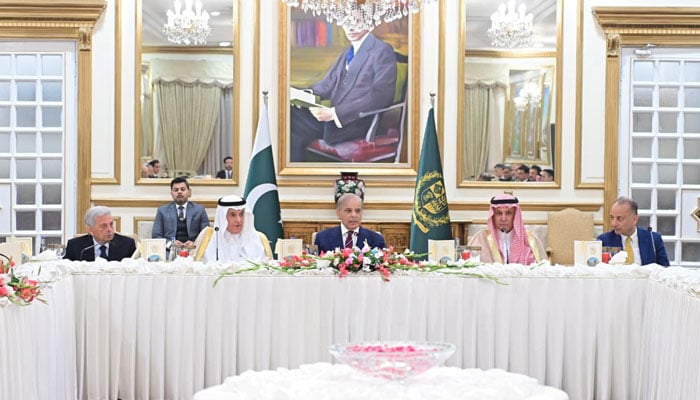
The prime minister made the remarks on Friday during a meeting with Saudi Arabia’s Minister of Environment, Water and Agriculture, Engineer Abdulrahman bin Abdulmohsen Al-Fadley, who called on him at the Prime Minister’s House in Islamabad.

The Makkah agreement was signed on Aug 7 by Saudi Crown Prince and Prime Minister Mohammed bin Salman, Turkish President Recep Tayyip Erdogan and Prime Minister Shehbaz Sharif in Makkah. The agreement provides a framework for stronger collective defence cooperation and states that an armed attack against any one of the three countries will be regarded as an attack against all.

Sharif said the agreement had further strengthened the strategic relationship among Pakistan, Saudi Arabia and Türkiye while conveying a message of unity and peace across the region.

The prime minister also stressed that Pakistan and Saudi Arabia should now build on their strategic partnership by expanding economic and agricultural cooperation.

He said stronger trade and investment ties could help transform the longstanding relationship between the two countries into a broader and more mutually beneficial economic partnership.

Focus on agriculture and food security

Agriculture emerged as a key area of discussion during the meeting, with both sides reviewing ways to increase cooperation in agricultural productivity, technology, research and development, and efficient water management.

Sharif expressed satisfaction with the ongoing cooperation over Pakistani agricultural exports to Saudi Arabia. He said Islamabad was keen to expand the range and volume of agricultural products supplied to the Kingdom.

Pakistan has increasingly sought to strengthen its economic relationship with Saudi Arabia beyond traditional financial and energy cooperation, with agriculture and food security offering significant opportunities for both sides.

The prime minister announced that a delegation of Pakistani agricultural experts would soon travel to Riyadh to continue discussions and explore practical areas of cooperation.

The delegation is expected to focus on improving agricultural productivity through modern technology, research and more efficient use of water resources.

The Saudi minister, meanwhile, reaffirmed Riyadh’s commitment to expanding cooperation with Pakistan in agriculture, water management and food security, according to the Prime Minister’s Office.

A broader strategic partnership

The meeting reflects Islamabad’s effort to translate its close political and strategic ties with Riyadh into greater commercial and economic engagement.

Saudi Arabia has historically remained one of Pakistan’s most important partners, providing financial support and assistance during periods of economic pressure. In recent years, however, both countries have increasingly emphasised investment, trade and private-sector partnerships.

The latest discussions also come shortly after the signing of the Makkah Joint Defence Agreement, which marked a new phase in security cooperation among Pakistan, Saudi Arabia and Türkiye.

Pakistan’s Foreign Office has described the agreement as defensive in nature, saying it is intended to strengthen collective deterrence and promote regional peace and stability rather than target any particular country.

For Islamabad, the challenge now will be to convert the political momentum generated by the Makkah pact into tangible economic gains.

The planned visit by Pakistani agricultural experts to Riyadh could provide an early test of that approach, particularly as both countries seek greater cooperation in food security, water management, agricultural technology and exports.

The meeting therefore carried significance beyond diplomatic messaging, highlighting Pakistan and Saudi Arabia’s shared interest in developing a relationship that combines strategic cooperation with stronger economic ties.

As regional security concerns continue to shape diplomacy in the Middle East and beyond, Islamabad appears keen to present the Makkah pact not simply as a defence arrangement, but as part of a wider push for stability, cooperation and closer partnerships among the three countries.

Similar Posts

  • | | |

    Mrunal Thakur warns of legal action over deepfake …

    Bollywood actress Mrunal Thakur has strongly condemned the misuse of artificial intelligence to create fake videos and images using her identity. Expressing serious concern over the growing circulation of AI-generated deep fake content on social media, the actress warned that she will pursue legal action against anyone involved in creating or sharing such material. According to Indian media reports, several deepfake videos and manipulated images featuring Mrunal Thakur have recently appeared across social media platforms. The actress described the unauthorized use of her face and identity through AI technology as unacceptable and called for an immediate end to the practice. Taking to her Instagram Stories, Mrunal Thakur issued a clear warning to individuals responsible for generating or distributing fake AI content using her name or likeness. She urged them to stop immediately, stating that continued misuse of her identity would leave her with no choice but to take legal action against those involved. Deepfake technology, powered by artificial intelligence, allows users to create highly realistic but fabricated videos, images, and audio recordings. While the technology has legitimate applications in entertainment and education, it has increasingly been misused to spread misinformation, damage reputations, and violate personal privacy. Mrunal Thakur’s statement has once again highlighted the growing concerns surrounding the ethical and legal challenges posed by deepfake technology. Experts warn that AI-generated fake content can seriously affect an individual’s reputation, personal life, and professional career. In many cases, victims may also face emotional distress and legal complications as a result of manipulated media circulating online. The issue has become increasingly significant in the entertainment industry, where celebrities are frequent targets of AI-generated fake content. Actors, musicians, and public figures across the world have raised concerns about the unauthorized use of their identities and have called for stronger legal protections against digital impersonation. Governments and technology companies are also working to address the misuse of artificial intelligence by introducing stricter regulations, improving content detection systems, and developing tools to identify manipulated media. However, experts believe that public awareness and responsible use of AI remain equally important in tackling the problem. Mrunal Thakur’s strong response reflects the growing determination among celebrities to protect their privacy and digital identity. Her warning serves as a reminder that while artificial intelligence offers remarkable technological advancements, its misuse can have serious legal, ethical, and social consequences. As deep fake technology continues to evolve, stronger safeguards and greater accountability will be essential to prevent its abuse.

  • | | |

    Pakistan targets $1.5bn hybrid rice market in Chin…

    Pakistan has a major opportunity to increase its hybrid rice exports to China and could potentially secure exports worth up to $1.5 billion, according to industry experts. The opportunity has emerged as China looks for alternative sources of non-Basmati rice amid a decline in rice trade with India. Pakistani exporters believe the changing market conditions could allow the country to expand its presence in China. Shahzad Ali Malik, founding chairman of the Rice Exporters Association of Pakistan (REAP) and CEO of Guard Agricultural Research and Services, said Pakistan should move quickly to take advantage of the situation. He said Pakistan had a competitive edge because local farmers already grow Chinese hybrid rice varieties. With a coordinated strategy between the government and private sector, Pakistan could significantly increase its exports to the Chinese market. China is expected to remain one of the world’s largest rice importers. Its rice import demand for 2025-26 has been estimated at around 3.1 million tonnes. India had previously been an important supplier of non-Basmati rice to China. However, changes in Chinese import requirements and non-tariff restrictions have affected Indian rice shipments. This has created an opening for other suppliers. Pakistan is considered well placed to benefit because it already produces both Basmati and non-Basmati rice. Pakistan also has surplus stocks of several non-Basmati varieties. These include Chinese hybrid rice and IRRI varieties that are used in China for food processing and strategic food reserves. The hybrid rice segment offers particular potential. Pakistan uses hybrid seed parent lines imported from China. This could make it easier for Pakistani producers and Chinese buyers to maintain compatibility in varieties and quality standards. Pakistan also has an advantage in the non-GMO segment. Industry representatives believe this could strengthen the country’s position as Chinese buyers become more selective about imported rice. The Pakistan-China Free Trade Agreement could further support exports. Existing trade links and CPEC-related logistics may also help Pakistani exporters reduce transportation time and improve their competitiveness. The changing market could benefit both exporters and farmers. Lower competition from India may increase demand for Pakistani rice and could improve prices. Chinese buyers may also seek long-term contracts and assured supplies. Such arrangements could provide farmers with greater market certainty and encourage investment in rice production. However, industry experts say Pakistan must improve its export systems to take full advantage of the opportunity. The government and private sector will need to work together on contract farming, seed quality, certification and food safety requirements. Chinese authorities have strict standards for food safety and pesticide residues. Pakistani exporters will therefore need to ensure that rice consistently meets the required specifications. Seed companies can also play an important role. Improved hybrid seeds could increase yields per acre while helping farmers produce rice of consistent quality. Logistics will be another key factor. Industry representatives believe Pakistan’s ports and CPEC-linked infrastructure could help shorten delivery times and reduce costs. Rice is one of Pakistan’s most important export commodities and ranks second after textiles. An increase in rice exports could generate additional foreign exchange and provide greater economic opportunities for farmers, particularly in Punjab and Sindh. Malik estimated that Pakistan could increase its overall rice exports to around $5 billion within three to five years if the necessary planning, investment and policy support are provided. He also proposed establishing a Pakistan-China Rice Export Task Force. The proposed body could include rice exporters, seed companies and relevant government authorities. The task force could develop a long-term export strategy, coordinate with Chinese buyers and address regulatory and logistical challenges.

  • | | |

    Kuwait welcomes Pakistan-Saudi-Türkiye Makkah def…

    ISLAMABAD: Kuwait has congratulated Pakistan on the signing of the Makkah Joint Defence Agreement with Saudi Arabia and Türkiye, signalling growing regional interest in the new security arrangement. Pakistan’s Deputy Prime Minister and Foreign Minister Ishaq Dar received a telephone call from Kuwaiti Foreign Minister Sheikh Jarrah Jaber Al-Ahmad Al-Sabah late on Sunday, during which the two officials discussed the agreement as well as the wider regional situation. According to Pakistan’s Foreign Office, the Kuwaiti foreign minister felicitated Dar on the agreement signed in Makkah on Friday. The two ministers also exchanged views on developments in the region, including the situation in occupied East Jerusalem. Their conversation also covered bilateral relations and ways to expand cooperation between Pakistan and Kuwait, particularly in investment and other key sectors. The officials also discussed follow-up to Sheikh Jarrah’s recent visit to Pakistan. “The two sides agreed to remain closely engaged,” the Foreign Office said. The development comes as Pakistan continues to explain the objectives and scope of the landmark defence pact, which brings Pakistan, Saudi Arabia and Türkiye closer together on security matters. Dar has stressed that the agreement is defensive in nature and is not directed against any particular country. Under the pact, an armed attack against any one of the three signatories would be treated as an attack against all three. The foreign minister said the arrangement was designed to strengthen collective deterrence while supporting regional peace, stability and security. He also maintained that the agreement was consistent with the right of individual and collective self-defence recognised under Article 51 of the United Nations Charter. Importantly, Dar clarified that the Makkah agreement does not replace or cancel existing bilateral or multilateral defence arrangements involving the three countries. The pact could also have a broader regional dimension. Dar said the agreement remains open to other countries in the region that are willing to respect its principles and resolve differences through dialogue, cooperation and peaceful means. His comments came amid reports that Egypt could potentially join the arrangement. Earlier, Dar also spoke with Canadian Foreign Minister Anita Anand, with the two officials discussing regional developments and the newly signed agreement. Pakistan has presented the Makkah accord as part of its broader foreign-policy objective of promoting regional stability and peaceful conflict resolution. With Kuwait now extending its congratulations, attention is increasingly turning to how the new defence framework could influence cooperation and security across the wider region.

  • | |

    78 policemen suspended after Lahore station rape a…

    Punjab Police suspended 78 officials of Lahore’s Ghaziabad Police Station after an assistant sub-inspector (ASI) was arrested for allegedly sexually assaulting a mentally challenged young woman inside the police station. The action followed the registration of a First Information Report (FIR) against the accused under rape provisions of the Pakistan Penal Code and relevant sections of the Police Order 2002. Senior police authorities immediately took notice of the incident and ordered the arrest of the suspect. According to the complaint filed by the victim’s father, his 19 to 20-year-old daughter, who has a mental disability, left home on Sunday afternoon and did not return for some time. During the search, a local resident allegedly informed the family that a policeman in plain clothes had taken the girl away. The complainant said he rushed to the Ghaziabad Police Station, where he was told that his daughter had already been sent home. After returning home, he found her in distress. He alleged that she told him a police official had taken her to the station and sexually assaulted her. Following the complaint, police registered a case and arrested the accused ASI. Authorities also launched both criminal and departmental investigations into the matter. As part of disciplinary action, 78 police personnel, including the station house officer (SHO), sub-inspectors, assistant sub-inspectors, front desk officials and other staff members, were suspended over alleged negligence, poor supervision and failure to maintain discipline at the police station. All suspended officials have been directed to report to Police Lines until further orders. Police officials said maintaining discipline and ensuring a safe environment at police stations is the responsibility of every officer. They warned that negligence or irresponsible conduct would not be tolerated and pledged strict accountability at the police station level. A new SHO has been appointed to take charge of Ghaziabad Police Station while the investigation continues. Punjab Women Protection Authority Chairperson Hina Parvez Butt strongly condemned the incident, describing it as deeply disturbing and calling for strict legal action against those responsible. Police said further legal and departmental proceedings will be carried out after the investigation is completed.

  • | |

    Hajj applications go digital as Pakistan lets pilg…

    ISLAMABAD: Federal Minister for Religious Affairs Sardar Muhammad Yousaf has announced that Pakistan’s Hajj application process has been fully digitized, allowing prospective pilgrims to apply from the comfort of their homes without visiting offices or standing in long queues. Speaking at a press conference in Islamabad, the minister said the digital system had been introduced to make the Hajj registration process easier and more convenient for pilgrims. Around 400,000 registered applicants will be able to submit their applications online. Under the new system, applicants will have several options for paying their Hajj expenses. Payments can be made through credit cards or PSID, while those wishing to pay in cash can print a challan and deposit the required amount. Yousaf said 107,526 pilgrims are eligible to perform Hajj under the government scheme. The collection of the first installment of Hajj expenses will begin on August 17, while the second installment is scheduled to be collected in October. Applications will be processed on a first-come, first-served basis, with registration closing once the government’s allocated quota is reached. The minister also said pilgrims opting for the private Hajj scheme would be able to select a private operator through the Pak Hajj application. However, he cautioned pilgrims against making direct payments to private Hajj operators.

  • |

    Come to streets, we’ll serve you water’: Nasir

    Sindh Local Government Minister Syed Nasir Hussain Shah has responded strongly to recent statements by MQM-P leaders Khalid Maqbool Siddiqui and Mustafa Kamal. The remarks have sparked a fresh political exchange between the Sindh government and the MQM-P leadership. Shah reacted to the MQM-P leaders’ calls for political mobilisation and protests. He said they were free to take to the streets if they wanted to. In a sarcastic remark, he said the weather was hot and that “water would be provided” to them. The minister also questioned MQM-P’s demand for an account of the past 18 years. He asked the party leaders to explain how much accountability they had themselves provided during their political tenure. Shah also rejected suggestions about changing the existing structure of Sindh. He said the constitutional and geographical status of the province could not be changed according to the wishes of an individual political leader. He also criticised Mustafa Kamal’s remarks about the creation of new provinces. Shah said the country was already facing difficulties in managing its existing four provinces. He questioned why there was now a demand for additional provinces. The minister accused the MQM-P of turning towards public issues as elections approach. He said the party had previously enjoyed the benefits of political power but was now raising issues concerning the people. Shah’s comments came after Khalid Maqbool Siddiqui accused the Pakistan Peoples Party of creating an ethnic and linguistic divide in Sindh. Siddiqui had also demanded an accurate population count and stronger local governments. MQM-P leader Mustafa Kamal had separately said that the party would take to the streets to demand its rights. The statements have increased political tension between the MQM-P and the Sindh government. Sindh Culture Minister Zulfiqar Shah also criticised the MQM-P leadership. He said Khalid Maqbool Siddiqui was struggling to protect his position as party chairman. Zulfiqar Shah described the differences between Khalid Maqbool and Mustafa Kamal as the result of what he called divisive politics. He said the MQM-P leadership should first resolve its own differences. He also questioned the competing positions within the party. According to Zulfiqar Shah, the divided leadership should first decide whose statements should be taken seriously. The latest exchange comes amid renewed political debate over Sindh’s governance, representation and local government system. MQM-P has been demanding greater authority for local governments and an accurate population census. The party has also raised concerns about political representation and resource distribution in Sindh. The Sindh government, however, has rejected calls that could affect the province’s existing constitutional and geographical structure.

Leave a Reply

Your email address will not be published. Required fields are marked *