Welcome to the ‘United States of Makati,’ where family income is PH’s highest – and most unequal
MANILA, Philippines – Have you been to the United States of Makati lately?
It’s where office workers have taken to calling themselves OFWs – whether that means “Onsite Filipino Workers” or, depending on the day, “Overworked Filipino Workers” – earning their keep in “Makati dollars.”
Even the Department of Tourism (DOT) joined in, pitching Makati as a “visa-free” destination for museums, malls, weekend markets, food trips, and runs around the Commercial Business District (CBD). One Ayala, a modern commercial-transport hub at the corner of EDSA and Ayala Avenue, even issued a weather update from the new republic.
But all jokes aside, Makati really does stand apart by the numbers. In the Philippine Statistics Authority’s (PSA) preliminary 2025 Family Income and Expenditure Survey, Makati posted an average annual family income of P796,990, or around P66,400 a month – that’s the highest among highly urbanized cities and higher than any province or region too.
Rappler mapped out just how high Makati’s average family income is compared to other cities in the Metro. The next map, meanwhile, reveals that while it’s the country’s richest city, it’s also the most unequal.
The nationwide average was P411,350, just over half Makati’s figure.
Makatizens also spent more. Average annual family expenditure reached P606,700, likewise the highest among Highly Urbanized Cities (HUCs).
Check out Rappler’s in-depth data visualization of which cities and provinces had the highest average family income in this article below.
All roads lead to Ayala Avenue
Even beyond household income, Makati is an economic anomaly.
The city generated P1.2 trillion in gross domestic product (GDP) in 2024. Its GDP per capita stood at a staggering P3.89 million, the highest among all provinces and HUCs and nearly 20 times the national P197,325. It’s also far ahead of second place Pasay.
However, note that Makati’s GDP per capita is partly inflated by the sheer amount of economic activity generated by offices and businesses whose workers may actually live elsewhere. Their output is counted in the city’s GDP, but they aren’t counted in Makati’s resident population. No wonder the CBD can sometimes feel less like a neighborhood and more like the headquarters of Philippine capitalism.
You see that in the office market statistics too. Even as Philippine office leasing slowed in the first half of 2026, Makati posted at least 106,000 square meters (sqm) worth of transactions – the most of any location tracked by Leechiu Property Consultants and ahead of Bonifacio Global City’s (BGC) 61,000 sqm.
I can attest to that pull personally. When I worked as an analyst for a consultancy serving foreign-based funds, we were based in Makati even though, in theory, we could have worked almost anywhere. Makati simply felt like the obvious place to be.
It helps that Makati is one of the few places where getting lunch a couple blocks away is a welcome walk rather than an obstacle course of broken pavements and missing sidewalks.
Take, for example, the 1.1-kilometer elevated Dela Rosa Walkway, stretching from Makati Medical Center to Greenbelt. From there, pedestrians can continue through a series of malls toward MRT3 Ayala Station – a godsend for commuters, though they might still begrudge a certain development for breaking up that usual path.

Makati as a place to live
That walkability carries over into the rest of the CBD. Greenbelt and Glorietta sit within easy reach of offices, hotels, restaurants, and residential towers, while Salcedo and Legazpi Villages mix condos and cafés with small pockets of greenery.
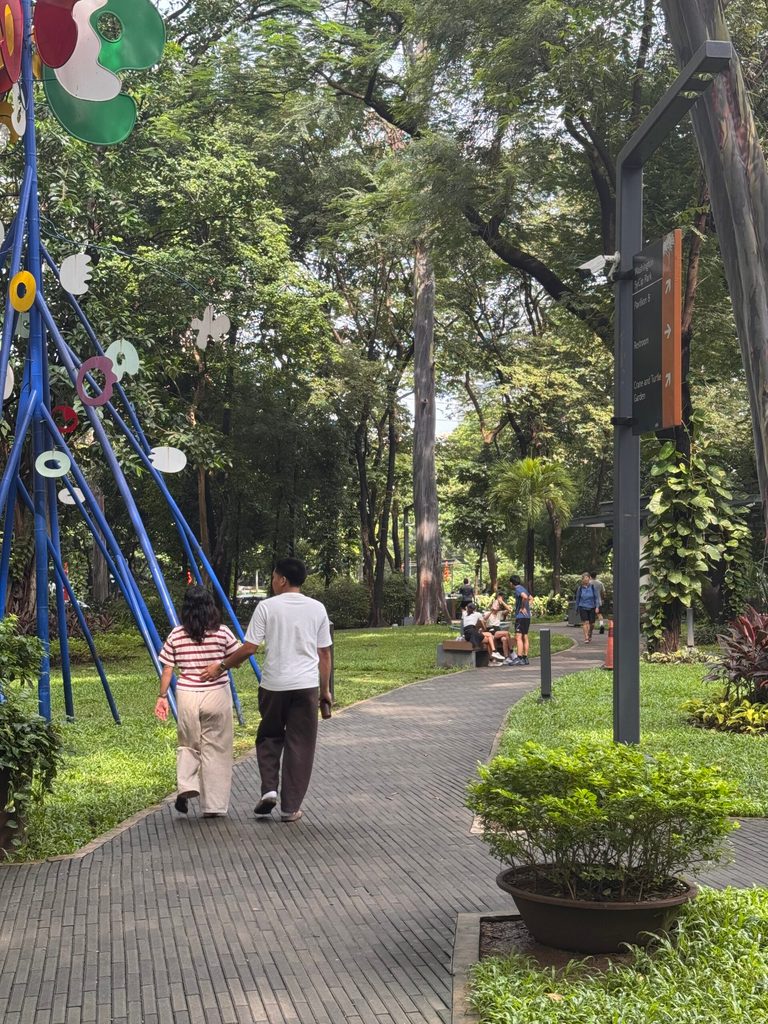
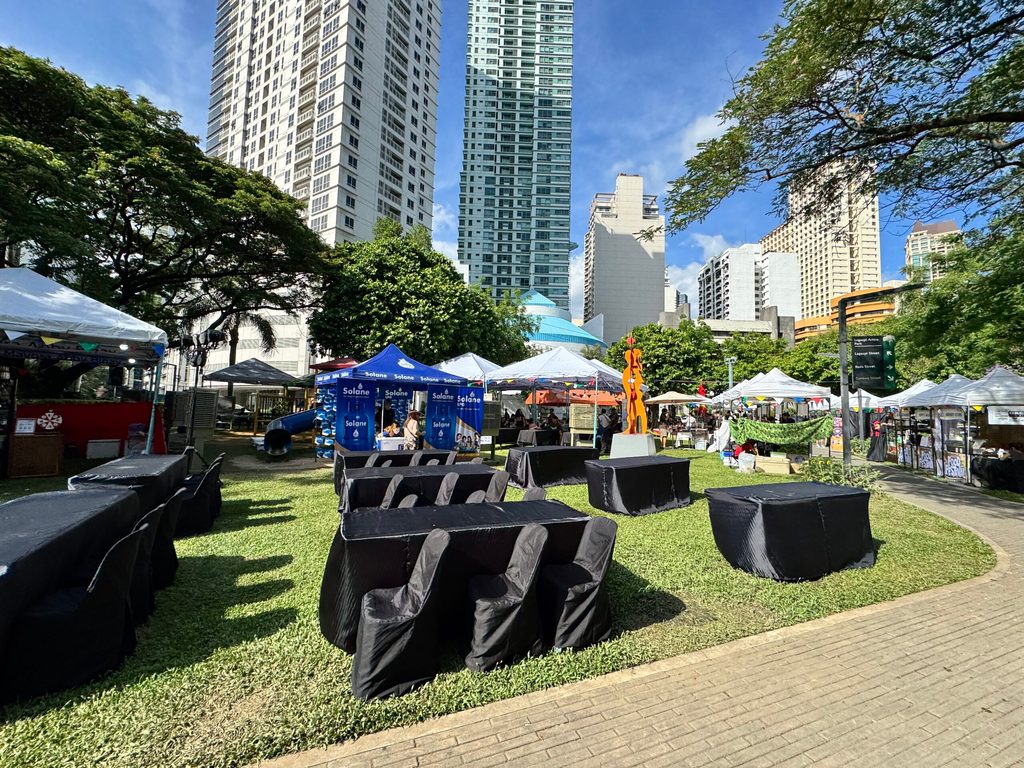
If you’re an office worker stuck inside a cubicle for eight hours a day, those small pockets are enough to keep you sane. If you live in Makati, the parks become fixtures for community events too on weekends. Jaime Velasquez Park becomes the Salcedo Saturday Market; Legazpi has its Sunday market and two nearby parks. Ayala Triangle Gardens provides another patch of green in the middle of the office towers.
Ayala Avenue itself turns into exercise space on Sunday mornings, when a 2.3-kilometer stretch goes car-free for runners, cyclists, dog walkers, and families. The program started in 2023 and has since become a crowd favorite, drawing in visitors from all across the metro. Similar car-free initiatives have since spread around other cities, including Tomas Morato in Quezon City.
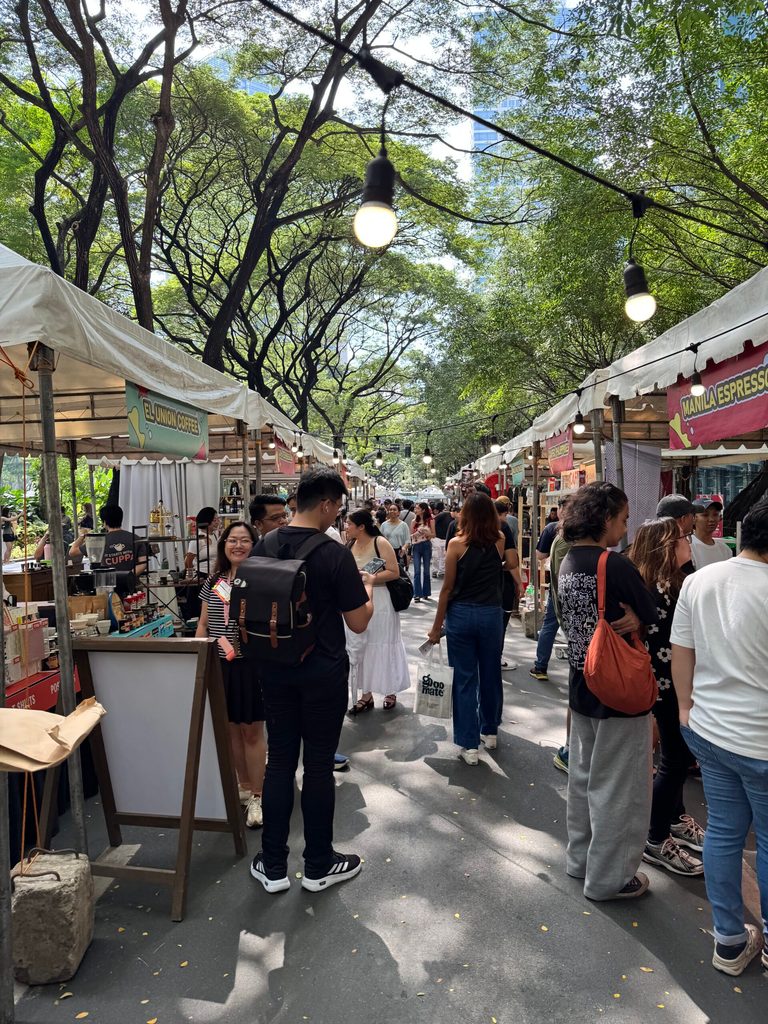
And if you’re looking for a night of lively drinking, then Poblacion’s only a few minutes’ walk away too.
It’s no wonder then that residential real estate prices are also sky-high. Two of Metro Manila’s most exclusive enclaves, Dasmariñas Village and Forbes Park, are technically Makatizen territory. In Leechiu’s Q4 2025 prime village data, Dasmariñas Village reached about P711,000 per sqm, up 7% year on year, while Forbes Park was at P648,000 per sqm, up 1%.
For comparison, other prime villages like Green Meadows was at P287,000 and Ayala Alabang at P233,000.
A tale of two cities
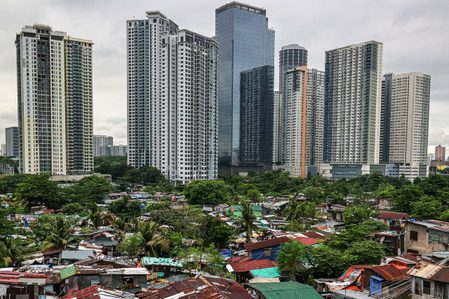
But don’t let the jokes about Makati obscure the painful reality that while there is fabulous wealth to be found in the city, there’s also intense inequality in how it’s distributed.
The average family income in Makati, P796,990, is just that – an average. It doesn’t describe every Makati family, far from it.
In fact, the same survey by the PSA shows Makati had the highest inequality among all major cities in the Philippines. It had a Gini coefficient of 0.4569 in 2025, considerably higher than the national Gini of 0.391 and National Capital Region’s (NCR) 0.3489. The closer that inequality measure gets to 1, the more unequal the distribution of income.
The detailed PSA tables show just how wide that gap can be.
Families in Makati’s bottom 10% had an average annual family income of P338,230, or roughly P28,200 a month. That’s below the P411,350 national family average and almost the same as the P337,970 average for families in Surigao del Norte.
At the other end, Makati families in the highest income decile averaged P2.66 million a year, or about P221,000 a month. That’s nearly eight times the family income of those in Makati’s lowest decile.
Even the amount left between income and spending looks radically different. The lowest income decile earned an average P338,230 and spent P314,930, a difference of only about P23,300 for the entire year.
For the highest decile, average income of P2.66 million compared with expenditure of P1.77 million, leaving a gap of nearly P889,000. Those differences shouldn’t automatically be treated as savings, but they do illustrate how much more financial room higher-income households have.
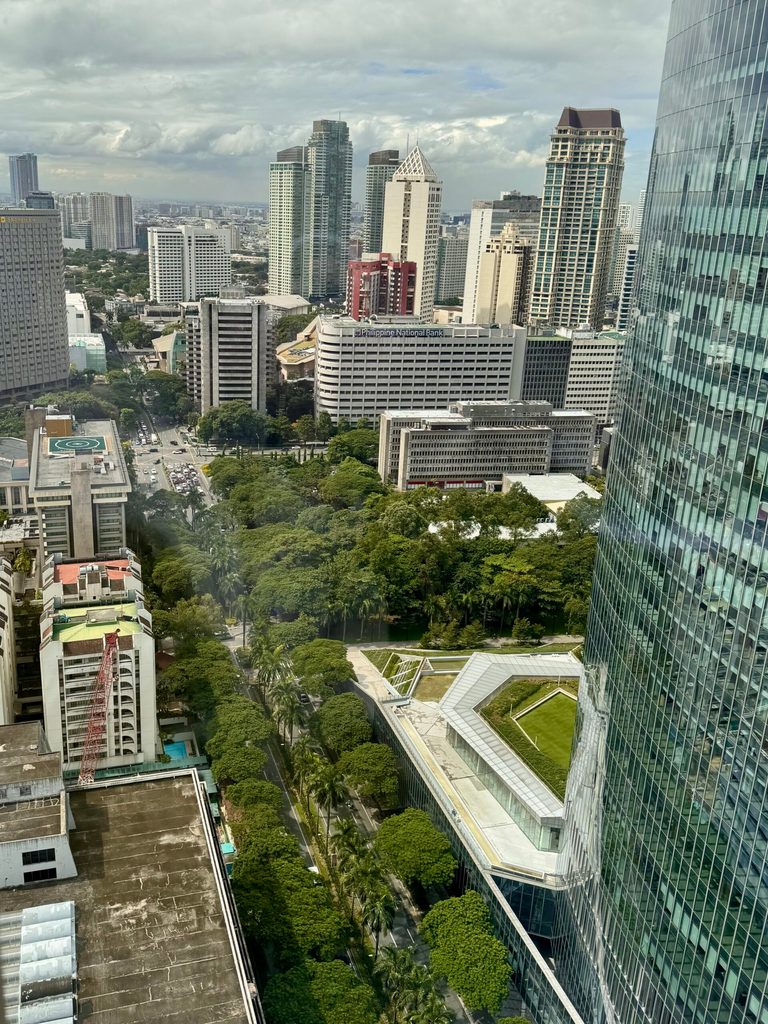
And Makati, that glittering little city of ambition, is expensive. A family earning P338,000 there and another earning roughly the same amount elsewhere may be living very different lives once housing, food, transport, and other costs enter the picture. – Rappler.com