welcome united states
| | | | |

Welcome to the ‘United States of Makati,’ where family income is PH’s highest – and most unequal

MANILA, Philippines – Have you been to the United States of Makati lately?

It’s where office workers have taken to calling themselves OFWs – whether that means “Onsite Filipino Workers” or, depending on the day, “Overworked Filipino Workers” – earning their keep in “Makati dollars.”

Even the Department of Tourism (DOT) joined in, pitching Makati as a “visa-free” destination for museums, malls, weekend markets, food trips, and runs around the Commercial Business District (CBD). One Ayala, a modern commercial-transport hub at the corner of EDSA and Ayala Avenue, even issued a weather update from the new republic.

But all jokes aside, Makati really does stand apart by the numbers. In the Philippine Statistics Authority’s (PSA) preliminary 2025 Family Income and Expenditure Survey, Makati posted an average annual family income of P796,990, or around P66,400 a month – that’s the highest among highly urbanized cities and higher than any province or region too. 

Rappler mapped out just how high Makati’s average family income is compared to other cities in the Metro. The next map, meanwhile, reveals that while it’s the country’s richest city, it’s also the most unequal.

The nationwide average was P411,350, just over half Makati’s figure.

Makatizens also spent more. Average annual family expenditure reached P606,700, likewise the highest among Highly Urbanized Cities (HUCs).

Check out Rappler’s in-depth data visualization of which cities and provinces had the highest average family income in this article below.
Must Read

MAP: Where Filipino families earn the most and least


MAP: Where Filipino families earn the most and least

All roads lead to Ayala Avenue

Even beyond household income, Makati is an economic anomaly.

The city generated P1.2 trillion in gross domestic product (GDP) in 2024. Its GDP per capita stood at a staggering P3.89 million, the highest among all provinces and HUCs and nearly 20 times the national P197,325. It’s also far ahead of second place Pasay.

However, note that Makati’s GDP per capita is partly inflated by the sheer amount of economic activity generated by offices and businesses whose workers may actually live elsewhere. Their output is counted in the city’s GDP, but they aren’t counted in Makati’s resident population. No wonder the CBD can sometimes feel less like a neighborhood and more like the headquarters of Philippine capitalism.

You see that in the office market statistics too. Even as Philippine office leasing slowed in the first half of 2026,  Makati posted at least 106,000 square meters (sqm) worth of transactions – the most of any location tracked by Leechiu Property Consultants and ahead of Bonifacio Global City’s (BGC) 61,000 sqm. 
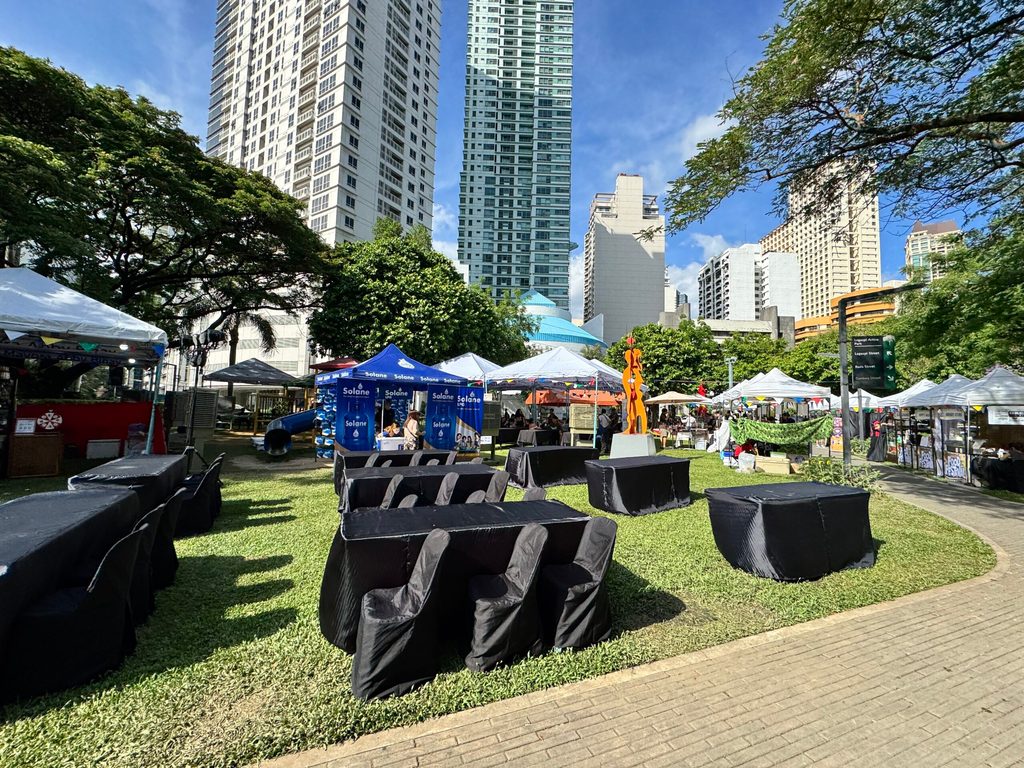
Legazpi Village Park, Makati City
SUNNY. A quiet afternoon at the Legazpi Active Park’s Food Festival 2025. Lance Spencer Yu/Rappler.

I can attest to that pull personally. When I worked as an analyst for a consultancy serving foreign-based funds, we were based in Makati even though, in theory, we could have worked almost anywhere. Makati simply felt like the obvious place to be.

It helps that Makati is one of the few places where getting lunch a couple blocks away is a welcome walk rather than an obstacle course of broken pavements and missing sidewalks.

Take, for example, the 1.1-kilometer elevated Dela Rosa Walkway, stretching from Makati Medical Center to Greenbelt. From there, pedestrians can continue through a series of malls toward MRT3 Ayala Station – a godsend for commuters, though they might still begrudge a certain development for breaking up that usual path.

Must Watch

The Philippines is now upper-middle income. Really?


The Philippines is now upper-middle income. Really?

Makati as a place to live

That walkability carries over into the rest of the CBD. Greenbelt and Glorietta sit within easy reach of offices, hotels, restaurants, and residential towers, while Salcedo and Legazpi Villages mix condos and cafés with small pockets of greenery.
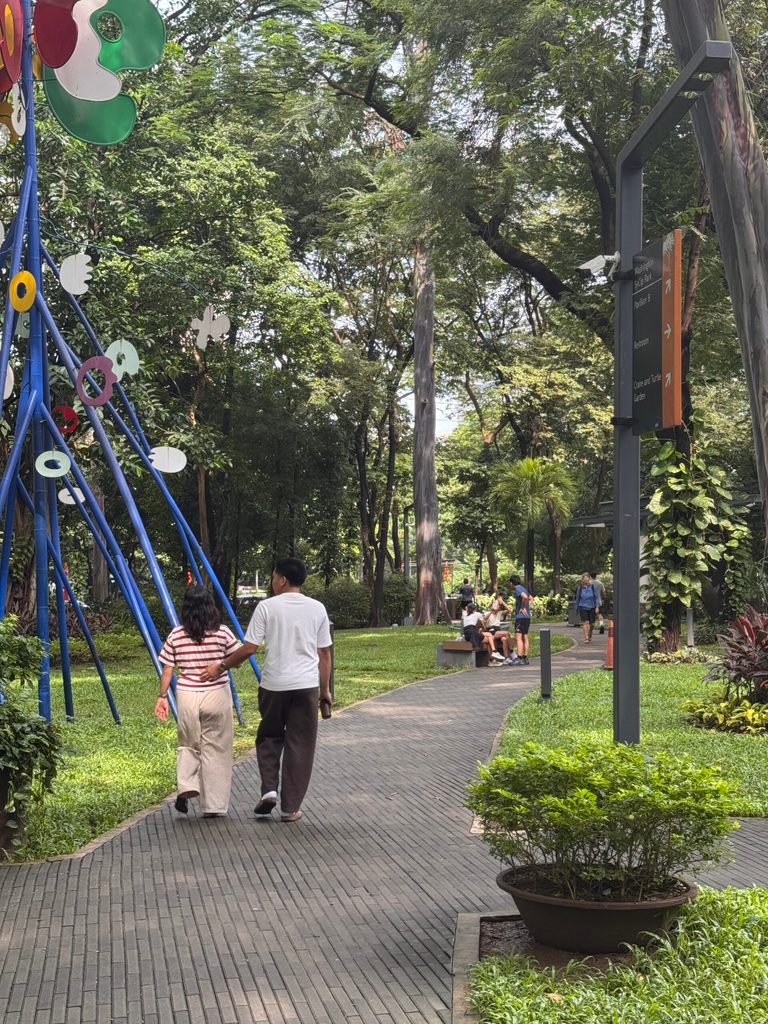
Washington Sycip Park, Legazpi Village, Makati City
DRIZZLY. People stroll beneath the rain-dampened trees of Washington Sycip Park. Lance Spencer Yu/Rappler.

If you’re an office worker stuck inside a cubicle for eight hours a day, those small pockets are enough to keep you sane. If you live in Makati, the parks become fixtures for community events too on weekends. Jaime Velasquez Park becomes the Salcedo Saturday Market; Legazpi has its Sunday market and two nearby parks. Ayala Triangle Gardens provides another patch of green in the middle of the office towers.

Ayala Avenue itself turns into exercise space on Sunday mornings, when a 2.3-kilometer stretch goes car-free for runners, cyclists, dog walkers, and families. The program started in 2023 and has since become a crowd favorite, drawing in visitors from all across the metro. Similar car-free initiatives have since spread around other cities, including Tomas Morato in Quezon City.
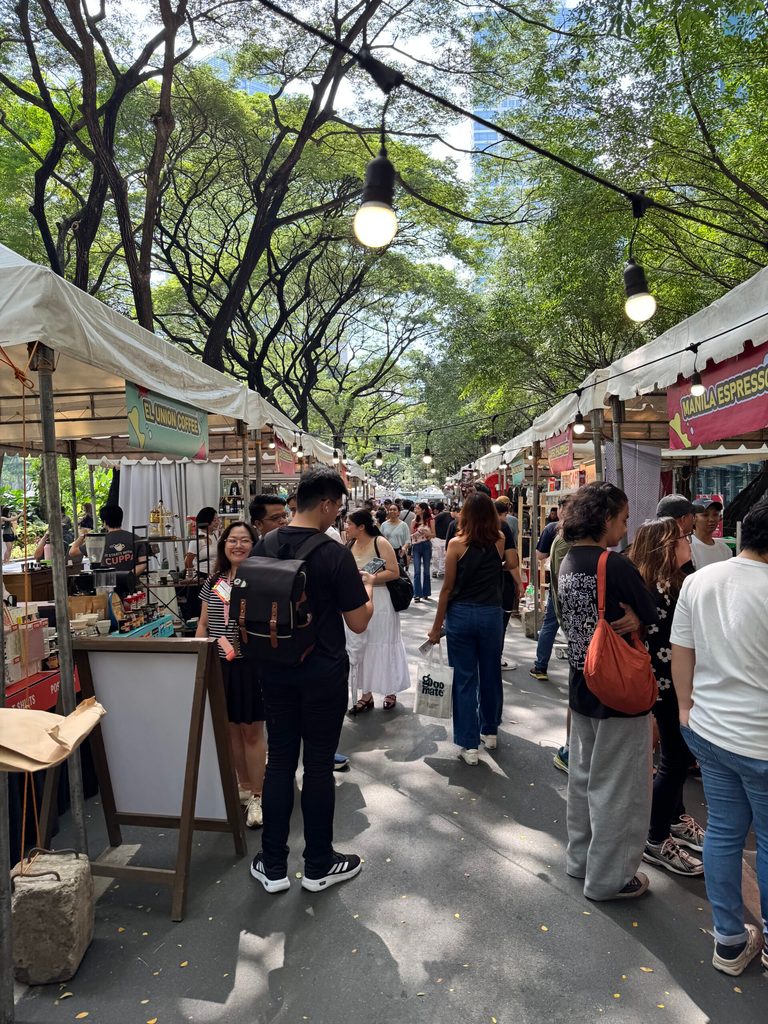
Legazpi Village park
KAPE! Coffee lovers hunt for their next caffeine fix at Kapecon 2025 along Paseo de Roxas. Lance Spencer Yu/Rappler.

And if you’re looking for a night of lively drinking, then Poblacion’s only a few minutes’ walk away too.

It’s no wonder then that residential real estate prices are also sky-high. Two of Metro Manila’s most exclusive enclaves, Dasmariñas Village and Forbes Park, are technically Makatizen territory. In Leechiu’s Q4 2025 prime village data, Dasmariñas Village reached about P711,000 per sqm, up 7% year on year, while Forbes Park was at P648,000 per sqm, up 1%.

For comparison, other prime villages like Green Meadows was at P287,000 and Ayala Alabang at P233,000.

A tale of two cities

But don’t let the jokes about Makati obscure the painful reality that while there is fabulous wealth to be found in the city, there’s also intense inequality in how it’s distributed.

The average family income in Makati, P796,990, is just that – an average. It doesn’t describe every Makati family, far from it.

In fact, the same survey by the PSA shows Makati had the highest inequality among all major cities in the Philippines. It had a Gini coefficient of 0.4569 in 2025, considerably higher than the national Gini of 0.391 and National Capital Region’s (NCR) 0.3489. The closer that inequality measure gets to 1, the more unequal the distribution of income.

The detailed PSA tables show just how wide that gap can be.

Families in Makati’s bottom 10% had an average annual family income of P338,230, or roughly P28,200 a month. That’s below the P411,350 national family average and almost the same as the P337,970 average for families in Surigao del Norte.

At the other end, Makati families in the highest income decile averaged P2.66 million a year, or about P221,000 a month. That’s nearly eight times the family income of those in Makati’s lowest decile.

Even the amount left between income and spending looks radically different. The lowest income decile earned an average P338,230 and spent P314,930, a difference of only about P23,300 for the entire year. 

For the highest decile, average income of P2.66 million compared with expenditure of P1.77 million, leaving a gap of nearly P889,000. Those differences shouldn’t automatically be treated as savings, but they do illustrate how much more financial room higher-income households have.
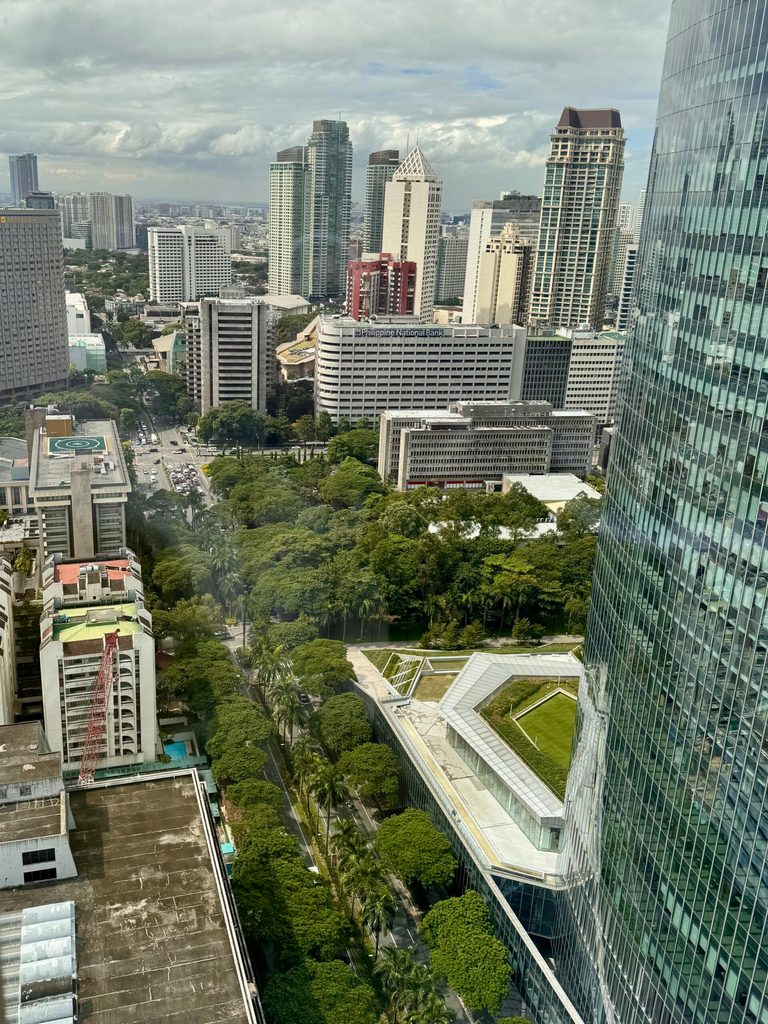
Makati Commercial Business District, Zuellig Building
HIGH ABOVE. Seen from the Zuellig Building, Makati’s skyline stretches across the CBD, where immense wealth sits alongside one of the country’s starkest income inequality. Lance Spencer Yu/Rappler.

And Makati, that glittering little city of ambition, is expensive. A family earning P338,000 there and another earning roughly the same amount elsewhere may be living very different lives once housing, food, transport, and other costs enter the picture. – Rappler.com
Must Read

Filipino family income grew 16.5% since 2023. So why doesn’t it feel like it?


Filipino family income grew 16.5% since 2023. So why doesn’t it feel like it?

Similar Posts

  • |

    CPEC 2.0: Pakistan, China shift focus to B2B investment

    ISLAMABAD: Pakistan and China are moving toward a more business-driven model of cooperation under the second phase of the China-Pakistan Economic Corridor (CPEC), with greater emphasis on Business-to-Business (B2B) partnerships, industrial development, exports and productivity rather than large-scale Government-to-Government (G2G) financing. The development emerged during a high-level Chinese delegation’s visit to the CPEC Secretariat, where discussions focused on strengthening industrial and commercial ties between the two countries. According to an official statement issued by the Ministry of Planning on Tuesday, the Chinese delegation was headed by Sun Dongsheng, Senior Advisor, Economic Affairs Press. The delegation met Federal Minister for Planning, Development and Special Initiatives Ahsan Iqbal, along with senior policymakers and development experts. The talks centred on ways to advance B2B and industrial cooperation under CPEC 2.0, reflecting a broader shift in the corridor’s priorities from infrastructure-led development toward industrialisation, exports, technology and private-sector participation. From infrastructure to industrialisation During the meeting, Ahsan Iqbal briefed the Chinese delegation on the government’s Uraan Pakistan economic transformation programme and outlined Islamabad’s priorities for the next phase of CPEC. The minister proposed closer cooperation with Chinese institutions, including counterparts of the National Centre of New Manufacturing, to benefit from China’s experience in advanced manufacturing, innovation, automation and robotics. He said Pakistan needed to strengthen its productive capacity and adopt modern technologies to remain competitive in the era of Industrial Revolution 4.0 and prepare for the emerging Industrial Revolution 5.0. Ahsan Iqbal identified Pakistan’s limited export base as one of the country’s major economic challenges. According to the minister, repeated attempts to accelerate economic growth have struggled to generate sustainable momentum because productive sectors have not been sufficiently integrated with export markets. He stressed that the government’s priority was therefore to turn agriculture, manufacturing and other productive sectors into stronger sources of exports and foreign exchange. Pakistan seeks greater access to Chinese market The minister also called for greater facilitation of Pakistani exports to China, highlighting the considerable gap between the two countries’ trade potential. He noted that China imports goods worth around $2.6 trillion annually, whereas Pakistan’s exports to the Chinese market remain close to $3 billion. Ahsan said Pakistan needed to increase its presence in the Chinese market by improving production standards, competitiveness and the ability of domestic businesses to meet international demand. He expressed the expectation that CPEC 2.0 could help Pakistan address what he described as its “export deficit”, just as the first phase of the corridor contributed to addressing the country’s energy shortfall. CPEC enters a new phase Under CPEC’s first phase, China committed substantial financing to infrastructure, energy and other development projects in Pakistan. Nearly $30 billion was invested in infrastructure and power-sector projects, including independent power producers. However, the focus is now increasingly shifting toward private-sector-led cooperation. Islamabad continues to pursue financing for selected road and motorway projects, but China has yet to demonstrate readiness to finance the long-delayed Main Line-1 (ML-1) railway upgrade, which had previously been regarded as one of CPEC’s flagship projects. The latest consultations indicate that CPEC 2.0 is expected to rely more heavily on commercial partnerships between Pakistani and Chinese companies. The government has already been encouraging enterprises from both countries to explore joint ventures and investment opportunities in sectors including manufacturing, agriculture and mining. Ahsan Iqbal said recent agreements between Pakistani and Chinese companies showed that B2B cooperation was beginning to gain momentum. He expressed confidence that stronger business-to-business engagement would support the modernisation of Pakistan’s industrial and agricultural sectors while creating opportunities for investment, employment and exports. China stresses productive capacity Sun Dongsheng reaffirmed the importance China attaches to its longstanding relationship with Pakistan and highlighted the achievements of CPEC’s first phase. He called for further cooperation in industrial and agricultural development, particularly in strengthening Pakistan’s productive capacity. The Chinese delegation also stressed the importance of involving small and medium-sized manufacturing enterprises in bilateral economic cooperation. Greater enterprise-to-enterprise engagement, according to the delegation, could help create commercially sustainable partnerships and expand opportunities for businesses in both countries. The discussions also focused on technology transfer, innovation, skills development and the creation of stronger industrial linkages. Five Corridors aligned with Uraan Pakistan Officials also discussed the strategic relationship between the Five Corridors of CPEC 2.0 and Pakistan’s 5Es framework under Uraan Pakistan. The government’s 5Es framework focuses on exports, e-Pakistan, environment and climate change, energy and infrastructure, and equity and empowerment. The participants stressed that alignment between the two initiatives needed to translate into concrete economic outcomes, including new enterprises, technology adoption, innovation, employment opportunities, skills development, increased exports and higher investment. The delegation was also briefed on the progress achieved during CPEC Phase I and Pakistan’s priorities for the second phase. The consultations suggest that the next stage of CPEC will increasingly be measured not only by the volume of infrastructure investment but also by its ability to improve Pakistan’s industrial competitiveness, expand exports, attract private investment and create sustainable employment.

  • | | |

    Pakistan moves to strengthen digital finance and e…

      Finance Minister Muhammad Aurangzeb has called for a more supportive regulatory framework to expand electronic transactions, improve digital access to finance and accelerate Pakistan’s broader digital transformation. The minister made these remarks during a meeting with Pakistan Digital Authority (PDA) Chairperson Dr Sohail Munir, where the two discussed digital finance, technology-driven economic activity and the development of Pakistan’s digital infrastructure. According to the Ministry of Finance, Aurangzeb stressed that existing regulations must evolve alongside technological advancements and new business models. The meeting focused on creating an environment that recognises electronic transactions and encourages greater use of digital systems in trade and financial activities. The participants also examined ways to improve access to finance by expanding digital platforms and making financial procedures more efficient. Aurangzeb particularly highlighted the need to simplify customer onboarding, strengthen data-sharing systems and improve the interoperability of financial information. Greater integration between banks and capital markets was also discussed, with the aim of making investment opportunities more accessible to ordinary citizens. The minister said streamlined digital account-opening procedures could encourage wider participation in the capital market. Better connections between banking and capital-market systems, he added, could increase investor participation and improve access to investment opportunities. The meeting also covered the importance of connecting government data systems. According to the ministry, better-integrated data could help policymakers improve planning, policy formulation and decision-making. The increased use of technology and artificial intelligence was identified as another opportunity to improve the efficiency of government and financial services. Digital infrastructure was another key area of discussion. Aurangzeb emphasised that new initiatives should be practical, scalable and consistent with Pakistan’s wider digital transformation goals. Digital assets and tokenisation were also discussed, particularly their possible applications in real estate and other investment sectors. Participants stressed that appropriate regulations and supporting mechanisms would be necessary for the responsible adoption of emerging technologies. Aurangzeb appreciated the work of the Pakistan Digital Authority and called for practical, high-impact initiatives that could improve efficiency, expand financial access and strengthen the country’s digital capabilities. He also emphasised continued coordination among relevant stakeholders to ensure steady progress in Pakistan’s digital economy. Pakistan has already witnessed significant growth in digital payments. According to the State Bank of Pakistan, retail payments through the banking system reached 3.7 billion transactions during January-March 2026, representing a 9% increase from the previous quarter. Digital channels accounted for 92% of total retail payment volumes, processing around 3.4 billion transactions worth Rs68.3 trillion. Mobile banking and digital wallet registrations exceeded 132 million by March 2026, rising 37% year-on-year. Nearly half of Pakistan’s 268 million bank accounts were connected to a mobile banking application or digital wallet. Meanwhile, Raast processed 742 million transactions worth Rs23.27 trillion during the quarter, reflecting growing public acceptance of instant digital payments. Mobile wallets such as Easypaisa and JazzCash have also expanded access to basic financial services, particularly for people previously underserved by traditional banking. Merchant adoption is growing as well. QR-enabled merchants more than tripled during FY25, rising from 516,000 in FY24 to more than 1.9 million by the end of 2025. Although digital adoption remains stronger in urban areas, the figures indicate that Pakistan’s digital financial ecosystem is expanding rapidly.

  • |

    The Education Dilemma

    By Tuba Khan Literacy is the key to a successful political, economic and social structure of a country. Nations that prioritize education give birth to a strong, responsible and intellectual generation that could foster civic culture in the country. A well-educated and politically aware youth is the backbone of a country’s development. Society can only progress if it invests in its youth, allocating resources and opportunities to young people. Pakistan ranks fifth among the countries having the largest young population in the world. This youth bulge could become a driver of economic prosperity and social progress if quality education and skills development are provided to the youth. Unfortunately, Pakistan lacks an education system that can produce civic-minded, skilled and informed people. The education sector has remained stagnant for several decades and the quality of education is declining day by day, producing an intellectually enslaved generation. Pakistan ranked 164th out of a total of 194 countries globally in education quality, lagging far behind from the other countries in the region. Education in Pakistan is treated as a business for generating revenue and in return creating inequality across all levels of education.   In Pakistan, around 54% of students are enrolled in public sector institutions, where the quality of education and the infrastructure are in a state of severe deterioration. The country’s education standard is so poor that no Pakistani university ranks among the world’s top 350 reputable universities as per QS World University Rankings 2026. Moreover, approximately 26 million children are out of school and those who are enrolled in schools are often products of the rote learning system, unable to think critically and lack the ability to build independent opinions. They are deprived of basic facilities, such as safe and secure buildings, furniture, laboratories, libraries, electricity, clean drinking water, proper sanitation facilities and other basic amenities at the public educational institutions. The outdated syllabus and unprofessional staff at public educational institutions add fuel to the fire, aggravating the education crisis in Pakistan. According to the data provided by UNESCO in 2024, there were 25.38 million students in total for all public and private elementary schools in the country, while only 445,877 teachers were available to facilitate the students. This highlights that there are around 57 children for each teacher. This highlights the ailing condition of the education system of Pakistan.   Despite the educational challenges and poor education system, government spending on the education sector has declined significantly. From 0.8% of GDP allocated to the education sector in 2024, the education spending has dropped to only 0.2% of the federal budget in 2026. Additionally, the privatization of public schools in Punjab is also the biggest failure of the government as it raised the costs and fees, putting a financial burden on low-income families and provoking more elimination of students from the schools. The privatization policy is contrary to the constitutional promise, introduced under the 18th amendment in 2010 of providing free and compulsory education up to Matriculation, exacerbating the education breakdown. This underscores the incompetence of the government in addressing the paramount issue, the root cause of several multidimensional problems of Pakistan.   Education is a fundamental right of every human being and it must be delivered to its citizens by the state. The government of Pakistan must realize that without an educated nation, the country could never be placed on the path of progress. The government should focus on eliminating gender inequality in the education sector while raising awareness in rural areas, making the educational institutions safe for women and holding the institutions accountable. It should encourage digital and vocational training programs, research, practical learning, skills development and the ability of youth to think critically and form independent opinions about the important issues. It is the duty of the government to provide quality education, maintain educational institutions, strengthen checks and balances within the education system, fulfil the constitutional promise of providing free education to children between the ages of 5 and 16 and strengthen the economy so that the middle and lower-middle class can easily afford education. Investing in education is not merely the responsibility of the government, but a national necessity. However, education alone is not enough unless it is coupled with employment opportunities. Otherwise, the youth bulge would become a demographic burden, marked by unemployment, poverty and instability. Pakistan urgently needs reforms in the education sector and strategies to transform the young population from a demographic challenge into a valuable demographic dividend for sustainable growth. The government must treat the education crisis as a priority issue to ensure a prosperous future.

  • |

    Oil prices slide as US-Iran tensions ease

    Global oil prices declined by about 1% on Tuesday as investors assessed the possibility of a diplomatic breakthrough between the United States and Iran. Brent crude futures fell by 54 cents, or 0.6%, to $87.82 a barrel. US West Texas Intermediate crude dropped 66 cents, or 0.8%, to $81.95 a barrel. Both benchmarks had fallen by around 1% earlier in the session. They reached their lowest levels in more than a week. The decline came after US President Donald Trump said Washington was engaged in positive talks with Iran. He also indicated that a settlement could be possible. However, Trump warned that US strikes could resume if negotiations fail. Iran has also indicated that it would respond to further attacks. The possibility of diplomatic progress has reduced some concerns about disruptions to oil supplies from the Middle East. Analysts said the market remained highly uncertain. Any breakdown in negotiations could quickly push oil prices higher. Concerns about attacks by Yemen-based Houthi fighters have also influenced the market. Officials in Yemen have warned that the Houthis could seek to disrupt shipping through the Bab el-Mandeb Strait. The waterway is an important route for international energy shipments. Market analysts remain uncertain about whether the Houthis have the ability to impose a complete blockade. However, shipping activity in the Red Sea and nearby waters has already declined significantly. The Strait of Hormuz is another major concern for energy markets. It is a key route for global oil shipments. Recent data showed that oil and refined product exports through the strait had dropped sharply. Net exports averaged around 2.9 million barrels per day in the week ending July 24. The figure was nearly 5.9 million barrels per day during the previous week. The lower shipping volumes have added to concerns about global energy supplies. However, analysts said weaker demand was also preventing oil prices from rising further. Demand in Asia has been particularly affected. Slower consumption could reduce pressure on the global oil market. Investors are also watching US energy inventory data. A preliminary market survey indicated that US crude oil stocks probably declined last week. Gasoline inventories were also expected to fall. Distillate stocks, which include diesel and heating oil, were estimated to have increased. The market is now closely following developments in US-Iran talks. A successful diplomatic agreement could reduce fears about supply disruptions and support the normal flow of energy shipments. A breakdown in negotiations, however, could revive concerns over attacks and shipping disruptions.

Leave a Reply

Your email address will not be published. Required fields are marked *