meta pledges share
| |

Meta pledges to share data over imminent threats, says Hontiveros

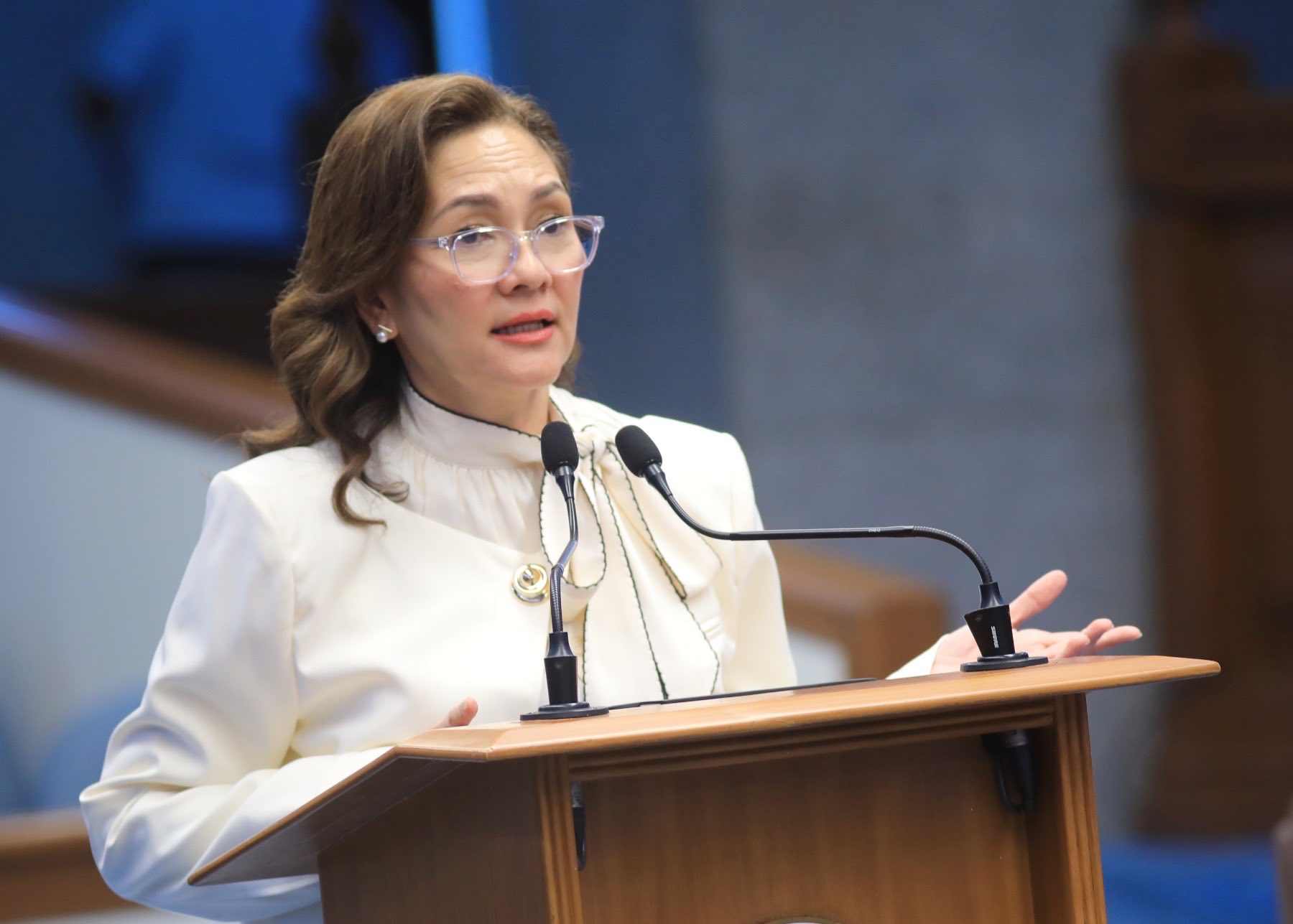
MANILA, Philippines – Senator Risa Hontiveros on Friday, August 28, said the government has secured a commitment from Meta to respond to requests from Philippine law enforcement authorities for user data when there are indications of an imminent threat of violence.

Hontiveros sent representatives on Thursday, August 27, to join a Philippine delegation of key government officials in a roundtable meeting with Meta’s top Asia-Pacific policy officers at the tech giant’s regional headquarters in Singapore.

The meeting focused on the responsibilities of Meta’s platforms, particularly Facebook, in addressing the spread of nihilistic violent extremism and preventing online activity from translating into real-world attacks.

As the meeting neared its conclusion, Hontiveros’ representatives pressed Meta to commit to providing subscriber information and traffic data to Philippine authorities once an imminent threat to public safety has been identified.

Meta agreed to the request, according to Hontiveros.

Napapayag natin, napa-commit natin ang Meta na ibibigay nila sa ating mga awtoridad ang subscriber information at pati traffic data once na may ma-identify silang banta sa kaligtasan ng ating mga bata bago pa may mangyaring aktwal na pag-atake,” Hontiveros said.

(We were able to get a commitment from Meta that they will provide subscriber information and traffic data once they identify a threat to the safety of our youth before an attack even happens.)

Hontiveros also linked the agreement to the looming passage of the Child Online Safety and Protection Act or Senate Bill No. 2424, a priority measure that seeks to strengthen safeguards for children on digital platforms.

The bill consolidates social media regulation bills pertaining to children’s use of such platforms.

Under the bill, children below 16 years of age shall not be allowed to create, access or maintain accounts on these platforms, with corresponding penalties to platform owners, as well as parents if proven willfully negligent.

The proposed legislation builds on protections established under Republic Act No. 11930, or the Anti-Online Sexual Abuse and Exploitation of Children and Anti-Child Sexual Abuse or Exploitation Materials Act.

The senator stressed that technology companies operating in the Philippines should be held accountable for harmful content distributed through their platforms.

Her remarks come amid growing scrutiny of social media companies over the role their platforms play in the spread of extremist content, violent threats and other harmful material. At a Senate hearing on August 20, police revealed that it had handled 74 cases linked to nihilistic violent extremism so far.

At the same hearing, Hontiveros had castigated Meta for allowing a livestreamed video of the Ateneo de Zamboanga shooting incident to remain published online for 14 minutes. She said: “Linisin niyo ang kalat niyo, ang basura niyo sa inyong powerful platform, linisin niyo. Huwag niyo iwan lahat sa CICC (Cybercrime Investigation and Coordinating Center).”

Must Read

Zamboanga school shooting kills at least 2 | The wRap


Zamboanga school shooting kills at least 2 | The wRap

(It shouldn’t be the CICC that cleans up after Meta. Clean your mess up, your trash on your powerful platform. Don’t leave it up to the CICC.)

Two minors, including the student who fired his father’s gun inside the school, died in the Ateneo de Zamboanga incident last August 18.

During a Senate plenary session on Tuesday, August 25, Hontiveros also said digital platforms must establish local legal entities to make it easier for authorities to hold them accountable, and called for stronger regulation of these platforms’ business models, especially the use of virality that can at times spread harmful content. – Rappler.com

Similar Posts

  • |

    Meta hit with record $567m child safety fine

    A US judge in New Mexico has ordered Meta to pay $567 million over allegations that its social media platforms failed to adequately protect children from harmful content and online risks. The ruling is the largest penalty Meta has faced in a child safety case. It brings the total amount the company has been ordered to pay in the New Mexico case to $942 million, including an earlier $375 million penalty. Judge Bryan Biedscheid ruled that Meta’s platforms had created harms serious enough to be considered a “public nuisance”. He compared the company’s operations to a factory, saying harmful effects on children spread beyond the platforms and affect families, schools, healthcare providers and law enforcement. The judge ordered the money to be placed in a fund designed to address the impact of social media-related harm on children. A large portion of the fund, about $420 million, will support clinical and behavioural health programmes for people affected by such harms. Additional funding will be used for awareness and prevention programmes, including training for teachers and healthcare professionals. The court also imposed a series of measures aimed at strengthening protections for users under 18. Meta will be required to prevent adult users from messaging minors and stop accounts belonging to users under 18 from being recommended to adults. The company must also restrict the sending and receiving of nude material by underage users. The ruling further requires Meta to adopt a strict policy against adult users involved in child sexual exploitation. Other restrictions include removing “like” counts for users under 18 and limiting push notifications during overnight hours. Notifications will also be restricted during normal school hours on school days. The court additionally ordered a monthly usage limit of 90 hours across Instagram and Facebook for users under 18. Meta, which operates Instagram, Facebook, WhatsApp and Threads, rejected the ruling and said it would appeal. The company said it works to protect users and has been transparent about the challenges of detecting harmful content and malicious actors. Meta also maintained that the ruling does not accurately reflect its efforts to protect teenagers online. The New Mexico case began with a lawsuit filed by state authorities in 2023. Prosecutors argued that Meta’s platforms exposed children to harmful material and enabled contact with sexual predators. During the earlier stage of the case, Meta was found to have violated New Mexico’s consumer protection law. The court determined that its recommendation systems could direct young users towards harmful content and potentially dangerous contacts. Meta is facing thousands of similar lawsuits across the United States. Nearly three dozen state attorneys general are also pursuing claims involving the company’s treatment of children and their privacy.

  • | |

    Shakespeare’s sorcery and silicon valley

    For over four centuries, William Shakespeare’s plays have served for understanding human nature, politics, psychology, and empire. Yet, as scholars Xin Chen Chai and Xin Ying Lim argue, his work offers surprising insights into a decidedly modern phenomenon. The hidden human and physical infrastructure driving artificial intelligence. When millions of users enter prompts into generative AI chatbots every day, the experience feels weightless, instantaneous and virtual. However, behind every generated sentence lies a physical network of high-powered data centers. These facilities consume massive volumes of electricity and millions of gallons of water to cool servers. This illusion of effortless command reflects the dynamic in Shakespeare’s The Tempest. In the play, the exiled duke Prospero rules a remote island through sorcery. He forces the spirit Ariel and the native inhabitant Caliban into servitude. Prospero’s magical feats appear grand and detached from the labor and coercion required to maintain his power. Modern AI systems operate on a similar logic. The seamless magic of AI algorithms obscures the extractive resource demands and physical labor that sustain them. Prospero’s dominance depended on usurping Caliban’s land and subjugating its inhabitants. Similarly, the expansion of tech infrastructure often targets marginalized or rural territories. The reasons are land and natural resources that can be acquired with minimal resistance. A real-world example unfolded within the Mvskoke Nation in Oklahoma. A proposed legislative bill, NCA 25-077, sought to establish the Mvskoke Technology and Innovation Park. The bill was put on the table to bring major data centers to tribal lands. However, Indigenous citizens, including Jordan Harmon and Mackenzie Roberts, showed strong opposition. They highlighted the facilities’ ravenous water and energy consumption. They raised concerns regarding digital surveillance.  Framing the development as a continuation of historical colonial exploitation. Due to community pressure and concerns, the tribal council ultimately rejected the proposal. Postcolonial scholars have long viewed The Tempest as a critique of colonial dynamics. They have  drawn direct parallels between Prospero’s rule and imperial subjugation. In the play, Prospero surrenders his magical powers only after securing his own political goals. It demonstrates that rulers rarely give up power purely out of goodwill.   The successful resistance within the Mvskoke Nation highlights an essential difference between literature and real-life action. Unlike Shakespeare’s characters, real communities are actively demanding accountability from corporate giants. Their resistance demonstrates that the unchecked expansion of data centers is not an inevitable trajectory. By pushing back against resource-extractive technology models, Indigenous and local communities are forcing a necessary public conversation about who truly benefits from artificial intelligence and who pays the hidden costs.

  • |

    Apple plans smart glasses with future health and fitness features

    Apple is reportedly working on a new generation of smart glasses that could eventually become an important part of its health and fitness ecosystem. Although the first version of the wearable device is expected to focus on core smart features, the company is said to have a long-term vision of transforming future models into personal health and wellness companions. Apple is exploring ways to expand its health-focused product lineup beyond the Apple Watch. The company is believed to be developing advanced fitness and wellness features for its upcoming wearable devices, allowing users to monitor their health more conveniently throughout the day. Apple has previously experimented with integrating fitness technology into its Vision Pro headset. The original concept involved a dedicated version of Apple Fitness+ that would let users participate in guided workout sessions while the headset tracked their body movements in real time. This system was designed to analyze posture, movement, and exercise performance, providing users with more accurate feedback during workouts. Reports also suggested that Apple had developed sophisticated body-tracking technology capable of monitoring users’ physical movements with a high level of precision. The feature was intended to enhance fitness training by measuring exercise form and movement patterns. However, despite the promising technology, Apple ultimately decided not to introduce these fitness capabilities with the Vision Pro. The main reason behind this decision was the headset’s weight. While Vision Pro offers advanced mixed-reality experiences, its relatively heavy design made it uncomfortable for prolonged physical activity. Wearing the headset during exercise was considered impractical, leading Apple to postpone its fitness ambitions for the device. Rather than abandoning the idea altogether, Apple appears to be shifting its focus toward lighter wearable products, particularly its upcoming smart glasses. These glasses are expected to provide a more comfortable platform for delivering health and fitness experiences without the limitations posed by a bulky headset. To support these efforts, Apple is reportedly recruiting specialists with expertise in health technology, spatial computing, and wearable devices. Recent job postings indicate that the company is looking for professionals who can help create innovative wellness and fitness experiences for future vision-based products. The hiring efforts suggest Apple remains committed to expanding the capabilities of its wearable ecosystem. Industry analysts have also indicated that Apple may incorporate heart-rate monitoring technology into future smart glasses. The sensor technology is expected to be similar to the heart-rate monitoring features reportedly being developed for upcoming AirPods models. If implemented successfully, these sensors could allow users to monitor key health metrics without relying solely on the Apple Watch. Although Apple has not officially confirmed the features or launch timeline, reports suggest that these advanced health capabilities are still under development. As a result, they are unlikely to appear in the first generation of Apple smart glasses. Instead, Apple is expected to introduce these fitness and wellness functions gradually in future versions of the device as the technology matures. While consumers may need to wait several years before these advanced features become available, Apple’s continued investment in wearable health technology highlights its ambition to build a broader ecosystem that seamlessly combines everyday convenience with personal health monitoring.

Leave a Reply

Your email address will not be published. Required fields are marked *