thailand asks israeli

Thailand Asks Israeli Envoy To Remind Nationals To Respect Thai Laws

BANGKOK, Thailand – Thailand has formally requested that the Israeli ambassador to Bangkok remind her nationals that, while the country welcomes tourists and values the income they bring, visitors must respect Thailand’s dignity, honour, culture and laws and cannot simply do whatever they want, Foreign Minister Sihasak Phuangketkeow said on Tuesday following talks with Ambassador Alona Fisher-Kamm. The foreign minister conveyed to the envoy that Thailand does not discriminate against Israeli nationals or any other foreigners but will strictly enforce Thai laws against anyone who breaks them, emphasising that tourists cannot come to Thailand, bring income to the country and then think they can do anything they want, Thai PBS reported.

Israeli man deported from Koh Samui under Thailand’s new deportation rules

The talks came amid growing attention to the activities of some Israeli nationals in Thailand, including cases that have resulted in deportations under recently tightened enforcement measures. Thai authorities are also investigating Jewish cemeteries, including sites in Bangkok and Chachoengsao, to determine whether they hold the required licences to operate. Meanwhile, former protest leader Sondhi Limthongkul has announced plans to lead supporters to the Israeli Embassy in Bangkok on Thursday to submit a letter protesting what he described as illegal activities by some Israeli tourists and businessmen in Thailand.

Speaking at a press briefing after the meeting, Sihasak stated that the discussions focused on concerns among Thai people over incidents involving Israeli nationals in the country, which could broadly be divided into two groups: Israelis who stay in Thailand for extended periods to conduct business and those accused of violating Thai laws. He stressed that Thailand would strictly enforce the law in such cases and that the policy was not discriminatory, pointing to the recent deportations of Israeli and French nationals as examples. He also raised concerns about the behaviour of some Israeli tourists, both short- and long-term visitors, which he said had affected the feelings of local people, Thai culture and traditions, and the ways of life of communities, singling out Phang Nga and Phuket where Israeli nationals have formed sizeable communities.

Israelis in Thailand Warned by Embassy to Comply Strictly With Thai Laws Amid Phuket Crackdown

Sihasak said visitors should understand and respect Thai culture and traditions, just as Thai tourists travelling abroad are expected to respect the customs and values of the countries they visit. He stressed that the government was not generalising about Israeli nationals as a whole but said some individuals needed to show greater respect for Thailand’s culture, values and local ways of life. According to Sihasak, the Israeli ambassador acknowledged the concerns, saying she was not ignoring the issue and had already visited affected areas to assess the situation. The envoy said the Israeli embassy would prepare information for Israeli nationals visiting Thailand on what they should and should not do, to be distributed through the Israeli embassy and consulates, as well as tour companies sending visitors to Thailand and airlines.

-Thailand News (TN)

Similar Posts

  • Bhumjaithai Projected as Leading Party

    BANGKOK — Polling stations across Thailand closed at 5:00 PM Sunday following a day of high turnout for the historic dual-track general election and constitutional referendum. As official vote counting commenced, a prominent pre-election survey projected a fragmented parliament with no clear single-party majority. Anti-Government Banners, Suspected Explosives Found in Narathiwat Ahead of Election The […]

  • | |

    ‘Give me my baby back’: Mother’s desperate P…

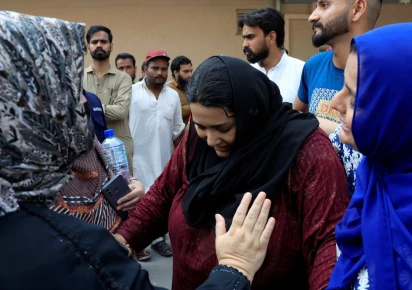
    A devastating fire at the Pakistan Institute of Medical Sciences (PIMS) in Islamabad has claimed the lives of 15 children, turning a routine morning at the capital’s major public hospital into a scene of panic, grief and anguish. The fire broke out early Wednesday in the Mother and Child Health Ward, where critically ill newborns were receiving treatment. Thick smoke rapidly filled parts of the ward, leaving families and hospital staff struggling to reach the affected area. The tragedy has raised serious questions about fire safety, emergency response, hospital security and the availability of adequate facilities for vulnerable newborns. Among the grieving parents was a mother who could not hold back her anguish after losing her infant. “Give me my child back,” she cried, as families gathered outside the hospital waiting for information about their children. Witnesses described a chaotic situation inside the hospital, with heavy smoke making it difficult to move through the affected area. Some patients and attendants reportedly attempted to escape through windows after finding access points blocked. A witness said the fire spread rapidly and that babies as young as a day old were present in the ward. Another witness claimed rescue personnel took considerable time to reach the affected section, while hospital security allegedly restricted the movement of people trying to leave. However, Islamabad’s senior administration gave a different account of the emergency response. Officials said the emergency call was received shortly before 7am and that rescue and police teams reached the hospital promptly. The fire was subsequently brought under control. The exact circumstances surrounding the incident remain under investigation. PIMS officials said the preliminary cause of the fire appeared to be an electrical fault involving an air conditioner. Authorities are expected to examine the equipment, wiring, hospital safety systems and emergency procedures to determine how the fire started and why it spread so quickly. The deaths have caused widespread grief across the country. Prime Minister Shehbaz Sharif and Interior Minister Mohsin Naqvi expressed sorrow over the loss of the infants and called for a detailed examination of the circumstances that led to the tragedy. The prime minister directed that those responsible for any negligence be identified and that strict action be taken on the basis of the investigation. The incident has also brought renewed attention to safety standards at public hospitals. PIMS is one of Islamabad’s largest healthcare institutions and caters to a large number of patients from the capital and surrounding areas. Families and witnesses have raised questions about the availability of emergency exits, fire-fighting equipment, evacuation procedures and the preparedness of hospital staff to deal with fires in specialised wards. The presence of newborns in critical care areas makes emergency preparedness particularly important. Infants requiring intensive medical support cannot be evacuated in the same manner as ordinary patients, increasing the need for specialised fire-safety plans and trained personnel. The tragedy has also sparked anger over whether existing safety warnings and shortcomings at public hospitals were adequately addressed before the incident. For the bereaved families, however, the immediate concern is the loss of their children. Parents gathered outside PIMS in distress as they waited for confirmation and the return of their babies. The fire is among the most serious recent incidents involving a public healthcare facility in Pakistan and has intensified calls for stronger enforcement of fire-safety regulations in hospitals and other major public buildings.

  • | |

    Doctor suspended after performing laparoscopic sur…

    Islamabad: The Medical Tribunal has upheld a one year suspension of Dr Irfan Ashraf after finding that he performed laparoscopic surgery despite not completing the required training for independent laparoscopic procedures and operated at a healthcare facility that lacked an Intensive Care Unit and other essential facilities needed to deal with serious complications. The Tribunal also upheld a Rs100,000 fine and a ban preventing Dr Irfan Ashraf from performing laparoscopic procedures until he completes proper certified training. The judgment, announced on July 8, 2026, came in an appeal filed by Muhammad Zahid Niaz, whose father Niaz Ahmad died after a chain of medical treatment that began with laparoscopic surgery at Saleem Polyclinic in Mian Channu on December 31, 2016. The case took a serious turn when the disciplinary inquiry examined the actual training record of Dr Irfan Ashraf. The inquiry found that although he had taken part in laparoscopic procedures during his postgraduate training, most of his experience was as an observer or assistant. According to the judgment, Dr Irfan Ashraf had not completed the required number of procedures at the higher training levels needed to show independent surgical ability. The record showed that he had not completed even a single Level V procedure, which represents the stage at which a trainee is expected to perform laparoscopic surgery independently without supervision. The Tribunal said this was not simply a case where a normal surgical complication had occurred. The main concern was that Dr Irfan Ashraf undertook an elective laparoscopic operation without having demonstrated the required independent competence and at a facility that did not have the necessary backup facilities. The patient, Niaz Ahmad, suffered an injury to the common bile duct and hepatic vascular structures during the surgery. He was later taken to Bahawal Victoria Hospital in Bahawalpur for further treatment. He subsequently received treatment at Sheikh Zayed Hospital in Lahore and underwent an interventional radiological procedure at Lahore Medical Complex. Despite prolonged treatment at several hospitals, he died on March 4, 2017. The Punjab Healthcare Commission had earlier investigated the matter. It found that Saleem Polyclinic did not have the required infrastructure, qualified human resources and licensing needed for such surgical procedures. The Commission imposed a financial penalty on the owner of the healthcare establishment and referred the conduct of Dr Muhammad Saleem Akhtar and Dr Irfan Ashraf to the medical regulator for disciplinary action. The medical disciplinary committee later appointed Prof Dr Tanwir Khaliq, an experienced general surgeon, as an independent medical expert. He examined the medical record and assessed the standard of care, the management of laparoscopic complications and the facilities available at the clinic. Prof Dr Tanwir Khaliq concluded that the operation had been performed at a relatively small healthcare facility without an ICU and other essential backup facilities. He also found that Dr Irfan Ashraf was not sufficiently proficient in laparoscopic surgery, particularly when dealing with complications. The Tribunal noted that Dr Irfan Ashraf himself acknowledged that Saleem Polyclinic did not have an ICU or the facilities required to manage serious complications from laparoscopic surgery. The Tribunal also noted that Dr Irfan Ashraf had been working as a Senior Registrar at Bahawal Victoria Hospital, where better surgical support was available. When questioned about why the operation was carried out at the private facility, the explanation was that the patient wanted the surgery there. The Tribunal rejected this reasoning. It said a patient’s preference cannot remove a surgeon’s professional responsibility to determine whether a healthcare facility is safe enough for the planned procedure. The case also raised questions about what doctors tell patients about their professional skills. The disciplinary committee found that Dr Irfan Ashraf had represented himself as independently competent to perform laparoscopic surgery even though his training record did not show that he had completed the required independent procedures. The Tribunal said the evidence supported three major findings against Dr Irfan Ashraf. He performed an elective laparoscopic operation at a facility that could not properly manage foreseeable complications. He represented himself as independently competent despite incomplete training. He also exposed the patient to avoidable risk by choosing a facility without the necessary support instead of a properly equipped tertiary hospital. However, the Tribunal did not hold every doctor involved in the patient’s treatment responsible. Dr Muhammad Saleem Akhtar, the owner of Saleem Polyclinic, received a warning rather than a disciplinary punishment. The Tribunal found that there was no evidence that he personally performed the operation or took part in the surgical decision making. The Tribunal said ownership of a healthcare facility alone was not enough to impose the same disciplinary punishment on Dr Muhammad Saleem Akhtar as the operating surgeon. However, the warning required him to ensure that his facility was not used for procedures beyond its capacity. Dr Khurram Shafiq Khan was also cleared of professional negligence. His involvement came later, after the patient had already suffered complications from the earlier surgery. His role was connected with an embolization procedure to control bleeding from the hepatic artery. After examining his role, the disciplinary committee found no clear connection between the procedure performed by Dr Khurram Shafiq Khan and the patient’s eventual death. The Tribunal found no reason to disturb that decision. Muhammad Zahid Niaz had appealed because he believed the punishment against Dr Irfan Ashraf was too weak considering that his father’s treatment ultimately ended in death. He also wanted stronger action against Dr Muhammad Saleem Akhtar and Dr Khurram Shafiq Khan. The Medical Tribunal, chaired by Justice (Retired) Safdar Saleem Shahid, rejected the request for harsher punishment. The Tribunal said a tragic medical outcome does not automatically mean that every doctor involved was negligent. It explained that medical procedures can have known complications even when reasonable care is taken. The important question is whether a doctor failed to meet the level of skill and care expected from a competent doctor in similar circumstances. In the case of Dr Irfan Ashraf, however, the Tribunal found that the disciplinary committee had enough evidence

  • |

    Students protest Cambridge exam leaks

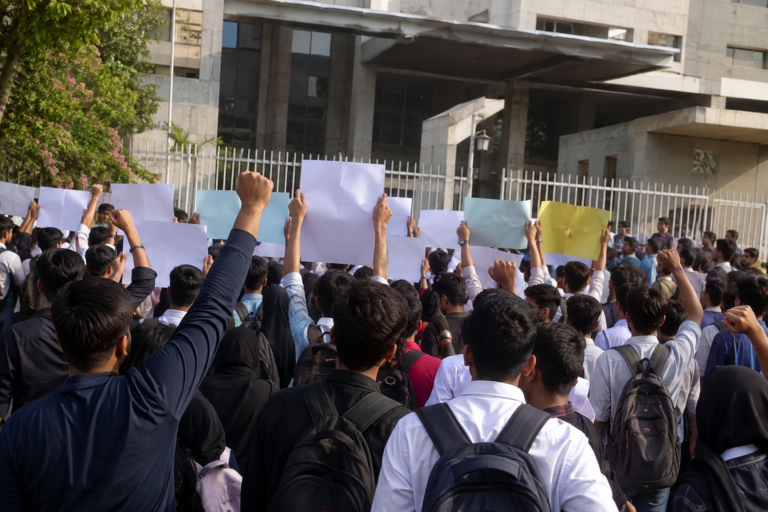
    ISLAMABAD: Accountability4Cambridge has called for a student protest against Cambridge Assessment International Education (CAIE) over alleged examination paper leaks during the 2026 examination cycle, saying the incidents have raised serious concerns about fairness and the credibility of Cambridge examinations. The student group said reports of leaked papers emerged in 2024 and increased in 2025, but Cambridge failed to provide sufficient public explanations or demonstrate that it had effectively strengthened its examination security system. According to Accountability4Cambridge, leaked material from several major papers circulated before scheduled examination times in 2026. The group compiled evidence from 17 alleged cases, including screen recordings showing time-zone information that it says established that the material was available before the relevant examinations. Cambridge recognised four cases and took action, but the students say the remaining evidence was not adequately addressed. The group raised the issue before the Senate Standing Committee on Federal Education and Professional Training on May 18 and again on June 16. Following the meetings, a sub-committee comprising IBCC, Cambridge, Accountability4Cambridge, the British Council, the Ministry of Education and NCCIA was formed. During a July 13 meeting, the students presented the 17 recordings and asked Cambridge to respond. After Cambridge questioned the reliability of the videos, Accountability4Cambridge sought forensic verification from the National Cyber Crime Investigation Agency (NCCIA). The group said NCCIA’s report, received on July 29, found no evidence of tampering in the submitted recordings. Accountability4Cambridge subsequently requested another sub-committee meeting to present the forensic findings. The meeting was initially scheduled for August 7 but was postponed to August 12 after Cambridge said it was unavailable. The students have also criticised Cambridge’s decision to use S1 paper marks instead of assessed marks. They argue that using compromised papers for grading could unfairly benefit students who accessed leaked material while disadvantaging those who did not. Accountability4Cambridge is demanding reversal of the S1 marking decision, lower grade thresholds for Computer Science and Mathematics, recognition of additional leaks supported by forensic evidence, publication of a detailed investigation report and a transparent mechanism for handling compromised examinations. The group has also urged schools to demand greater accountability from Cambridge. Founder Samaak Iqbal Malik said the dispute concerns the integrity of the entire examination system rather than a few individual papers. The organisation has announced a student demonstration outside the IBCC office in G-10, Islamabad, at 1pm on Wednesday, August 12, calling for immediate action before the controversy further affects students’ academic futures.

  • Two Former Convicts Confess To Murder Of Missing Russian Siblings In Chonburi

    SA KAEO / CHONBURI, Thailand — Two men wanted in connection with the disappearance of two Russian siblings in Chon Buri province have been arrested and have reportedly confessed to killing and burying the youths, marking a grim breakthrough in a case that has gripped the nation. Two Men Arrested In Pattaya As Search Intensifies […]

  • | | | |

    Saudi-led coalition hits Houthi military sites nea…

    The Saudi-led military coalition announced on Saturday that it had carried out precision strikes against Houthi military positions in Yemen’s Al Hudaydah governorate, saying the operation was aimed at neutralizing threats to commercial shipping in the Red Sea. In a statement, the coalition said the strikes targeted military sites linked to the Houthi movement and stressed that Al Hudaydah Port was not targeted during the operation. It added that all Yemeni ports remain open to maritime traffic and international shipping. According to the coalition, the destroyed targets were associated with activities that posed a threat to commercial vessels navigating the Red Sea, one of the world’s busiest maritime trade routes. Officials said the operation was part of ongoing efforts to safeguard regional security and ensure the uninterrupted flow of global trade. The coalition warned that it would continue to respond if Houthi forces carried out further hostile actions against shipping or Saudi interests. It also reiterated its commitment to protecting merchant vessels and the Kingdom’s strategic interests, saying military operations would continue whenever necessary to counter security threats. The latest strikes come amid heightened tensions across the Middle East, where attacks on commercial shipping have raised concerns among international maritime operators and governments. The Red Sea remains a vital corridor for global energy supplies and cargo traffic, making any disruption a matter of international concern. There was no immediate response from the Houthi movement regarding the coalition’s claims or the reported strikes. The situation in Yemen continues to be closely monitored, with regional and international observers warning that any escalation around key shipping lanes could have wider implications for global trade and security. Despite the latest military action, the coalition maintained that navigation through Yemeni ports and the Red Sea remains unaffected and commercial vessels can continue operating normally.

Leave a Reply

Your email address will not be published. Required fields are marked *