over 200000 without
| |

Over 200,000 without power, 100 homes damaged as hurricane hits Hawaii

More than 200,000 utility customers were without power across Hawaii at midday on Sunday, August 16, after Hurricane Lala brushed the Big Island before being downgraded to a tropical storm.

About 219,000 customers across Hawaii were without power as of 12:05 pm (2205 GMT), according to poweroutageus.com. Outages on Oahu, the most populated island, had decreased from more than 220,000 to around 130,000 as of Sunday morning, state officials said during a press conference.

State officials received reports of at least 100 homes damaged, Hawaii Governor Josh Green said on Sunday.

Lala was moving west-northwest at almost 26 kph with maximum sustained winds near 105 kph as of 11 am (2100 GMT), just slightly below the hurricane threshold of 119 kph, according to the latest advisory from the National Hurricane Center. A tropical storm warning remains in effect for Maui, Oahu and Kauai counties, according to the advisory.

Hawaiian Electric had warned customers on Saturday evening that repair efforts were being hampered as hurricane-force winds toppled trees and rain flooded roadways.

Lala had battered Hawaii’s southern areas with flash floods “like we’ve never seen,” a state official said.

State officials also urged residents to stay indoors after at least one person was reported dead in a car-related accident.

“It’s not a day to go to the beach,” one official said during a press conference on Sunday morning.

Video released by the Hawaii Department of Transportation showed floodwaters overtaking roads. Two homes were swept away, according to the National Weather Service.

About 117 people were in shelters as of Sunday morning, officials said.

The Hawaii Department of Transportation said that all airports have been reopened, but state officials advised travelers to check with their airlines for updates. – Rappler.com

Similar Posts

  • |

    Lt Gen (R) Abdul Qayyum calls for global peace through dialogue; FIRD Chairman Toaha Qureshi backs strong armed forces

    LONDON:  Senator Lt Gen (R) Abdul Qayyum (HI(M)), President of the Pakistan Ex-Servicemen Society, called for greater respect for international law, dialogue under the umbrella of the United Nations and enhanced cooperation among Muslim countries to address global security challenges, while Forum for International Relations Development (FIRD) Chairman Toaha Qureshi reaffirmed support for Pakistan’s armed forces, saying they remained the country’s defenders and that the Field Marshal had enhanced Pakistan’s reputation on the global stage. Addressing the Second International Conference on Global Peace, organised by FIRD in London, Senator Abdul Qayyum said lasting peace could only be achieved through diplomacy and adherence to international law. “Respect for international law and pursuing dialogue as a strategy for peace under the umbrella of the United Nations can help resolve even the most complex global challenges. Destructive wars can only lead to catastrophic consequences and bring suffering to humanity as a whole,” he said. During his address, the senator argued that the post-Cold War unipolar world had witnessed repeated violations of international law and human rights, weakening the effectiveness of institutions such as the United Nations and the International Court of Justice. Discussing global security, he said colonialism had evolved into neo-colonialism in the modern era and referred to the establishment of US military bases around the world. He also cited recent developments in the Middle East, saying they had highlighted the importance of national self-reliance in defence and strategic planning. Senator Abdul Qayyum said vulnerable states increasingly needed to strengthen their own defence capabilities while developing strategic partnerships through mutual defence agreements. Referring to recent tensions involving Iran, Israel and the United States, he said the evolving regional security environment had prompted Gulf countries to reassess their strategic priorities and seek greater autonomy. He said Pakistan, with its strategic geographical location and strong defence capability, could play a constructive role in promoting closer cooperation among Muslim-majority countries. He added that greater unity among Muslim states, beyond sectarian divisions, could strengthen regional stability and collective security. The senator warned that unilateral actions and disregard for international law risked pushing the world towards another major global conflict. Referring to former US President Richard Nixon’s geopolitical doctrine, he said pragmatic diplomacy, a balance of power and economic stability remained essential foundations for international peace. Addressing interfaith harmony, Senator Abdul Qayyum said dialogue and mutual respect remained essential to strengthening relations between different faith communities. He expressed concern over the rise of Islamophobia and called for greater engagement, education and cooperation to counter prejudice and promote peaceful coexistence. Speaking at the conference, FIRD Chairman Toaha Qureshi said Pakistan’s armed forces were the guardians of the country’s sovereignty and deserved the nation’s continued support. “Pakistan’s armed forces are the protectors of the country. We need strong armed forces, and it is necessary that we continue to support this institution,” he said. Qureshi added that Pakistan’s Field Marshal had earned the country greater international recognition and enhanced its standing through his leadership. The conference also heard from educationist and businessman Mian Muhammad Jehangir, who stressed the importance of meaningful education in shaping future generations and driving national development. He said Pakistan’s youth possessed immense talent and potential, adding that investment in quality education, skills development and character-building was essential for the country’s progress. He praised the achievements, resilience and capabilities of Pakistan’s young people, expressing confidence that they would play a pivotal role in building a stronger, more prosperous and globally competitive nation.

  • |

    Google’s $15bn India data centre faces green bac…

    VISAKHAPATNAM: Google’s ambitious $15 billion data centre investment in India is facing mounting resistance from environmental groups, residents and legal activists, turning what was expected to be a landmark technology project into one of the country’s most closely watched development disputes. The massive project, being developed in partnership with Indian billionaire Gautam Adani’s group, is under construction in Tarluvada near the coastal city of Visakhapatnam in Andhra Pradesh. Touted as Google’s largest-ever investment in India, the facility is expected to strengthen the company’s cloud computing and artificial intelligence infrastructure while generating an estimated 188,000 jobs. However, critics argue that the economic benefits could come at a significant environmental cost. Water concerns spark protests In recent weeks, environmental activists have intensified protests against the project, warning that the data centre could worsen water shortages in a city already struggling to meet daily demand. Demonstrators, including schoolchildren, have marched through Visakhapatnam carrying banners reading “We Cannot Drink DATA”, while others painted handcuffs over Google’s logo to symbolise what they describe as the environmental consequences of unchecked technological expansion. At a public awareness gathering attended by local campaigners, members of the environmental organisation Green Visakha outlined plans for neighbourhood campaigns and beach demonstrations aimed at increasing public awareness. Raja Rama Mohan Roy, founder of Green Visakha, argued that development should never come at the expense of local communities. “Development should not be at the cost of the livelihood of the people,” Roy said, pointing to government figures showing that Visakhapatnam currently receives around 410 million litres of water daily, despite requiring approximately 480 million litres. Water rationing has become a regular feature of life for the city’s 2.5 million residents, raising concerns about future demand. Legal battle gains momentum Opposition to the project has now reached the courts. India’s Andhra Pradesh High Court this week directed the state government to respond to allegations raised by environmental group Jal Biradari (Water Community), which claims the project could place additional pressure on regional water resources. The court is scheduled to hear the public interest litigation again on August 24. Meanwhile, three additional petitions have been filed before India’s National Green Tribunal by the Human Rights Forum. The petitioners argue that authorities approved the project without conducting sufficient environmental assessments regarding water usage and ecological impacts. Environmental groups are questioning the government’s reported commitment to provide guaranteed water supplies for the project over the next two decades while many residents continue experiencing periodic shortages. Wildlife under threat? Another major concern centres on the project’s location. According to campaigners, the construction site lies only about 860 metres from the Kambalakonda Wildlife Sanctuary, a protected forest known for its biodiversity and home to species including leopards, pangolins, spotted deer and numerous bird species. Activists fear continuous construction, heavy machinery and increased industrial activity could disturb wildlife through noise, habitat disruption and increased human presence. The Andhra Pradesh government, however, insists the development complies with all legal requirements and maintains that the sanctuary is located at a safe distance under existing regulations. Google also said it intends to minimise environmental impacts by installing sound-dampening technologies designed to reduce noise pollution around the facility. Government and Google defend project Despite growing criticism, Andhra Pradesh authorities continue to describe the project as transformational for the state’s economy. Officials rejected accusations that environmental clearances were rushed or that local drinking water resources would be diverted for industrial use. In a statement, the state government acknowledged citizens’ right to protest but said many claims circulating about the project were “incorrect and misleading.” It added that authorities remain willing to examine legitimate concerns and provide clarification where necessary. Google has similarly defended the project, stating that construction will comply fully with Indian environmental regulations. The company said it plans to use advanced air-cooling technology, significantly reducing dependence on water compared with conventional cooling systems used by many data centres. Google also stressed that sustainability remains a key part of its global operations and that the Visakhapatnam facility would be designed to protect local water resources while supporting India’s rapidly expanding digital economy. Global debate over data centres The controversy reflects a broader international debate over the environmental footprint of modern data centres. As demand for artificial intelligence, cloud computing and digital services continues to surge, technology companies worldwide are investing billions in new infrastructure. Yet these facilities often require enormous amounts of electricity and cooling, placing additional pressure on local water and power supplies. Similar concerns have emerged across the United States and Europe, where communities have challenged large-scale data centre developments over resource consumption, environmental sustainability and their impact on nearby residents. For Google, the Andhra Pradesh project represents a major strategic investment in one of its fastest-growing markets. But with legal challenges pending and public protests gathering momentum, the future of the project may depend not only on engineering and investment, but also on the company’s ability to convince local communities that technological progress can coexist with environmental protection.

  • | | |

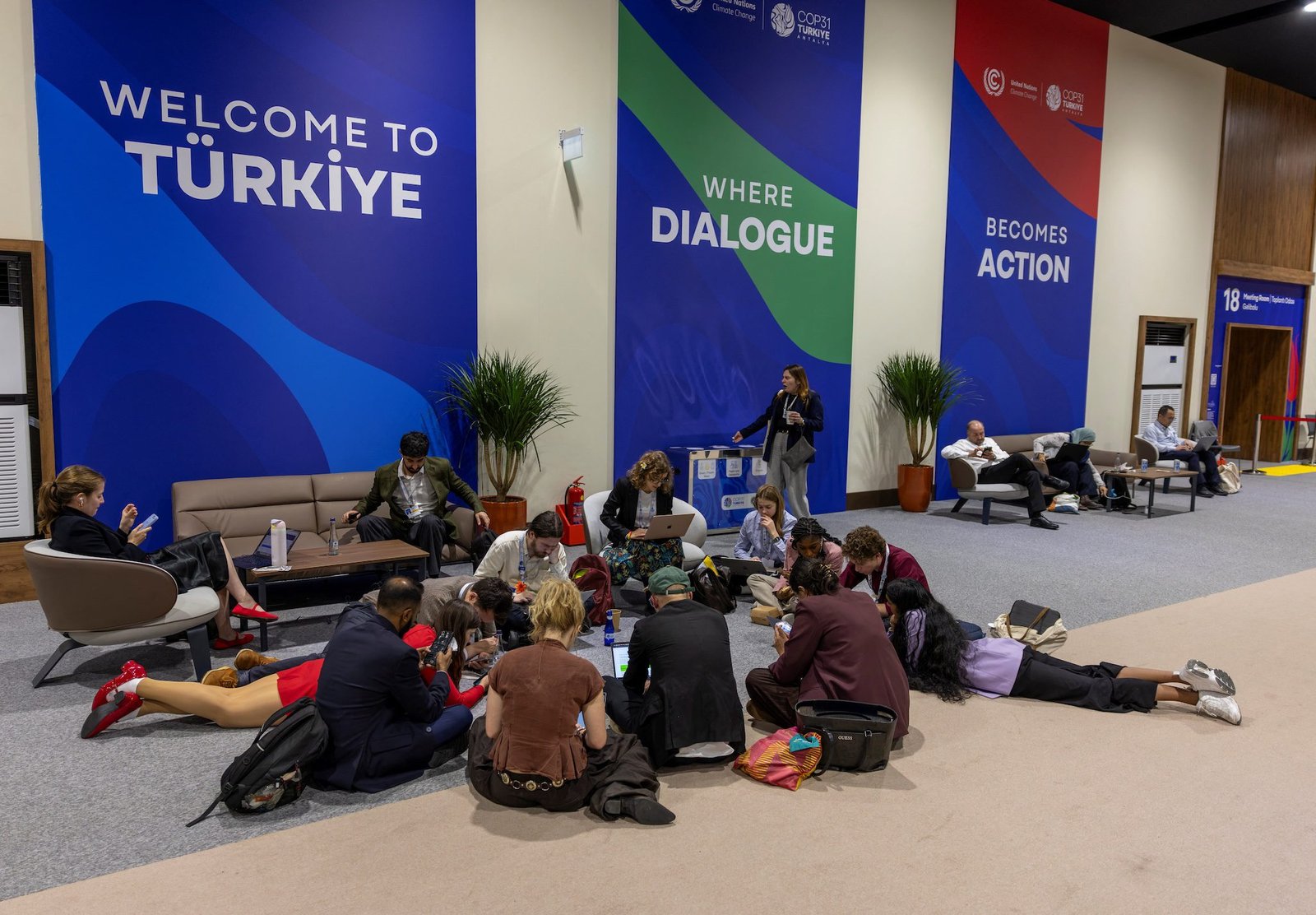
    COP31 draft drops fossil fuel language as talks near deadline

    The revised deal, which is not expected to be the final version, drops or weakens language on several of the conference’s central issues, including fossil fuels, electrification, and adaptation finance, compared to a first draft published on November 16

  • | | | |

    Israeli raids, settlement plans deepen West Bank t…

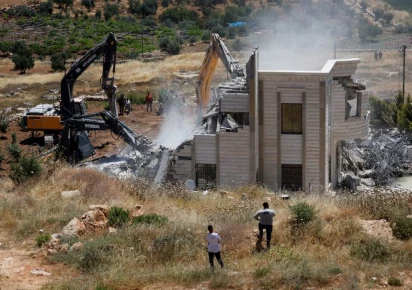
    RAMALLAH: Tensions across the occupied West Bank intensified on Monday as Israeli forces reportedly destroyed water pipelines, detained Palestinians and ordered families to leave their homes ahead of a planned demolition. While a new settlement plan near Jerusalem raised fresh concerns over the expansion of Israeli settlements. The latest developments have added to growing pressure on Palestinian communities already facing restrictions on movement, damage to agricultural land and disruptions to basic services. Palestinian human rights activist Aref Daraghmeh said Israeli forces destroyed water pipelines in the Atouf and Ras al-Ahmar areas of Tubas governorate. The areas, located in the northern Jordan Valley, have experienced repeated military operations in recent months. According to Daraghmeh, agricultural land has been cleared, water networks damaged and artesian wells filled in, causing significant losses for farmers who depend on the land and water supplies for their livelihoods. The destruction of water infrastructure has particular significance in the Jordan Valley, where Palestinian farming communities rely heavily on limited water resources. Brothers detained during raid In another operation in the northern Jordan Valley, Israeli forces detained two Palestinian brothers in the Ein al-Hilweh area, according to local sources cited by Anadolu. Meanwhile, Israeli troops raided the village of Tell, southwest of Nablus, and ordered residents to leave several homes ahead of the planned demolition of a house belonging to Palestinian Farouq Ramadan. Ramadan was killed on July 24 during an attack in the village, according to Palestinian sources. They said he had disarmed and killed one of the attackers before being shot dead. Three other members of his family were also killed and four Palestinians were injured during the incident, the sources said. Near Ramallah, agricultural land east of Jaljaliya village was also set on fire, Palestinian official news agency Wafa reported. Palestinian civil defence crews later brought the blaze under control. Village council head Osama Nazmi said an Israeli outpost had been established in the area about a year ago and that Palestinian homes belonging to residents from nearby Al-Mazraa Al-Sharqiya had subsequently been seized. New settlement plan raises alarm At the same time, Palestinian officials said Israel had advanced plans for a new settlement containing approximately 650 housing units south of Jerusalem. The Palestinian Jerusalem Governorate said Israel’s District Planning and Building Committee had deposited the plan for the proposed “Nofei Rachel” settlement. The project would cover approximately 27 dunams, or 6.7 acres, near Palestinian homes, according to the governorate. Palestinian authorities warned that the consequences would extend beyond the construction of the housing units, arguing that the development could affect Palestinian movement, urban growth and the ability of local communities to expand. They described the plan as part of a broader Israeli policy of expanding settlements and restricting Palestinian development. Israeli rights organisation Ir Amim separately said Israel had advanced three major settlement projects involving more than 3,400 housing units in East Jerusalem in recent weeks. The developments have renewed international concerns about settlement expansion. The United Nations and most countries regard Israeli settlements established in territory occupied since 1967 as illegal under international law. Critics say continued settlement construction threatens the possibility of establishing a viable Palestinian state alongside Israel. West Bank caught in wider conflict The latest events come as the Israeli-Palestinian conflict continues to reverberate across the region. According to figures cited by Palestinian authorities, violence in the West Bank has intensified alongside the wider war that began after the October 2023 Hamas attack on Israel. The situation has also drawn attention to the issue of Palestinian remains held by Israel. Report: Israel holds 1,700 Palestinian bodies Israel is holding the remains of around 1,700 Palestinians for possible use in future exchanges, Israeli newspaper Haaretz reported, citing two unnamed sources familiar with recent discussions within Israel’s security establishment. According to the report, Shin Bet chief David Zini supports retaining the bodies in case Israeli citizens are captured or disappear in the future. The Israeli military is also reportedly supportive of the position. Haaretz reported that most of the remains are believed to belong to Palestinians from Gaza who participated in the October 7, 2023 attack on Israel or subsequent fighting. However, the newspaper also reported that some of the bodies belong to Palestinians who were not involved in combat. The issue has raised legal questions inside Israel. Legal experts cited by Haaretz questioned whether authorities have the power to retain the remains of Palestinians who have not been proven to have taken part in fighting. The Palestinian National Campaign for the Retrieval of Martyrs’ Bodies and Disclosure of the Fate of the Missing said in October 2025 that Israel was holding around 1,500 bodies of Palestinians from Gaza at the Sde Teiman military facility in southern Israel. A crisis extending beyond borders The developments in the West Bank are unfolding against the backdrop of the devastating Gaza conflict. Palestinian health authorities say tens of thousands of Palestinians have been killed and injured since October 2023, while much of Gaza’s infrastructure has been destroyed or severely damaged. The reported destruction of water pipelines in the West Bank, the proposed settlement expansion and the continued disputes over Palestinian remains highlight how the conflict affects not only major political centres but also ordinary families, farmers and communities. For Palestinians living in areas such as Tubas, Nablus and the outskirts of Jerusalem, the immediate concerns are often deeply personal: access to water, the safety of their homes, the ability to farm their land and the uncertainty of what another military raid may bring. As settlement plans move forward and military operations continue, hopes for a reduction in tensions remain overshadowed by developments that are reshaping the landscape of the occupied West Bank.

  • |

    Epstein Files , who is Gisele Attias Bonnouvrier?

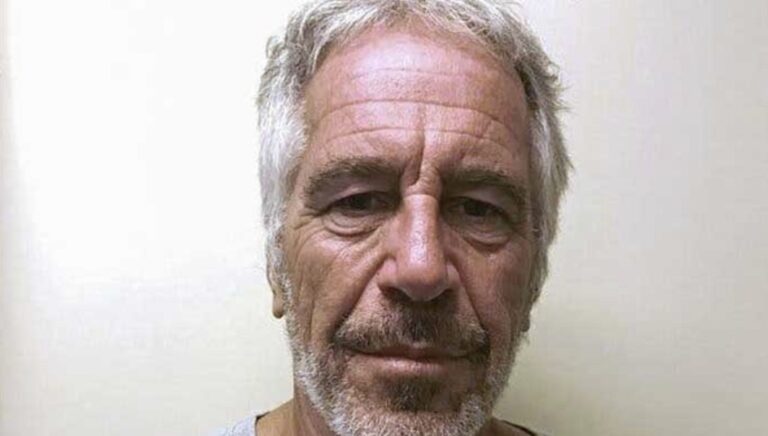
    The release of the Epstein files by the US Department of Justice has brought a French modelling agent’s name into the spotlight, raising questions about her connections to the disgraced financier. Gisele Attias Bonnouvrier, who ran the “Mill Valley Connection” agency, was identified in 2013 email exchanges with Jeffrey Epstein, according to documents reviewed by student journalists at California’s Redwood High School. The emails, which came to public attention as part of the broader release of Epstein-related files, outlined potential business proposals between Bonnouvrier and Epstein. These included casting fees for introducing models, image usage rights, sponsorship of events and modelling conventions, and acting as his Paris correspondent. One specific message referenced: “Regarding Hannah, my Austrian model, we can come and see you this evening if you are interested, and in that case let me know how I can get my fees.” The correspondence suggests a transactional relationship centered around the modelling industry, though the full extent of their interactions remains unclear. The investigation began as a school assignment for Ben Mueller, a student at California’s Redwood High School, who scoured the Epstein files for connections to his local Marin County. His findings, which highlighted “Mill Valley” in an Instagram slideshow, gained widespread attention online. The exposure prompted Bonnouvrier to email the school demanding the removal of her name from the coverage and threatening legal action. In her communication, Bonnouvrier denied providing women to Epstein, and there is no public record of her facing criminal charges in connection with the case. The Epstein files, released by the US Department of Justice, have been a subject of intense public interest, revealing the extensive network of associates connected to the late financier. Epstein, who died in 2019 while awaiting trial on sex trafficking charges, had a long history of connections to powerful figures in politics, business, and entertainment. The release of these documents has reignited debates about accountability and the extent of Epstein’s influence. Bonnouvrier’s name is among dozens that have surfaced in the files, though her role appears to be that of a business associate rather than a direct participant in Epstein’s criminal activities. Her denial of providing women to Epstein and the absence of charges against her suggest that her involvement may have been limited to professional interactions. However, the nature of her correspondence with Epstein has drawn scrutiny, particularly given the context of his well-documented history of exploiting young women. The role of student journalists in uncovering Bonnouvrier’s connection to Epstein highlights the power of investigative journalism, even at the high school level. Mueller’s work demonstrates how ordinary citizens can contribute to holding powerful figures accountable. As the public continues to sift through the Epstein files, more names and connections are likely to emerge, shedding further light on the network of individuals who enabled Epstein’s activities. For now, Bonnouvrier’s name stands as a reminder of the far-reaching web of associates that surrounded one of the most notorious figures in modern history.

Leave a Reply

Your email address will not be published. Required fields are marked *