epstein files gisele
|

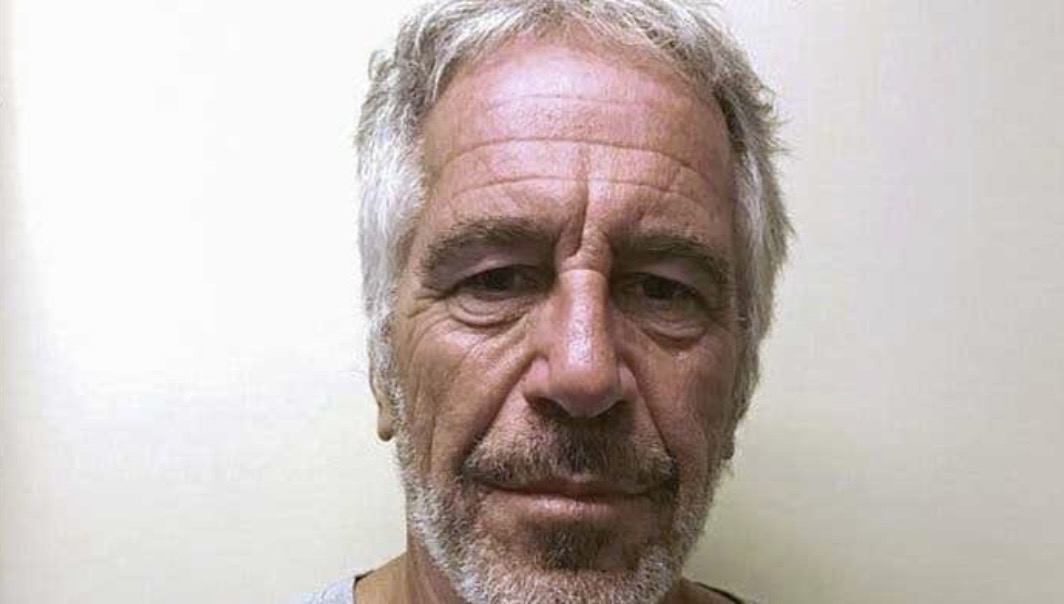
Epstein Files , who is Gisele Attias Bonnouvrier?

The release of the Epstein files by the US Department of Justice has brought a French modelling agent’s name into the spotlight, raising questions about her connections to the disgraced financier. Gisele Attias Bonnouvrier, who ran the “Mill Valley Connection” agency, was identified in 2013 email exchanges with Jeffrey Epstein, according to documents reviewed by student journalists at California’s Redwood High School.

The emails, which came to public attention as part of the broader release of Epstein-related files, outlined potential business proposals between Bonnouvrier and Epstein. These included casting fees for introducing models, image usage rights, sponsorship of events and modelling conventions, and acting as his Paris correspondent. One specific message referenced: “Regarding Hannah, my Austrian model, we can come and see you this evening if you are interested, and in that case let me know how I can get my fees.” The correspondence suggests a transactional relationship centered around the modelling industry, though the full extent of their interactions remains unclear.

The investigation began as a school assignment for Ben Mueller, a student at California’s Redwood High School, who scoured the Epstein files for connections to his local Marin County. His findings, which highlighted “Mill Valley” in an Instagram slideshow, gained widespread attention online. The exposure prompted Bonnouvrier to email the school demanding the removal of her name from the coverage and threatening legal action. In her communication, Bonnouvrier denied providing women to Epstein, and there is no public record of her facing criminal charges in connection with the case.

The Epstein files, released by the US Department of Justice, have been a subject of intense public interest, revealing the extensive network of associates connected to the late financier. Epstein, who died in 2019 while awaiting trial on sex trafficking charges, had a long history of connections to powerful figures in politics, business, and entertainment. The release of these documents has reignited debates about accountability and the extent of Epstein’s influence.

Bonnouvrier’s name is among dozens that have surfaced in the files, though her role appears to be that of a business associate rather than a direct participant in Epstein’s criminal activities. Her denial of providing women to Epstein and the absence of charges against her suggest that her involvement may have been limited to professional interactions. However, the nature of her correspondence with Epstein has drawn scrutiny, particularly given the context of his well-documented history of exploiting young women.

The role of student journalists in uncovering Bonnouvrier’s connection to Epstein highlights the power of investigative journalism, even at the high school level. Mueller’s work demonstrates how ordinary citizens can contribute to holding powerful figures accountable. As the public continues to sift through the Epstein files, more names and connections are likely to emerge, shedding further light on the network of individuals who enabled Epstein’s activities. For now, Bonnouvrier’s name stands as a reminder of the far-reaching web of associates that surrounded one of the most notorious figures in modern history.

Similar Posts

  • |

    PhD exams face explosive questions over quality

    A renewed debate over the reliability of PhD examinations has emerged following questions surrounding the doctoral thesis of Professor Jason Arday. Arday submitted his PhD thesis at Liverpool John Moores University in July 2015. The controversy resurfaced after Professor Richard Dawkins publicly questioned whether the thesis had been thoroughly examined. Other commentators have also raised concerns about its academic quality and allegations of plagiarism. The debate has now expanded beyond the individual case. It has prompted questions about how universities assess doctoral research and whether the existing system consistently maintains the required academic standards. A PhD normally represents several years of specialised research. A doctoral thesis can contain tens of thousands of words and often requires extensive academic reading and analysis. The assessment is generally carried out by two examiners. One is usually from the candidate’s university, while the other comes from an external institution. Critics argue that the workload involved in examining a thesis is not always matched by the financial compensation provided to examiners. Examiners are commonly paid a relatively modest fee for reviewing lengthy and complex research. This has raised concerns that some may not devote sufficient time to the process. There are also concerns about inconsistencies in examination decisions. Some candidates have reportedly failed their PhDs despite believing that their research met the required standard. Others have received a pass even when questions remained about the quality of their work. The appeal process can be particularly difficult for unsuccessful candidates. A failed PhD can mean years of research being lost. Students who finance their own studies can also face substantial financial losses. For those hoping to build academic careers, the consequences can be even more serious. Another issue is the selection of examiners. Supervisors often play a role in recommending academics to assess their students’ work. Critics say professional relationships within academia could potentially influence the choice of examiners or the assessment itself. Academic misconduct presents another challenge. Universities can spend considerable time investigating allegations of plagiarism and other forms of cheating. Lengthy investigations can involve hearings, appeals and administrative procedures. The discussion has also highlighted the subjective nature of academic assessment. Different examiners can sometimes reach different conclusions about the same research. In some cases, candidates who fail with one set of examiners may later receive a pass from another panel after an appeal. There is no suggestion that these concerns necessarily apply to Arday’s examination. The available debate does not establish whether his thesis met or failed to meet the required standard. However, the controversy has renewed calls for universities to examine their doctoral assessment systems. Questions include how examiners are selected, whether they receive adequate compensation, how thoroughly theses are reviewed and how allegations of academic misconduct are handled. The wider debate is therefore about more than one doctoral thesis. It raises fundamental questions about the credibility, consistency and accountability of the PhD examination process.

  • | |

    Punjab launches Integrated Safe City network

    LAHORE: Punjab Chief Minister Maryam Nawaz Sharif on Friday formally inaugurated the Punjab Integrated Safe City Network, describing it as a major step towards protecting citizens and reducing crime across the province. Punjab has become the first province in the country to establish an integrated Safe City network covering all 41 districts and two tehsils. Officials said coordinated efforts by the police, Crime Control Department (CCD) and Safe Cities Authority had contributed to an estimated 80 per cent decline in crime. Safe Cities Authority Managing Director Ahsan Younas briefed the chief minister on the province-wide smart surveillance system. He said artificial intelligence (AI) was strengthening monitoring and enabling authorities to respond more quickly to potential threats. The network combines intelligent surveillance, Emergency Helpline 15, traffic management, real-time command and control, and predictive policing. It also offers services through the Virtual Women Police Station, Child Safety Centre and Blood Bank, along with traffic and environmental monitoring facilities. The government plans to install another 1,500 panic buttons across Punjab and equip every police station with the facility. Smart screens will also be installed at public locations. AI-powered cameras will support facial identification and weapon detection, helping law-enforcement agencies improve surveillance and respond to security threats. Maryam Nawaz said the government would expand the Safe Smart Cities project to every union council in Punjab. She said the province had made significant progress in technology, smart policing and predictive policing. The chief minister said the government had transformed every district into a Safe City within the past two and a half years. She termed the ability to monitor the entire province through a single system a major achievement. She said AI-based surveillance and predictive policing were helping authorities identify developments early and take timely action. Speaking about the security situation, Maryam Nawaz said more than 70 areas of Punjab had previously been considered no-go zones, where people avoided travelling after sunset. She claimed that the government had now eliminated such areas across the province, including the riverine belt. She added that the riverine region had recorded no serious crime or kidnapping for ransom for nearly 10 months. The administration also recently organised a cricket tournament there, which she described as a sign of improving law and order. The chief minister said the provincial government would spend Rs30 billion on development projects in the riverine belt, including healthcare and other facilities, with the aim of bringing the area closer to the development standards of Punjab’s cities.

  • | | |

    One missed bill enough for Lesco to pull the plug?…

    The month of July brings heat and humidity to Lahore. It also brings frequent power cuts, mainly from weather related issues. When it rains, and the atmosphere is muggy, power breakdown occurs and people expect that power will return soon after it goes. But there is a different kind of fear. This fear grows when a house sits dark while every other house on the street still has light. This means the power meter has been disconnected. Recent reports say that field staff of the Lahore Electric Supply Company (LESCO), have been harassing consumers. These reports say that officials are disconnecting power for people who have missed just one month of bill payment. This goes against the normal rule. Under the normal rule, a meter can only be disconnected after two months of non-payment. LESCO spokesperson Rabia Qadir has denied these reports. She said the company has not received any complaint about this issue. She said that rules made by the National Electric Power Regulatory Authority (Nepra), protect the rights and safety of consumers. Under these rules, a meter cannot be disconnected simply because one month of bill payment was missed. She also said that Lesco has not received any formal complaint against any sub-divisional officer, executive engineer, or lineman of any of its circle regarding such incidents. However, she said that some linemen may try to scare or pressure consumers. These linemen may threaten to disconnect a meter if the consumer does not pay the outstanding bill right away. She said this could happen in some cases and this was not the company’s policy. But she stressed that Lesco has a consumer complaint cell. All complaints are recorded there. She said that according to these records, no such complaint has come in. The situation on the ground appears more complicated. This reporter visited the consumer cell at the office of the Lesco chief officer. Several consumers were present there. Their complaints were about different issues. Some wanted correction of industrial bills. Others reported broken meters. When asked about the reports of meters being cut for a single month of default, one officer gave an important detail. They said this practice usually happens in June or July. They said the ministry gives instructions during these months to speed up bill recovery. The goal is to reduce financial losses. Staff at the office suggested that a proper response should come from Lesco Chief Executive Officer Ramzan Butt or his public relations office. However, the public relations office said that Ramzan Butt was in Islamabad for a meeting at the time. This problem is not limited to LESCO areas. Similar reports have come from areas covered by the Multan Electric Power Company. In Muzaffargarh, consumers who missed one month of payment received strict warnings from field staff. These staff members told consumers to avoid another default. If they defaulted again, they were told, their meters would be disconnected. According to the rules, a power connection cannot be cut through meter removal unless bills for both the current and the previous month remain unpaid. Yet for several months now, Lesco teams have continued cutting connections even when only one month of payment was missing. Other than power severe threats, the other main issue people face is take notice of a major problem in the new electricity bill format. The Pakistan Hosiery Manufacturers and Exporters Association in a letter to the prime minister said the revised bill has removed a lot of information that consumers used to see. He said this makes it hard for people to check their meter readings, units consumed, tariff calculations and other charges on their own. They say the changes seem to have been made without following the proper process set by the National Electric Power Regulatory Authority, known as NEPRA. No formal request for changing the bill format was filed with NEPRA and that consumers were never asked for their objections, nor were they given a chance to take part in a public hearing before the change was made. They say that bills are supposed to show the date when the connection or meter was installed, but this information is now missing. The removal of the meter reading snapshot is a serious problem, because consumers can no longer check if the reading used for their bill matches the actual reading at their home. Also, information about the meter reader, along with the date and time of the reading, has also disappeared. They say that when a meter is changed, the bill should show a snapshot of the final reading from the old meter, but distribution companies are not properly doing this. The new bills carry a QR code instead, but this cannot replace information that should be clearly printed on the bill itself. Many senior citizens, people living in rural areas, and low income households may not have smartphones or the internet access needed to scan a QR code. Economist and corporate lawyer Dr Ikramul Haq commented on this situation. He said that the conduct of power distribution companies is not simply a small technical mistake. He called it as a form of pressure against ordinary citizens. These citizens are already struggling with rising prices, high electricity rates, and falling purchasing power. He said that reports of field teams arriving at homes, treating consumers badly, and threatening immediate disconnection show the real human cost of this careless approach. He added that in some cases, meters were removed without any prior notice being given. Dr said explained that the legal position on this matter is very clear. Under the revised Consumer Service Manual issued by Nepra, electricity cannot be disconnected only because the bill for the current or previous month remains unpaid. A notice of seven days must be given along with the bill for the second month of default. Only after this notice period passes, and the default continues, can disconnection take place. He said that removing a meter involves even more safeguards under the rules. He

  • EU Charges TikTok over child safety failures under digital rules

    The European Commission has issued preliminary findings accusing TikTok of breaching the EU’s Digital Services Act over how it protects children online. Regulators say TikTok’s account settings fall short of DSA safety standards, letting children make their accounts public and potentially exposing them to cyberbullying or contact from predators. The charges mark the fourth set of allegations against TikTok in two years, brought under a law that requires major tech platforms to do more to tackle illegal and harmful content. This latest finding zeroes in specifically on minors’ account settings. The Commission’s concerns do not stop at public accounts. Even private accounts are not fully safe, regulators say, since children can still be easily located through other users’ “following” and “followers” lists, visible even to people without a TikTok account. Investigators found that teens aged 13 to 15 could switch from private to public with little friction, while accounts belonging to 16 and 17-year-olds stayed visible to anyone online by default. TikTok has pushed back on the findings. The company said teen accounts come with more than 50 preset privacy and safety features, shaped by outside experts from the moment an account is created. It added that under-18 accounts are private by default, and that TikTok is among the only platforms where younger teens can not use direct messaging or have their posts surface in others’ feeds. The Commission wants stricter defaults going forward. It believes TikTok should adjust settings so that minors’ content is visible only to users the minor has specifically approved, rather than being public by default. TikTok now has a chance to respond before any final decision is made. The findings are preliminary, giving the company an opportunity to answer the allegations before the Commission issues a final ruling. If confirmed, TikTok could face fines of up to 6% of its global annual turnover. EU tech chief Henna Virkkunen framed the case as part of a broader principle. She said the Digital Services Act requires platforms to build protections for minors directly into how their services are designed, and holds them accountable when they fail to do so. A high level of protection, she added, should not be something users opt into, it should simply be the default. This is not TikTok’s only regulatory headache in Brussels. The platform is also facing separate EU scrutiny over allegedly addictive design features like infinite scroll and autoplay.

  • | | |

    Wheat imports spark farmer anger

    The federal government’s decision to import one million tonnes of wheat has sparked strong criticism from farmers and agricultural experts. The move has raised concerns about Pakistan’s food policy and the country’s continued dependence on imported grain despite being a major wheat producer. Pakistan produces around 31 million tonnes of wheat annually. The crop covers nearly 40 per cent of the country’s cultivated area and remains a major part of the daily diet of millions of people. Punjab is the country’s largest wheat-producing province and contributes almost three-fourths of national production. Farmers and experts say the issue is not simply about wheat availability. They believe repeated imports are linked to weak planning, inaccurate crop estimates, poor storage facilities, post-harvest losses and inconsistent government policies. Population growth and changing weather patterns have also increased pressure on the wheat supply chain. Farmer organisations have strongly opposed the import decision. They say local growers are still struggling to sell their recently harvested wheat. Many farmers claim they are receiving prices below their production costs after spending heavily on seeds, fertiliser, pesticides, diesel and electricity. Growers fear that imported wheat could further reduce local prices. They argue that the government should first ensure that locally produced wheat is purchased at fair rates before turning to international markets. The controversy has also highlighted changes in Pakistan’s wheat procurement system. Under wider economic reforms linked to the International Monetary Fund programme, successive governments have reduced state intervention in agricultural markets. The aim is to limit government losses and encourage greater private-sector participation. The IMF has not directly ordered Pakistan to stop purchasing wheat from farmers. However, governments have moved away from the traditional procurement and support price system. Provincial authorities have also reduced wheat purchases, leaving farmers increasingly dependent on private traders. Farmers say the transition has not been properly managed. They argue that private buyers now have greater influence over prices because of weak market regulation. This has forced some growers to sell their wheat below production costs.

  • |

    US Department of Defence orders swift ramp-up in weapons manufacturing as conflict with Iran strains stockpiles

    The United States Department of Defence has called on defence contractors to accelerate weapons production amidst growing anxiety over dwindling military stockpiles as hostilities with Iran persist. Deputy Secretary of Defence Steve Feinberg issued a formal directive on Wednesday, setting a 21-day deadline for defence industry leaders to deliver proposals aimed at driving significantly faster delivery timelines and boosting output for critical capabilities. The directive was initially revealed by The Washington Post following heightened scrutiny regarding the condition of US weapons reserves during the ongoing conflict. Spokesperson for the Department of Defence Sean Parnell verified the authenticity of the directive, noting that the submissions will directly shape the Pentagon’s budget request for fiscal year 2028. “The August 5 memo is real,” Parnell stated. “It will inform the fiscal year 2028 budget submitted to Congress for funding, and it is entirely consistent with our ongoing push to rebuild the defence industrial base.” Parnell added that direct engagement with weapons manufacturers is routine practice, defending the administration’s aggressive measures to expedite procurement schedules. He detailed that Feinberg is actively working to overhaul what he characterized as a broken, outdated, and overly intricate procurement framework, ensuring the military retains the capability to produce equipment at a pace that matches modern threat levels.

Leave a Reply

Your email address will not be published. Required fields are marked *