britishborn monk becomes

British-Born Monk Becomes First Foreigner to Reach Highest Rank

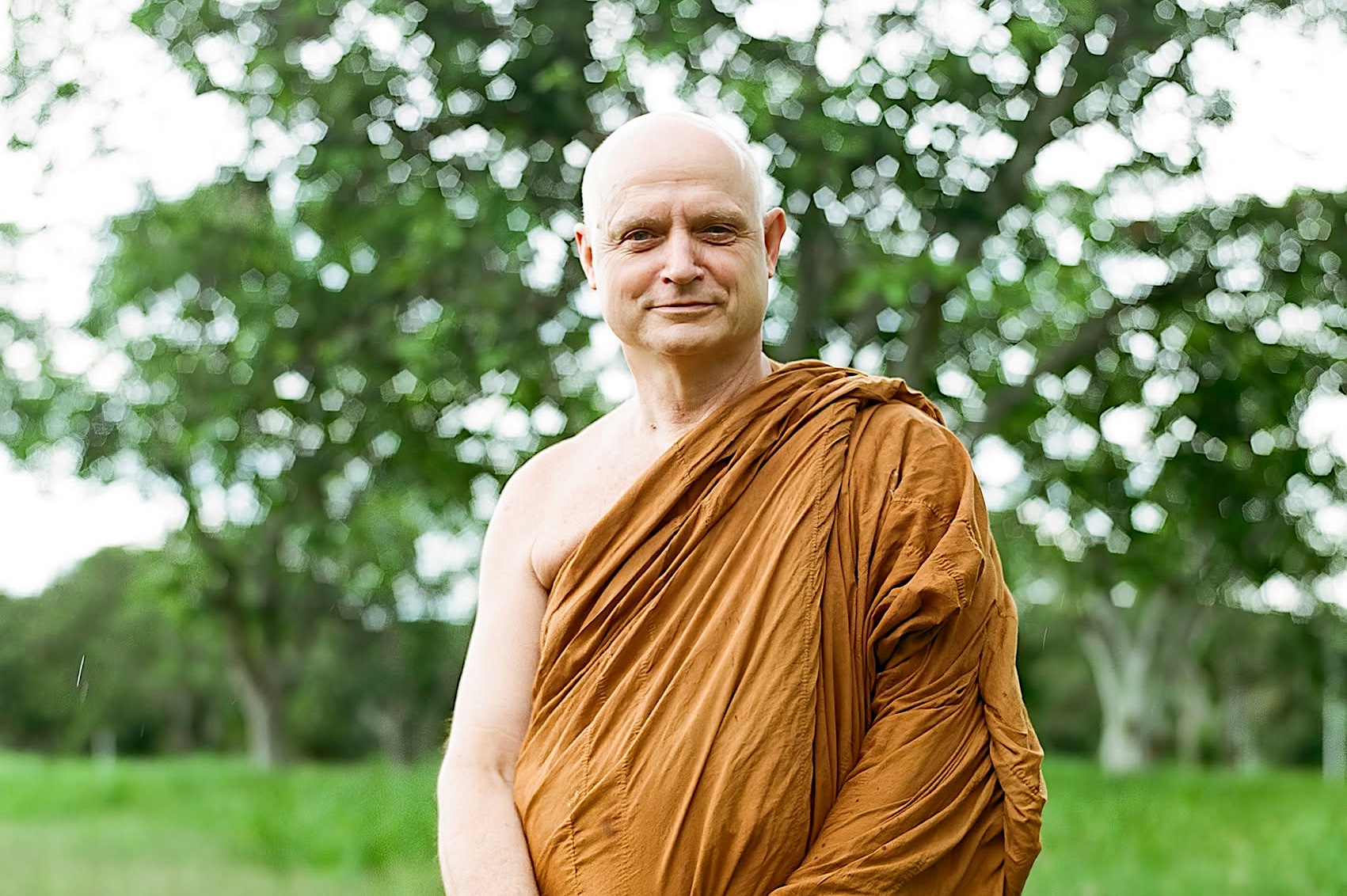
NAKHON RATCHASIMA, Thailand — The Thai Buddhist community is celebrating a historic milestone after a British-born monk was elevated to the kingdom’s highest echelon of the monastic hierarchy, becoming the first foreign national in the nation’s history to be appointed to the supreme rank of Somdet Phra Ratchakhana.

Thais mourn departure of Supreme Patriarch Somdet Phra Sangharaja

On July 12, 2026, the Royal Gazette published a royal command announcing the promotion of eight senior monks to this prestigious rank. Among them was Phra Brahmapatcharayanamunee, widely known as Ajahn Jayasaro (born Shaun Michael Chiverton), the resident monk at the Ban Rai Thaw Si Monastic Residence in Nakhon Ratchasima. Under the royal decree, he was bestowed the title of Somdet Phra Mahapatcharayanamunee, marking an unprecedented recognition of a foreign-born practitioner through a royal Suphanabat appointment.

Born on the Isle of Wight in England on January 7, 1958, Ajahn Jayasaro’s spiritual journey began long before his arrival in Thailand. Frequent school absences due to severe childhood asthma afforded him the time to pursue independent academic study, during which he began questioning the meaning of life. He found profound answers in Buddhist philosophy, which he embraced as the truth he had long sought. Determined to deepen his understanding, he began practicing meditation independently and worked from the age of 17 to save the funds necessary to travel to Thailand.

His formal spiritual path commenced in 1978 after practicing meditation with the esteemed Ajahn Sumedho in England. He subsequently traveled to Thailand and became a devoted disciple of the late Luang Por Chah Subhaddo, one of the country’s most revered meditation masters, at Wat Nong Pah Pong in Ubon Ratchathani. He ordained as a novice monk in 1979 and entered full monkhood on June 3, 1980, with Luang Por Chah serving as his preceptor. He was given the Pali name Jayasaro, meaning “one who is victorious through the dhamma.”

Dedicated to rigorous scholarship, Ajahn Jayasaro devoted himself to mastering Thai, Pali, and Sanskrit, operating on the belief that serious students of Buddhism must engage with the classical languages underlying the Buddhist canon. After completing his first five years in the monkhood, he undertook years of solitary forest wandering in the traditional dhutanga ascetic practice to cultivate his mind and body before returning to teach and disseminate the Buddha’s teachings.

Ajahn Jayasaro has played a prominent role in bridging Eastern and Western understandings of Theravada Buddhism. From 1986 to 1996, he served as deputy abbot of Wat Pah Nanachat, the International Forest Monastery established specifically for non-Thai monks, before serving as its abbot from 1997 to 2002. During this period, he earned widespread respect for delivering dhamma teachings fluently in both Thai and English. He was also entrusted with compiling “Stillness Flowing,” which is widely regarded as the most comprehensive biography and collection of teachings of Luang Por Chah.

In 2003, he stepped down as abbot to devote himself fully to meditation practice, relocating to the Ban Rai Thaw Si Monastic Residence in the Pak Chong district of Nakhon Ratchasima. There, he has continued to teach meditation while developing the “Vividh Buddha” concept, which integrates the Buddhist Threefold Training—morality, concentration, and wisdom—into the curriculum of the Panyaprateep School to promote holistic Buddhist education for youth.

His profound contributions have earned him extensive recognition beyond the monastic community. In 2010, he received the Culture Ministry’s Outstanding Thai Language User Award in recognition of his linguistic mastery. The following year, Mahachulalongkornrajavidyalaya University conferred upon him an honorary Doctor of Buddhist Studies degree in Dhamma Communication. In a rare and significant honor, His Majesty the King granted him Thai citizenship as a special case on March 9, 2020, bestowing upon him the Thai surname Bothanuwat, a name suggested by the distinguished Buddhist scholar Somdet Phra Buddhaghosacariya.

Ajahn Jayasaro’s ascent through Thailand’s monastic hierarchy has been steady and distinguished, with promotions in 2019, 2020, 2021, and 2024, culminating in his 2026 appointment to the supreme royal ecclesiastical title. Just weeks before this historic elevation, on June 4, he was invited to deliver a sermon on the Ten Perfections before His Majesty the King and Her Majesty the Queen at the Amarin Winitchai Throne Hall in the Grand Palace, underscoring his standing as one of Thailand’s most respected contemporary Buddhist teachers.

Wat Luang Phor Toh in Nakhon Ratchasima (Korat)

The appointment has been widely welcomed by Buddhist followers in Thailand and abroad, who regard it as a fitting recognition of a lifetime devoted to Buddhist practice, scholarship, and education. It stands as a testament to the inclusive and merit-based nature of Thailand’s spiritual traditions, bridging cultural divides through shared devotion to the dhamma.

-Thailand News (TN)
Similar Posts

  • | |

    National Assembly security assistant suspended

    The National Assembly Secretariat has suspended security assistant Waqas Ahmed over alleged misuse of official powers. According to an official notification issued by the National Assembly Secretariat, the security official has been removed from his existing duties and directed to report immediately to the Human Resources Management Branch. The notification did not provide detailed information about the specific incident or circumstances that led to the disciplinary action. However, it stated that the suspension was linked to the alleged misuse of authority. The development comes as the National Assembly Secretariat continues to enforce administrative and disciplinary measures among its employees to ensure compliance with official rules and regulations. Waqas Ahmed has been instructed to follow the directions contained in the notification and report to the designated HR branch without delay. Further action in the matter is expected after the relevant authorities examine the circumstances surrounding the alleged violation.

  • | | | |

    Four Palestinians killed in Israeli raid on West B…

    JERUSALEM: At least four Palestinians were killed and four others wounded after Israeli forces, accompanied by Israeli settlers, launched a raid on a town in the occupied West Bank on Friday, according to Palestinian health officials and local sources. The latest violence took place in the town of Tell, located southwest of Nablus in the northern occupied West Bank, where tensions have continued to escalate amid repeated military operations and attacks by Israeli settlers. The Palestinian Ministry of Health confirmed in a statement that the death toll from the incident had risen to four. It added that four more Palestinians were injured during the assault, with three of the wounded reported to be in critical condition and receiving emergency medical treatment. According to local residents and security sources, Israeli settlers entered the town before Israeli troops moved in, triggering panic among residents. Witnesses said the attackers targeted several residential neighborhoods and opened direct fire at two Palestinian homes. Residents described scenes of chaos as families rushed to take shelter while ambulances struggled to reach the wounded. Emergency crews and local volunteers evacuated the injured under difficult conditions as sporadic gunfire continued in parts of the town. The incident marks another deadly episode in the occupied West Bank, where confrontations between Israeli forces, settlers and Palestinians have intensified in recent months. Rights groups and humanitarian organizations have repeatedly expressed concern over the growing number of civilian casualties and attacks on residential areas. The Palestinian Ministry of Health condemned the killings and called on the international community to take immediate steps to protect civilians in the occupied territories. Palestinian officials have also urged international organizations to investigate the latest incident and hold those responsible accountable. Israeli authorities had not immediately issued a detailed statement regarding the operation or responded to the allegations made by Palestinian officials at the time of reporting. The occupied West Bank has witnessed a sharp rise in violence alongside the ongoing conflict in Gaza, with frequent Israeli military raids, armed confrontations and settler attacks contributing to worsening security conditions across the territory. Friday’s deadly raid in Tell adds to growing international concern over the deteriorating humanitarian situation in the Palestinian territories, as calls for restraint and renewed diplomatic efforts continue to mount. With casualties increasing and tensions showing little sign of easing, fears remain that violence could spread further across the region in the coming days.

  • | |

    Islamabad symposium examines Xi Jinping’s approa…

    ISLAMABAD: A joint symposium on “Xi Jinping Thought on Party Building” was held in Islamabad on Wednesday, bringing together senior Pakistani and Chinese officials, diplomats, parliamentarians, academics and representatives of think tanks to discuss China’s approach to political organisation, governance and institutional development. The symposium was organised by the Embassy of the People’s Republic of China in Pakistan in collaboration with the Institute of Regional Studies (IRS). Chairman Senate Syed Yousaf Raza Gilani attended the event as chief guest. The Chinese delegation included Liu Daxiu, Head of Delegation and First-Class Inspector at the Party Building Research Institute of the Organization Department of the Communist Party of China (CPC) Central Committee, and Zheng Huan, Professor of Party Building at the Central Party School of the CPC Central Committee. Chinese Ambassador to Pakistan Jiang Zaidong also addressed the gathering. While adressing, Pakistani and Chinese representatives reaffirmed the longstanding partnership between the two countries, noting that political and institutional exchanges have expanded alongside cooperation in economic, infrastructure and development-related fields. They further added that dialogue between political parties has become an important pillar of the Pakistan-China strategic relationship. Speakers outlined the evolution of Xi Jinping Thought on Party Building, describing it as a doctrine centred on strengthening the Communist Party of China through disciplined leadership, rigorous internal governance, organisational cohesion and ideological development. They said the framework seeks to ensure the Party’s long-term capacity to govern while maintaining accountability, institutional resilience and public trust. CPC’s efforts to curb corruption and maintain discipline, while strengthening the organisation at different levels were also discussed. The recurring theme throughout the symposium was that China’s development should not be viewed solely through the lens of economic growth. Pakistani and Chinese speakers argued that the country’s transformation has also been shaped by strong political organisation, consistent policy implementation and institutional continuity. At the same time, Chinese experts stressed that these experiences were not being presented as a model for direct replication, noting that every country must pursue its own path according to its national circumstances. Participants also reflected on the broader relevance of the CPC’s experience for political parties worldwide, discussing issues such as governance capacity, organisational resilience, leadership development and the ability of institutions to translate policy into tangible results. Chairman Senate Yousaf Raza Gilani, Ambassador Jiang Zaidong and IRS President Jauhar Saleem affirmed the importance of sustained engagement between the two countries and welcomed continued exchanges on governance, public policy and institutional development. The symposium concluded with an interactive session in which participants discussed the relevance of Party building, leadership and governance reforms to contemporary political challenges and future Pakistan-China cooperation.

  • Inspections Conducted Nationwide Reveal Underfilled Gas Tanks

    BANGKOK — Inspectors from the Department of Internal Trade under the Commerce Ministry have been conducting random inspections of outlets selling LPG cooking gas and gas-filling facilities to ensure they are not cheating customers by selling less gas than the tanks’ stated capacity. Cabinet freezes diesel and cooking gas prices for 3 months, raises electricity […]

  • Death Toll In Bangkok Rong Beer Na Fire Reaches 37

    BANGKOK, Thailand — The death toll from the devastating fire at the Rong Beer Na Ladprao entertainment venue in Bangkok’s Chatuchak district has risen to 37, following the death of a performing band member. Thitiwat “Din” Kaewkanha, a 27-year-old singer with the Tossakan band, succumbed to severe injuries at Rajavithi Hospital and after other injured […]

  • | |

    DI Khan church still guards colonial memories

    There are some places we pass every day without realising how much history they hold. They remain untapped until some visitors put their eyes on them. During summer vacations, I travelled to Dera Ismail Khan, a district situated in southern Khyber Pakhtunkhwa. It takes six hours from Lahore to arrive in this historic city. During my stay there, I came across one such place that immediately captured my attention, and I thought to write about it. It was St Thomas Church, sacred place of worship for Christian community. A large cross standing at the entrance, old rusty walls, and an ambience of spiritualism. But the Church showcased more than that. Its walls contain historical accounts of colonial past, the military campaigns led by British soldiers in this area and a grave of one Lieutenant Governor of Punjab.   St Thomas Church was built in 1856 during British rule in the Indian subcontinent. It is one of the oldest churches in present-day Pakistan. It has survived political changes, the Partition of 1947, and the passing of time. Even today it stands as a symbol of the rich and diverse heritage of Dera Ismail Khan. The church is not only a place of worship but also a reminder that different faiths and communities have long been part of the history of this region. As we walked inside, we met the old priest and caretaker of the church named Chand. He welcomed us warmly and narrated the remarkable history of this place. There are memorials of British soldiers who lost their lives in this region during military campaigns. The priest stood in front of each tablet inscribed on the church wall and briefed about it. One memorial narrates the names, ranks and units of one hundred and 69 British military officers and other ranks who were killed or died due to injuries or disease in Waziristan military campaigns launched between 1919 to 1921.     Another memorial lists details of sixty-eight officers and other ranks who met a similar fate during the 1936-1938 Waziristan military campaigns. Similarly, one tablet erected by friends and fellow officers mourns the death of Herbert Walter Gee, ICS, deputy commissioner of Dera Ismail Khan, who died in 1901. There are other memorials as well, erected by colleagues in memory of the fallen officers. I thought that these names contain historical accounts year by year about what happened in this part of the world at that time. Every sentence of the Priest carried a new story, such as how the church has witnessed a lot of happenings through generations and that it still serves the small Christian community living in Dera Ismail Khan. As we stepped outside, believing our visit had come to an end, the priest said, “Wait. I have to show you one more thing.” He took me to the back of the building, where I saw a large white grave standing quietly among the dusty bushes. Here rests Lieutenant General Sir Henry Marion Durand (1812-1871). Durdand – a quite familiar name for the people of Pakistan and Afghanistan. Sir Durand was a career British military officer, diplomat, and administrator. He served in the East India Company Army, took part in several military campaigns, and later became the Lieutenant Governor of Punjab from 1870 to 1871. His son Sir Mortimer Durand is the one who drew the contours of the border between British India and Afghanistan in 1893. A man who once held such an important position now lies in silence behind an old church, while many people living nearby are unaware that his grave even exists. Henry Marion Durand died in 1871 at the age of 58 from a tragic accident. He was visiting Nawab of Tank Shahnawaz Khan along with his daughter when he fell from an elephant. The elephant was passing through the gateway by the town of Tank with the Nawab on the same elephant and an official (Chaprassy). The gate was too low to cross an elephant with howdah. The howdah struck the walls of crossing and the elephant got frightened resulting in the fall of Durand. He remained unconscious for a few days and never recovered. He was buried beside St. Thomas’ Church in Dera Ismail Khan. The British suspected some conspiracy into this incident. One of descendent of Nawab Shahnawaz Khan says that The British launched an enquiry into it. But the daughter of Durand gave testimony in favour of the Nawab that it was just an accident and there was no fault on his part. However, as a punishment, the British authorities stripped the powers of Nawab Shahnawaz Khan in 1875 and sent him to Lahore under strict watch. He passed away in 1881 while under surveillance. Standing beside the grave of Sir Henry Durand, I felt as if I had stepped into a forgotten chapter of history. The name engraved on the stone reminded me that many important events and personalities of the past remain connected to places that we often overlook. How easily history can fade from people’s memories, even when it is standing right in front of us. As I left St Thomas Church, I felt that I had walked through a chapter of history that few people ever get to read. Sir Henry Durand ruled Punjab from this soil, and his son later sat across a table in Kabul and drew the line that still separates Afghanistan and Pakistan today. That line appears in newspapers and political debates all the time. Yet the grave of the man whose name it carries lies quietly behind a church in Dera Ismail Khan.

Leave a Reply

Your email address will not be published. Required fields are marked *