national assembly security
| |

National Assembly security assistant suspended

The National Assembly Secretariat has suspended security assistant Waqas Ahmed over alleged misuse of official powers.

According to an official notification issued by the National Assembly Secretariat, the security official has been removed from his existing duties and directed to report immediately to the Human Resources Management Branch.

The notification did not provide detailed information about the specific incident or circumstances that led to the disciplinary action. However, it stated that the suspension was linked to the alleged misuse of authority.

The development comes as the National Assembly Secretariat continues to enforce administrative and disciplinary measures among its employees to ensure compliance with official rules and regulations.

Waqas Ahmed has been instructed to follow the directions contained in the notification and report to the designated HR branch without delay.

Further action in the matter is expected after the relevant authorities examine the circumstances surrounding the alleged violation.

Similar Posts

  • |

    Tanzid Hasan hits century as Bangladesh dominate Australia

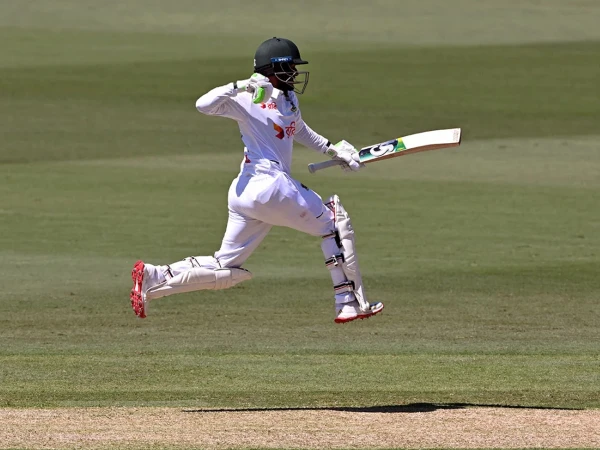
    Bangladesh strengthened their grip on the Darwin Test against Australia on Friday as opener Tanzid Hasan produced a memorable maiden Test century to put the visitors in a commanding position after the second day. Bangladesh finished the day on 351 for six, securing a valuable 153-run lead and leaving Australia facing an uphill battle in the opening Test. The biggest highlight was Tanzid, who marked only his second Test appearance with a composed century. The young opener spent nearly five hours at the crease, facing 197 deliveries and striking eight boundaries and one six on his way to three figures. His innings provided Bangladesh with the foundation they needed against a strong Australian attack. Tanzid first combined with Mominul Haque to build a 102-run partnership for the second wicket. He then continued Bangladesh’s progress alongside captain Najmul Hossain Shanto, with the pair adding another 93 runs. Shanto played a valuable supporting role before falling for 84, but Bangladesh refused to surrender their advantage despite Australia finding some success with the new ball. Australia managed to take three quick wickets with the second new ball, raising hopes of a late collapse. However, Mehidy Hasan Miraz and Hasan Mahmud responded with disciplined batting to frustrate the hosts. The pair remained unbeaten at the close, putting together an important 43-run partnership for the seventh wicket and ensuring Bangladesh ended the day firmly in control. For Australia, Josh Hazlewood, Mitchell Starc and Pat Cummins claimed one wicket each, but their efforts were not enough to prevent Bangladesh from establishing a substantial advantage. Tanzid’s century was particularly significant given his limited Test experience. Having played only his second match in the format, he showed patience and maturity against one of the world’s most respected bowling attacks. With Bangladesh already 153 runs ahead and four wickets still in hand, Australia face a crucial third day in Darwin. The hosts will need early breakthroughs to prevent Bangladesh from turning their advantage into a potentially decisive position.

  • | |

    Sindh IGP calls for proper investigation into Mir …

      Sindh Inspector General of Police (IGP) Javed Alam Odho has said that the death of Mir Raza is a tragic and deeply concerning incident, stressing that the case must be investigated and resolved properly  Speaking at a press conference in Sukkur, the Sindh police chief said that a committee had been formed to investigate the case and that a new investigation team would now carry out the inquiry. Commenting on the circumstances surrounding Mir Raza’s death, Odho said he believed that a communication gap or miscommunication had emerged in the case. He described the incident as unfortunate and said that the authorities were committed to ensuring that the matter was investigated in a proper and transparent manner. “We are not the policymakers; we are responsible for implementing the law,” the IGP said, adding that the investigation would eventually establish the facts surrounding the incident. Javed Alam Odho described the Mir Raza case as sensitive and said that both the police and the Sindh government wanted to ensure that it was handled appropriately. He said that much of the confusion surrounding the case had emerged because of the medical-legal report. According to him, an earlier report prepared by one doctor had presented in different findings, which contributed to uncertainty surrounding the case. The IGP said that a new committee had now been formed to investigate the matter and restore public confidence in the process. He explained that the previous committee had continued its work on the basis of the evidence that had been provided to it at the time. However, according to Odho, the evidence available to investigators had subsequently changed significantly. In light of the new evidence, he said, there was a need to restart the investigation using a different approach. The new investigation team has also been instructed to maintain open communication with the victim’s family and the media throughout the investigation, he added. Earlier, reports emerged that an attempt had allegedly been made to burn Mir Raza’s body with acid. According to forensic sources, traces of acid were reportedly found on his shirt, adding another dimension to the investigation. Meanwhile, the Sindh government had decided to have the Mir Raza case investigated through a judicial commission involving High Court judges. Sindh Law Minister Zia Lanjar said that a meeting had been held with the Chief Minister regarding the case. He said the government had decided to establish a judicial commission to investigate the circumstances surrounding Mir Raza’s death. Mir Raza Ali Khan went missing on July 28 from the Pakistan Employees Cooperative Housing Society (PECHS). According to reports, he left his home at around 4:09am in an online taxi. His body was recovered two days later from the Gulistan-e-Johar area. Police officials said that the body was found in a severely damaged condition and that Mir Raza had suffered a gunshot wound to the chest. Authorities also said that all of his social media accounts had been deactivated one day before his body was recovered, a development that investigators are expected to examine as part of the case. Mir Raza’s family has been seeking answers about the circumstances surrounding his death. His father previously said that Mir Raza was scheduled to get married on August 30 at Bait-ul-Mukarram Mosque in Gulshan-e-Iqbal. According to his father, Mir Raza had been extremely happy about starting a new chapter of his life and was looking forward to his upcoming marriage. The formation of a new investigation committee and the proposed judicial commission are expected to bring greater clarity to the case and address concerns raised by the victim’s family and the public.

  • | |

    Adam Driver, Sadie Sink join Marvel’s upcoming X-Men film

      Marvel Studios has revealed an impressive new cast for its highly anticipated X-Men movie, with Adam Driver, Sadiew Sink and Inde Navarrette among the actors set to join the franchise. The announcement was made by Disney during its biennial D23 fan convention in California on Friday, generating considerable excitement among thousands of Marvel fans. Marvel Studios president Kevin Feige appeared on stage at the Honda Center during the opening night of the three-day event. He gave more than 10,000 attendees an early glimpse of the upcoming X-Men project, which has not yet received an official title. The film is currently scheduled to arrive in cinemas in May 2028. Sadie Sink, known for her role in Stranger Things will reportedly continue as Jean Grey following her appearance in Spider-Man: Brand New Day. Inde Navarrette will portray Rogue, while the ensemble cast also features Kit Connor as Cyclops, Samara Weaving as Emma Frost, Christopher Abbott as Professor Xavier and Maya Boyd as Storm. Adam Driver is also joining the project, taking on the role of the villain Nathaniel Milbury. The actor appeared at the D23 gathering through a video message and spoke about his long-running discussions with Feige regarding a possible role in the Marvel Cinematic Universe. Driver said that he and Feige had been discussing the possibility of working together for several years and believed they had eventually found the right project and the right moment to make their collaboration happen. The X-Men announcement was one of several major reveals made by Disney and Marvel during the event. Feige also presented footage from Avengers: Doomsday another major Marvel production scheduled for release in December. The movie is expected to bring together several major superhero groups, including the Avengers, the Fantastic Four and the X-Men, along with Wakandan warriors. The heroes will face one of Marvel’s most prominent villains, Doctor Doom, who will be portrayed by Robert Downey Jr. The crossover is expected to play a major role in the expanding Marvel Cinematic Universe. Disney also provided fans with their first glimpse of Ryan Gosling in Lucasfilm’s upcoming Star Wars: Starfighter.The new film is scheduled to reach cinemas in 2027, a year that will mark the 50th anniversary of the original Star Warsmovie. The D23 event also featured announcements about several new sequels. Pixar presented previews of upcoming projects including Gatto and the supernatural adventure Ghost Market. The studio also confirmed The Incredibles 3 and Coco 2 Other returning franchises receiving new installments include Lilo & Stitch 2 Ice Age: Boiling Point and Frozen 3.Stars Kristen Bell, Idina Menzel and Josh Gad were among those promoting the latest Frozen project. The strong focus on sequels was noticed by attendees. One visitor, Gary Aurin, joked that almost everything at the event appeared to be a continuation of an existing franchise. Disney also surprised audiences by announcing a new animated project featuring Oswald the Lucky Rabbit. Director Jon Favreau introduced the character, who will appear in a mini-series scheduled to premiere on Disney+ next year. Oswald was created by Walt Disney and Ub Iwerks in 1927 for Universal Pictures and predates Mickey Mouse. Disney regained the character’s rights in 2006. The three-day D23 convention is scheduled to conclude on Sunday, bringing together fans, filmmakers, actors and creative teams to celebrate Disney’s upcoming entertainment projects.

  • | |

    Pakistani journalist Murtaza Ali Shah assaulted du…

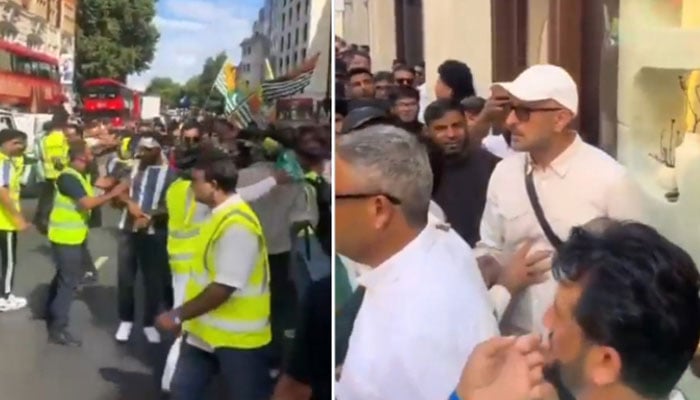
    Pakistani journalist Murtaza Ali Shah was assaulted and injured while covering a protest march in central London. According to reports, Shah was attacked while reporting on a march organised by supporters of the banned Joint Awami Action Committee (JAAC), which began at Hyde Park and proceeded towards the Pakistan High Commission. A large number of British Kashmiris gathered at Hyde Park before the march to express concern over the deteriorating situation in Azad Kashmir. Protesters called for an end to violence, the restoration of fundamental rights, and the resumption of dialogue. Eyewitnesses and videos showed that Shah came under attack as the march approached the Pakistan High Commission. While reporting from the scene, he was allegedly kicked and punched from both the front and behind by at least three individuals. A crowd quickly surrounded the journalist, escalating tensions until Metropolitan Police officers, protest organisers, and other participants intervened to prevent the situation from worsening. Police later escorted Shah away from the crowd and ensured his safety. According to reports, when Shah returned to the Pakistan High Commission to continue his reporting, members of the same group allegedly attempted to harass him again.

  • |

    India’s young protesters turn memes into a tool of resistance

    NEW DELHI: A massive youth-led protest in India’s capital has taken an unusual turn after thousands of demonstrators responded to a police crackdown not only with slogans but also with memes, short videos and social media posts. The online campaign has become a powerful extension of the street movement, with young protesters using humour to document their experiences and keep public attention focused on their demands. The demonstrations were organised by supporters of the Cockroach Janta Party (CJP), a youth movement that first emerged over allegations of examination paper leaks and irregularities in government recruitment. Over time, the campaign expanded into a broader call for transparency, accountability and reforms in India’s education and recruitment systems. Tens of thousands of protesters marched towards Parliament in New Delhi, demanding the resignation of Education Minister Dharmendra Pradhan. Demonstrators accused the government of failing to stop repeated examination leaks that they say have damaged the future of millions of students. The minister has rejected the allegations and insisted that opposition parties are using students for political purposes. Police blocked the march before protesters could reach Parliament. Security personnel used tear gas and baton charges to disperse the crowd after demonstrators attempted to cross security barriers. Authorities also suspended mobile internet services around the protest area, saying the measure was necessary to maintain law and order. Both protesters and police reported injuries during the clashes. Demonstrators claimed that many participants were beaten during the operation, while police said several officers were also injured. Once internet services were restored, social media platforms were flooded with videos recorded during the protest. Instead of sharing only images of violence, many young protesters posted humorous clips showing themselves preparing for the march, running from tear gas and joking about the day’s events. Several participants uploaded “fit check” videos before joining the protest. The popular social media trend, usually used to show clothing and fashion, was transformed into political content. Some joked that they were dressed for a protest where they expected to face police action. Hours later, many of those same individuals were posting videos from the streets after the clashes. Other protesters shared short clips reviewing the effects of tear gas in a humorous style or laughing about the long distances they ran while escaping baton charges. The humour quickly attracted millions of views and became one of the defining features of the protest movement online. Participants said the jokes were never meant to make light of the violence. Instead, they described humour as a way to deal with fear and emotional stress. Many said laughing together helped them remain calm during an extremely tense situation. Young demonstrators also explained that recording videos had become a natural part of participating in modern protests. Smartphones allowed them to document events from their own perspective and preserve evidence of what happened on the streets. Researchers who study digital culture say the protests highlight how political activism is changing among younger generations. Unlike traditional demonstrations that relied mainly on speeches, banners and newspapers, today’s movements increasingly use short videos, memes and online storytelling to spread their message. Experts believe internet humour has become an effective political tool because it reaches audiences who may not normally follow current affairs. A single viral video or meme can introduce complex political issues to millions of young people in a simple and engaging way. Observers also note that humour has always played an important role in protest movements around the world. Songs, cartoons, street theatre and satire have historically helped protesters build unity, reduce fear and maintain morale during difficult campaigns. Social media has simply given those traditions a new digital form.

  • | |

    Doctor suspended after performing laparoscopic sur…

    Islamabad: The Medical Tribunal has upheld a one year suspension of Dr Irfan Ashraf after finding that he performed laparoscopic surgery despite not completing the required training for independent laparoscopic procedures and operated at a healthcare facility that lacked an Intensive Care Unit and other essential facilities needed to deal with serious complications. The Tribunal also upheld a Rs100,000 fine and a ban preventing Dr Irfan Ashraf from performing laparoscopic procedures until he completes proper certified training. The judgment, announced on July 8, 2026, came in an appeal filed by Muhammad Zahid Niaz, whose father Niaz Ahmad died after a chain of medical treatment that began with laparoscopic surgery at Saleem Polyclinic in Mian Channu on December 31, 2016. The case took a serious turn when the disciplinary inquiry examined the actual training record of Dr Irfan Ashraf. The inquiry found that although he had taken part in laparoscopic procedures during his postgraduate training, most of his experience was as an observer or assistant. According to the judgment, Dr Irfan Ashraf had not completed the required number of procedures at the higher training levels needed to show independent surgical ability. The record showed that he had not completed even a single Level V procedure, which represents the stage at which a trainee is expected to perform laparoscopic surgery independently without supervision. The Tribunal said this was not simply a case where a normal surgical complication had occurred. The main concern was that Dr Irfan Ashraf undertook an elective laparoscopic operation without having demonstrated the required independent competence and at a facility that did not have the necessary backup facilities. The patient, Niaz Ahmad, suffered an injury to the common bile duct and hepatic vascular structures during the surgery. He was later taken to Bahawal Victoria Hospital in Bahawalpur for further treatment. He subsequently received treatment at Sheikh Zayed Hospital in Lahore and underwent an interventional radiological procedure at Lahore Medical Complex. Despite prolonged treatment at several hospitals, he died on March 4, 2017. The Punjab Healthcare Commission had earlier investigated the matter. It found that Saleem Polyclinic did not have the required infrastructure, qualified human resources and licensing needed for such surgical procedures. The Commission imposed a financial penalty on the owner of the healthcare establishment and referred the conduct of Dr Muhammad Saleem Akhtar and Dr Irfan Ashraf to the medical regulator for disciplinary action. The medical disciplinary committee later appointed Prof Dr Tanwir Khaliq, an experienced general surgeon, as an independent medical expert. He examined the medical record and assessed the standard of care, the management of laparoscopic complications and the facilities available at the clinic. Prof Dr Tanwir Khaliq concluded that the operation had been performed at a relatively small healthcare facility without an ICU and other essential backup facilities. He also found that Dr Irfan Ashraf was not sufficiently proficient in laparoscopic surgery, particularly when dealing with complications. The Tribunal noted that Dr Irfan Ashraf himself acknowledged that Saleem Polyclinic did not have an ICU or the facilities required to manage serious complications from laparoscopic surgery. The Tribunal also noted that Dr Irfan Ashraf had been working as a Senior Registrar at Bahawal Victoria Hospital, where better surgical support was available. When questioned about why the operation was carried out at the private facility, the explanation was that the patient wanted the surgery there. The Tribunal rejected this reasoning. It said a patient’s preference cannot remove a surgeon’s professional responsibility to determine whether a healthcare facility is safe enough for the planned procedure. The case also raised questions about what doctors tell patients about their professional skills. The disciplinary committee found that Dr Irfan Ashraf had represented himself as independently competent to perform laparoscopic surgery even though his training record did not show that he had completed the required independent procedures. The Tribunal said the evidence supported three major findings against Dr Irfan Ashraf. He performed an elective laparoscopic operation at a facility that could not properly manage foreseeable complications. He represented himself as independently competent despite incomplete training. He also exposed the patient to avoidable risk by choosing a facility without the necessary support instead of a properly equipped tertiary hospital. However, the Tribunal did not hold every doctor involved in the patient’s treatment responsible. Dr Muhammad Saleem Akhtar, the owner of Saleem Polyclinic, received a warning rather than a disciplinary punishment. The Tribunal found that there was no evidence that he personally performed the operation or took part in the surgical decision making. The Tribunal said ownership of a healthcare facility alone was not enough to impose the same disciplinary punishment on Dr Muhammad Saleem Akhtar as the operating surgeon. However, the warning required him to ensure that his facility was not used for procedures beyond its capacity. Dr Khurram Shafiq Khan was also cleared of professional negligence. His involvement came later, after the patient had already suffered complications from the earlier surgery. His role was connected with an embolization procedure to control bleeding from the hepatic artery. After examining his role, the disciplinary committee found no clear connection between the procedure performed by Dr Khurram Shafiq Khan and the patient’s eventual death. The Tribunal found no reason to disturb that decision. Muhammad Zahid Niaz had appealed because he believed the punishment against Dr Irfan Ashraf was too weak considering that his father’s treatment ultimately ended in death. He also wanted stronger action against Dr Muhammad Saleem Akhtar and Dr Khurram Shafiq Khan. The Medical Tribunal, chaired by Justice (Retired) Safdar Saleem Shahid, rejected the request for harsher punishment. The Tribunal said a tragic medical outcome does not automatically mean that every doctor involved was negligent. It explained that medical procedures can have known complications even when reasonable care is taken. The important question is whether a doctor failed to meet the level of skill and care expected from a competent doctor in similar circumstances. In the case of Dr Irfan Ashraf, however, the Tribunal found that the disciplinary committee had enough evidence

Leave a Reply

Your email address will not be published. Required fields are marked *