mystery deepens over
| |

Mystery deepens over 2 girls’ deaths in Lahore p…

LAHORE: The deaths of two young women in police custody have raised fresh questions after their autopsy reports revealed black spots on their lungs and blood clots in their hearts, while failing to find visible signs of physical assault or torture.

The two women, identified as Amina and Anmol, died while in the custody of Lahore’s Township police. According to sources, their post-mortem examinations found no external injuries or marks suggesting physical violence. Samples of their blood and internal organs have now been sent for histopathological testing, which is expected to help establish the final cause of death.

The autopsies were conducted two days after the deaths and the reports were finalised after the medical board reached a consensus. Doctors found the women’s livers, kidneys and stomachs to be in normal condition, while black spots were observed on both sets of lungs and clots were detected in their hearts.

The findings have not yet provided a definitive explanation for the deaths. Authorities are waiting for the histopathology results before determining the final cause.

The families of the deceased have meanwhile called for an independent and transparent investigation. Tajamul Hussain, the father of one of the women, rejected the police version that the deaths were linked to a medical condition. He questioned how both women could have suffered fatal heart problems while in custody and alleged that they were killed.

Police have denied the allegations. SSP Investigation Naveed Ahmed said the women had previous criminal records and were arrested after a passerby contacted Police Emergency 15 and reported that they had allegedly snatched an earring.

The officer also claimed that the women used drugs but firmly rejected allegations that they were tortured or mistreated during their detention.

With the histopathology reports still awaited, the investigation is expected to focus on the women’s medical condition, their treatment while in custody and the circumstances leading up to their deaths.

Similar Posts

  • PSB, ACTIVIT sign MoU to promote sports, health and youth development

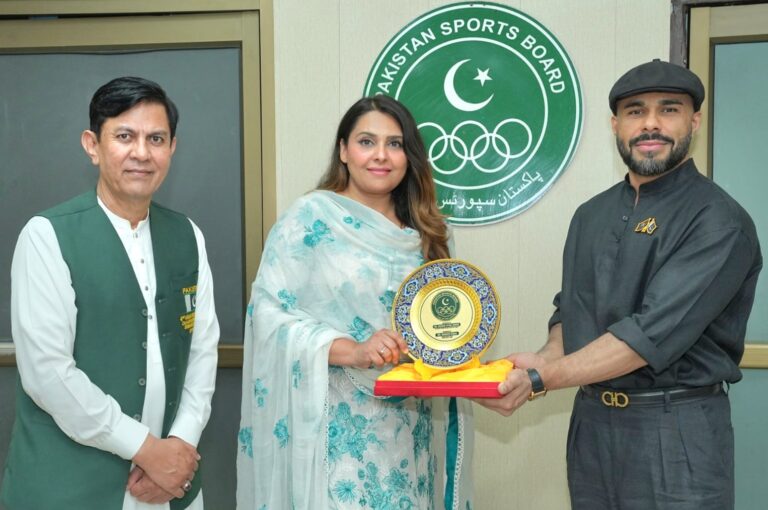
    The Pakistan Sports Board (PSB) Coaching Centre Lahore and ACTIVIT have signed a Memorandum of Understanding (MoU) aimed at promoting sports, improving health and wellness, and creating sustainable opportunities for athletes through long-term collaboration. The agreement was signed by PSB Coaching Centre Lahore Director Noorish Sabah and ACTIVIT CEO and Director of National Hospital Lahore, Rd. Rizwan Aftab Ahmed. Under the partnership, ACTIVIT will sponsor annual sports events organised by the PSB Coaching Centre Lahore on the occasion of Independence Day, ensuring regular competitions while providing greater support to athletes and youth development initiatives. Speaking at the signing ceremony, Noorish Sabah described the partnership as a significant step towards strengthening sports development in pakistan. She expressed her gratitude to Rd. Rizwan for supporting the Jashn-e-Azadi Celebrations 2026, saying that his sponsorship, including logistical support and winning prizes, made the national celebrations more meaningful and memorable for athletes and participants. She said the collaboration reflected a shared commitment to nurturing sporting talent, promoting healthy lifestyles and empowering Pakistan’s youth. “I am grateful to Rd. Rizwan for his valuable contribution to the cause of sports and youth development. People like him are not only a national treasure but also a true inspiration for all of us who believe in supporting the national cause and contributing to Pakistan at every possible level. We look forward to working together on many more impactful initiatives in the years ahead.” Rd. Rizwan described the agreement as an important milestone in expanding grassroots sports and strengthening the role of the PSB Coaching Centre Lahore. He emphasised the importance of maintaining an active lifestyle and working towards physical and overall well-being. “Healthy minds and healthy bodies are the foundation of a strong nation. Our academies can become beacons of education, inspiring young people to embrace sports, make healthier choices and build disciplined, productive lives,” he said. The MoU marks a shared vision to use sports as a powerful force for health, discipline, unity and youth empowerment, while creating more opportunities for young athletes to discover their potential and contribute positively to Pakistan’s future.

  • | |

    Sindh orders three-year appointment of Qaim Ali Sh…

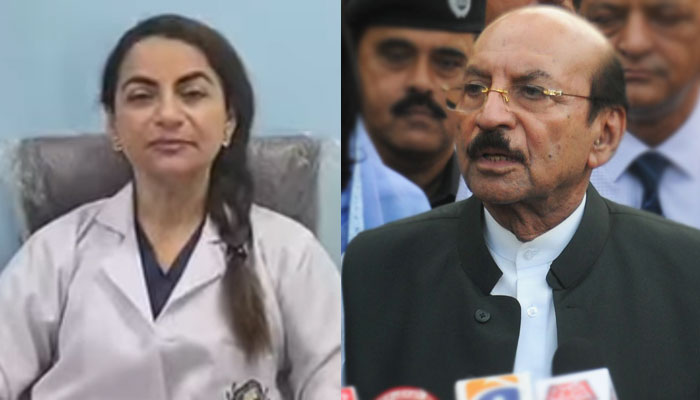
    The Sindh government has directed Jinnah Sindh Medical University (JSMU) to take immediate steps for the three-year appointment of Professor Dr Nighat Shah, daughter of former Sindh chief minister Qaim Ali Shah, just one day before her scheduled retirement. The directive was issued following a decision of the Sindh Cabinet. Secretary of the Boards and Universities Department Abbas Baloch has also issued a formal notification in this regard. According to the notification, the provincial cabinet discussed the matter during its meeting held on August 5 under agenda item 16. The cabinet cited the broader public interest, continuity of specialised medical services, academic leadership, postgraduate medical education, research, innovation and institutional standards as reasons for considering the appointment. The notification initially states that the vice chancellor should consider appointing Dr Nighat Shah as a professor for three years. However, it subsequently directs the university administration to take immediate steps to process her three-year appointment. The university has also been instructed to implement the cabinet decision without delay and submit a report on the action taken to the Boards and Universities Department on a priority basis. The appointment has raised questions because the government has referred to a notification issued by the Pakistan Medical and Dental Council (PMDC) on May 19, 2026. The PMDC had allowed public medical and dental institutions to hire retired faculty members on a purely contractual basis until the age of 65. However, the council had clarified that the policy was enabling in nature and was not mandatory for any institution. Under the PMDC policy, individual institutions were allowed to make decisions according to their requirements, rules, regulations and available resources. The PMDC notification also stated that contractual appointments of retired faculty would not create any right to permanent employment, seniority or absorption into the regular cadre. It further clarified that such appointments should not adversely affect the promotion opportunities, career progression or cadre structure of junior faculty members. The case has therefore raised questions about the need for the provincial cabinet to intervene in the appointment of a particular retired faculty member when the PMDC policy leaves the decision to individual institutions. The PMDC notification is a general policy applicable to public medical and dental institutions. It does not specifically direct any institution to appoint an individual faculty member. The proposed appointment has also triggered concerns over seniority within JSMU. Associate professors Dr Shazia Naseeb, Dr Nasreen Fatima, Dr Saba Khan, Dr Iram Majid and Dr Maimoona Rehman are reportedly among those whose seniority could be affected by Dr Nighat Shah’s appointment. The issue is likely to attract further attention because the proposed appointment comes immediately before Dr Nighat Shah’s retirement. Questions are also being raised about how the decision could affect existing faculty members and their career progression.

  • | | | |

    Iran, Oman make progress on Strait of Hormuz shipping talks

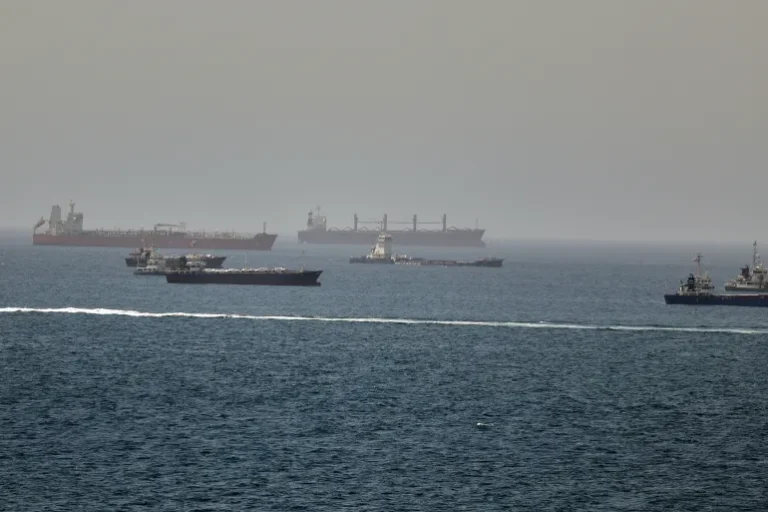
    Iran and Oman have reported progress in discussions aimed at ensuring safer shipping through the Strait of Hormuz amid the ongoing regional conflict. Iranian Foreign Ministry spokesman Esmaeil Baghaei said senior officials from both countries held talks in Tehran over two days to discuss arrangements for managing maritime traffic through the strategic waterway. According to Baghaei, the discussions focused on common principles and practical measures to maintain safe shipping while respecting the sovereignty of Iran and Oman, the two countries bordering the strait. He described the talks as useful and said progress had been made. Further political and technical consultations are expected to continue between the two sides. Baghaei also said there had been no change in the current traffic situation in the Strait of Hormuz. The development comes as tensions remain high between Iran, the United States and Israel. The waterway has become a major focus of the conflict because it is a critical route for global energy shipments. Iranian army spokesman General Abolfazl Shekarchi separately claimed that Washington had failed to achieve its objectives in the Strait of Hormuz and in weakening Iran. He described the situation for the United States as “chaotic and undesirable” and said Washington was apparently considering a new strategy. Shekarchi also suggested that any possible US withdrawal from the conflict could depend on Israel’s approval. Meanwhile, tensions have spread beyond the immediate battlefield. Iran summoned Ukrainian diplomats after Kyiv reportedly struck an Iranian vessel in the Caspian Sea, killing at least one sailor and injuring another. Ukraine said the operation targeted Russian vessels allegedly carrying military cargo linked to Iran. Ukrainian President Volodymyr Zelenskyy has also accused Russia of supporting Iran during the ongoing conflict.

  • |

    Maj Gen (R) Dr. Rajih Al-Baqami needs to go beyond defence diplomacy

    ISLAMABAD: For the second consecutive time, the Kingdom of Saudi Arabia has appointed a career military veteran as its ambassador to Islamabad, inaugurating a compelling new chapter in Pakistan-Saudi defense diplomacy. The recent designation of Major General (R) Dr. Rajih bin Tami Al-Baqami as the Saudi envoy comes at a pivotal geopolitical juncture. Smaller Gulf states like Qatar, Bahrain, and particularly Kuwait are increasingly turning their strategic gaze toward Riyadh for defense assurances. In response, Saudi Arabia has conspicuously integrated Pakistan into the its defensive calculus, both specifically within the Gulf and more broadly across the Middle East. This deepening collaboration signifies the beginning of the end of an era characterized by blind, unilateral reliance on the United States for regional security. Whether through multinational maritime security coalitions or trilateral defense pacts, Riyadh has unequivocally positioned Islamabad as a trusted strategic partner. Crucially, while Washington has not been entirely excluded from the new arrangements, the table that once seated only the US now accommodates Pakistan and Turkey’s president states that more seats will soon be filled. His hint is for Egypt. Turkey is playing a big game and Egypt is part of his plans for Sahel and Middle East. Moreover, Saudi Arabia has extended its supportive hand to facilitate Pakistan’s major defense agreements with Somalia, further expanding Islamabad’s footprint in Riyadh’s sphere of influence. This rapidly evolving landscape demands an exceptionally shrewd Saudi diplomat in Islamabad, given that intellectual powerhouses like the United States are unlikely to passively observe these seismic shifts in the affluent Gulf region. One could argue that defense diplomacy has cycled back to the fervor of the 1970s but the stark difference is that the towering strategic minds of that era, such as Zulfikar Ali Bhutto, Ardeshir Zahedi, and Henry Kissinger, are no longer among us and on the other hand China of today is 100 times more important than China of 1970s. However, Crown Prince Mohammed bin Salman has proven himself uniquely adept at this high-stakes game. Without jeopardizing ties with Washington, he has fortified relations with Beijing to an unprecedented degree; in fact, Riyadh is now expanding its commercial and strategic footprint with China more aggressively than with the US. According to the Saudi Foreign Ministry, Dr. Al-Baqami is among eight newly appointed ambassadors who recently took their oath before the Crown Prince in Jeddah. Despite this formal announcement, frequent winner of government awards for his services in journalism, Saleh Zaafir, curiously attributed the news to his “sources.” Meanwhile, leading AI chatbots and search engines like ChatGPT, DeepSeek, and Gemini draw a blank regarding the nature of Dr. Al-Baqami’s specific postings in Saudi diplomatic missions London and Jordan, which strongly suggests a classified, defense-oriented portfolio. Dr. Al-Baqami hails from the warrior Al-Baqami tribe, a lineage renowned for its formidable resilience and esprit de corps. Yet, a note of caution is urgently warranted. Misleading and unrealistic commentary regarding Saudi-Pakistan defense pacts has become rife. These agreements will not automatically neutralize Pakistan’s internal existential threats, specifically, the escalating bureaucratic corruption and spiraling crime rates. The historical precedent is sobering: the practice of deploying military officers to diplomatic roles is ancient, tracing back to the Roman and Byzantine empires, yet it has no inherent correlation with a nation’s prosperity or moral standing. Napoleon formalized this tradition in the pre-WWI era, but French military envoys failed to stave off famine and destitution in France. Subsequently, professional foreign ministries emerged, and bureaucrats, much like termites, consumed diplomacy from the inside, burying interstate relations beneath classified files. When opacity became the norm, civil society rebelled, giving rise to digital media and public diplomacy, a trend recently taken to extremes by former US President Donald Trump. For the new Saudi ambassador, public diplomacy will prove a formidable challenge. Although several Saudi-funded media outlets operate in Pakistan, they have largely been hijacked by populist scribes who have reduced them to ashes of sensationalism. Reclaiming these platforms from the clutches of journalistic mediocrity must be an immediate priority. Dr. Al-Baqami’s predecessor, Nawaf bin Malik Al-Maliki, a retired Saudi Navy officer, remained in Islamabad for nearly twelve years. Pakistan’s navy has historically played a pivotal role in the formation and training of the Saudi Naval Forces. Al-Maliki initially arrived as defense attaché in 2014, the very year MBS ascended to a high office before being appointed Defense Minister in 2015. When MBS became Crown Prince in 2017, Al-Maliki assumed the ambassadorship. He retained this position for a decade indicating that he was a trusted confidant of the Crown Prince. Intriguingly, Al-Maliki’s next posting is Algeria—a nation where military dominance permeates business and governance, ensnaring the country in poverty and bloodshed. As Algeria remains a Saudi ally, it is premature to forecast the trajectory of his new mission. To conclude, one can only hope that Major General (Retd) Dr. Rajih Al-Baqami’s tenure in Pakistan transcends the narrow confines of defense diplomacy. The true test of his legacy will lie in revitalizing public diplomacy, fostering people-to-people connections, and navigating the intricate socio-political fabric of Pakistan with the same dexterity he brings to the strategic chessboard.

  • | |

    PPP leads in two AJK seats as PML-N wins one

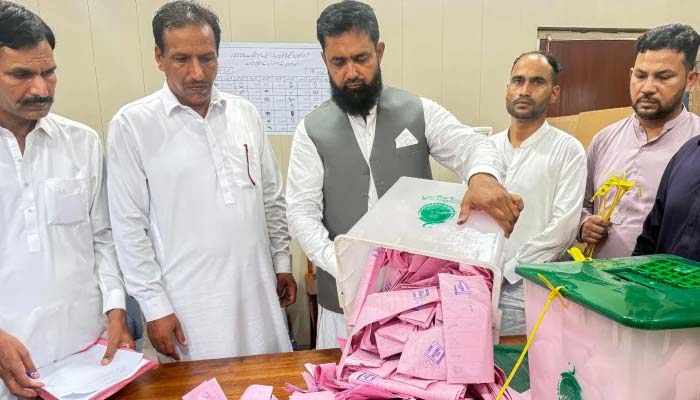
    MUZAFFARABAD: The Pakistan Peoples Party is leading in two constituencies in the third phase of the Azad Jammu and Kashmir Legislative Assembly elections, while the Pakistan Muslim League-Nawaz is ahead in one seat. An independent candidate has also secured victory in another constituency, according to unofficial results. Polling was held in four constituencies of Bagh and Haveli districts in the Poonch division. However, voting could not take place at several polling stations because of unrest and security concerns. In LA-15 Bagh-2, PPP candidate Zia Qamar was leading after results from most polling stations were received. PML-N candidate Muhammad Mushtaq Ahmed Minhas was in second place. PML-N candidate Sardar Mir Akbar Khan was leading in LA-16 Eastern Bagh. He was ahead of PPP candidate Sardar Qamar Zaman Khan, making the constituency the strongest prospect for the PML-N in the third phase. In LA-17 Haveli-Kahuta, PPP candidate and AJK Prime Minister Faisal Mumtaz Rathore was ahead of PML-N candidate Chaudhry Mohsin Aziz in the closely contested race. An unexpected result emerged from LA-14 Western Bagh. Independent candidate Sardar Sajid Iqbal Abbasi defeated former AJK prime minister and Muslim Conference leader Sardar Attique Ahmed Khan in his home constituency. The AJK Election Commission has also announced re-polling at 23 polling stations. The exercise will take place on August 15. According to Election Commission officials, voting will be repeated at nine polling stations in LA-16 and 14 stations in LA-15. Polling at these locations could not be conducted during the earlier round because of unrest. Elections in five constituencies of Poonch and two constituencies of Sudhnoti have been postponed. The authorities are expected to announce new dates after reviewing the security situation. Meanwhile, PML-N candidate Mohsin Aziz has demanded a recount in LA-17 Bagh-4. His request was rejected by the Returning Officer, prompting PML-N workers to stage a sit-in outside the RO office. Aziz said the protest would continue until the votes were recounted. The demand has added another layer of uncertainty to the closely contested election process. The PPP has also raised allegations of electoral irregularities. Party leaders have accused authorities of disrupting polling and creating difficulties for voters and polling agents. PPP representatives have called for an impartial review of complaints. They said the Election Commission should examine allegations of irregularities to ensure that the voters’ mandate is protected. PPP Senator Sherry Rehman had earlier raised concerns over delays in polling. She also alleged that party polling agents were stopped from entering some polling stations. The PML-N has rejected the allegations of widespread rigging. Senior PML-N leader Rana Sanaullah said the PPP was using the rigging narrative to cover what he described as an electoral setback. He also called for an end to protests and sit-ins. Sanaullah said legitimate demands would be considered by the government, while warning that violence and armed activity would be dealt with according to law. The PML-N remains in a strong position overall after the first two phases of the AJK elections. It won nine of 13 seats in the Mirpur division during the first phase. In the second phase, the party secured 15 seats from the Muzaffarabad division and refugee seats. The PPP won four seats in the first phase and six in the second. The PML-N has so far secured 24 seats across the first two phases, while the PPP has won 10. The ruling party has said it needs only a few additional seats to reach a two-thirds majority in the AJK Assembly.

  • |

    Moroccan migrants return home after failed bid to reach Europe

    Thousands of Moroccan migrants who entered Spain’s North African enclave of Ceuta this week have begun returning home after their hopes of reaching mainland Europe faded. Many said they were driven back by hunger, exhaustion and difficult living conditions, while others claimed they faced hostility after arriving in the Spanish territory. Several returnees said they had decided to cross into Ceuta after watching viral social media videos and receiving messages from friends claiming the heavily guarded border could be breached. Believing they had a chance to build a better future in Europe, many left their jobs and travelled to the border. However, after reaching Ceuta, migrants discovered there was no clear route to mainland Spain. Many said they became stranded in the enclave with limited access to food, water and shelter. One migrant said he survived for three days by drinking only water because he could not afford food. He described the cost of basic meals as extremely high and said life in Ceuta was far more difficult than he had expected. Returning migrants also claimed that many supermarkets and shops remained closed, making it difficult to buy essential supplies. Some spent days in wet clothes after swimming across the border and struggled to find safe places to rest. Several migrants alleged they were forced to leave certain neighbourhoods by local residents, although those claims could not be independently verified. Spanish authorities confirmed that two people suffered minor injuries in separate knife attacks and said one suspect had been arrested. Officials added that no deaths linked to the incidents had been reported. The large influx also affected businesses on both sides of the border. In the Moroccan border city of Fnideq, hotels and restaurants faced staff shortages after several workers crossed into Ceuta. Some employers have already begun looking for replacement workers as many employees remain missing. Meanwhile, daily life in Ceuta has gradually started returning to normal. Cafes have reopened in parts of the city, while police continue to maintain a strong security presence. Many businesses, however, remain closed as authorities monitor the situation. Aid workers said migrant reception facilities are operating at full capacity, with thousands of people still believed to be inside the enclave awaiting assistance or decisions on their future. Local residents expressed mixed emotions over the crisis. While many admitted the sudden arrival of thousands of migrants created fear and uncertainty, others said they sympathised with the young people, arguing they had been misled by false hopes of an easier route into Europe.

Leave a Reply

Your email address will not be published. Required fields are marked *