sindh orders threeyear
| |

Sindh orders three-year appointment of Qaim Ali Sh…

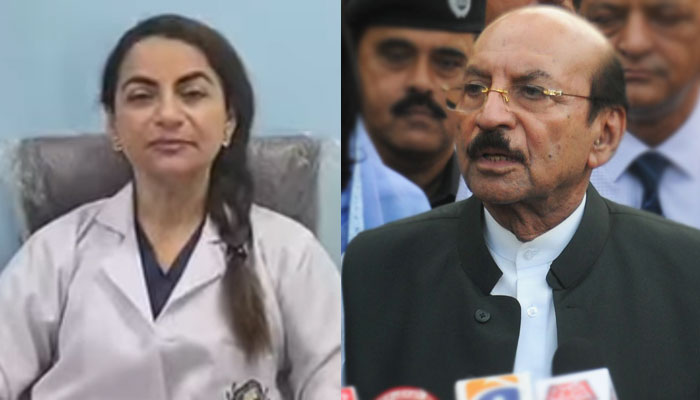
The Sindh government has directed Jinnah Sindh Medical University (JSMU) to take immediate steps for the three-year appointment of Professor Dr Nighat Shah, daughter of former Sindh chief minister Qaim Ali Shah, just one day before her scheduled retirement.

The directive was issued following a decision of the Sindh Cabinet. Secretary of the Boards and Universities Department Abbas Baloch has also issued a formal notification in this regard.

According to the notification, the provincial cabinet discussed the matter during its meeting held on August 5 under agenda item 16.

The cabinet cited the broader public interest, continuity of specialised medical services, academic leadership, postgraduate medical education, research, innovation and institutional standards as reasons for considering the appointment.

The notification initially states that the vice chancellor should consider appointing Dr Nighat Shah as a professor for three years. However, it subsequently directs the university administration to take immediate steps to process her three-year appointment.

The university has also been instructed to implement the cabinet decision without delay and submit a report on the action taken to the Boards and Universities Department on a priority basis.

The appointment has raised questions because the government has referred to a notification issued by the Pakistan Medical and Dental Council (PMDC) on May 19, 2026.

The PMDC had allowed public medical and dental institutions to hire retired faculty members on a purely contractual basis until the age of 65. However, the council had clarified that the policy was enabling in nature and was not mandatory for any institution.

Under the PMDC policy, individual institutions were allowed to make decisions according to their requirements, rules, regulations and available resources.

The PMDC notification also stated that contractual appointments of retired faculty would not create any right to permanent employment, seniority or absorption into the regular cadre.

It further clarified that such appointments should not adversely affect the promotion opportunities, career progression or cadre structure of junior faculty members.

The case has therefore raised questions about the need for the provincial cabinet to intervene in the appointment of a particular retired faculty member when the PMDC policy leaves the decision to individual institutions.

The PMDC notification is a general policy applicable to public medical and dental institutions. It does not specifically direct any institution to appoint an individual faculty member.

The proposed appointment has also triggered concerns over seniority within JSMU.

Associate professors Dr Shazia Naseeb, Dr Nasreen Fatima, Dr Saba Khan, Dr Iram Majid and Dr Maimoona Rehman are reportedly among those whose seniority could be affected by Dr Nighat Shah’s appointment.

The issue is likely to attract further attention because the proposed appointment comes immediately before Dr Nighat Shah’s retirement. Questions are also being raised about how the decision could affect existing faculty members and their career progression.
Similar Posts

  • |

    US awards Lockheed up to $58.6 billion for Patriot missile production

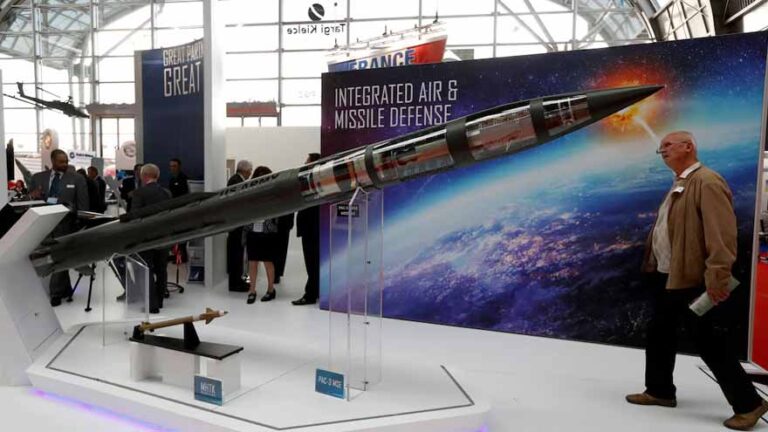
    The United States has awarded Lockheed Martin a defence contract worth up to $58.6 billion to expand production of Patriot interceptor missiles, as ongoing conflicts in the Middle East and Ukraine continue to put pressure on American weapons stockpiles. The agreement, announced by the Pentagon on Wednesday, is designed to strengthen the country’s air defence capabilities and ensure a steady supply of Patriot missiles over the coming years. The move comes after the United States supplied large quantities of military equipment to its allies while also using significant numbers of precision guided weapons during its own military operations against Iran. The new contract replaces an earlier one year agreement valued at $4.7 billion that was signed in April. It now establishes a seven year procurement framework covering the period from the 2026 to the 2032 fiscal years. According to the US Army, the longer term arrangement is expected to provide greater stability for production planning while helping manufacturers increase output to meet rising demand. The Pentagon has been urging defence companies to speed up production as global security challenges increase. Officials have been negotiating with major contractors throughout the year to secure higher manufacturing capacity for missiles and other critical military equipment. The administration of President Donald Trump has also increased pressure on defence firms to focus more heavily on fulfilling government contracts. Earlier this year, Trump signed an executive order directing officials to identify companies that were failing to meet contract obligations while continuing to reward shareholders. The administration has argued that expanding production is essential as the US seeks to replenish military inventories. Industry leaders have welcomed the government’s long term procurement strategy, saying it gives manufacturers greater confidence to plan future investments. However, they have also noted that Congress must approve the necessary funding before companies can fully expand production facilities and hire additional workers. Many of the final details surrounding Pentagon weapons contracts, including delivery schedules and production targets, are still being negotiated. The Patriot missile agreement follows a similar initiative involving RTX, the parent company of Raytheon, aimed at increasing production of Tomahawk cruise missiles. Under that plan, annual output is expected to rise dramatically from around 60 missiles to as many as 1,000 each year once production reaches full capacity. Lockheed Martin said the latest contract will support its long term investment plans and help the company significantly expand manufacturing. The company expects to triple production capacity for its PAC 3 MSE interceptor missiles by the end of 2030. It also plans to increase its workforce at its Camden, Arkansas, facility by about 50 percent, raising employment from roughly 1,200 workers to around 1,850. The defence contractor has also announced plans to invest between $8 billion and $9 billion through 2030 to modernise more than 20 facilities across the United States. The investment includes the construction of new munitions production centres in Alabama and Arkansas to support increased manufacturing. The PAC 3 MSE interceptor is one of the most advanced missiles used within the Patriot air defence system. It is designed to destroy incoming ballistic missiles, cruise missiles, and aircraft through direct impact rather than carrying an explosive warhead. The system has become an important part of air defence operations in several regions facing growing missile threats. Concerns over US missile inventories have intensified in recent months. The Washington based Center for Strategic and International Studies recently estimated that the US military has fewer than 1,000 Patriot interceptors and fewer than 250 THAAD interceptors remaining in its stockpile. Both systems have been heavily used during recent military operations in the Middle East while the United States has also continued supplying advanced air defence equipment to partners facing ongoing security challenges.

  • | |

    Rana Sanaullah compares AJK protesters to former m…

    Prime Minister’s Adviser Rana Sanaullah has compared some protesters in Azad Jammu and Kashmir (AJK) to militant groups that Pakistan had trained in the past, claiming that certain elements later turned against the country. Speaking during an interview Sanaullah alleged that individuals associated with armed organisations had become involved in the ongoing unrest in AJK. He claimed that these groups possessed weapons and were attempting to exploit public gatherings to create instability rather than pursue legitimate political objectives. According to the prime minister’s adviser, the protesters do not have genuine political demands and are instead using ordinary citizens as a shield while pursuing what he described as a broader agenda. He suggested that the situation involved elements who wanted to take advantage of public sentiment and use the protests to challenge the state. Sanaullah also defended the actions of law enforcement agencies, arguing that the authorities had few alternatives in dealing with what he characterised as an armed threat. He said security forces had to respond when groups carrying weapons created a law-and-order situation and posed a threat to public safety. The adviser maintained that the government could not allow armed groups to operate freely under the cover of protests. He said law enforcement agencies would continue to take action whenever necessary to maintain order and protect citizens. His comments come at a time of heightened political and social tensions in AJK, where protests have sparked a wider debate about public grievances, governance, law enforcement, and the government’s response. The situation has also raised questions about how authorities should balance the right to peaceful protest with the need to prevent violence and maintain public order. Sanaullah’s remarks are expected to fuel further discussion about the nature of the ongoing demonstrations and the role of political and armed elements in the unrest. While the government has emphasised the need for strict action against violence and armed activity, critics have continued to call for dialogue and political engagement to address the underlying concerns of the people of AJK.

  • | |

    Peshawar High Court blocks deportation of two Afgh…

    The Peshawar High Court has stopped the deportation of two Afghan journalists who are currently living in Pakistan. The court has directed the federal government to decide their cases within two months. The petitioners have been identified as Syed Ehsanullah Salehi and Syed Munir Ahmed. Both are Afghan journalists. The court said the two petitioners entered Pakistan on valid visas. They are currently residing in the country. According to the petitioners, they have applied for resettlement in France. Their applications are still under consideration. The petitioners also informed the court that the French embassy has already verified their cases. Their lawyer told the court that both journalists face a risk of arrest and deportation. He said the fear of deportation has also restricted their freedom of movement in Pakistan. After hearing the case, the high court directed the federal government to determine the matter within 60 days. The court also issued directions for the situation if the government fails to reach a decision within the given period. It said the Ministry of Interior should grant the petitioners temporary permission to remain in Pakistan. The ruling provides temporary relief to the two Afghan journalists while their cases are being reviewed by the relevant authorities. Separately, Minister of State for Interior Talal Chaudhry said Afghan nationals who wish to return to Pakistan in the future can do so after obtaining a valid visa. The development comes as Afghan nationals in Pakistan continue to face scrutiny over their legal status and documentation. The court’s decision means that the two petitioners cannot be deported while the government considers their cases within the period set by the court

  • | |

    Bessent tells allies to pick a side as US ramps up…

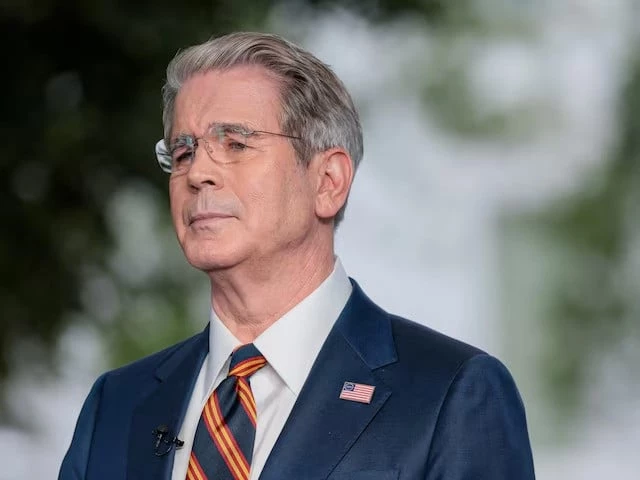
    US Treasury Secretary Scott Bessent has told Washington’s allies they must choose between backing or opposing the United States’ push to economically isolate Iran, as President Donald Trump moves to intensify pressure on Tehran. Bessent told a US broadcaster that the campaign would amount to the largest coordinated economic isolation effort in history, framing the choice facing allied nations as a binary one. Asked whether Washington intends to pressure China into joining the effort, Bessent said certain conversations are best conducted privately, while urging Beijing to align itself with the campaign. He said the administration’s plan to sharply escalate sanctions and economic pressure on Iran is ultimately designed to bring down the Iranian government, predicting the strategy would work and lead to the regime’s collapse. Bessent added that expanded economic pressure could actually lower the odds of the United States resuming large scale military action against Iran, arguing that a maximum pressure economic approach makes a return to major combat operations less likely. He said he plans to hold a press conference Monday to detail the administration’s next steps regarding Iran. Iran’s foreign ministry condemned the latest round of US sanctions, calling them a violation of international law and an attempt to undermine the country’s sovereignty. In a statement, the ministry said Washington had unveiled comprehensive economic sanctions despite previously claiming its measures targeted the government rather than ordinary Iranians. Tehran argued there is no legal or economic justification for the sanctions and described them as part of a broader US policy that threatens the international system and undermines rules governing relations between states. The ministry said the sanctions explicitly target Iranian citizens and institutions and represent a continuation of hostile American policy, adding that economic pressure functions as the flip side of military aggression. Iranian officials called the new measures a repeat of a strategy that has already failed and said the country would not bow to the pressure, vowing to defend its sovereignty and respond to what it characterized as hostile US actions. Separately, Egypt and Qatar emphasized the need for continued coordination toward a final, sustainable agreement to end the broader Middle East war while addressing the concerns of Gulf states, according to a statement from Qatar’s foreign ministry. The two countries discussed regional developments and diplomatic efforts aimed at reducing tensions and strengthening stability, and both underscored the importance of reopening the Strait of Hormuz and protecting the security and freedom of maritime navigation, calling uninterrupted trade through the waterway essential to both regional and global economic stability. Qatari Foreign Minister Sheikh Mohammed bin Abdulrahman bin Jassim Al Thani said traffic through the Strait of Hormuz needs to return to pre war conditions, adding that no party to the conflict should attempt to pressure or blackmail the other. Speaking at a press conference following talks in El Alamein, Egypt, he said the war’s consequences have been severe both within the Gulf region and beyond, and called for a return to how things stood before the conflict began, condemning any threats or obstacles standing in the way. Iran’s Revolutionary Guards warned separately that Saudi Arabia will be unable to contain Yemen’s Houthi movement as the group escalates attacks on the kingdom. A Guards spokesman said Saudi Arabia cannot stay safe from Houthi attacks, arguing that recent days have shown that the more the kingdom strikes, the more it gets hit in return. Iranian Foreign Minister Abbas Araghchi dismissed Trump’s economic threats as an attempt to distract American public attention from domestic financial troubles, including record debt levels and rising interest costs. He said Washington’s continued reliance on what he called failed policies would only produce further failures and further alienate the Iranian public, describing US economic pressure as a threat to the global economy and to national sovereignty more broadly. Deputy Foreign Minister Kazem Gharibabadi added that the US has shifted to what he called an economic war after failing to achieve results militarily, arguing that Washington’s need to compensate for miscalculations is driving it toward a bigger failure. Iranian Parliament Speaker Mohammad Bagher Ghalibaf, during a visit to Baghdad, met with Faiq Zaidan, president of Iraq’s Supreme Judicial Council, and blamed the United States for recent regional conflicts and disruptions to Gulf energy routes, while highlighting opportunities for deeper cooperation between Iran and Iraq. Separately, Iranian state media reported that authorities executed a man identified as Qaem Hosseini, a foreign national, over charges tied to his alleged role in nationwide protests in January, including accusations that he participated in events that led to the deaths of security force members. Trump underscored the stakes of the broader campaign in a social media post Wednesday evening, warning that any country allowing its financial institutions, businesses, airports or government entities to provide Iran with any kind of lifeline would face tremendous economic consequences. He promised what he called economic warfare and isolation on an unprecedented scale, though he offered few specific details. The war between the US and Iran, now in its sixth month, has killed thousands of people and drawn in countries across the Gulf, rattling global markets as Iran demonstrated its ability to disrupt shipping through the Strait of Hormuz, a waterway that carried roughly a fifth of the world’s traded oil before the conflict began. Two previous ceasefire agreements between Washington and Tehran, announced in April and June, both collapsed shortly after being reached, even as Israel has largely pulled back from direct fighting with Iran to focus its attacks on civilian infrastructure in Lebanon.

  • | | | |

    Four Palestinians killed in Israeli raid on West B…

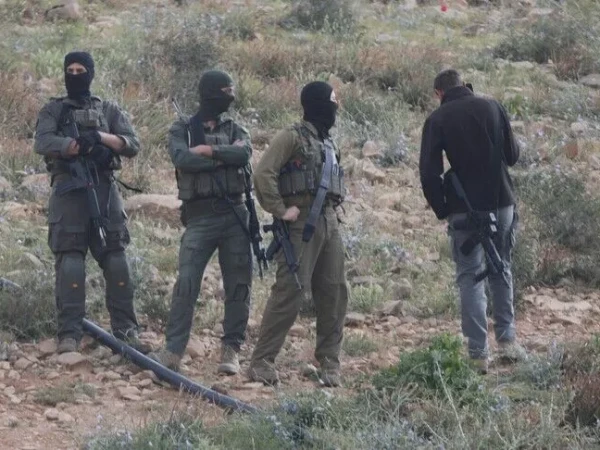
    JERUSALEM: At least four Palestinians were killed and four others wounded after Israeli forces, accompanied by Israeli settlers, launched a raid on a town in the occupied West Bank on Friday, according to Palestinian health officials and local sources. The latest violence took place in the town of Tell, located southwest of Nablus in the northern occupied West Bank, where tensions have continued to escalate amid repeated military operations and attacks by Israeli settlers. The Palestinian Ministry of Health confirmed in a statement that the death toll from the incident had risen to four. It added that four more Palestinians were injured during the assault, with three of the wounded reported to be in critical condition and receiving emergency medical treatment. According to local residents and security sources, Israeli settlers entered the town before Israeli troops moved in, triggering panic among residents. Witnesses said the attackers targeted several residential neighborhoods and opened direct fire at two Palestinian homes. Residents described scenes of chaos as families rushed to take shelter while ambulances struggled to reach the wounded. Emergency crews and local volunteers evacuated the injured under difficult conditions as sporadic gunfire continued in parts of the town. The incident marks another deadly episode in the occupied West Bank, where confrontations between Israeli forces, settlers and Palestinians have intensified in recent months. Rights groups and humanitarian organizations have repeatedly expressed concern over the growing number of civilian casualties and attacks on residential areas. The Palestinian Ministry of Health condemned the killings and called on the international community to take immediate steps to protect civilians in the occupied territories. Palestinian officials have also urged international organizations to investigate the latest incident and hold those responsible accountable. Israeli authorities had not immediately issued a detailed statement regarding the operation or responded to the allegations made by Palestinian officials at the time of reporting. The occupied West Bank has witnessed a sharp rise in violence alongside the ongoing conflict in Gaza, with frequent Israeli military raids, armed confrontations and settler attacks contributing to worsening security conditions across the territory. Friday’s deadly raid in Tell adds to growing international concern over the deteriorating humanitarian situation in the Palestinian territories, as calls for restraint and renewed diplomatic efforts continue to mount. With casualties increasing and tensions showing little sign of easing, fears remain that violence could spread further across the region in the coming days.

  • | |

    PTI protest: man without both arms arrested over a…

    ISLAMABAD: A unusual development emerged during the hearing of cases related to a Pakistan Tehreek-e-Insaf (PTI) protest in Islamabad after police presented a man who has no arms in court on allegations of throwing stones and wielding sticks during the demonstration. The case relates to a protest held on August 5 in connection with supporters expressing solidarity with PTI founder Imran Khan. Several people arrested in connection with the protest were produced before the District and Sessions Courts in Islamabad. Among those presented was Altaf Ullah, who had been arrested by police and booked at Koral Police Station. Authorities accused him of involvement in acts including stone-pelting during the protest. However, the case took an unusual turn when the accused’s lawyer, Sardar Masroor, challenged the allegations before Duty Magistrate Rizwan-ud-Din. The lawyer argued that his client could not have carried out the alleged acts because he has no arms. He asked the court to consider the physical condition of the accused before proceeding with the case. The court examined the accused in the courtroom and confirmed that both of his arms were absent. Following the observation, the court discharged Altaf Ullah from the case. He was therefore released from the proceedings related to the allegations brought against him. The incident has drawn attention because of the apparent contradiction between the allegations in the police case and the physical condition of the accused. The case highlights the importance of verifying allegations and considering available evidence during legal proceedings. While police had accused the man of involvement in stone-pelting and wielding sticks, the court’s examination of his physical condition led to his discharge. The development came during hearings involving people arrested over the August 5 PTI-related protest in Islamabad. Authorities had registered cases against individuals accused of various activities during the demonstration. The court’s decision in Altaf Ullah’s case means that he has been discharged from the particular case presented before the magistrate. The PTI protest man without both arms arrested case has since attracted attention because of the unusual circumstances surrounding the arrest and subsequent court proceedings. Further proceedings in other cases related to the protest are expected to continue separately.

Leave a Reply

Your email address will not be published. Required fields are marked *