awards lockheed 586
|

US awards Lockheed up to $58.6 billion for Patriot missile production

The United States has awarded Lockheed Martin a defence contract worth up to $58.6 billion to expand production of Patriot interceptor missiles, as ongoing conflicts in the Middle East and Ukraine continue to put pressure on American weapons stockpiles.

The agreement, announced by the Pentagon on Wednesday, is designed to strengthen the country’s air defence capabilities and ensure a steady supply of Patriot missiles over the coming years. The move comes after the United States supplied large quantities of military equipment to its allies while also using significant numbers of precision guided weapons during its own military operations against Iran.

The new contract replaces an earlier one year agreement valued at $4.7 billion that was signed in April. It now establishes a seven year procurement framework covering the period from the 2026 to the 2032 fiscal years. According to the US Army, the longer term arrangement is expected to provide greater stability for production planning while helping manufacturers increase output to meet rising demand.

The Pentagon has been urging defence companies to speed up production as global security challenges increase. Officials have been negotiating with major contractors throughout the year to secure higher manufacturing capacity for missiles and other critical military equipment.

The administration of President Donald Trump has also increased pressure on defence firms to focus more heavily on fulfilling government contracts. Earlier this year, Trump signed an executive order directing officials to identify companies that were failing to meet contract obligations while continuing to reward shareholders. The administration has argued that expanding production is essential as the US seeks to replenish military inventories.

Industry leaders have welcomed the government’s long term procurement strategy, saying it gives manufacturers greater confidence to plan future investments. However, they have also noted that Congress must approve the necessary funding before companies can fully expand production facilities and hire additional workers.

Many of the final details surrounding Pentagon weapons contracts, including delivery schedules and production targets, are still being negotiated.

The Patriot missile agreement follows a similar initiative involving RTX, the parent company of Raytheon, aimed at increasing production of Tomahawk cruise missiles. Under that plan, annual output is expected to rise dramatically from around 60 missiles to as many as 1,000 each year once production reaches full capacity.

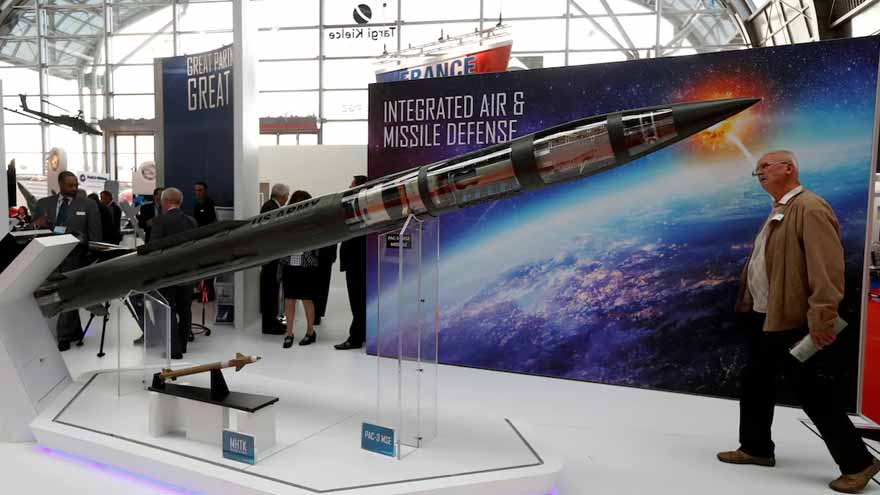
Lockheed Martin said the latest contract will support its long term investment plans and help the company significantly expand manufacturing. The company expects to triple production capacity for its PAC 3 MSE interceptor missiles by the end of 2030. It also plans to increase its workforce at its Camden, Arkansas, facility by about 50 percent, raising employment from roughly 1,200 workers to around 1,850.

The defence contractor has also announced plans to invest between $8 billion and $9 billion through 2030 to modernise more than 20 facilities across the United States. The investment includes the construction of new munitions production centres in Alabama and Arkansas to support increased manufacturing.

The PAC 3 MSE interceptor is one of the most advanced missiles used within the Patriot air defence system. It is designed to destroy incoming ballistic missiles, cruise missiles, and aircraft through direct impact rather than carrying an explosive warhead. The system has become an important part of air defence operations in several regions facing growing missile threats.

Concerns over US missile inventories have intensified in recent months. The Washington based Center for Strategic and International Studies recently estimated that the US military has fewer than 1,000 Patriot interceptors and fewer than 250 THAAD interceptors remaining in its stockpile. Both systems have been heavily used during recent military operations in the Middle East while the United States has also continued supplying advanced air defence equipment to partners facing ongoing security challenges.

Similar Posts

  • | |

    US imposes tariffs on Pakistan and more than 60 trading partners

    The United States has introduced a new round of tariffs on imports from more than 60 trading partners, including Pakistan, as part of a broader effort to strengthen measures against goods allegedly linked to forced labour. The new duties officially came into effect on July 24 and are expected to affect trade between the United States and a large number of countries. Under the latest policy, Pakistan has been placed in the group of countries whose exports to the United States will face a 10% tariff. The same tariff rate has also been imposed on imports from countries including India, Bangladesh, the United Kingdom, Canada, Argentina, Cambodia, Ecuador, El Salvador, Guatemala, Honduras, Indonesia, Jordan, Malaysia, Mexico, Sri Lanka and Trinidad and Tobago. Another group of 38 countries will face a 12.5% tariff on goods exported to the US under the same policy. The US administration said the decision was taken because these countries had failed to effectively prevent the import or production of goods allegedly made through forced labour. According to American officials, stronger enforcement of labour laws and better monitoring of supply chains are needed to stop products made under forced labour conditions from entering international markets. The new measures are part of President Donald Trump’s trade agenda, which focuses on using tariffs to address trade and labour-related concerns. The administration has introduced the tariffs under Section 301 of the US Trade Act, a legal provision that allows the United States to take trade action against countries it believes are engaging in unfair trade practices. The latest action follows a major legal setback earlier this year. In February 2026, the US Supreme Court blocked the implementation of an earlier tariff package introduced by the Trump administration. That policy had proposed additional duties ranging from 10% to 50% on imports from several countries. Following the court’s decision, the administration adopted a different legal mechanism to introduce the current tariffs. The decision has drawn criticism from several US trading partners. Australia and Brazil have described the new tariffs as unfair and said they will continue diplomatic efforts to have the measures withdrawn. Norway also rejected the allegations behind the tariffs, saying the decision was based on unsubstantiated claims. Despite the broad scope of the new policy, several important products have been excluded. The tariffs do not apply to imports of crude oil, natural gas, selected agricultural commodities and fertilisers. Goods that are already subject to separate Section 232 national security tariffs, including steel, aluminium, automobiles and copper, are also exempt from the latest duties.

  • |

    Northwestern province warns of glacial floods as Pakistan monsoon death toll rises to 107

    Authorities in Khyber Pakhtunkhwa province have issued urgent warnings regarding potential glacial lake outburst floods, urging residents and tourists to stay away from rivers, streams, and narrow mountain valleys. The disaster alert follows persistent heavy monsoon rains that have killed at least 107 people and injured 344 others across the country since late June, with the heaviest casualties reported in Khyber Pakhtunkhwa and Punjab due to flash floods, structural collapses, and electrocutions. The Provincial Disaster Management Authority has highlighted specific high-risk northern districts, including Upper and Lower Chitral, Upper Dir, Swat, Upper Kohistan, and Mansehra, where warm temperatures combined with intermittent rainfall are rapidly accelerating glacial melt. Local administrations have been instructed to monitor vulnerable zones closely, with officials advising the public to watch for sudden changes in river water colour or unusual mountain sounds that could signal an imminent surge.

  • | |

    Saima Noor’s epic transformation breaks the internet

    Veteran Pakistani actress Saima Noor has become the centre of attention on social media after videos showcasing her remarkable fitness transformation and youthful energy went viral. The 58-year-old actress was seen performing intense workout routines, including squats, kettlebell swings and other strength-training exercises. Her dedication to fitness drew widespread praise from fans, who admired her stamina, strength and disciplined lifestyle. Other viral clips also showed Saima Noor visiting a salon, where many social media users noticed her visible weight loss and refreshed appearance. Fans described the actress as “evergreen” and applauded her youthful looks. Some users jokingly remarked that the videos appeared so impressive they looked as though they had been created using artificial intelligence (AI). The renewed attention also brought back clips from Saima Noor’s earlier interviews, in which she spoke openly about her fitness journey and commitment to a healthy lifestyle. The actress revealed that there was a time when she felt she had become overweight, prompting her to make significant lifestyle changes to improve her health and overall well-being. Saima Noor said she does not follow strict or complicated diet plans. Instead, she prefers eating balanced meals in moderate portions and has incorporated intermittent fasting into her daily routine. She credited regular exercise, mental well-being and a disciplined lifestyle for helping her regain her fitness, boost her energy levels and maintain a healthy, youthful appearance.

  • |

    Injury clouds Masood’s future ahead of second test match

    Pakistan’s plans for the second Test against West Indies have hit a snag. Top-order batter Shan Masood has been ruled out due to a finger injury. The setback also raises doubts over whether he will be fit in time for the England tour. Masood, who is 36, injured the index finger on his left hand during the first Test. The injury occurred while he was batting. He went on to top-score for Pakistan, finishing with 109 runs in the first innings. Despite the pain, he still walked out to bat at number eight during the second innings. The Pakistan Cricket Board shared an official update confirming the situation. According to the board, Masood underwent a scan followed by a clinical assessment. He is now being treated by the team’s medical staff. The board also addressed his chances of playing against England. That series begins on 19 August in Leeds. Whether Masood takes the field will depend entirely on how well he recovers over the coming weeks. Until then, he will stay with the squad and continue his rehabilitation alongside the team. This injury adds to a growing list of concerns for Pakistan’s touring squad. Just before the first Test kicked off in the Caribbean, the team lost Abdullah Faftzal to a back injury. As a result, Faftzal has been ruled out of both the West Indies and England legs of the tour entirely. To fill the gap left by Masood, Pakistan has brought in two replacements. Saud Shakeel and Abdullah Shafique have both been added to the squad. Shafique did not need to travel far, since he was already in the Caribbean playing in the ongoing Global Super League 2026. Attention now turns to the second Test, which starts on 2 August in Port of Spain. West Indies currently hold a 1-0 lead in the two-match series, putting extra pressure on Pakistan heading into the contest. With injuries piling up before a crucial away assignment, Pakistan’s management will be hoping for good news on the fitness front soon. The coming days will be crucial, not just for the ongoing series, but also for shaping the squad Pakistan eventually takes into their high-stakes tour of England next month.

  • | |

    Electricity bills to increase this month under new…

    The National Electric Power Regulatory Authority (NEPRA) has announced a 75-paisa per unit increase in electricity prices for consumers across Pakistan, including domestic users of K-Electric. The revised tariff will be reflected in electricity bills issued during August 2026, according to an official notification released by the regulator. The increase has been approved under the monthly fuel cost adjustment (FCA) for June 2026, a mechanism through which electricity tariffs are periodically revised to account for changes in fuel generation costs. The adjustment applies to electricity consumers served by power distribution companies nationwide, including those receiving electricity from K-Electric in Karachi. According to the notification, consumers will pay an additional Rs0.75 per unit in their August electricity bills. The fuel cost adjustment is a routine regulatory measure designed to recover fluctuations in the cost of electricity generation caused by varying fuel prices and the overall energy mix used by power producers. NEPRA stated that the revised charges are part of the monthly adjustment process and are intended to align electricity tariffs with the actual cost of power generation during the relevant period. The authority regularly reviews requests submitted by power distribution companies before approving any changes in consumer tariffs. The latest increase comes as electricity consumers across Pakistan continue to face higher utility costs amid rising inflation and increasing household expenses. The adjustment will affect millions of residential, commercial, and industrial consumers, although the exact financial impact will depend on individual electricity consumption levels. Domestic consumers in Karachi supplied by K-Electric will also be subject to the revised tariff, ensuring that the increase is implemented uniformly across the country. The notification confirms that the additional charges will be included in the current billing cycle for August. Fuel cost adjustments are separate from the base electricity tariff and may result in either increases or reductions in monthly bills depending on changes in fuel prices and electricity generation costs. In recent years, these periodic revisions have become a regular feature of Pakistan’s electricity pricing system as regulators seek to recover actual power generation expenses. Consumers are advised to review their upcoming electricity bills carefully to understand the impact of the latest tariff adjustment and any other applicable charges included in the monthly billing statement.

  • |

    Gold prices hold steady at Rs461,936 per Tola

    KARACHI: Gold prices in Pakistan remained unchanged on Tuesday, with the price of one tola of 24-karat gold holding at Rs461,936, according to the latest rates released by the All-Pakistan Gems and Jewellers Sarafa Association (APGJSA). The local bullion market remained relatively calm after gold recorded a notable increase in the previous trading session. On Monday, the price of gold had risen by Rs2,000 per tola, bringing it to Rs461,936. The price of 10 grams of 24-karat gold also remained unchanged at Rs396,035 on Tuesday. In the international market, gold prices showed little movement, with the benchmark rate standing at $4,395 per ounce, including a $20 premium. The stability in global bullion prices contributed to the lack of significant movement in domestic gold rates. Market participants continue to closely monitor international developments, particularly movements in the US dollar, expectations surrounding global interest rates and geopolitical developments, all of which can influence demand for the precious metal. Meanwhile, silver prices moved in the opposite direction in the domestic market. The price of silver declined by Rs43 per tola, settling at Rs6,986 per tola.

Leave a Reply

Your email address will not be published. Required fields are marked *