psb activit sign

PSB, ACTIVIT sign MoU to promote sports, health and youth development

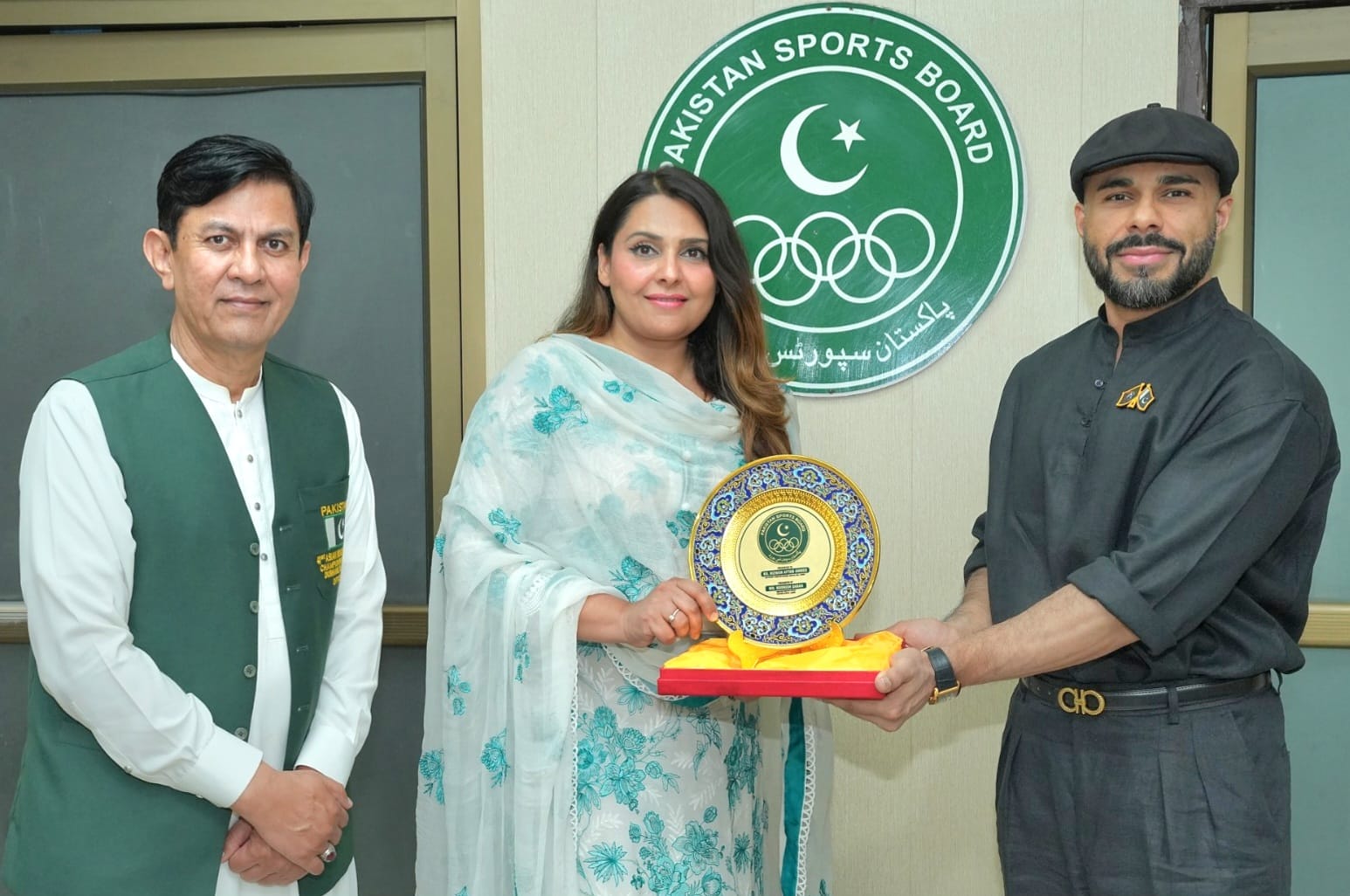
The Pakistan Sports Board (PSB) Coaching Centre Lahore and ACTIVIT have signed a Memorandum of Understanding (MoU) aimed at promoting sports, improving health and wellness, and creating sustainable opportunities for athletes through long-term collaboration.

The agreement was signed by PSB Coaching Centre Lahore Director Noorish Sabah and ACTIVIT CEO and Director of National Hospital Lahore, Rd. Rizwan Aftab Ahmed. Under the partnership, ACTIVIT will sponsor annual sports events organised by the PSB Coaching Centre Lahore on the occasion of Independence Day, ensuring regular competitions while providing greater support to athletes and youth development initiatives.

Speaking at the signing ceremony, Noorish Sabah described the partnership as a significant step towards strengthening sports development in pakistan. She expressed her gratitude to Rd. Rizwan for supporting the Jashn-e-Azadi Celebrations 2026, saying that his sponsorship, including logistical support and winning prizes, made the national celebrations more meaningful and memorable for athletes and participants.

She said the collaboration reflected a shared commitment to nurturing sporting talent, promoting healthy lifestyles and empowering Pakistan’s youth.

“I am grateful to Rd. Rizwan for his valuable contribution to the cause of sports and youth development. People like him are not only a national treasure but also a true inspiration for all of us who believe in supporting the national cause and contributing to Pakistan at every possible level. We look forward to working together on many more impactful initiatives in the years ahead.”

Rd. Rizwan described the agreement as an important milestone in expanding grassroots sports and strengthening the role of the PSB Coaching Centre Lahore. He emphasised the importance of maintaining an active lifestyle and working towards physical and overall well-being.

“Healthy minds and healthy bodies are the foundation of a strong nation. Our academies can become beacons of education, inspiring young people to embrace sports, make healthier choices and build disciplined, productive lives,” he said.

The MoU marks a shared vision to use sports as a powerful force for health, discipline, unity and youth empowerment, while creating more opportunities for young athletes to discover their potential and contribute positively to Pakistan’s future.

Similar Posts

  • | |

    Govt withdraws controversial telecom amendment bil…

    ISLAMABAD: The government on Thursday withdrew the Pakistan Telecommunication (Re-organization) (Amendment) Bill, 2026, from the Senate amid concerns raised by opposition lawmakers and stakeholders in the telecom sector. The withdrawal motion was moved on the Senate floor by Minister of State for Interior Talal Chaudhry on behalf of the Minister for Information Technology and Telecommunication. The proposed legislation sought to introduce amendments to the existing legal and regulatory framework governing Pakistan’s telecommunications sector. However, the bill had faced criticism in recent weeks, with opposition members and industry representatives expressing reservations over several of its provisions. No specific reason for withdrawing the bill was disclosed during the Senate proceedings. However, government sources indicated that the legislation could be brought back before Parliament after further consultations with relevant stakeholders and consideration of their concerns. The Pakistan Telecommunication (Re-organization) Act provides the legal framework for the structure, licensing and regulation of the country’s telecom sector. With the bill withdrawn, the existing telecom regulatory framework will remain unchanged for the time being.

  • | |

    Injection marks found on woman who died at Lahore …

    Medical board sources have revealed that injection marks were found on the arm and wrist of one of the two women who died at Township Police Station in Lahore. According to sources, around three and a half hours passed between the time the women were brought to the police station and their deaths. The sources said there was no significant difference in the post-mortem reports of the two women. The exact cause of death, however, has not yet been established. Police sources said the two women were not searched after being brought to the police station. They added that no female police personnel were present when the women were brought to the station. According to sources, both women were brought to the police station following a call made to emergency helpline 15. They reportedly remained seated near the station’s muharrir for around two hours. The muharrir was preparing to send the women to the female lock-up when the situation changed, sources said. Police officials said a case had been registered and the women were subsequently handed over to the investigation wing. They were reportedly being prepared for transfer to jail when both women collapsed. Sources further said there was no CCTV camera installed in the room of the investigation wing where the women were present. Police said female officers assigned to the station were deployed on duty at Data Darbar at the time. Officials maintained that women are searched before being placed in the female lock-up. Meanwhile, medical experts have suggested that the women may have died after consuming or being given a poisonous substance. Experts said the actual cause of death can be determined through forensic examination of samples collected during the investigation. The deaths have raised questions about the circumstances in which the women died while in police custody. Authorities are expected to rely on forensic evidence, post-mortem findings and other available evidence to establish the exact cause of death.

  • | |

    Senator Abdul Qadir calls for urgent action agains…

    Senator Muhammad Abdul Qadir has expressed serious concern over the rising cost of living in the country. He said inflation is increasing at a rate of 9.66 percent, while ordinary people are struggling to meet their daily needs. In a statement, the Chairman of the Senate Standing Committee on Defence Production said the continued rise in the prices of essential commodities was creating additional pressure on households. He said prices of 23 basic items had increased, making it difficult for people to manage their monthly expenses. According to the senator, the rising prices of food and other necessities are directly affecting families with limited incomes. Senator Abdul Qadir urged the government to take immediate steps to control inflation. He said effective measures were needed to provide relief to the public and prevent further increases in the prices of essential commodities. He also raised concerns over the role of profiteers and powerful market mafias. He alleged that some groups were artificially increasing the prices of essential goods for their own benefit. The senator said such practices were adding to the financial difficulties faced by ordinary citizens. He stressed that there should be strict monitoring of markets to identify those involved in illegal profiteering and price manipulation. Senator Abdul Qadir called for effective and indiscriminate action against profiteers and mafias. He said no individual or group involved in artificially increasing prices should be allowed to exploit consumers. He further emphasized that controlling inflation required coordinated efforts from the government and relevant authorities. Regular market inspections, effective price monitoring and strict enforcement of laws, he said, were essential to protect consumers. The senator maintained that immediate action was necessary to ease the burden on the public. He urged the government to make controlling inflation a priority and take practical measures to stabilize prices across the country.

  • | | |

    Private sector lending surges 15% in FY2025–26, …

    Pakistan’s private sector borrowing recorded its strongest growth in four years during the fiscal year 2025–26, signaling renewed business confidence and improving economic activity, according to Adviser to the Finance Minister Khurram Shahzad. Shahzad said private sector credit expanded by nearly 15 percent over the fiscal year, with total lending reaching Rs1.138 trillion. He described the increase as a positive indicator of strengthening economic momentum, driven by greater financial support for businesses and productive sectors. According to the adviser, around 89 percent of the new loans were directed toward key segments of the economy, including manufacturing, wholesale and retail trade, and agriculture. These sectors have played a central role in boosting production, expanding commercial activity, and encouraging private investment. The manufacturing sector emerged as the largest beneficiary, receiving Rs657 billion in fresh financing. Shahzad noted that the substantial flow of credit reflects increased industrial expansion, higher production capacity, and growing confidence among manufacturers. He added that improved access to financing for the trade and agriculture sectors has further strengthened business operations and supported economic growth across the country. Shahzad emphasized that the surge in private sector lending demonstrates rising investor confidence and reflects Pakistan’s continued progress toward greater economic stability, stronger industrial performance, and a more resilient business environment.

  • |

    Pakistan, Kazakhstan agree to accelerate trade and agricultural cooperation

    ISLAMABAD: Pakistan and Kazakhstan have agreed to speed up the implementation of previously signed agreements and memorandums of understanding (MoUs), with both sides seeking to convert existing commitments into practical trade, investment and business opportunities. The understanding was reached during a meeting between Federal Minister for National Food Security and Research Rana Tanveer Hussain and Kazakhstan’s Ambassador to Pakistan Yerzhan Kistafin in Islamabad, where the two sides reviewed a broad range of issues related to agriculture, food security, connectivity, farm mechanisation and private-sector cooperation. According to the Ministry of National Food Security and Research, the meeting focused on identifying areas where bilateral cooperation could produce commercially viable projects and contribute to stronger economic relations between the two countries. Rana Tanveer Hussain said agriculture represented one of the most promising areas for expanding Pakistan-Kazakhstan relations, particularly given the potential for increased trade in agricultural commodities, machinery and technology. The minister stressed that bilateral agreements should move beyond formal commitments and result in concrete projects that could benefit businesses and farmers in both countries. He also called for closer coordination among government departments, research institutions, agricultural organisations and the private sector to facilitate investment and technology transfer. Joint agriculture working group to meet in Kazakhstan Pakistan and Kazakhstan also agreed to hold the next meeting of their Joint Working Group on Agriculture in Kazakhstan. The forum is expected to assess progress on previously identified areas of cooperation and explore additional opportunities in agricultural trade, food security, mechanisation and related fields. The proposed meeting is also expected to provide a platform for officials and private-sector representatives to discuss practical barriers to trade and develop proposals aimed at increasing agricultural exchanges between the two countries. Kazakhstan, meanwhile, showed interest in supplying wheat to Pakistan. Pakistani authorities agreed to examine the proposal while taking into account factors including the prevailing price, quality standards and reliability of supply. The development comes as Pakistan continues to explore ways to diversify its sources of food commodities and strengthen trade relationships with Central Asian economies. Pakistan seeks greater access for agricultural exports During the discussions, Pakistan highlighted the export potential of several agricultural products, including mangoes, guava, dates, bananas, potatoes and onions. The Pakistani side expressed interest in securing greater access for these products in Kazakhstan and other Central Asian markets. Improved market access, the officials noted, could create new opportunities for Pakistani growers, exporters and agribusinesses. The two sides also discussed the importance of improving transport and logistics infrastructure to support agricultural trade. Connectivity was identified as a critical factor in expanding commercial relations, particularly through proposed rail and regional transportation routes linking Central Asian countries with Pakistan. Better transport links could reduce freight and transit costs, improve the movement of perishable agricultural goods and provide businesses in both regions with access to new markets. Mechanisation offers new area of cooperation Agricultural mechanisation was also identified as an area with considerable potential for joint ventures and investment. Particular attention was given to affordable tractors and agricultural machinery that could be used by small and medium-sized farmers. Cooperation in this field could help improve farm productivity while creating opportunities for manufacturers and investors from both countries. The Pakistani side also emphasised the importance of exchanging agricultural technology and research expertise, saying stronger institutional links could support innovation and improve agricultural productivity. The minister underscored the need for closer engagement between research organisations, agricultural institutions and business communities so that technical cooperation could be translated into commercially sustainable ventures. Kyrgyzstan supports stronger Pakistan business ties Separately, Pakistan’s private sector has also taken steps to deepen economic engagement with another Central Asian country, Kyrgyzstan. Kyrgyzstan’s Chargé d’Affaires Aibek Tilebaliev held a meeting with Federation of Pakistan Chambers of Commerce and Industry (FPCCI) President Atif Ikram Sheikh, during which the two sides discussed bilateral trade, investment and direct business-to-business contacts. The participants agreed that stronger interaction between companies from Pakistan and Kyrgyzstan would be essential for expanding bilateral commerce and identifying new investment opportunities. Atif Ikram Sheikh welcomed the increasing high-level engagement between the two countries, saying that considerable potential existed to expand trade and investment but that greater efforts were needed to convert this potential into actual business activity. He suggested that a Pakistani business delegation could visit Kyrgyzstan under the FPCCI platform to explore commercial opportunities, establish direct contacts with local companies and develop partnerships in different sectors. Joint Business Council proposed A key outcome of the meeting was agreement to accelerate the establishment of a Joint Business Council between Pakistan and Kyrgyzstan. The proposed council is expected to provide a formal platform for representatives of the two countries’ business communities to discuss trade barriers, investment opportunities, market access and potential joint ventures. Both sides agreed to expedite the necessary steps for setting up the council. Sheikh also highlighted the importance of regional forums, particularly the Shanghai Cooperation Organisation (SCO), in facilitating greater economic integration among member states. He said the platform could be used more effectively to promote trade, investment and business-to-business cooperation across the region. Tilebaliev reaffirmed Kyrgyzstan’s interest in strengthening economic and commercial relations with Pakistan. He stressed that more frequent and direct interaction between business communities would be important for translating political goodwill into tangible economic gains. The parallel initiatives involving Kazakhstan and Kyrgyzstan reflect Pakistan’s broader efforts to deepen economic engagement with Central Asia. Improved connectivity, stronger private-sector links and greater agricultural and industrial cooperation could provide new avenues for Pakistani exporters while opening opportunities for investment and regional trade.

  • | |

    Sharmila Faruqui warns of growing PPP-PML-N tensio…

    Pakistan Peoples Party (PPP) lawmaker Sharmila Faruqui has warned that relations between the PPP and Pakistan Muslim League-Nawaz (PML-N) have become increasingly tense following the Azad Jammu and Kashmir (AJK) elections. Speaking to journalists outside Parliament, Faruqui said the situation between the two coalition partners was currently strained. She added that it was difficult to predict how the political situation would develop in the coming days. Her remarks came amid discussions over the political relationship between the PPP and PML-N and growing differences on several issues. Faruqui said the issue of creating new administrative units should be handled through Parliament. She opposed turning the matter into a debate primarily conducted through television channels. She said any proposal to create new administrative units should be formally brought before the National Assembly and the Senate. According to her, Parliament is the appropriate forum for discussing matters that could have major constitutional and administrative implications. The PPP leader stressed that such issues require detailed debate and consultation. She said lawmakers should have the opportunity to examine the proposals and discuss their possible political, administrative and constitutional consequences. Faruqui also highlighted the impact of the AJK elections on relations between the PPP and PML-N. She said the situation between the two parties had become “very tense” after the elections. She warned that the political developments could take different turns. Her comments indicate that differences between the coalition partners may become more prominent if the issues are not addressed through dialogue. The PPP and PML-N have remained key political partners at the federal level. However, differences between the two parties have surfaced on various political and administrative matters. Faruqui’s comments come at a time when the question of new administrative units has also generated political debate. The proposal has attracted attention because any major change in the administrative structure could have wider political and constitutional implications. The PPP lawmaker maintained that such a sensitive issue should not be settled through media discussions. She called for the matter to be brought before both houses of Parliament for a proper debate. Her statement also reflects the growing political uncertainty following the AJK elections, with questions emerging over the future course of relations between the PPP and PML-N.

Leave a Reply

Your email address will not be published. Required fields are marked *