pakistan kazakhstan agree
|

Pakistan, Kazakhstan agree to accelerate trade and agricultural cooperation

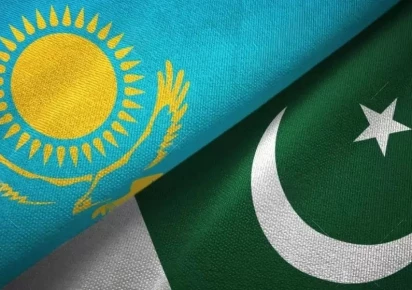
ISLAMABAD: Pakistan and Kazakhstan have agreed to speed up the implementation of previously signed agreements and memorandums of understanding (MoUs), with both sides seeking to convert existing commitments into practical trade, investment and business opportunities.

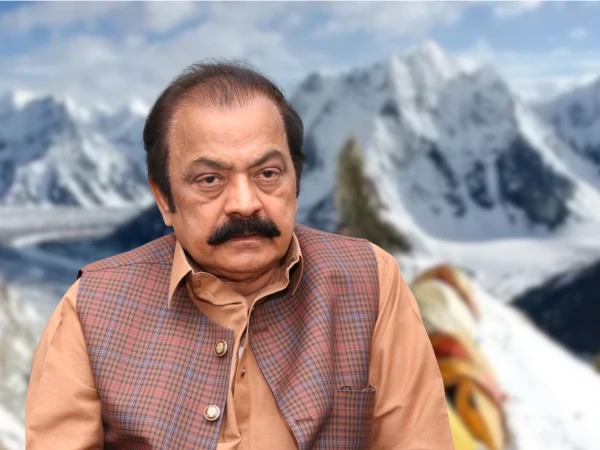
The understanding was reached during a meeting between Federal Minister for National Food Security and Research Rana Tanveer Hussain and Kazakhstan’s Ambassador to Pakistan Yerzhan Kistafin in Islamabad, where the two sides reviewed a broad range of issues related to agriculture, food security, connectivity, farm mechanisation and private-sector cooperation.

According to the Ministry of National Food Security and Research, the meeting focused on identifying areas where bilateral cooperation could produce commercially viable projects and contribute to stronger economic relations between the two countries.

Rana Tanveer Hussain said agriculture represented one of the most promising areas for expanding Pakistan-Kazakhstan relations, particularly given the potential for increased trade in agricultural commodities, machinery and technology.

The minister stressed that bilateral agreements should move beyond formal commitments and result in concrete projects that could benefit businesses and farmers in both countries. He also called for closer coordination among government departments, research institutions, agricultural organisations and the private sector to facilitate investment and technology transfer.

Joint agriculture working group to meet in Kazakhstan

Pakistan and Kazakhstan also agreed to hold the next meeting of their Joint Working Group on Agriculture in Kazakhstan.

The forum is expected to assess progress on previously identified areas of cooperation and explore additional opportunities in agricultural trade, food security, mechanisation and related fields.

The proposed meeting is also expected to provide a platform for officials and private-sector representatives to discuss practical barriers to trade and develop proposals aimed at increasing agricultural exchanges between the two countries.

Kazakhstan, meanwhile, showed interest in supplying wheat to Pakistan. Pakistani authorities agreed to examine the proposal while taking into account factors including the prevailing price, quality standards and reliability of supply.

The development comes as Pakistan continues to explore ways to diversify its sources of food commodities and strengthen trade relationships with Central Asian economies.

Pakistan seeks greater access for agricultural exports

During the discussions, Pakistan highlighted the export potential of several agricultural products, including mangoes, guava, dates, bananas, potatoes and onions.

The Pakistani side expressed interest in securing greater access for these products in Kazakhstan and other Central Asian markets. Improved market access, the officials noted, could create new opportunities for Pakistani growers, exporters and agribusinesses.

The two sides also discussed the importance of improving transport and logistics infrastructure to support agricultural trade.

Connectivity was identified as a critical factor in expanding commercial relations, particularly through proposed rail and regional transportation routes linking Central Asian countries with Pakistan.

Better transport links could reduce freight and transit costs, improve the movement of perishable agricultural goods and provide businesses in both regions with access to new markets.

Mechanisation offers new area of cooperation

Agricultural mechanisation was also identified as an area with considerable potential for joint ventures and investment.

Particular attention was given to affordable tractors and agricultural machinery that could be used by small and medium-sized farmers. Cooperation in this field could help improve farm productivity while creating opportunities for manufacturers and investors from both countries.

The Pakistani side also emphasised the importance of exchanging agricultural technology and research expertise, saying stronger institutional links could support innovation and improve agricultural productivity.

The minister underscored the need for closer engagement between research organisations, agricultural institutions and business communities so that technical cooperation could be translated into commercially sustainable ventures.

Kyrgyzstan supports stronger Pakistan business ties

Separately, Pakistan’s private sector has also taken steps to deepen economic engagement with another Central Asian country, Kyrgyzstan.

Kyrgyzstan’s Chargé d’Affaires Aibek Tilebaliev held a meeting with Federation of Pakistan Chambers of Commerce and Industry (FPCCI) President Atif Ikram Sheikh, during which the two sides discussed bilateral trade, investment and direct business-to-business contacts.

The participants agreed that stronger interaction between companies from Pakistan and Kyrgyzstan would be essential for expanding bilateral commerce and identifying new investment opportunities.

Atif Ikram Sheikh welcomed the increasing high-level engagement between the two countries, saying that considerable potential existed to expand trade and investment but that greater efforts were needed to convert this potential into actual business activity.

He suggested that a Pakistani business delegation could visit Kyrgyzstan under the FPCCI platform to explore commercial opportunities, establish direct contacts with local companies and develop partnerships in different sectors.

Joint Business Council proposed

A key outcome of the meeting was agreement to accelerate the establishment of a Joint Business Council between Pakistan and Kyrgyzstan.

The proposed council is expected to provide a formal platform for representatives of the two countries’ business communities to discuss trade barriers, investment opportunities, market access and potential joint ventures.

Both sides agreed to expedite the necessary steps for setting up the council.

Sheikh also highlighted the importance of regional forums, particularly the Shanghai Cooperation Organisation (SCO), in facilitating greater economic integration among member states. He said the platform could be used more effectively to promote trade, investment and business-to-business cooperation across the region.

Tilebaliev reaffirmed Kyrgyzstan’s interest in strengthening economic and commercial relations with Pakistan. He stressed that more frequent and direct interaction between business communities would be important for translating political goodwill into tangible economic gains.

The parallel initiatives involving Kazakhstan and Kyrgyzstan reflect Pakistan’s broader efforts to deepen economic engagement with Central Asia. Improved connectivity, stronger private-sector links and greater agricultural and industrial cooperation could provide new avenues for Pakistani exporters while opening opportunities for investment and regional trade.

Similar Posts

  • |

    Telecom operators invest $178.57 million in Pakistan’s 5G rollout

    Pakistan’s major telecom operators have invested an estimated $178.57 million in the deployment of 5G networks across the country up to June 2026, the Senate has been informed. The investment details were presented in a written reply submitted by the Ministry of Information Technology and Telecommunications in response to a question raised by Senator Samina Mumtaz Zehri. According to the government’s data, Zong emerged as the largest investor in the country’s 5G rollout, committing around $98.9 million by June 2026. Jazz followed with an investment of approximately $59.67 million, while Ufone invested an estimated $20 million during the same period. The figures were based on information provided directly by the respective mobile network operators. No Foreign Investment Target Set for 5G Minister for Information Technology and Telecommunications Shaza Fatima Khawaja told the Senate that the government had not imposed any specific foreign direct investment (FDI) target on telecom companies as part of the country’s 5G rollout policy. She said the Policy Directive for the Spectrum Auction, issued on January 6, 2026, did not include a requirement for operators to attract a particular amount of foreign investment for the deployment of 5G services. The minister clarified that the investment figures presented before the Senate represented data supplied by the operators themselves. Operators Plan Additional 5G Investment Telecom companies are also preparing to increase their investment in 5G infrastructure during fiscal year 2026-27. Jazz has projected an additional investment of approximately $30.33 million, while Zong expects to spend around $39.9 million on further 5G deployment during the year. A specific investment projection for Ufone was not available at this stage. According to the written response, the company’s future investment figures will be shared once its ongoing merger-related activities are completed. The government also noted that Ufone’s previously reported $20 million investment in the 5G rollout was an estimated figure. More Than 1,100 Sites Upgraded to 5G The Senate was also informed that mobile operators had upgraded 1,136 sites to support 5G services across Pakistan by June 2026. Punjab recorded the highest number of upgraded sites, with 587 locations, reflecting the province’s large subscriber base and extensive telecom infrastructure. The regional breakdown showed:  Punjab: 587 5G-upgraded sites  Sindh: 262 sites  Islamabad Capital Territory: 192 sites Khyber Pakhtunkhwa: 64 sites Balochistan: 31 sites No 5G-upgraded sites were reported in Gilgit-Baltistan or Azad Jammu and Kashmir in the province-wise figures submitted to the Senate. Pakistan Has 10,499 Fiberized Sites The government’s response also provided an update on the country’s broader telecom infrastructure, particularly the expansion of fiber-optic connectivity. Pakistan had a total of 10,499 fiberized telecom sites, with the overall fiberization rate standing at approximately 17.2 percent. Punjab had the largest number of fiberized sites at 6,153, followed by Sindh with 2,121 and Khyber Pakhtunkhwa with 953. The figures for other regions were: Islamabad: 521 fiberized sites Balochistan: 417 sites Gilgit-Baltistan: 196 sites Azad Jammu and Kashmir: 138 sites Despite having fewer fiberized locations in absolute numbers, Gilgit-Baltistan recorded the highest fiberization rate at 36.3 percent. Islamabad ranked second with a rate of 30.4 percent. Meanwhile, Azad Jammu and Kashmir recorded the lowest fiberization rate at 9.5 percent. 5G Expansion Linked to Digital Connectivity The continued investment by telecom operators is expected to support the expansion of high-speed mobile connectivity and strengthen Pakistan’s digital infrastructure. The deployment of 5G technology is also being viewed as an important step toward improving mobile broadband capacity, supporting digital businesses and enabling emerging technologies that require faster and more reliable networks. With operators planning further investment during FY2026-27, the scale of Pakistan’s 5G network is expected to expand further. However, the pace of deployment will also depend on infrastructure development, fiberization, spectrum utilization and the completion of ongoing corporate and regulatory processes.

  • |

    Norway’s ‘People’s King’ dies: What comes next?

    Norway is mourning the death of King Harald V, who passed away on Friday at the age of 89 after more than three decades on the throne. The Norwegian royal palace said Harald died peacefully at Oslo University Hospital at 6:35am local time. He had been receiving treatment after being hospitalised earlier this month with a serious illness and a bacterial infection in his blood. Harald’s death brings an end to a 35-year reign during which he became one of Norway’s most respected and popular public figures. He was widely regarded as a modernising monarch who helped make the royal institution more open, accessible and closely connected with ordinary citizens. His son, Crown Prince Haakon, immediately became king following his father’s death. Haakon, 53, is expected to formally address the government and parliament as Norway begins the transition to a new reign. Born on February 21, 1937, Harald was the first Norwegian-born heir to the throne in almost six centuries. His childhood was shaped by the Second World War. When Nazi Germany invaded Norway in 1940, the young prince left the country with his mother and sisters. The family spent time in Sweden before travelling to the United States, where they lived during the war. Harald returned to Norway after the war and later completed his education and military service. He studied social sciences, history and economics at Oxford University before becoming increasingly involved in royal duties. One of the defining moments of his personal life came in 1968, when he married Sonja Haraldsen, the daughter of a businessman. The marriage broke with royal tradition because Sonja was a commoner. Harald had reportedly waited years for permission to marry her and eventually made clear that he would rather remain unmarried than give her up. Queen Sonja remained his partner throughout his nearly six decades of marriage and his entire reign. Harald became king in January 1991 following the death of his father, King Olav V. Over time, he developed a reputation for showing emotion and speaking openly on issues affecting Norwegian society. His role as a national unifier became particularly important after the 2011 terrorist attacks in Oslo and on Utøya, in which 77 people were killed. Harald’s public response focused on solidarity, compassion and rejecting fear. He also became known for advocating tolerance and diversity. In a widely remembered speech in 2016, he emphasised that Norway was home to people of different nationalities, religions and sexual orientations. Outside his official duties, Harald was a passionate sailor and represented Norway at three Olympic Games. He was also interested in environmental conservation and supported efforts to protect nature. His later years were marked by repeated health problems. In 2024, he was hospitalised while visiting Malaysia and later received a pacemaker. He subsequently reduced his public engagements but rejected calls for abdication, maintaining that his commitment to the throne was lifelong. Harald’s death also comes at a difficult time for Norway’s royal family. Crown Princess Mette-Marit has faced scrutiny over her past contacts with convicted sex offender Jeffrey Epstein, while her son Marius Borg Høiby was convicted this year of rape and domestic violence. Mette-Marit has also undergone a lung transplant after suffering from a serious pulmonary condition. Despite the controversies surrounding members of his family, Harald himself retained strong personal popularity among Norwegians. Tributes have poured in from European leaders and fellow monarchs. Britain’s King Charles III described Harald as a much-loved relative and friend, while Sweden’s King Carl XVI Gustaf remembered him as a close friend of his family and Sweden.

  • | | |

    Pakistan stands with Nepal after broad peak avalan…

    Pakistan has expressed solidarity with Nepal following the tragic avalanche on Broad Peak in the Karakoram mountain range, where members of an international mountaineering expedition were caught in a deadly snow slide. Prime Minister’s Adviser on Inter-Provincial Coordination, Senator Rana Sanaullah, said Pakistan shares the grief of the Nepalese people and remains committed to supporting rescue efforts. According to Rana Sanaullah, the avalanche struck a team of 10 international climbers attempting to scale Broad Peak. The expedition included six climbers from Nepal, along with mountaineers from Pakistan, the United States, China, and Oman. He said the Government of Pakistan immediately prioritized search and rescue operations after the incident. So far, the bodies of four climbers have been recovered, including Nepalese mountaineer Pur Bahadur Gurung. Rescue teams continue to search for the remaining missing climbers despite difficult terrain and severe weather conditions. Rana Sanaullah stated that the Pakistan Army and other relevant agencies are carrying out extensive rescue operations using helicopters, drones, and all available resources. He noted that challenging weather and the remote mountainous landscape have made rescue efforts extremely difficult, but authorities remain fully committed to locating the missing climbers. The adviser explained that search teams are utilizing GPS tracking, aerial surveillance, and ground search missions to maximize the chances of finding those still unaccounted for. He emphasized that rescue operations will continue without interruption until every possible effort has been exhausted. Expressing condolences to the families of the victims, Rana Sanaullah said Nepalese climbers, along with other international mountaineers, are highly respected in Pakistan for their contributions to global mountaineering. He added that Pakistan values its long-standing friendship with Nepal and stands with the families affected by the tragedy during this difficult time. He further reaffirmed that the government will continue to deploy all available resources until the search mission is completed. Pakistan, he said, remains committed to assisting the international climbing community and ensuring that every effort is made to locate the missing members of the expedition. The Broad Peak avalanche has once again highlighted the dangers of high-altitude mountaineering in the Karakoram, where unpredictable weather, avalanches, and challenging terrain continue to pose significant risks even to experienced climbers. Authorities have pledged to maintain rescue operations while closely monitoring weather conditions to ensure the safety of rescue personnel.

  • |

    TikTok star Cesar Gastelum shot dead during livestream in Mexico

    Mexican social media influencer Cesar Gastelum was shot and killed while livestreaming in Culiacan. The city sits in the northwestern state of Sinaloa, a region long troubled by unrest. Gastelum had built a following of nearly 600,000 people on TikTok. He was known mainly for his comedy content and light-hearted videos. At the time of the attack, he was streaming live outside a fast-food restaurant with friends. Footage from the livestream showed two helmeted individuals approaching on a motorcycle. The driver reportedly opened fire directly at Gastelum during the broadcast. The attack unfolded in real time as viewers watched the stream online. A security official in Sinaloa confirmed Gastelum’s death shortly after the incident. Authorities said a major security operation was launched in response. Details about a possible motive have not yet been released publicly. According to Reuters, the killing adds to a pattern of violence in the region. Culiacan, the state capital, has seen ongoing clashes between rival criminal groups. These factions have been fighting for territorial control across the city for some time. Sinaloa has repeatedly made headlines in recent years over organised crime activity. The state is widely associated with one of Mexico’s most powerful drug cartels. Public killings and targeted attacks have periodically disrupted daily life in the region. The incident has drawn comparisons to another high-profile case from last year. In May 2025, Mexican beauty influencer Valeria Marquez was killed in a similar way. She was shot while livestreaming from a salon in Zapopan, Jalisco. Marquez, who was 23 at the time, was killed after a man entered the salon. Prosecutors said he opened fire before fleeing the scene afterward. Her case was later investigated using femicide protocols by local authorities. Both cases have renewed concern over the safety risks facing content creators in Mexico. Livestreaming has increasingly placed influencers in vulnerable, exposed situations during public appearances. Digital rights groups have previously called for stronger protections for online creators. Authorities have not indicated whether the two cases are connected in any way. Investigations into Gastelum’s death remain ongoing as officials gather further information. No arrests have been announced at this time.

  • |

    Emi Martinez hints at Argentina retirement after World Cup final

    BUENOS AIRES: Argentina goalkeeper Emiliano “Emi” Martinez has hinted that his international career could be nearing its end following Argentina’s heartbreaking 1-0 extra-time defeat to Spain in the FIFA World Cup 2026 final. The 33-year-old shot-stopper shared an emotional message on social media after the loss, suggesting it may be time to consider stepping away from international football after years of success with La Albiceleste. “I dreamed we’d win it again. I dreamed of bringing the trophy back to Argentina and making history once more,” Martinez wrote on Instagram. The Aston Villa goalkeeper admitted the defeat was one of the most painful moments of his career, saying he had given everything to help Argentina defend the world title they won in Qatar in 2022. “The truth is, the pain is hard to explain. There are many things to reflect on and how to move forward, and if it’s time to step aside,” he said, adding, “I’m so sorry. I truly tried my best to help my country and my teammates.” Martinez featured in all eight matches of Argentina’s World Cup campaign, keeping two clean sheets while conceding eight goals. Despite the final defeat, he was widely regarded as one of Argentina’s standout performers throughout the tournament. In the final against Spain, Martinez produced a series of crucial saves to keep his side in contention as Spain dominated large periods of the match. However, his resistance was finally broken in extra time when Ferran Torres scored the decisive goal in the 106th minute, sealing Spain’s victory. Martinez has earned 67 international caps since making his Argentina debut and has played a central role in one of the country’s most successful eras. Alongside the 2022 FIFA World Cup triumph, he helped Argentina win multiple major international titles and claimed the Golden Glove award as the best goalkeeper at the Qatar World Cup. The experienced goalkeeper has also been recognised at club level, winning the prestigious Yashin Trophy in both 2023 and 2024 as the world’s best goalkeeper. Although Martinez remains under contract with Aston Villa until 2029, he has recently been linked with a potential move to Italian giants Juventus. His emotional message has sparked speculation over whether the World Cup final marked the end of an unforgettable chapter with Argentina, though no official retirement decision has yet been announced.

  • | |

    Pakistani climbers open historic new route on broa…

      Pakistani mountaineers have achieved a landmark feat by opening a brand-new climbing route on Broad Peak, one of the world’s highest mountains. The accomplishment is being hailed as a major milestone for Pakistan’s mountaineering community, showcasing the country’s growing expertise in high-altitude climbing and technical expedition planning. Broad Peak, standing at 8,051 metres (26,414 feet), is located in the Karakoram mountain range of Gilgit-Baltistan, approximately five miles from K2. Ranked as the world’s 12th-highest mountain, Broad Peak has long attracted climbers from around the globe because of its challenging terrain and unpredictable weather conditions. The newly established route, officially named the Mirza Ali Legacy Route, begins above Camp 3 and offers a fresh approach to the summit. The route was created after an intensive three-day effort that required climbers to navigate deep snow, steep rock faces, and mixed sections of snow and rock under extremely demanding conditions. The expedition was led by renowned Pakistani mountaineer Mirza Ali, founder of Karakorum Expeditions. Along with his team, he spent days fixing ropes and securing the mountain to make the route accessible for future expeditions. Their summit push began at 2:00 a.m. local time on July 19. Battling continuous snowfall, freezing temperatures, and severe weather, the climbers finally reached the summit at 9:55 p.m. after more than 24 hours of nonstop climbing. To establish the route, the team installed over 1,600 metres of fixed rope and placed permanent rock pitons at critical points to improve safety and stability. According to expedition organisers, the new line is shorter, more direct, and significantly safer than the traditional path, which passes through Broad Peak’s hazardous “V Section.” The redesigned route is expected to reduce climbers’ exposure to avalanches and falling rocks, two of the mountain’s most serious risks. Organisers estimate that under normal weather conditions, climbers using the new route should be able to reach the summit from Camp 3 within seven to eight hours and descend in approximately two to three hours, making the ascent both faster and more efficient. The route was unanimously named in honour of Mirza Ali to recognise his 16 years of dedication to Pakistan’s mountaineering sector. Throughout his career, he has trained aspiring climbers, organised national and international expeditions, and promoted Pakistan as a premier destination for adventure tourism. Reflecting on the achievement, Mirza Ali said the successful opening of the route demonstrates the technical capability, determination, and resilience of Pakistani climbers. He also stressed the importance of investing in mountaineering education, safety training, and adventure tourism, highlighting Gilgit-Baltistan’s enormous untapped potential within the mountain economy. International members of the expedition also praised the accomplishment. Argentine climber Juan Toro described the project as a historic milestone for Pakistani mountaineering, while Hungarian climber David Klein called the newly opened path an innovative and technically brilliant route that reflected the team’s exceptional skill and perseverance. The summit team included Mirza Ali, Ahmed Baig, Rizwan Dad, Waqar Ali, Nawaz Ali Khan, Zaman Karim, Juan Toro, and David Klein. To support future expeditions and improve emergency response, the team also recorded all major anchor locations using Garmin inReach GPS technology, ensuring the new route can be safely managed for climbers in the years ahead.

Leave a Reply

Your email address will not be published. Required fields are marked *