
iran oman make
| | | |

Iran, Oman make progress on Strait of Hormuz shipping talks

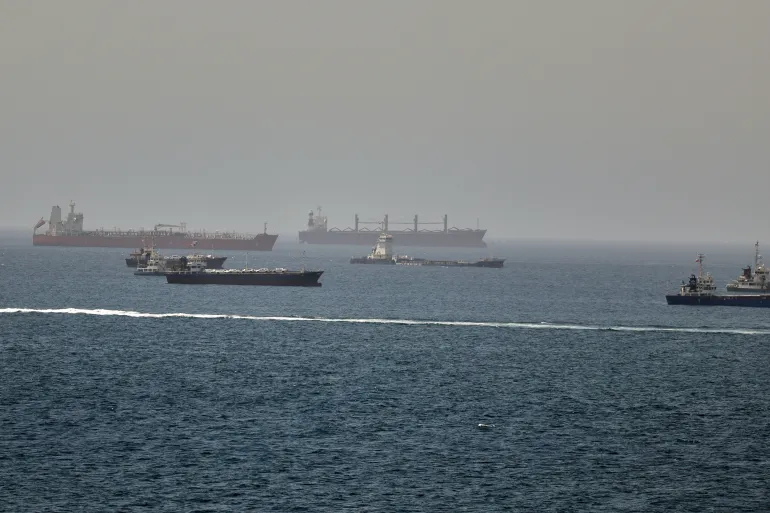
Iran and Oman have reported progress in discussions aimed at ensuring safer shipping through the Strait of Hormuz amid the ongoing regional conflict.

Iranian Foreign Ministry spokesman Esmaeil Baghaei said senior officials from both countries held talks in Tehran over two days to discuss arrangements for managing maritime traffic through the strategic waterway.

According to Baghaei, the discussions focused on common principles and practical measures to maintain safe shipping while respecting the sovereignty of Iran and Oman, the two countries bordering the strait.

He described the talks as useful and said progress had been made. Further political and technical consultations are expected to continue between the two sides.

Baghaei also said there had been no change in the current traffic situation in the Strait of Hormuz.

The development comes as tensions remain high between Iran, the United States and Israel. The waterway has become a major focus of the conflict because it is a critical route for global energy shipments.

Iranian army spokesman General Abolfazl Shekarchi separately claimed that Washington had failed to achieve its objectives in the Strait of Hormuz and in weakening Iran.

He described the situation for the United States as “chaotic and undesirable” and said Washington was apparently considering a new strategy.

Shekarchi also suggested that any possible US withdrawal from the conflict could depend on Israel’s approval.

Meanwhile, tensions have spread beyond the immediate battlefield. Iran summoned Ukrainian diplomats after Kyiv reportedly struck an Iranian vessel in the Caspian Sea, killing at least one sailor and injuring another.

Ukraine said the operation targeted Russian vessels allegedly carrying military cargo linked to Iran. Ukrainian President Volodymyr Zelenskyy has also accused Russia of supporting Iran during the ongoing conflict.


Similar Posts

  • |

    Former Mexican governor formally charged over 2014 disappearance of 43 Ayotzinapa students

    A Mexican judge has ruled that prosecutors presented sufficient evidence to formally charge Ángel Aguirre, the former governor of Guerrero state, with forced disappearance and obstruction of justice in connection with the 2014 vanishing of 43 students. Aguirre, who was arrested following new testimony gathered by a federal investigative unit, is accused of ordering the destruction of surveillance camera recordings that could have clarified the events surrounding the abduction of students from the Raúl Isidro Burgos Rural Teachers’ College in Iguala. Defence counsel denied all allegations, asserting that Aguirre was attending a high-level meeting at the time the recordings were allegedly transferred to him. The judge ordered that Aguirre remain held in a maximum-security prison pending trial. The indictment represents one of the most prominent legal developments in the case since the 2022 arrest of former federal Attorney General Jesús Murillo Karam. Of the 43 trainees abducted on 26 September 2014 after commandeering buses for a protest, the remains of only three have been positively identified.

  • | |

    Roma Ria steps into national director role for Mis…

    Roma Ria is entering a new chapter in her pageant journey as she officially steps into the role of National Director for Miss Universe Pakistan. The announcement marks an important moment for Ria, who previously represented Pakistan as Miss Universe Pakistan 2025. Sharing her feelings about the new responsibility, Ria described the appointment as a deeply meaningful achievement. She said she was “incredibly humbled, grateful, and honored” to be officially announced as the national director. The new position places Ria in a role that goes beyond the spotlight, giving her an opportunity to help shape the future of Pakistan’s participation in the Miss Universe competition. As national director, she will have a greater role in guiding the pageant, supporting contestants and helping prepare future representatives for the international stage. Ria’s transition from titleholder to leadership also adds a personal touch to the development of Miss Universe Pakistan. Having experienced the competition herself, she understands the preparation, expectations and pressure that come with representing the country internationally. Her journey has also been connected with advocacy and community work. Online references to Ria describe her as the founder of Rehmat Foundation, an initiative associated with supporting girls’ access to education. (Instagram⁠) This gives her new position a wider dimension, as her public platform has increasingly extended beyond fashion and pageantry. For Ria, the national director role appears to be about creating opportunities as much as celebrating beauty. Pageants today increasingly place emphasis on confidence, communication, social causes and leadership, allowing contestants to use their visibility to represent something larger than themselves. Her appointment could therefore signal an evolving direction for Miss Universe Pakistan, with greater attention on empowering contestants and preparing them to become confident representatives of the country. Ria’s announcement has also highlighted the significance of her own journey. From wearing the national title on an international stage to helping guide the next generation of Pakistani contestants, she is now moving from competitor to mentor and decision-maker. With gratitude at the heart of her announcement, Ria is embracing the responsibility with optimism. Her new role gives her a chance to contribute to the pageant from behind the scenes while helping future contestants step onto the global stage with confidence. As Miss Universe Pakistan continues to build its presence, Roma Ria’s move into the national director position represents a fresh beginning — one that combines pageantry, leadership and a commitment to creating meaningful opportunities for women in Pakistan. (Instagram⁠)

  • |

    Experts reveal how ancient Egyptians built pyramids?

    The centuries-old Egyptian pyramids have long remained a major focus of interest for people and scientists. For years, scientists have been trying to solve the mystery of how such massive pyramids were constructed in ancient Egypt thousands of years ago. Now, a possible answer has emerged. Earlier, it was believed that ropes and sledging systems were used to transport stones to the upper sections of the pyramids. However, evidence discovered near the Nile River suggests that experts of that era had already mastered advanced construction techniques centuries before the construction of the Great Pyramid of Giza in the desert. Archaeologists have excavated a 5,000-year-old cemetery-like site near the eastern bank of the Nile River. Two tombs discovered there have construction styles remarkably similar to those of the Egyptian pyramids built centuries later. The walls of these tombs were thicker at the bottom and gradually became narrower toward the top. This design provided greater stability to the structures. Similar techniques were later used in the construction of step pyramids and other large pyramids. Researchers also discovered evidence of ancient methods used to cut stones and wood which were employed in the construction of the tombs. The tombs were discovered in Egypt’s Jabal al-Tayr region where people have been buried for thousands of years. The style of these tombs resembles the tombs of kings in Abydos, one of Egypt’s oldest cities. This suggests that advanced construction techniques may have been widely known across Egypt even before the construction of the pyramids. Researchers said the tombs provide a glimpse into experimental construction methods that may have eventually led to the construction of the Egyptian pyramids. Experts said preliminary analysis indicates that the construction style of these tombs was quite similar to that of the pyramids associated with Egypt’s First Dynasty. Egypt’s First Dynasty ruled the country around 3100 BC. According to Egypt’s Tourism Minister, Sherif Fathy, the new discovery will help researchers understand how these construction techniques evolved throughout ancient Egyptian history. Earlier, in May 2024, researchers discovered a buried branch of the Nile River beneath the desert that once flowed around more than 30 pyramids thousands of years ago. This discovery helped solve the mystery of how ancient Egyptians transported extremely heavy stones to the pyramid construction sites. The 40-mile-long branch of the river once flowed around the Great Pyramid of Giza and other pyramids. Thousands of years ago, it gradually became buried beneath desert sand and agricultural land. According to the research, the presence of this ancient river explains how 31 pyramids were constructed between approximately 4,700 and 3,700 years ago in a valley that has now become a deserted strip of desert. The valley is located near Memphis, the ancient capital of Egypt and is home to the Great Pyramid of Giza, the only surviving wonder of the ancient Seven Wonders of the World. A study published in the journal Nature Communications reported the discovery of this ancient branch of the river. The research team used radar satellite technology to identify the hidden river channel. Surveys of the area and analysis of samples confirmed the presence of the ancient river. According to researchers, the river was once very powerful but may have gradually become buried under sand because of drought around 4,200 years ago. The Great Pyramid of Giza is located just one kilometer from the bank of this buried river. Around 2.3 million stone blocks were used to build the pyramid with each block weighing between 2.5 and 15 tons. Researchers said the ancient river also provides clues about why pyramids were built at different locations. They explained that the river’s course and flow changed over time which may have led Egyptian rulers to construct pyramids at different locations.

  • |

    Sri Lanka’s Tharanga storms to Commonwealth gold

    Pakistan’s star javelin thrower Arshad Nadeem failed to secure a medal in the men’s javelin final at the Commonwealth Games, finishing ninth in a field of 12 athletes. Arshad entered the competition as one of Pakistan’s strongest medal contenders. However, he was unable to produce the long throws needed to challenge for a place on the podium. His opening attempt was declared a foul and did not count towards the final standings. In his second attempt, he registered a throw of 77.41 metres. His third and final throw measured 75.39 metres, leaving him in ninth position at the end of the event. Sri Lanka’s Romesh Tharanga delivered the best performance of the competition to win the gold medal with a throw of 89.75 metres. His effort secured the top spot after an impressive display throughout the final. India’s Neeraj Chopra claimed the silver medal with a best throw of 85.83 metres. Fellow Indian athlete Yashvir Singh completed the podium by winning the bronze medal after recording a throw of 85.41 metres. The men’s javelin final featured 12 athletes from different Commonwealth nations, with several competitors producing throws beyond the 85-metre mark. Arshad was unable to find his rhythm during the competition and remained well behind the leading performers. The result came as a disappointment for Pakistani fans, who had hoped Arshad would add another major international medal to his impressive career. Despite missing out on the podium, he remains one of Pakistan’s most successful athletes and has consistently represented the country with distinction at international events. Arshad has previously won medals at major competitions and is widely regarded as one of the world’s leading javelin throwers. His achievements have inspired a new generation of athletes in Pakistan and raised the profile of athletics in the country.

  • |

    Marvel unveils star-studded ‘X-Men’ cast, sets 2028 release

    “X-Men” is officially gearing up for its big-screen return, arriving with a star-studded new cast. Marvel Studios ended months of speculation with a major announcement on Friday, August 14. At Disney’s D23 event, studio president Kevin Feige revealed the full casting lineup alongside the film’s official release date. The announcement marks the MCU’s first-ever standalone “X-Men” film. During Marvel’s segment of the Disney Entertainment Showcase, cast members took to the stage together, sparking immediate excitement among fans in attendance. Jake Schreier has been confirmed to direct the highly anticipated project. The newly announced cast includes Sadie Sink as Jean Grey and Kit Connor as Cyclops. Christopher Abbott joins as Professor X, while Inde Navarrette takes on the role of Rogue. Rounding out the ensemble, Maya Boyd will play Storm and Samara Weaving steps into the role of Emma Frost. Adam Driver was also confirmed for the film, playing Nathaniel Milbury, better known as the villainous Mr Sinister. Alongside the cast reveal, the studio confirmed “X-Men” will hit theatres on May 5, 2028. The announcement represents a major milestone in Marvel’s long-awaited effort to formally bring the X-Men into the Marvel Cinematic Universe. Fans reacted quickly on social media, flooding Variety’s post announcing the update. One follower said they could hardly put their excitement for the film into words. Another praised the casting choices entirely, calling every pick perfect. A third fan expressed disbelief at the announcement, celebrating Navarrette’s casting as a major career milestone. Not everyone focused purely on excitement, though. One fan noted the casting remains incomplete, pointing out that characters like Beast, Wolverine and Iceman have yet to be announced. With a strong ensemble now in place and a confirmed release date, anticipation for Marvel’s X-Men debut is expected to keep building steadily over the next two years.

  • |

    British driver sets hydrogen vehicle speed record at 654 km/h

    British driver and former Royal Air Force pilot Andy Green has set a new world land-speed record using a hydrogen-powered vehicle. According to foreign media reports, 64-year-old Andy Green drove the hydrogen-powered vehicle at 406 miles per hour (654 km/h) at the Bonneville Salt Flats in Utah, USA making it the fastest speed ever achieved by a vehicle of this type. According to the report, the HydroMax is equipped with two hydrogen engines that generate a combined 1,600 horsepower. 20-year-old record broken The new HydroMax vehicle more than doubled the previous world record of 185.5 miles per hour, set in 2004 by a hydrogen-combustion vehicle. Twenty years ago at the same location, the same company’s diesel-powered vehicle, DieselMax set a world record by reaching 350 miles per hour (563 km/h). Only person to break sound barrier on land Andy Green has already made history in motorsports. In 1997, he drove the jet-powered ThrustSSC to a speed of 763 miles per hour (1,228 km/h) breaking the sound barrier on land. Andy Green remains the only person to have broken the sound barrier in a land vehicle.

Leave a Reply

Your email address will not be published. Required fields are marked *