thai government pushes

Thai Government Pushes Plan to Get 300,000 EVs on the Road

BANGKOK — The Ministry of Transport is preparing an action plan to boost electric vehicle adoption by 300,000 vehicles, supported by tax incentives and a car trade-in scheme aimed at accelerating the shift away from petrol-powered transportation.

Thailand pushes to put electric cars on the road

Deputy Transport Minister Siripong Angkasakulkiat outlined two key measures following discussions with the Department of Land Transport, designed to overcome the financial barriers that have slowed EV adoption in Thailand despite growing consumer interest.

The first proposal expands the car trade-in policy to include not only private vehicles but also public transport, particularly taxis. The plan seeks to encourage operators to switch to electric models by offering financial support for retiring older petrol-powered vehicles and replacing them with EVs. For taxi operators, who face high daily fuel costs, the switch to electric power could significantly reduce operating expenses while also cutting urban air pollution in Bangkok and other major cities.

The second measure involves reducing annual vehicle tax for EVs and hybrid vehicles by up to 80 percent or waiving it entirely during the transition period. The proposal is intended to ease the financial burden on motorists and stimulate wider adoption of cleaner technology by making EV ownership more affordable over the long term. Currently, annual vehicle tax rates are based on engine size and vehicle type, with larger engines incurring higher taxes. Shifting to an emissions-based or EV-friendly tax structure would reward those who choose cleaner vehicles.

Siripong indicated that fiscal implications are currently under review with the Finance Ministry before the package can be submitted to the cabinet. If approved, the measures are expected to be enacted through a royal decree, potentially taking effect in June. The timeline suggests the government is moving quickly, recognizing that Thailand’s ambition to become a regional EV hub requires not just manufacturing incentives but also demand-side measures to get vehicles on the road.

Currently, a total of 55,217 transport operators and 206,529 vehicles have registered for the government’s diesel fuel aid scheme, which closed yesterday. The relief program provided support for public buses, vans, taxis, motorcycle taxis and freight vehicles. Under the scheme, petrol-powered taxis received a flat payment of 5,040 baht per vehicle, on condition that taxis complete at least 2,500 kilometres of service during the 42-day support period, tracked through a Department of Land Transport application. The scheme provided temporary relief but did nothing to address the underlying dependence on fossil fuels.

Siripong added that petrol-powered taxis, along with older private vehicles, are key targets, with the government aiming to convert them into 300,000 EVs on the roads. The target is ambitious but achievable, given Thailand’s growing EV manufacturing base and the increasing availability of affordable models. However, challenges remain, including the need for more public charging infrastructure, consumer concerns about battery range and the higher upfront cost of EVs compared with petrol vehicles.

The government is also considering strengthening incentives specifically for taxis to ensure a smoother transition. The taxi sector, with its high daily mileage and concentrated operations in urban areas, is an ideal candidate for electrification. Electric taxis can charge overnight at depots, operate at lower cost per kilometre than petrol taxis and produce zero tailpipe emissions, improving air quality in Bangkok’s congested streets.

First locally assembled compact electric car at 300,000 baht to be available end of this year

For Thailand’s EV industry, the government’s 300,000-vehicle target represents a vote of confidence in the future of electric mobility. For taxi drivers, the promise of lower fuel costs and reduced taxes may finally make the switch economically viable. And for the millions of Bangkok residents who breathe the city’s polluted air every day, the shift to EVs cannot come soon enough. Whether the cabinet approves the measures in time for a June implementation remains to be seen, but the direction is clear: Thailand is putting its foot on the EV accelerator, and it has no intention of slowing down.

-Thailand News (TN)

Similar Posts

  • | |

    Academy mafia behind MDCAT controversy, minister t…

    Islamabad: Federal Health Minister Mustafa Kamal on Tuesday blamed an organised academy mafia for creating controversy over MDCAT, while a Senate panel questioned why thousands of students were being pushed towards expensive coaching centres for medical college admission. During a heated meeting at Parliament House, Senator Anusha Rahman said private medical colleges in Pakistan were ripping off students by charging around Rs18 lakh every year. She compared these charges with medical education in China, where Pakistani students told her they were paying around Rs5 lakh a year and nearly Rs50 lakh for their complete medical degree. Anusha Rahman said she asked a Chinese provincial governor how they provided medical education at such a low cost. She said the governor replied, “We do not penalise the future.” The meeting of the Senate Health Committee Sub Committee was chaired by Senator Anusha Rahman. Senators Agha Shahzaib Durrani and Samina Mumtaz Zehri also attended. Senator Zehri joined the meeting online. Committee members expressed anger over the federal health minister’s late arrival. Senator Agha Shahzaib Durrani said the meeting had already been rescheduled three times at the minister’s request. Anusha Rahman warned that another meeting would be called the next day if the minister failed to attend. After joining the meeting, Mustafa Kamal said the MDCAT system could be improved but claimed that, in his view, the current system was perfect. He said coordinated text messages were being sent to senators to pressure them and delay the medical admission test. “Do not become emotional over these messages. This is the season of messages and there is a mafia behind them,” the minister told the committee. He also claimed that students sometimes demanded delays by citing floods and other emergencies as reasons. The minister said students from Khyber Pakhtunkhwa sometimes called for postponement even before floods reached Balochistan. He said some students later claimed that their books had been washed away in floods. Senator Samina Mumtaz Zehri rejected the idea that all complaints were organised. She said the committee was receiving around 50 messages from students every day and asked why their problems had not been addressed. She also raised concerns that FSc, A Level and MDCAT examination dates were overlapping. The minister said the MDCAT would be held around three weeks after the final board examination. He said the last board examination was expected to end on July 20 and MDCAT would be conducted three weeks later. The Pakistan Medical and Dental Council told the committee that around 135,000 students would appear in MDCAT. The test will be conducted in 36 cities, including 35 cities in Pakistan and Riyadh in Saudi Arabia. PMDC officials said medical colleges previously conducted separate entry tests, but the system was later changed to a national MDCAT. They said several problems had been reported in earlier years, especially regarding examination papers. To solve these problems, PMDC formed committees and prepared a nationally uniform syllabus. Officials said the syllabus was displayed on different public platforms and around 1,000 people submitted complaints. Anusha Rahman told PMDC officials that students had suffered because of weaknesses in the system. She said FSc students complained that they were asked questions linked to the A Level system, while A Level students were forced to study FSc books. She questioned why students were going to private academies and paying up to Rs1 lakh for MDCAT preparation. “Every year, academies make huge profits from these tests,” she said. She added that students were placed under heavy pressure to complete MDCAT preparation within three months. Senator Agha Shahzaib Durrani said the FSc system mainly focused on detailed knowledge, while the A Level system gave greater importance to analysis and reasoning. PMDC officials said MDCAT had been designed around common learning points included in both systems. They said the aim was to provide a fair test for FSc and A Level students. The health minister agreed to review the issue and asked the committee to send students with genuine complaints directly to the ministry and PMDC. He said officials would sit with the students, listen to their concerns and try to solve their problems. The committee also raised serious concerns about fees charged by private medical colleges. Members said many seats remained vacant because deserving students could not afford the fees. They said Pakistani students were choosing foreign universities because medical education abroad was cheaper. The committee called for a review of the fee structure of private medical colleges to make medical education more affordable. Senator Agha Shahzaib Durrani proposed giving 40 percent weight to MDCAT, 50 percent to academic results and 10 percent to interviews during medical college admissions. PMDC officials warned that reducing MDCAT marks could weaken the importance and credibility of the national test. The committee also recommended conducting MDCAT twice a year so students could get another chance instead of losing a complete academic year. Members appreciated some reforms introduced by PMDC but asked the council to improve public awareness. They recommended issuing brochures and running information campaigns about foreign medical colleges that are not recognised in Pakistan. The committee said students must be warned before spending money on institutions whose medical degrees will not be accepted by Pakistani authorities. It also recommended providing more house job and professional training opportunities to Pakistani medical graduates returning from foreign countries. The minister directed officials to provide complete MDCAT data from the last five years. The information will include the total number of students who appeared in the test and a comparison of FSc and A Level candidates. Committee members also sought details about the members of the MDCAT assessment committee. The health minister promised to provide those details within 24 hours. The committee decided to continue discussions on MDCAT, medical college fees and admission policies in its next meeting.

  • | |

    Karachi hospitals face fire safety gaps after PIMS…

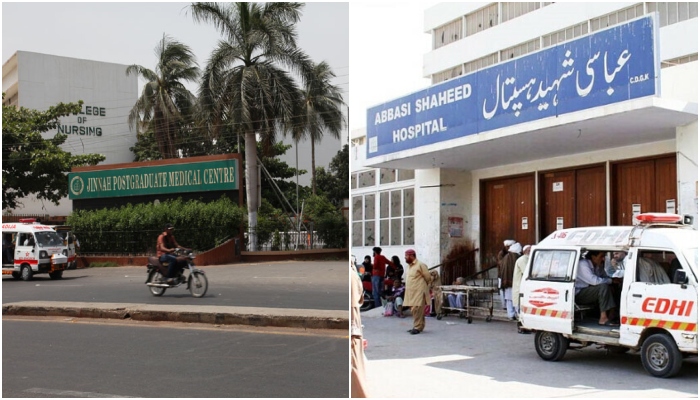
    KARACHI: Serious shortcomings in fire safety arrangements have been reported at major government hospitals in Karachi following the deadly fire at the Pakistan Institute of Medical Sciences (PIMS) in Islamabad, where newborns lost their lives. Hospital sources said several major public healthcare facilities in Karachi lack functional fire alarm systems and adequate emergency preparedness, raising concerns about the safety of thousands of patients and healthcare workers. At Abbasi Shaheed Hospital, operated by the Karachi Metropolitan Corporation (KMC), only 13 fire extinguishers are reportedly available across the facility. Sources said hospital staff have also not received regular fire safety training or participated in proper fire drills. The hospital reportedly does not have a fire alarm system or a designated emergency exit route. The situation is particularly concerning because hundreds of patients visit the emergency department every day, while more than 1,000 patients reportedly attend the outpatient department (OPD). Abbasi Shaheed Hospital has two generators, with one reportedly kept as a backup power source. The hospital’s Medical Superintendent said authorities were taking further steps to improve the fire safety system and address existing shortcomings. At Jinnah Postgraduate Medical Centre (JPMC), fire extinguishers are available in the wards, but hospital sources said several of them are not functional. Sources further said the last fire drill at the hospital was conducted in 2017. The hospital also reportedly lacks an installed fire alarm system. JPMC’s Joint Executive Director said a dedicated firefighting team needs to be established at the hospital. He said each ward has a fire extinguisher, while further training for staff is also required. He added that the hospital administration would write to the Sindh government seeking additional fire safety training for employees. Meanwhile, Civil Hospital Karachi has around 180 fire extinguishers distributed among its wards. However, sources said the overall fire safety arrangements at the hospital also fall short of ideal standards. The revelations have raised concerns about the preparedness of major public hospitals in Karachi to deal with fires and other emergencies. Large government hospitals handle thousands of patients, attendants and healthcare workers every day. In the event of a fire, the absence of functional alarms, clearly marked emergency exits, regular drills and trained response teams could make evacuation difficult and increase the risk to human lives. The situation has come under renewed scrutiny after the PIMS tragedy in Islamabad, prompting calls for immediate inspections of fire safety systems at hospitals across the country. Experts and hospital officials have stressed the need for regular fire drills, functioning extinguishers, alarm systems, emergency exits and trained firefighting teams.

  • | |

    SC to hear Imran access pleas on August 18

    The Supreme Court has scheduled five petitions concerning access to jailed former prime minister and PTI founder Imran Khan for hearing on August 18. A three-member bench headed by Justice Shahid Waheed will hear the petitions. Justice Naeem Akhtar Afghan and Justice Ishtiaq Ibrahim are also part of the bench. The cases were previously being heard by a bench headed by Justice Muhammad Ali Mazhar. The bench has now been reconstituted after Justice Mazhar became unavailable at the Supreme Court’s principal seat. The petitions seek permission for Imran Khan’s family members, personal doctors and legal team to meet him in prison. The applicants have also requested access to his medical records and proper arrangements for his medical treatment. The petitions gained renewed attention after PTI lawyers and lawmakers gathered outside the Supreme Court earlier this week, protesting over the continued delay in fixing the cases. A delegation led by PTI lawyer Salman Akram Raja subsequently met the apex court registrar. According to Insaf Lawyers Forum chief organiser Intezar Panjutha, the registrar assured the delegation that five petitions relating to restrictions on meetings with Imran would be listed for hearing. The cause list was expected to be issued ahead of the proceedings. One of the petitions was filed by Imran’s sister, Uzma Khan. She has sought his transfer to Shifa International Hospital, arguing that he requires proper treatment and continuous medical monitoring for an eye-related condition and other health complications. The Supreme Court had earlier directed that details of meetings held by Imran and his wife, Bushra Bibi, with family members, lawyers and party leaders in prison be submitted. The newly constituted bench has attracted attention because of the legal positions previously taken by its members in politically sensitive matters. Justice Afghan has been associated with dissenting opinions on several major constitutional and legal issues. He had opposed the constitutionality of trying civilians in military courts and had also dissented in a case involving the transfer of judges between high courts. He has previously granted post-arrest bail to PTI leaders facing cases related to the May 9 violence. Justice Ibrahim was part of a Supreme Court judgment that overturned an earlier order concerning Imran’s right to defend himself in a defamation case filed by Prime Minister Shehbaz Sharif. Meanwhile, the Islamabad High Court is separately hearing petitions concerning the alleged solitary confinement of Imran Khan and Bushra Bibi. The dispute over access to Imran has remained a major issue for the PTI, which maintains that his family, lawyers and doctors should be allowed regular meetings. The government has continued to face pressure over the prison arrangements surrounding the former prime minister.

  • | |

    Muzaffargarh canal accident: Last missing victim?…

    KOT ADDU: The body of the last person missing after the tragic Muzaffargarh Canal accident has been recovered near Head Kallo, bringing the search and rescue operation to an end. The body was recovered during a continued search operation launched to locate people who went missing following the accident. Rescue teams had been conducting searches at different points along the canal, including Head Kallo, day and night. According to officials, water was released into the canal following a request from the families of the victims. Due to the flow of water, the missing person’s body surfaced near Head Kallo. Rescue personnel deployed at the location immediately responded and recovered the body. The search operation continued despite the release of water into the canal. Teams from the district administration, Rescue 1122 and other relevant departments remained engaged in the operation under the direction of Kot Addu Deputy Commissioner Bilal Saleem and the supervision of Assistant Commissioner Kot Addu Farrukh Mahmood. Rescue teams were deployed at multiple locations along the canal. They maintained continuous surveillance and carried out searches in different sections to locate all missing persons. With the recovery of the latest body, officials said that all people reported missing in connection with the Muzaffargarh Canal accident have now been found. The rescue teams are completing the necessary procedures following the recovery. The body will be handed over to the relevant authorities for identification and other legal formalities. The district administration and rescue teams used all available resources throughout the operation. Officials also provided possible assistance and cooperation to the affected families during the search. The recovery of the last missing victim marks the completion of the search for those reported missing after the tragic canal accident.

  • | |

    UAE opens direct sea route to China, cutting car d…

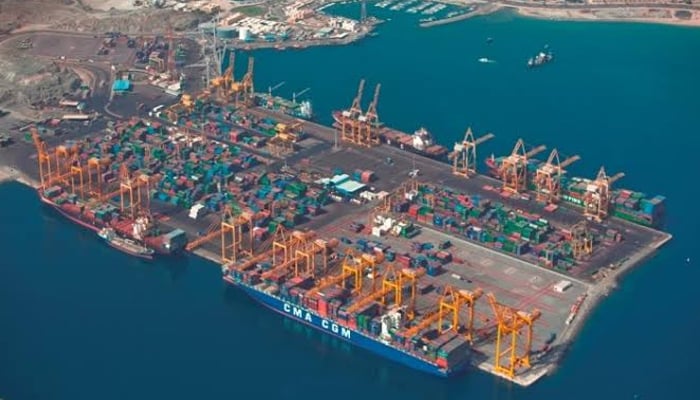
    DUBAI: The United Arab Emirates has launched a new direct maritime trade route with China, creating a faster shipping link between the two countries and reducing the time needed to transport vehicles. The new route connects Khorfakkan Port, located on the Gulf of Oman outside the Strait of Hormuz, with China’s Xiaomo Port. According to the Emirates News Agency, the service will bring large shipments of vehicles directly from the Chinese port to Khorfakkan. The launch is expected to give vehicle importers and logistics companies a quicker option for moving cargo between China and the UAE. The new direct service will reportedly cut vehicle transportation times by three to five days, improving efficiency across the supply chain. Khorfakkan’s strategic location on the Gulf of Oman makes it an important maritime gateway, with direct access to international shipping routes. The new connection could further strengthen the port’s role in handling Chinese goods and automotive shipments bound for the UAE and wider regional markets. The development also reflects growing trade and logistics cooperation between the UAE and China, particularly as demand for faster and more reliable supply chains continues to increase. For the automotive sector, shorter transit times could mean quicker deliveries, smoother inventory planning and greater flexibility for businesses handling vehicles imported from China. With the new route now operational, the UAE is strengthening its position as a regional logistics hub while providing Chinese exporters with a more direct maritime connection to the Gulf. The service is expected to support growing bilateral trade and make vehicle movement between the two markets faster and more efficient.

  • | | |

    Pakistan’s defence tech breakthrough: PM Shehbaz

    Prime Minister Shehbaz Sharif has said Pakistan has achieved significant progress in developing its own defence technologies and autonomous systems. Addressing the Indus Robotics and Autonomous Systems (RAS) Expo 2026 in Islamabad, the prime minister praised the country’s growing capabilities in robotics, artificial intelligence and advanced defence technologies. PM Shehbaz said Pakistan’s armed forces have made major advancements in indigenous defence production and autonomous systems. He credited the progress to strong leadership and the efforts of national institutions. He said modern technologies displayed at the exhibition reflected Pakistan’s ability to develop advanced systems locally. The prime minister highlighted that several defence-related technologies, including simulators and autonomous platforms, were designed and manufactured within the country. During his visit to the exhibition, PM Shehbaz reviewed various locally developed technologies. He said the production of advanced equipment inside Pakistan was a major achievement and demonstrated the country’s growing technical expertise. The prime minister noted that drone technology had achieved significant levels of local production, while several other important machines and systems were also being developed domestically. He said Pakistan’s armed forces have successfully used modern autonomous systems to strengthen the country’s physical and cyber security. He added that advanced technologies have enhanced the ability of security institutions to respond to emerging challenges. PM Shehbaz emphasized the importance of innovation, research and technological development for Pakistan’s future. He said continued investment in artificial intelligence, robotics and modern defence systems would help strengthen national security and technological independence. The Indus Robotics and Autonomous Systems Expo brings together experts, researchers, defence professionals and technology developers to showcase advancements in robotics, automation and artificial intelligence. The prime minister said such initiatives would encourage local innovation and support Pakistan’s journey toward self-reliance in advanced technologies.

Leave a Reply

Your email address will not be published. Required fields are marked *