pti cant escape
| |

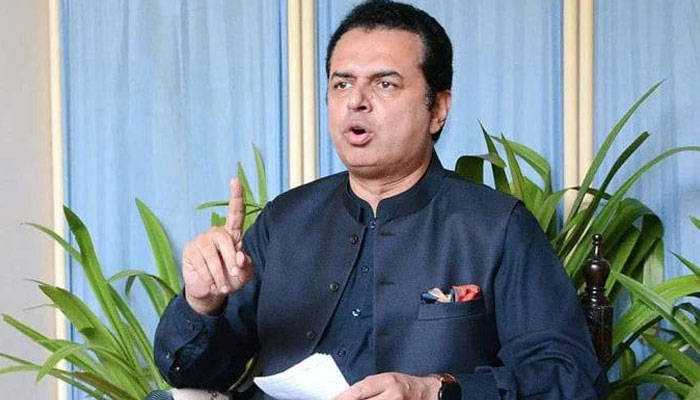
PTI can’t escape Mall Road attack: Talal

Minister of State for Interior Talal Chaudhry has said that the Pakistan Tehreek-e-Insaf (PTI) leadership cannot distance itself from the recent shooting incident on Rawalpindi’s Mall Road.

Addressing a press conference in Islamabad, Chaudhry said the incident was deeply regrettable and alleged that the man involved had links with the PTI and had remained in contact with the party’s leadership.

According to the minister, the suspect had previously stayed at the Khyber Pakhtunkhwa House and had met members of the PTI leadership. He also allegedly carried the party’s flag and appeared in social media videos showing attacks on security forces.

Chaudhry said a security personnel was injured when the attacker opened direct fire on Mall Road. He argued that the PTI leadership could not simply deny responsibility by claiming that the individual had no connection with the party or suffered from mental health problems.

“If his mental condition was not stable, why did he attack a security official instead of his own family or a party leader?” Chaudhry asked.

He questioned why the individual had allegedly been placed at the frontline of protests if the party had no association with him.

The minister accused the PTI of promoting a political culture based on confrontation, violence and hatred. He said the government had repeatedly urged the party to avoid spreading hostility and unrest among young people.

Chaudhry linked such politics to previous violent incidents, including the events of May 9 and November 26, and warned that continuing to promote hatred could lead to further incidents.

He also criticised what he described as vandalism and arson carried out in the name of politics. He questioned what the PTI had achieved for the people of Khyber Pakhtunkhwa during its long period in power in the province.

“Setting things on fire and creating disorder is not politics,” he said, adding that such actions neither served the party nor the province.

Referring to future political activities, Chaudhry warned that similar incidents could occur again if party workers continued to be exposed to what he described as hateful and inflammatory rhetoric.

He also criticised PTI founder Imran Khan’s statements and speeches, alleging that they had contributed to political polarisation and unrest.

Chaudhry further accused PTI supporters of disrespecting security personnel and national heroes, including through social media posts targeting the country’s fallen soldiers.

The minister said investigations into the Rawalpindi incident were progressing and that authorities were conducting a transparent inquiry.

He assured that the findings would be made public once the investigation was completed.

Chaudhry said the government would not allow Pakistan to be pushed into further political instability and warned that those involved in attacks would face legal consequences.

Similar Posts

  • | |

    Punjab CNF seizes 24.7 tonnes of narcotics worth R…

      Lahore, August 4, 2026: The Punjab Counter Narcotics Force (CNF) has intensified its crackdown on drug trafficking across the province, achieving significant success in recent intelligence-led operations. The campaign is being carried out under the special directives of Punjab Chief Minister Maryam Nawaz Sharif as part of the government’s commitment to building a “Drug-Free, Healthy and Safe Punjab.” Over the past two weeks, the CNF conducted 85 intelligence-based operations across the divisions of Lahore, Dera Ghazi Khan, Rawalpindi, Gujranwala, Faisalabad, Bahawalpur and Sargodha. These coordinated raids targeted major drug trafficking networks operating in different parts of the province. The operations resulted in the arrest of 93 suspected drug traffickers, while authorities recovered approximately 296 kilograms of narcotics with an estimated market value of more than Rs. 53.4 million. Officials described the operations as a major step toward curbing the illegal drug trade and improving public safety. The seized narcotics included a wide range of illegal substances such as hashish, opium, cannabis (weed), crystal meth (Ice), poppy straw, cocaine, heroin and five litres of illicit liquor. In addition to narcotics, the CNF recovered a significant cache of weapons from the suspects. These included 13 pistols, two sub-machine guns (SMGs), four rifles and seven drones that investigators believe were being used to facilitate criminal activities and drug distribution. Director General of the Punjab Counter Narcotics Force, Commander Brigadier Mazhar Iqbal, said the Force’s success should not only be measured by the quantity of drugs confiscated but also by its ability to dismantle organised drug trafficking networks across Punjab. He noted that the CNF continues to rely on modern intelligence gathering, professional expertise and coordinated operational planning to identify and eliminate criminal groups involved in the narcotics trade. He further highlighted the Force’s overall performance since it became operational in August 2025. According to the Director General, the Punjab CNF has recovered a cumulative 24.7 tonnes of narcotics valued at more than Rs. 2.23 billion. He described these achievements as evidence of the provincial government’s zero-tolerance policy against narcotics and the effectiveness of its law enforcement strategy. Commander Brigadier Mazhar Iqbal also credited the Force’s progress to close coordination among various law enforcement agencies, which has strengthened efforts to combat drug trafficking and disrupt criminal organisations operating throughout the province. Reaffirming the CNF’s commitment, the Director General said the Force will continue to launch vigorous and indiscriminate operations against drug dealers and traffickers. He stressed that intelligence-driven policing, enhanced operational capabilities and sustained enforcement efforts will remain central to achieving the government’s vision of a province free from the menace of narcotics. Punjab authorities have reiterated that the fight against drugs remains a top priority, emphasizing that continued action against traffickers is essential to protecting communities, safeguarding young people and ensuring a healthier and safer future for the province.

  • |

    Hyderabad police issue 45 e-challans

    Hyderabad Police have issued 45 e-challans for various traffic violations after introducing the e-challan system in the city. According to a police spokesperson, SSP Hyderabad Shahzeb Chachar directed officers to use modern technology to strengthen traffic law enforcement. Officers issued the challans through a mobile application after recording violations at different locations. DSP Hussainabad Ghulam Akbar, DSP Traffic Latifabad Masood Arain and SO Auto Bhan Faisal Ali supervised the operation. Police are paying particular attention to violations on Auto Bhan Road, including parking in no-parking areas, driving in the wrong direction, one-way violations and signal jumping. SSP Shahzeb Chachar has instructed officers to take action against traffic violators without discrimination and ensure motorists follow traffic rules. Hyderabad Police have also urged citizens to park only in designated areas, follow the correct direction of traffic and obey signals and other road regulations.

  • | | |

    Uganda backs sending troops to planned Gaza peace …

    Uganda’s Parliament has approved a government proposal to deploy troops to a planned international peace and stabilisation force for Gaza, marking the country’s first commitment to the proposed multinational mission. The resolution was introduced by Uganda’s Minister of Defence and received parliamentary approval following debate among lawmakers. With the decision, Uganda joins Morocco, which has also announced its willingness to contribute troops to the proposed force. The Ugandan government has not publicly disclosed the diplomatic discussions or political considerations behind its decision. However, the move sparked debate in Parliament, with opposition members expressing concerns about the potential implications for Uganda’s foreign policy and regional relationships. Opposition lawmaker Hassan Kiromera questioned the mission’s objectives, asking which parties Ugandan troops would ultimately be expected to confront if deployed. He argued that the government should provide greater clarity regarding the mandate of the proposed force before committing military personnel. Defence Minister Jacob Oboth-Oboth defended the proposal, stating that the Uganda People’s Defence Forces (UPDF) possess extensive experience in international peacekeeping operations, including missions in Somalia and other conflict zones. He said that this experience would enable Ugandan troops to contribute effectively to efforts aimed at restoring peace and stability in Gaza. According to the report, the proposed Gaza International Stabilisation Force is expected to consist of approximately 20,000 personnel from multiple countries. The force is reportedly planned under a proposal associated with US President Donald Trump’s Board of Peace and would be commanded by US Major General Jasper Jeffers. The mission is intended to help maintain law and order in Gaza following the end of hostilities between Israel and Hamas. Reports indicate that the proposal was first introduced earlier this year as part of broader discussions on post-conflict governance and security arrangements in the territory. The development follows recent announcements regarding a reported agreement under which Hamas would disarm and Israel would gradually withdraw its military forces from Gaza. Under the reported framework, the international stabilisation force would be deployed after the phased Israeli withdrawal. However, uncertainty remains over the implementation of the proposed arrangement. Israeli officials have reportedly expressed serious security concerns after reviewing the reported agreement, arguing that certain provisions could pose risks to national security. As a result, questions remain about the timeline and conditions for the deployment of the multinational peace force despite Uganda’s parliamentary approval.

  • |

    Australia initiates legal action against Telegram over failure to remove extremist content

    Australia’s eSafety Commissioner, Julie Inman-Grant, has launched legal proceedings in the Federal Court against messaging platform Telegram, alleging the company failed to comply with statutory safety obligations under the country’s Online Safety Act. The regulator claims Telegram permitted a permissive environment by hosting easily accessible extremist content, including footage of the 2019 Christchurch mosque shootings, the May 2022 Buffalo attack in New York, and filmed terrorist executions. The platform faces potential fines of up to 54.6 million Australian dollars for its non-compliance. The legal action follows a history of regulatory friction, including a one million Australian dollar fine imposed on Telegram in February 2025 for failing to answer inquiries regarding child abuse and violent material on time. Inman-Grant noted that whilst Australia does not license digital services, the regulator possesses the statutory authority to request a Federal Court order ceasing Telegram’s operations within the country if necessary. A spokesperson for Telegram rejected the allegations, stating that the platform’s anti-terrorism moderation efforts are well documented and confirming that the company will contest the claims in court.

  • |

    SBP to maintain focus on price stability, reforms and sustainable economic growth

    KARACHI: State Bank of Pakistan (SBP) Governor Jameel Ahmad has said the central bank will continue to prioritise price stability, structural reforms and the creation of a business-friendly economic environment aimed at boosting productivity, exports and employment. Addressing a flag-hoisting ceremony held at the SBP headquarters in Karachi to mark Pakistan’s 79th Independence Day, Governor Ahmad said the country had made notable progress towards macroeconomic stability over the past year. He attributed the improvement to disciplined fiscal and monetary policies, better economic management and continued efforts to strengthen financial and economic institutions. Inflation remains within medium-term range Speaking about the inflation outlook, the SBP governor said average inflation during fiscal year 2025-26 stood at 7.1 percent. He said the central bank believed that the prevailing monetary policy stance was appropriate for keeping inflation within its medium-term target range of 5 to 7 percent. According to Ahmad, the current policy framework also provides sufficient space for economic activity to continue, while supporting investment and employment generation. The governor said maintaining price stability would remain a central objective of the SBP as Pakistan seeks to move from short-term stabilisation towards sustained economic expansion. Growth expected to strengthen Ahmad said Pakistan’s economy recorded growth of 3.7 percent in FY26, reflecting the impact of improved macroeconomic conditions and greater fiscal and monetary discipline. Looking ahead, he projected economic growth in the range of 3.5 to 4.5 percent during FY27. He described the outlook as encouraging, saying the economy was gradually moving towards a more sustainable growth path after going through a difficult period of economic stabilisation. The governor stressed that maintaining policy discipline would be important to ensure that the gains achieved in recent years translate into durable economic development. Remittances strengthen external position The SBP chief also highlighted improvements in Pakistan’s external sector, particularly the performance of workers’ remittances. He said overseas Pakistanis had demonstrated confidence in the country by sending record amounts of money home, with remittances surpassing $41 billion during FY26. The inflow is expected to increase further, with remittances projected to reach around $44 billion in FY27, according to the governor. Ahmad said stronger remittance inflows, combined with a relatively low current account deficit, had helped improve Pakistan’s foreign exchange position. The country’s foreign exchange reserves reached $18.4 billion by the end of FY26, while the SBP expects reserves to rise above $21 billion during FY27. He said strengthening the external position would help improve economic resilience and provide greater capacity to withstand external shocks. SBP pushes digital transformation The governor also outlined measures taken by the central bank to modernise Pakistan’s financial infrastructure and expand the use of digital payment channels. He pointed to the successful launch of PRISM+, saying the upgraded payment and settlement infrastructure had brought Pakistan’s large-value payment system closer to international standards. The system has improved the speed, security and efficiency of large-value payments and settlements, he said. Ahmad added that SBP initiatives aimed at encouraging digital payments had resulted in a substantial increase in the use of electronic channels. Retail digital transactions increased from approximately 10 billion to 12 billion over the past year, reflecting growing adoption of technology across the financial system. According to the governor, the shift towards digital payments is more than a technological development. It is also contributing to greater documentation, transparency and efficiency within the economy. Self-reliance and institutions vital for progress Governor Ahmad said Pakistan’s long-term economic success would depend not only on financial and monetary policies but also on stronger institutions, economic self-reliance, respect for the rule of law and national unity. He emphasised that the country’s journey towards sustainable development required continued commitment and collective efforts from institutions, businesses and citizens. While acknowledging the progress achieved during the past year, he cautioned that Pakistan continued to face economic challenges that required sustained attention, policy consistency and determination. He said the objective should now be to convert the gains from economic stabilisation into a durable foundation for investment, productivity, exports and employment. The governor reaffirmed that the SBP would continue playing its role in supporting monetary and financial stability while contributing to broader efforts aimed at improving the welfare of the Pakistani people.

  • |

    Air India appoints CEO amid mounting financial losses

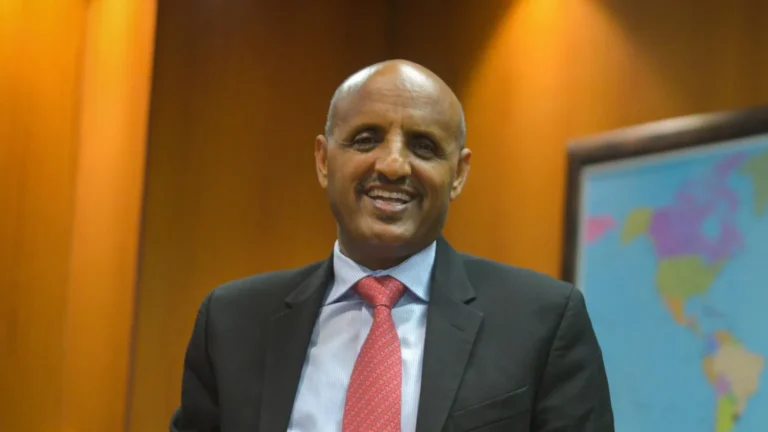
    Air India has appointed former Ethiopian Airlines chief Tewolde Gebremariam as its new chief executive officer, entrusting him with leading the airline through a challenging period marked by financial losses, operational setbacks and heightened safety concerns. Gebremariam succeeds Campbell Wilson, who stepped down in April after overseeing the airline’s initial restructuring following its acquisition by the Tata Group in 2022. The Air India board unanimously selected Gebremariam after an extensive global search, citing his leadership experience and strong operational record. During more than a decade at Ethiopian Airlines, he expanded the carrier’s fleet significantly and helped transform it into one of Africa’s leading and most profitable airlines. His appointment comes at a difficult time for Air India, which continues to recover from last year’s fatal Ahmedabad–London plane crash that claimed 260 lives. The airline is also dealing with mounting financial pressure after reporting a record loss of nearly $2.3 billion and reducing a significant portion of its international operations. In recent months, Air India has faced several operational disruptions, including flight delays, route adjustments and unexpected diversions. The broader aviation industry in India has also been affected by higher operating costs, aircraft delivery delays, disrupted international routes and stricter regulatory oversight. Industry analysts believe Gebremariam’s experience managing Ethiopian Airlines through the Boeing 737 Max crisis and the Covid-19 pandemic could prove valuable as Air India works to restore public confidence. Experts say his immediate priorities will include strengthening safety standards, improving employee morale, modernising the airline’s fleet, expanding its network and returning the carrier to long-term profitability.

Leave a Reply

Your email address will not be published. Required fields are marked *