thailand ends 60day

Thailand Ends 60-day Visa-free Scheme For 93 Countries

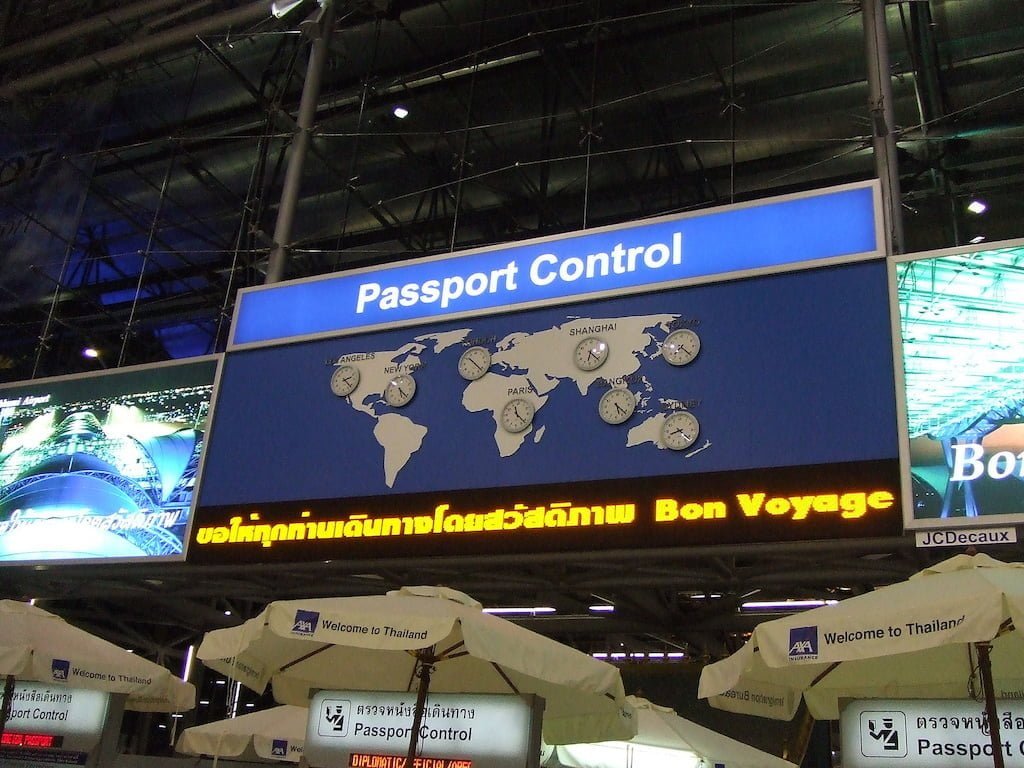
BANGKOK, Thailand — Thailand’s Cabinet has approved the cancellation of the pre-travel 60-day visa exemption scheme for citizens of 93 countries, a policy introduced two years ago to stimulate tourism and economic recovery, according to Tourism and Sports Minister Surasak Phancharoenworakul following the Cabinet meeting.

Thailand Prepares To Halve Visa-free Stay For Tourists From 60 To 30 Days

Under the new directive, Thailand will revert to its previous 30-day visa exemption framework for most affected nations, with the Visa Policy Committee conducting country-by-country reviews to determine the most appropriate visa arrangements based on security assessments and economic considerations. Some countries may see their visa-free period reduced further to 15 days to align with short-term tourism patterns.

The policy shift comes after authorities identified instances of foreign nationals exploiting the extended visa exemption to establish illegal nominee-owned businesses, work without proper permits, and use Thailand as a base for transnational criminal activities, including call-center scam operations. While the 60-day scheme was implemented in 2024 to support economic recovery and boost visitor arrivals, government officials have emphasized a strategic pivot toward attracting “quality tourists” rather than prioritizing volume alone.

Statistics from the Tourism and Sports Ministry indicate that the average length of stay for foreign tourists in Thailand is approximately nine days, leading officials to conclude that reducing the visa-free period to 30 days will not significantly impact the core tourism market. The adjustment is intended to strengthen immigration oversight while maintaining Thailand’s appeal as a premier travel destination.

All countries affected by the change will return to their previous visa arrangements, which generally permitted stays of up to 30 days for tourism purposes. The affected nations include major source markets such as the United States, United Kingdom, Australia, Japan, South Korea, and numerous European Union member states, as well as countries across Asia, the Middle East, Latin America, and the Pacific region.

The Visa Policy Committee will continue to evaluate visa arrangements on an individual country basis, with decisions informed by bilateral relations, security cooperation, tourism contribution, and reciprocity considerations. This approach allows for flexibility in responding to evolving travel patterns and international circumstances.

Thailand’s tourism sector has been a cornerstone of the national economy, contributing significantly to employment, foreign exchange earnings, and regional development. The government has indicated that the visa policy adjustment forms part of a broader strategy to enhance the sustainability and quality of tourism growth while safeguarding national security and regulatory compliance.

Travelers planning visits to Thailand are advised to verify current entry requirements through official government channels, including the Ministry of Foreign Affairs and Thai embassies or consulates in their home countries. Standard documentation requirements, including valid passports with sufficient remaining validity and proof of onward travel, continue to apply for visa-exempt entries.

For those requiring longer stays or engaging in activities beyond tourism, appropriate visa categories remain available through Thai diplomatic missions worldwide. Business travelers, students, retirees, and other long-term visitors should consult official resources to determine the correct visa type for their intended purposes.

The Royal Thai Police and Immigration Bureau have reaffirmed their commitment to facilitating legitimate travel while maintaining robust border security measures. Enhanced screening protocols and inter-agency coordination are intended to prevent misuse of visa exemptions without creating undue barriers for bona fide visitors.

Thailand To Tighten Visa-Free Rules, Slashing Eligible Countries From 93 to 57

As the policy transition takes effect, tourism authorities and industry stakeholders are working to ensure clear communication with international travel partners and to minimize disruption for travelers with existing plans. Further updates regarding implementation timelines, country-specific determinations, and any transitional provisions are expected as the Visa Policy Committee completes its review process.

-Thailand News (TN)

Similar Posts

  • New Lao River Water Station to Secure Clean Tap Water for Chiang Rai Residents

    CHIANG RAI — The Thai government is launching a major project to protect the long-term water safety of Chiang Rai residents. A brand-new water production station will be built to draw fresh water from the Lao River instead of the Kok River. Deputy Prime Minister Songsak Thongsri announced the plan during an official site visit […]

  • | |

    US lawmakers discuss stronger Pakistan-US cooperat…

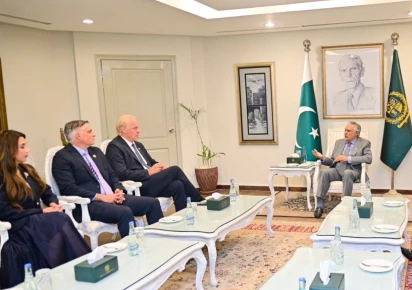
    ISLAMABAD: Deputy Prime Minister and Foreign Minister Ishaq Dar met a US Congressional delegation in Islamabad on Tuesday. The two sides discussed ways to strengthen relations between Pakistan and the United States. The delegation included US Representatives Ryan Zinke and Michael Baumgartner. Dar welcomed the lawmakers and said Pakistan-US relations were gaining positive momentum. The meeting focused on several areas of mutual interest. These included trade, investment, information technology and energy. Both sides discussed opportunities to expand cooperation in these sectors. They also explored ways to increase economic and commercial engagement between the two countries. Dar stressed the importance of regular parliamentary exchanges. He said continued contact between lawmakers could help build mutual trust and improve understanding between Pakistan and the US. The foreign minister also highlighted the importance of stronger institutional links. He said regular engagement could help both countries develop closer and more productive relations. The visiting US lawmakers praised the role of the Pakistani community in the United States. They acknowledged the diaspora’s contributions to the US economy and society. The Pakistani community was also described as an important bridge between the two countries. Its role can help promote stronger people-to-people and economic ties. Regional and international issues were also discussed during the meeting. The two sides exchanged views on developments affecting regional peace and security. The US delegation appreciated Pakistan’s efforts to promote regional peace and stability. Pakistani officials said Islamabad remained committed to dialogue and peaceful solutions to regional challenges. The meeting comes as Pakistan seeks to expand its economic engagement with the United States. Islamabad has been encouraging greater investment and cooperation in emerging sectors. Trade and investment remain key areas of focus in the evolving relationship. Pakistan is particularly interested in attracting US investment in technology, energy and other high-growth sectors.

  • | |

    Senate debates Imran Khan’s health after opposit…

    The Senate held a detailed discussion on the health of PTI founder Imran Khan. The discussion was held after a demand by Opposition Leader Allama Raja Nasir Abbas. The Senate proceedings were also suspended to take up the issue. Speaking in the Senate, Raja Nasir Abbas said Imran Khan was facing punishment for crimes he had not committed. He described the former prime minister’s health as a highly sensitive matter. The opposition leader urged the government to show restraint. He said political differences should not lead to anyone being subjected to unnecessary suffering. Raja Nasir Abbas said the government should focus on resolving the country’s problems instead of pursuing political revenge. He also questioned whether the priority was to fix the system or settle political scores. He demanded that Imran Khan be allowed to meet his personal doctors. He said access to proper medical care was essential, particularly because of concerns about the PTI founder’s health. The opposition leader also called for Imran Khan to be shifted to a hospital if necessary. He demanded that a meeting with him should be allowed. Raja Nasir Abbas said such measures could help prevent a serious situation in the future. He stressed that the authorities should take the health concerns seriously. He also called for politicians to be given an opportunity to run the country. He said political issues should be resolved through political means. The opposition leader also raised the issue of PTI women who are currently in prison. He called for greater attention to their situation. During the debate, Raja Nasir Abbas addressed PML-N Senator Rana Sanaullah. He said Rana Sanaullah knew that the cases against him had not been filed by politicians. Rana Sanaullah responded by asking Raja Nasir Abbas who had filed the case against him. The exchange highlighted the political tensions between the government and opposition benches in the Senate. The debate also brought renewed attention to Imran Khan’s health and the opposition’s demand for greater access to medical care and personal doctors. Opposition lawmakers have continued to raise concerns about the PTI founder’s condition and have called for his medical needs to be addressed without political considerations.

  • |

    Court pauses construction of $400 Million White Ho…

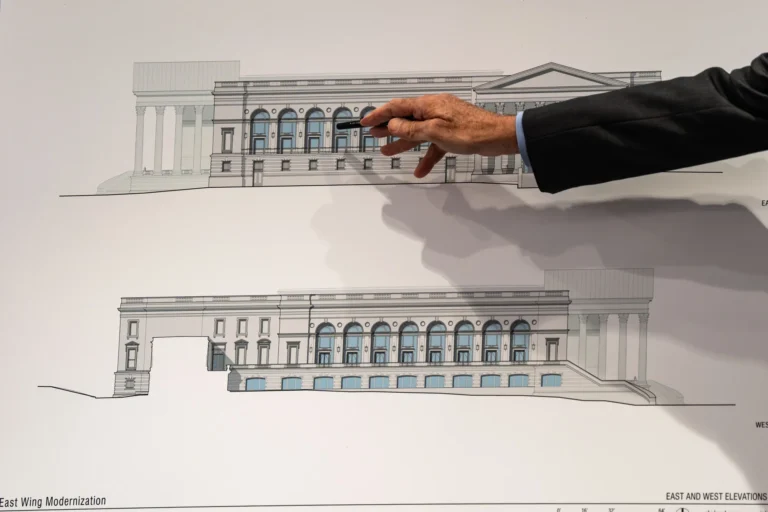
    A U.S. federal appeals court issued a ruling to halt construction on the ambitious $400 million White House ballroom project. The decision by the U.S. Court of Appeals for the District of Columbia Circuit upholds a preliminary injunction that brings above-ground work on the massive 90,000-square-foot facility to a standstill. The legal challenge was originally brought by the National Trust for Historic Preservation. The timing was right after the administration demolished the historic East Wing to clear space for the new addition. This project was devised without receiving formal authorization from the United States Congress or regulatory historic preservation bodies. The Core Legal and Historic Dispute The dispute began after the historic East Wing was razed to make way for a grand event space capable of hosting hundreds of guests. Preservationists quickly filed suit. Their argument was that the administration overstepped its legal boundaries by destroying part of the historic executive mansion without proper congressional oversight. In earlier lower court proceedings, the federal judge sided with the preservation group. The judge concluded that the executive branch could not bypass legislative authorization to construct such a massive structure. The administration argued that the ballroom itself would be funded primarily through private contributions rather than taxpayer dollars. Critics maintained that private funding does not grant an administration the right to alter iconic federal heritage sites at will. Security Exceptions vs. Architectural Expansion A major focal point of the ongoing litigation involves the distinction between above-ground construction and essential subterranean infrastructure. Lower court decisions made allowances for below-ground work to proceed. The allowed spots were specifically underground bunkers, military installations and updated security infrastructure meant to replace outdated Cold War-era facilities. Justice Department attorneys representing the administration argued that halting any portion of the project could jeopardize executive branch safety. The new complex integrates crucial defensive elements against modern airborne and ballistic threats. However, judges questioned whether national security arguments could be applied to justify an entire 90,000-square-foot ballroom built above those installations. The appellate court’s latest order reinforces the restriction on above-ground structural work. However, the order allows government a temporary 14-day emergency intervention from the U.S. Supreme Court. Broader Presidential Power Implications The ruling marks on significant constitutional questions regarding the limits of executive power over federal property. Government lawyers previously asserted to the court that judges lacked the authority to intervene in executive branch building decisions once work was underway. The judiciary’s willingness to block the project highlights a sharp pushback against the idea that rapid demolition creates a fait accompli immune to judicial review.   As the 14-day stay ticks down, all eyes are on the Supreme Court whether the nation’s highest tribunal will step in to allow construction or leave the high-stakes project frozen.

  • | |

    Malik Riaz seeks intervention over Bahria Town ass…

    Bahria Town founder Malik Riaz Hussain has appealed to senior Pakistani officials for intervention over the ongoing actions against his company and family. In a detailed appeal, Riaz raised concerns over the freezing, seizure and auction of Bahria Town properties. He claimed that assets worth around Rs238.6 billion have already been auctioned or taken into possession. He further alleged that some properties are currently facing auction and sale proceedings. According to the appeal, development projects worth approximately Rs372 billion have also been suspended. Riaz expressed concern over what he described as the forced takeover of Bahria Town assets. He alleged that several properties were being sold at prices far below their actual market value. He maintained that legal proceedings related to several properties and other actions are still pending before the relevant courts and forums. Despite this, he alleged that some Bahria Town assets were being taken over and sold before the legal disputes had been fully resolved. The Bahria Town founder also raised concerns over alleged threats against him and members of his family. He claimed that a person accused of threatening him and his family with serious consequences, including death threats, remains free. According to Riaz, an FIR was registered against the alleged individual. He also said that the matter later came before the High Court. However, he claimed that despite the FIR and court intervention, the accused person has not been taken into custody. Riaz urged senior officials to take notice of the situation. He asked them to review the actions being taken against Bahria Town and its properties. He warned that continued freezing, seizure and auction of the company’s assets could have wider economic consequences. The appeal also highlighted the potential impact on ongoing development projects. Riaz claimed that projects worth billions of rupees have been affected by the current situation. He argued that prolonged uncertainty could affect workers, contractors, investors and other parties associated with the projects. Riaz further alleged that the valuation of some assets did not reflect their actual market worth. He claimed that properties were being sold at unusually low prices. He called for the relevant legal procedures to be followed before any further action is taken against the company’s assets. The appeal comes amid ongoing legal and financial disputes involving Bahria Town and its properties. Riaz has asked the authorities to intervene and examine the allegations raised in his appeal.

  • Thai Cabinet Approves First Draft Of Strict New Deportation Regulations

    BANGKOK, Thailand — The Thai Cabinet has officially approved the first draft of new deportation regulations, marking a significant step toward tightening controls on illegal immigration and expediting the removal of foreign nationals who violate the law. The move aims to establish a clear, efficient legal framework for deportations, addressing previous gaps in administrative coordination. […]

Leave a Reply

Your email address will not be published. Required fields are marked *