pakistan reopen all
| | |

Pakistan to reopen all border, transit routes with…

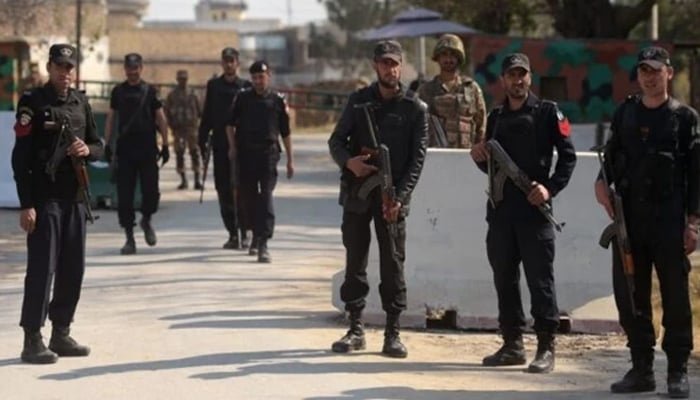
A decision has been taken to reopen all border crossings and transit routes between Pakistan and Afghanistan, following a meeting chaired by Federal Interior Minister Mohsin Naqvi with senior officials and representatives of the business community.

The meeting discussed measures to remove obstacles affecting bilateral trade and facilitate the movement of goods between the two countries.

Participants also stressed the need to restore normal economic ties and improve trade relations between Pakistan and Afghanistan.

The meeting further focused on making legal travel between the two countries easier and more convenient for their citizens.

Officials and business representatives agreed that reopening the routes would help address difficulties faced by traders and support economic activity on both sides of the border.

The government also emphasised the importance of reducing unnecessary hurdles in trade and movement while ensuring that legal procedures remain in place.

Similar Posts

  • Train Collides with Collapsed Crane in Korat, Killing at Least 32

    NAKHON RATCHASIMA — A passenger train traveling from Bangkok to Ubon Ratchathani collided with a collapsed construction crane on Wednesday morning, killing at least 32 people and injuring many others, Khaosod English reported. Some victims are still trapped inside the carriages. The incident occurred at approximately 9:05 a.m. in Ban Thanon Kod, Sikhiu district. Train […]

  • | | | |

    Houthi attack on Yemen’s Mokha leaves six dead

    MOKHA: A Houthi attack on Yemen’s Red Sea port city of Mokha has killed six people, including two security personnel, according to a military official from Yemen’s internationally recognised government. The attack, which took place on Friday, targeted commercial vessels unloading cargo at the port, raising fresh concerns over the security of maritime activity along one of the world’s most strategically important shipping routes. The military official said the Iran-aligned Houthi group fired five missiles at the vessels. The strikes reportedly hit the port area and caused fires to break out aboard two ships. The attack comes as tensions continue to rise across Yemen, with Houthi forces increasingly targeting areas controlled by the internationally recognised government. The latest violence has also added to concerns over the safety of commercial shipping operating near the Red Sea and Bab el-Mandeb Strait. Mokha, historically known as Mocha, is located on Yemen’s western coast near the Bab el-Mandeb, a narrow maritime passage linking the Red Sea with the Gulf of Aden. Its location gives the port significant importance for regional trade and shipping. The latest incident follows a series of Houthi attacks in and around Yemen’s government-held territories and against commercial vessels. The United Nations has warned that Yemen is at increasing risk of a return to wider conflict, with military activity intensifying despite the fragile calm that followed the 2022 truce. The renewed attacks have also raised fears of further disruption to international shipping. Maritime authorities continue to warn commercial operators about missile, drone and other threats in the southern Red Sea, Bab el-Mandeb and Gulf of Aden. Details about the identities of those killed and the extent of damage to the vessels were not immediately available. The attack is likely to further deepen concerns about Yemen’s fragile security situation and the growing risks facing civilian and commercial activity along its Red Sea coastline.

  • | |

    Hangu drone attack, FIR registered against TTP mil…

    HANGU: Pakistani authorities have registered a terrorism case following a deadly drone attack on the Khazina Banda police checkpost in Hangu, where officials say militants carried out a coordinated assault that left several police personnel dead and dozens injured. According to police, the case has been lodged at the Counter Terrorism Department (CTD) police station in Kohat on the complaint of the station house officer (SHO). The First Information Report (FIR) names members of the banned Tehreek-e-Taliban Pakistan (TTP) and includes 16 charges, including terrorism, murder, attempted murder and kidnapping. The FIR states that the attackers used a drone as part of the assault before engaging security personnel in an intense exchange of fire. According to the police report, DSP Diyar Khan was among 10 police officials martyred during the attack, while 33 other personnel sustained injuries in the fierce confrontation. Authorities said security forces responded immediately, leading to a prolonged gun battle with the militants. The FIR claims that 15 militants were killed during the retaliatory operation carried out by police. The attack also caused significant damage to government property. Police said the militants destroyed or damaged three armoured vehicles, along with other official vehicles and infrastructure at the checkpost. Investigators have launched a detailed probe to identify all individuals involved in planning and executing the assault. Officials said evidence is being collected from the attack site, while intelligence agencies are assisting in tracing the network behind the operation. The incident underscores the continuing security challenges facing law enforcement personnel in Khyber Pakhtunkhwa, where militant attacks have increased in recent years. Authorities have vowed to bring all those responsible to justice, reaffirming that counterterrorism operations will continue against militant groups threatening public safety and national security. Officials also paid tribute to the police officers who lost their lives, describing their sacrifice as a testament to the force’s commitment to protecting citizens and maintaining peace in the region.

  • Appeal filed in Supreme Court over minority reserved seats

    An appeal has been filed in the Supreme Court’s Lahore Registry challenging the Lahore High Court’s decision dismissing a constitutional petition seeking an increase in the number of reserved seats for minorities in the National and Provincial Assemblies in line with the country’s population growth. The constitutional appeal has been filed by advocate Naseeb Masih, who has made the Federal Government, the President of Pakistan, and the Secretary for Law and Parliamentary Affairs respondents in the case. The appellant contended that the Lahore High Court failed to correctly appreciate the legal and constitutional issues raised in the petition. It was argued that the number of reserved seats for minorities should have been increased following successive population censuses, but this constitutional requirement had been ignored. According to the appeal, the minority population has grown at a rate comparable to the Muslim population, yet the number of reserved seats allocated to minorities has remained unchanged. It was further submitted that representation for women has also not been increased proportionately to the growth in population. The petitioner maintained that the Constitution currently provides 10 reserved seats for minorities in the National Assembly, while the Punjab Assembly has eight reserved minority seats, Sindh nine, Khyber Pakhtunkhwa four, and Balochistan four. The appeal states that these allocations were originally based on the 1981 Population Census, following a Presidential Order issued in 1985, under which 10 minority seats were reserved in the National Assembly when the House consisted of 207 general seats. It further points out that under the Legal Framework Order (LFO) 2002, the number of general seats in the National Assembly was increased to 272, and 60 seats were reserved for women. However, despite these constitutional changes, the number of reserved seats for minorities was not increased. Similarly, the appeal notes that the number of general seats in the Punjab Assembly was enhanced from 240 to 297, while the number of reserved seats for women was increased to 60. However, the number of minority seats remained fixed at eight, despite the increase in the province’s population. The petitioner has requested the Supreme Court to set aside the Lahore High Court’s judgment and direct the relevant authorities to increase the number of reserved seats for minorities in the National and Provincial Assemblies in proportion to the country’s population, ensuring equitable constitutional representation for minority communities.

  • | |

    Rakhi Sawant gets emotional about her Pakistani fans

    Rakhi Sawant has always been one of Indian entertainment’s most unfiltered personalities, and a recent interview with BBC Hindi has given her fans on both sides of the border a moment to genuinely pause and reflect. In the interview, the actress and digital influencer spoke with visible emotion about her Pakistani fans, delivering a remarkably candid account of a connection that has quietly shaped her personal life in ways she had perhaps not expected. Sawant, who now follows Islam and has spoken openly about her affection for Muslims, did not approach the subject diplomatically or with the kind of measured language public figures typically deploy when navigating Indo-Pakistani sentiment. She spoke from personal experience, and the honesty of what she said has resonated widely. “They love me a lot,” she said, speaking of her Pakistani fans. “We Pakistanis and Hindus share a love-and-hate relationship, but whenever something happens to me, Pakistanis reach out first. Sometimes I have a fever, and no one from India shows up, but they come and take me to the hospital.” The admission was striking in its specificity. She was not speaking in generalities about cultural warmth or neighbourly affection. She was describing concrete acts of care at moments of genuine vulnerability, people showing up when she was unwell, accompanying her to hospital, filling a gap that others had left empty. She continued with equal candour, acknowledging the political narrative that frames the two countries as adversaries while making clear that her personal experience simply did not match that framing. “I know they are our enemy, our country’s enemy, but what’s true is true,” she said. “They love me a lot. I am just a neighbour residing in this building, and as neighbours, they are always there for me.” The online reaction to the interview has been overwhelmingly warm and has prompted a broader conversation that goes well beyond Sawant herself. Both Pakistani and Indian viewers flooded the comments to express agreement with the sentiment she was articulating. The most consistent thread running through the responses was the distinction between the political relationship that governments maintain and the human relationships that ordinary people choose to build across that same divide. Commenters from both countries wrote that neither people were each other’s real enemies, and that it was politicians who constructed and maintained the hostility that defined the official relationship between India and Pakistan. People on the ground, many argued, wanted something different entirely. Rakhi Sawant’s emotional honesty in this interview did not resolve any political realities. But it gave voice to something that is rarely said plainly enough in either country: that the warmth that exists between people when it is allowed to breathe is real, and sometimes shows up most clearly when someone needs to be taken to hospital and someone else simply decides to come.

  • |

    Shehnaaz Gill praises Hania, Bilal and Pakistani dramas

    Indian actress Shehnaaz Gill has expressed admiration for Pakistan’s television industry, praising its storytelling and applauding the performances of some of the country’s biggest stars, including Hania Aamir, Bilal Abbas Khan and Fahad Mustafa. During a recent interview, the actress spoke about her appreciation for Pakistani dramas, saying their portrayal of romance feels genuine and emotionally engaging. She noted that the love stories presented on screen are able to create a deep emotional connection without relying on physical intimacy. According to Shehnaaz, Pakistani dramas have a unique way of depicting relationships, allowing viewers to experience the emotions of the characters through meaningful storytelling, subtle expressions and strong performances. She said that watching these dramas makes the romance appear natural and believable, adding that the simplicity of the storytelling is one of the reasons audiences connect so strongly with the characters. The actress also described Pakistan’s television industry as unmatched when it comes to romantic dramas. She believes the quality of storytelling and character development sets Pakistani serials apart from many others in the region. Sharing some of her personal favourites, Shehnaaz named Meri Zindagi Hai Tu and Kabhi Main Kabhi Tum among the Pakistani dramas she has enjoyed watching. She praised both productions for their compelling narratives and emotionally driven performances. In addition to appreciating the dramas themselves, Shehnaaz spoke highly of several Pakistani actors whose work she admires. She specifically mentioned Hania Aamir, Bilal Abbas Khan and Fahad Mustafa, describing them as talented performers who consistently impress audiences with their acting abilities. Her remarks quickly attracted attention on social media, where fans from both Pakistan and India welcomed her appreciation for Pakistan’s entertainment industry. Many viewers praised the actress for acknowledging the quality of Pakistani television and celebrating the talent of its artists. Pakistani dramas have earned a strong international following in recent years, attracting viewers across South Asia and beyond. Their growing popularity has been driven by emotionally rich storytelling, relatable characters and narratives that often explore family relationships, social issues and personal struggles. Unlike productions that rely heavily on spectacle, many Pakistani television serials focus on realistic emotions and everyday experiences. This approach has helped them resonate with audiences of different age groups and cultural backgrounds. Many popular dramas also address important social themes, including women’s empowerment, family values, mental health and societal expectations. Their ability to balance entertainment with meaningful messages has contributed to their increasing global appeal. With streaming platforms making Pakistani content more accessible than ever, the industry’s reach continues to expand beyond national borders. Actors such as Hania Aamir, Bilal Abbas Khan and Fahad Mustafa have built large fan bases internationally, while several dramas have achieved millions of views online. Shehnaaz Gill’s appreciation for Pakistani television reflects the growing recognition the industry is receiving across the region. Her praise for its storytelling, memorable dramas and talented actors highlights the cultural connection created through quality entertainment and reinforces the widespread appeal of Pakistani serials among audiences worldwide.

Leave a Reply

Your email address will not be published. Required fields are marked *