kuwaiti visit pakistan
| |

Kuwaiti FM to visit Pakistan tomorrow

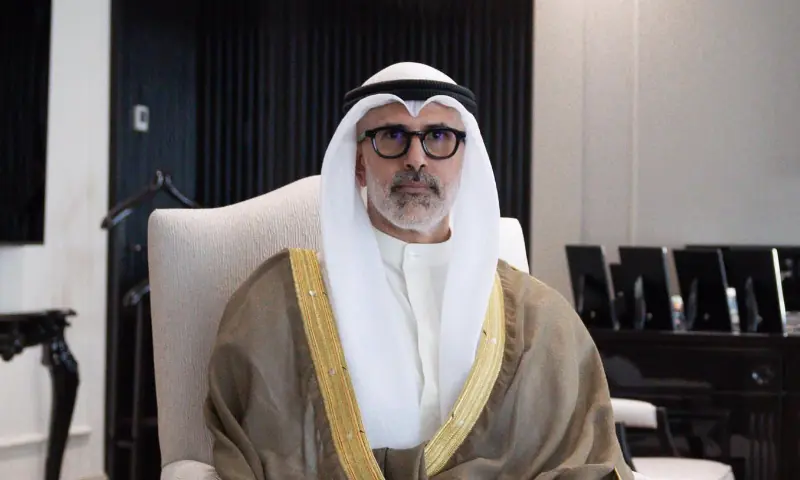
Kuwaiti Foreign Minister Sheikh Jarrah Jaber Al-Ahmad Al-Sabah will arrive in Pakistan on July 28 for a two-day official visit aimed at strengthening bilateral relations and expanding cooperation between the two countries.

According to Pakistan’s Foreign Office, the Kuwaiti foreign minister will stay in Pakistan until July 29. The visit has been arranged at the invitation of Deputy Prime Minister and Foreign Minister Ishaq Dar.

During his visit, Sheikh Jarrah will hold detailed discussions with Ishaq Dar on matters concerning Pakistan-Kuwait relations. The two sides are expected to review a wide range of bilateral issues and explore opportunities to further improve cooperation in different areas.

The discussions will also cover important regional and international developments. Pakistan and Kuwait are expected to exchange views on issues of mutual interest, particularly those affecting peace, stability and security in the region.

The Kuwaiti foreign minister is also scheduled to pay a courtesy call on Pakistan’s leadership during his stay.

The Foreign Office said the visit reflected the commitment of both countries to further strengthen their longstanding partnership. It also highlighted the desire of Pakistan and Kuwait to broaden cooperation for the mutual benefit of their people.

The visit comes shortly after a telephone conversation between Ishaq Dar and his Kuwaiti counterpart on July 18. During that discussion, Sheikh Jarrah appreciated Pakistan’s constructive role in encouraging dialogue and supporting regional stability.

The upcoming visit is expected to provide an opportunity for both sides to build on those discussions and develop closer diplomatic and economic ties.

Pakistan and Kuwait have maintained longstanding friendly relations, with cooperation extending across diplomatic, economic and other areas. Islamabad has consistently sought to strengthen engagement with Gulf countries, while Kuwait has remained an important partner for Pakistan in the region.

The two-day visit is therefore expected to give fresh momentum to bilateral engagement and encourage further cooperation on matters of shared interest.

Similar Posts

  • |

    Former boxing star Prichard Colon dies at 33 after brain injury

    Former professional boxer Prichard Colon, once regarded as one of boxing’s most promising young talents, has died at the age of 33, years after suffering a devastating brain injury during a fight. Colon, who was born in Puerto Rico, sustained severe trauma during his October 2015 bout against American boxer Terrel Williams. The injury left him in a coma and ultimately brought a sudden and heartbreaking end to a career that had appeared destined for success. Before the fight, Colon had built an impressive unbeaten record. He won all 16 of his professional bouts, including 13 victories by knockout, and had emerged as a rising name in the sport. However, the contest against Williams changed his life forever. Following the bout, Colon required emergency brain surgery after doctors discovered the seriousness of his injuries. He later regained consciousness, but the neurological damage was severe. Colon needed round-the-clock care for the remainder of his life and was unable to return to the professional career that had once promised so much. His family had remained by his side throughout the difficult years. His father, Richard Colon, announced his son’s death on Facebook, expressing his sorrow while also saying that Prichard was now in a better place. Colon had been living with his family in Florida, where he died. His story has remained one of boxing’s most painful reminders of the risks fighters face inside the ring. His rapid rise, unbeaten record and promising future were abruptly overshadowed by a single fight and its devastating consequences. For fans who followed his career, Colon’s legacy extends beyond his record. He will be remembered as a talented young boxer whose career was cut tragically short and whose long battle after his injury drew attention to the potentially life-changing dangers of combat sports.

  • Thai Baht Hits Four-Year High, Intensifying Pressure on Central Bank

    BANGKOK – The Thai baht has surged to its strongest level against the US dollar in over four years, escalating pressure on the Bank of Thailand ahead of its critical monetary policy meeting this week. The currency rose to 31.523 per dollar, marking its highest valuation since June 2021. Thai Baht Faces Further Depreciation Amid […]

  • |

    US fuel opens a capitalist crack in Cuba

    HAVANA: Gasoline selling for as much as $38 a gallon, diesel advertised on social media and fuel stored inside cramped apartments are offering an unusual glimpse of private enterprise in communist Cuba, where the energy sector has long remained firmly under state control. A US policy allowing American companies to export fuel to private Cuban businesses has triggered an unexpected transformation. As Cuba struggles with shortages, blackouts and a weakened public transport system, imported fuel is creating a growing private market — while also exposing a sharp divide between those who can afford it and millions who cannot. The change follows the collapse of Cuba’s traditional fuel supplies from Venezuela and Mexico after the United States removed Venezuelan President Nicolas Maduro in January. With sanctions discouraging tankers from sailing toward the island, fuel shortages have increasingly affected transport, hospitals, schools and other essential services. Under an exception to Washington’s oil restrictions, however, private Cuban restaurants, retailers, taxi operators and other businesses have been allowed to import fuel. The impact has been striking. Between February and May, around 900,000 barrels of US fuel entered Cuba — enough to meet only about nine days of the country’s energy requirements. Yet those relatively small shipments have helped create a new network of legal wholesalers, private buyers and illegal resellers. Gasoline becomes a luxury For ordinary Cubans, the new fuel market has often brought frustration rather than relief. On a July afternoon in Havana, 53-year-old Amarilis Sanchez waited for hours at a bus stop after attending her daughter’s birthday celebration. Public buses, which normally cost only two pesos, were unreliable. Nearby, taxi drivers offered rides in vintage cars, but one driver quoted Sanchez 1,000 pesos for the journey — roughly 500 times the price of a bus ride. Unable to afford it, Sanchez considered spending the night at her daughter’s home and trying again for a bus the following day. Her experience illustrates how Cuba’s fuel crisis is creating two very different realities: one for people with access to private vehicles and imported fuel, and another for those dependent on the country’s struggling public transport network. Black-market gasoline prices reportedly reached $10 per litre, or about $38 per gallon, during the spring before falling as imports increased. Social media fuels a new market The emerging trade is increasingly visible online. WhatsApp groups and Facebook pages advertise gasoline and diesel, while some sellers store fuel in apartments and small shops despite the dangers posed by fire, explosions and toxic fumes. At one Havana convenience store, a shopkeeper reportedly kept around a dozen 20-litre fuel containers in a backroom, selling gasoline for approximately $5 per litre. Private companies are also moving into the newly emerging legal wholesale market. By late July, almost 200 Cuban businesses had received permission to distribute fuel wholesale to other private companies. One company, A Granel, advertises diesel through social media and charges $2.50 per litre for a 940-litre tank. The promotion reportedly features a model walking through a warehouse of diesel containers while Daddy Yankee’s famous song Gasolina plays in the background — an unusually flashy image for a country where the energy industry has historically been dominated by the state. Are Cuban gas stations next? The transformation could go further. Cuban lawmakers approved a broad package of economic reforms in June aimed at opening the energy sector to private and foreign investment. Prime Minister Manuel Marrero Cruz later announced that Cuba had approved its first foreign investment project focused on importing and selling fuel, although he did not name the company. The reforms have raised the possibility that private operators could eventually take control of some of Cuba’s familiar state-run Cupet petrol stations. For now, however, retail fuel sales remain largely under state control. Some state-owned stations are storing imported fuel but can distribute it only to vehicles belonging to authorised private businesses. Cuban authorities have defended the reforms while rejecting the idea that they represent a move toward large-scale privatisation. President Miguel Diaz-Canel has accused Washington of imposing a “genocidal siege” on Cuba and said economic changes were not being introduced to satisfy the United States. A lifeline with a heavy price The new fuel market has helped prevent some businesses from shutting down completely. During recent power outages, restaurants and shops with generators powered by imported fuel remained illuminated while much of Havana was plunged into darkness. But experts warn that the emerging system could deepen inequality. With the average government salary reportedly around $10 a month, imported gasoline remains unaffordable for most of Cuba’s roughly nine million residents. Cuban sociologist Mayra Espina said the limited fuel supplies had helped prevent “complete paralysis” but warned that the benefits were overwhelmingly concentrated among those able to pay. The result is an extraordinary contradiction: a small opening toward private enterprise is helping Cuba keep parts of its economy running, while simultaneously making access to basic mobility and energy increasingly dependent on wealth. For a country that has spent decades keeping fuel firmly within the state system, Cuba’s new gasoline economy may therefore prove to be more than a temporary response to shortage. It could become an early test of how far Havana is prepared to let capitalism into one of its most tightly controlled sectors.

  • |

    Cristiano Ronaldo set to enter acting after World Cup defeat

    Cristiano Ronaldo is preparing for a surprising new chapter away from the football pitch, with the Portugal superstar reportedly set to make his acting debut in an upcoming football drama series. The five-time Ballon d’Or winner is expected to appear in “Day 1s”, a new series centred on the world of football agents. According to British media reports, Ronaldo will make a cameo appearance while also taking on the role of executive producer. The move marks an intriguing expansion of Ronaldo’s already wide-ranging career, as the football icon increasingly explores projects beyond playing the sport that made him a global superstar. Ronaldo moves from football to the screen “Day 1s” is reportedly built around the story of a fictional football agent and the pressures, ambitions and personalities surrounding the modern game. British actor Damian Lewis is set to play the lead role, while British rapper Dave and newcomer actress Carlotta Banat are also part of the cast. Ronaldo’s involvement is expected to add an extra layer of attention to the production, particularly because of his enormous global following and deep connection with football. The series is already in production, with some scenes reportedly filmed at The Hive Stadium, home of English League Two club Barnet. Thierry Henry also joins the cast Ronaldo will not be the only major football name making the jump into the fictional world. Former France and Arsenal star Thierry Henry is also expected to appear in a cameo role. Interestingly, the concept for “Day 1s” was reportedly developed by Darren Dean, Henry’s former agent, who is also involved in the project as an executive producer. The involvement of major football personalities could make the series particularly appealing to fans who want to see what happens behind the scenes of the sport. Streaming battle could be next Reports suggest that several major streaming platforms could show interest in acquiring the rights to “Day 1s”, potentially triggering strong competition for the series. For Ronaldo, the project represents more than just a brief appearance on screen. In addition to his football career, he has expanded into business, media and other entertainment ventures in recent years. His role as both actor and executive producer could therefore signal the beginning of another major chapter in his career. After years of dominating football headlines, Ronaldo may soon have audiences watching him for a completely different reason — not for what he does with a football, but for what he does in front of a camera.

  • |

    Ayeza Khan and Danish Taimoor spark divorce rumours

    Ayeza Khan, one of Pakistan’s most celebrated television actresses, has once again found herself at the centre of public attention following a social media post that has sparked speculation about her marriage to actor Danish Taimoor. Ayeza is widely admired for her performances in popular dramas including Pyarey Afzal, Mere Paas Tum Ho, Chupke Chupke, and Mein. She is married to Danish Taimoor, one of Pakistan’s most popular male television stars. Danish has recently been enjoying a successful run on television, with several of his projects receiving strong audience responses and achieving impressive viewership figures. While Danish continues to appear in major projects, Ayeza has currently taken a break from acting. Recently, Danish celebrated the finale of his hit drama Humrahi with a special screening at Nueplex Cinema in Karachi. However, fans quickly noticed that Ayeza was not present at the event. Her absence attracted further attention because the couple also did not publicly celebrate their Nikah anniversary on August 8. Neither Ayeza nor Danish appeared to share a post publicly wishing each other on the occasion, prompting some social media users to question whether everything was well between the two. The speculation grew after Ayeza shared a new black-and-white photograph on social media. In the picture, the actress appeared in a nightgown with a serious and expressionless look. She covered both of her ears with her hands while posing in a dramatic and seemingly detached manner. Although Ayeza did not directly mention her marriage or Danish in the post, its timing and intense imagery led some followers to interpret it as a possible message about her personal life. Several fans began discussing the possibility of problems between the couple, while others urged people not to draw conclusions based solely on social media activity. Some users also pointed out that the couple did not appear to share family photographs around August 14, another date associated with their wedding celebrations. A few followers connected this absence with Ayeza’s decision not to attend the Humrahi finale screening. Amid the growing discussion, some social media users went as far as suggesting that Ayeza and Danish could be considering separation. Others speculated that Danish might be distancing himself from his wife, while some interpreted Ayeza’s recent post as a sign that she was choosing to focus on herself. However, neither Ayeza Khan nor Danish Taimoor has confirmed any issues in their marriage. The divorce rumours currently remain unverified speculation based largely on their social media activity, public appearances, and fans’ interpretations. For now, the couple has not made any official statement addressing the rumours, leaving fans waiting for clarification about the situation.

  • | |

    Netflix finally unveils Pakistan’s biggest series

    Pakistan’s first original Netflix series, “Jo Bachay Hain Sang Samait Lo,” is reportedly set to premiere by the end of 2026 after facing repeated delays that left fans uncertain about its future. The series is based on the bestselling novel of the same name by acclaimed writer Farhat Ishtiaq. First published as a serialized story in 2009, the novel later appeared in book form in 2013 and became one of Pakistan’s most popular contemporary romance novels. The project marks a major milestone for Pakistan’s entertainment industry as it is the country’s first original production created specifically for Netflix. Unlike several Pakistani television dramas that were added to the streaming platform after airing locally, this series was developed exclusively as a Netflix original. The drama features one of the biggest ensemble casts in Pakistani television. It stars Mahira Khan, Fawad Khan, Bilal Ashraf, Hamza Ali Abbasi, Hania Aamir, Iqra Aziz, Sanam Saeed, Ahad Raza Mir, Nadia Khan, along with several other well-known actors. The series has been directed and produced by Momina Duraid. The project was initially expected to debut in 2025, but its release was postponed without any official explanation. The delay led to widespread speculation among viewers, with many questioning whether the series would ever reach the streaming platform. Fresh reports now suggest that post-production work is nearing completion. The final editing process is said to be underway, while promotional activities involving the cast are expected to begin in the coming weeks ahead of the planned release. Despite the latest update, many fans remain cautious after the long wait. Social media users have expressed excitement about the possibility of finally watching the series but say they will believe the release only when Netflix officially announces the premiere date and makes the episodes available. If released as expected, “Jo Bachay Hain Sang Samait Lo” is likely to become one of Pakistan’s biggest digital entertainment launches, introducing local storytelling to a wider international audience through one of the world’s leading streaming platforms.

Leave a Reply

Your email address will not be published. Required fields are marked *